






AQUA Peptides for Absolute Quantitation: How Stable Isotope Standards Convert Targeted LC-MS Signal to Known Amounts
Introduction
Relative peak ratios can show that a protein increases after treatment, yet they cannot answer how much protein is present in the sample. Biomarker programs may need plasma levels in ng/mL. Biopharmaceutical teams may need impurity peptides reported against a specification. Pharmacology groups may need stoichiometric comparisons that require known amounts rather than fold change alone.
An AQUA peptide addresses that need by serving as a stable isotope-labeled synthetic standard matched to a proteotypic target sequence. AQUA (Absolute QUAntification) peptides are spiked into samples at known amounts and measured alongside endogenous light peptide by selective LC-MS acquisition such as MRM or PRM. The labeled-to-unlabeled ratio anchors targeted signal to absolute amount through isotope dilution. This makes the AQUA peptide the quantitative reference point in many absolute protein and peptide assays.
Teams planning AQUA-based measurement should define target sequence, spike level, and matrix behavior before synthesis and assay lock-in. MtoZ Biolabs can Review AQUA peptide feasibility before standards are ordered or samples are submitted.
Related Services
What an AQUA Peptide Is
An AQUA peptide is a synthetic peptide with the same sequence as a selected proteotypic surrogate, incorporating stable isotopes such as 13C and 15N at defined residues. The isotope pattern creates a predictable mass shift relative to the endogenous light peptide while preserving chromatographic and fragmentation behavior closely enough for co-elution and selective quantitation.
The AQUA peptide differs from an unlabeled synthetic spike used only for retention time reference. It also differs from metabolic labeling strategies such as SILAC, which label proteins during cell culture rather than through a defined synthetic standard spiked at a known point in the workflow.
An AQUA peptide workflow typically answers one of these questions:
-
What is the absolute amount of a target peptide in the sample?
-
Can a biomarker surrogate be reported in ng/mL or fmol?
-
Does an impurity or product-related peptide meet a concentration limit?
-
Can multiple predefined peptides be quantified with a common isotope dilution strategy?
When reporting must be tied to known standard amount rather than sample-to-sample ratio alone, an AQUA peptide is often the most direct internal standard.
How an AQUA Peptide Workflow Is Built
Most AQUA peptide projects follow a structured sequence built on targeted LC-MS measurement.
Phase 1: Proteotypic peptide selection.
The protein target is translated into a peptide surrogate suitable for selective acquisition and stable isotope standard pairing.
Phase 2: AQUA peptide synthesis.
The synthetic peptide is prepared with defined isotope incorporation and qualified for identity and purity.
Phase 3: Spike design.
A known amount of AQUA peptide is added before or after digestion depending on whether whole-protein or peptide-level quantitation is required.
Phase 4: LC-MS acquisition.
MRM or PRM monitors light and heavy peptide signals in the same run.
Phase 5: Absolute calculation and reporting.
Labeled-to-unlabeled ratios are converted to concentration using calibrators, spike amount, or a validated response model.
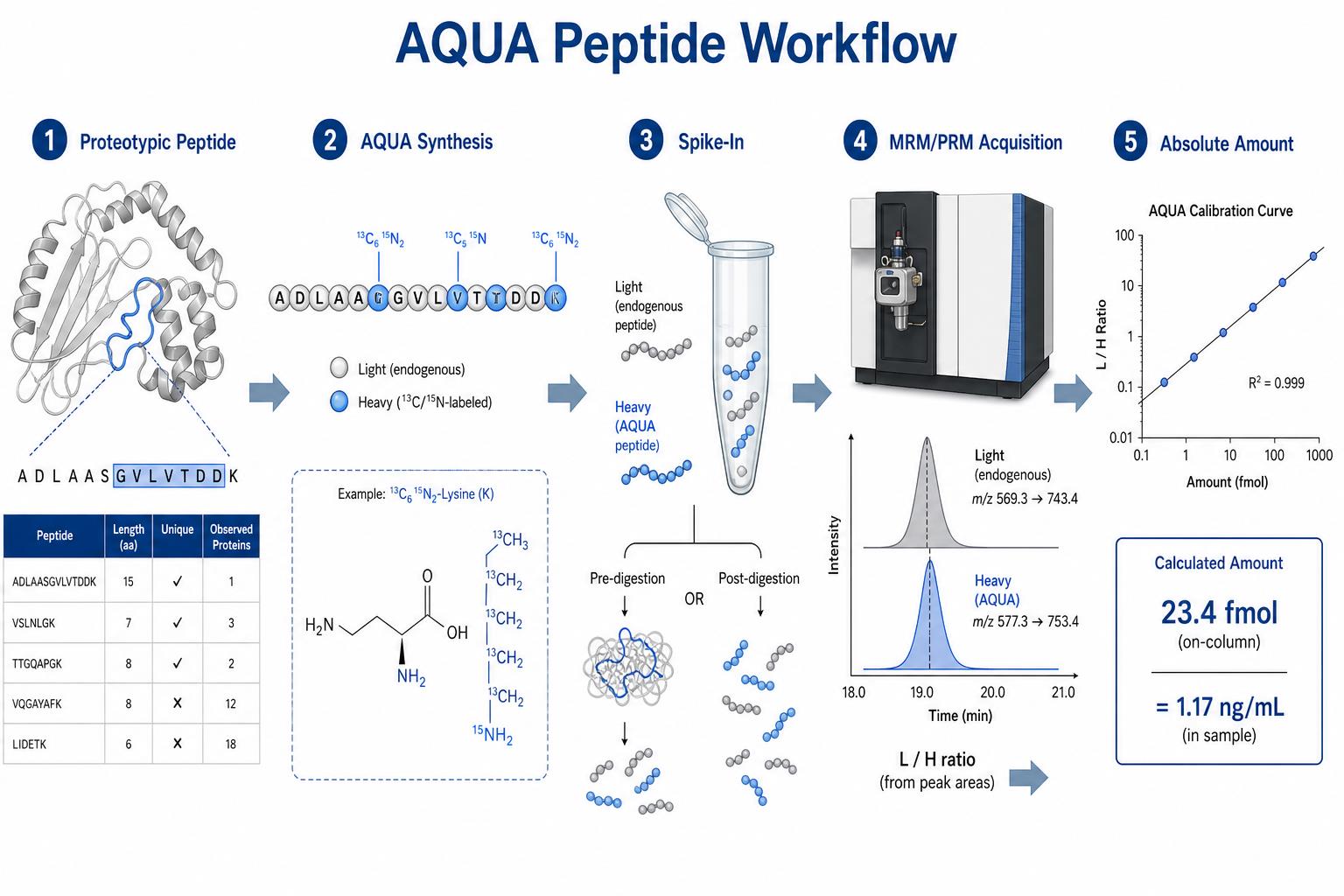
Figure 1. An AQUA peptide workflow links stable isotope standard synthesis, controlled spike-in, and targeted LC-MS acquisition to absolute amount reporting.
Pre-digestion spiking is common when whole-protein recovery must be represented in the final readout. Post-digestion spiking is often used when the assay quantifies a defined proteotypic surrogate after consistent proteolysis.
Isotope Dilution in Brief
The quantitative core of an AQUA peptide assay is the relationship between known standard amount and measured light-to-heavy ratio.
1. Co-elution
Light and heavy peptides are designed to share retention behavior closely enough for reliable ratio measurement in the same LC window.
2. Known Spike Amount
The amount of AQUA peptide added to each sample provides the quantitative anchor.
3. Ratio Measurement
MRM or PRM integrates paired peaks and calculates the response ratio across replicates.
4. Absolute Conversion
Ratio, spike amount, and calibration data are combined to report concentration or molar amount.
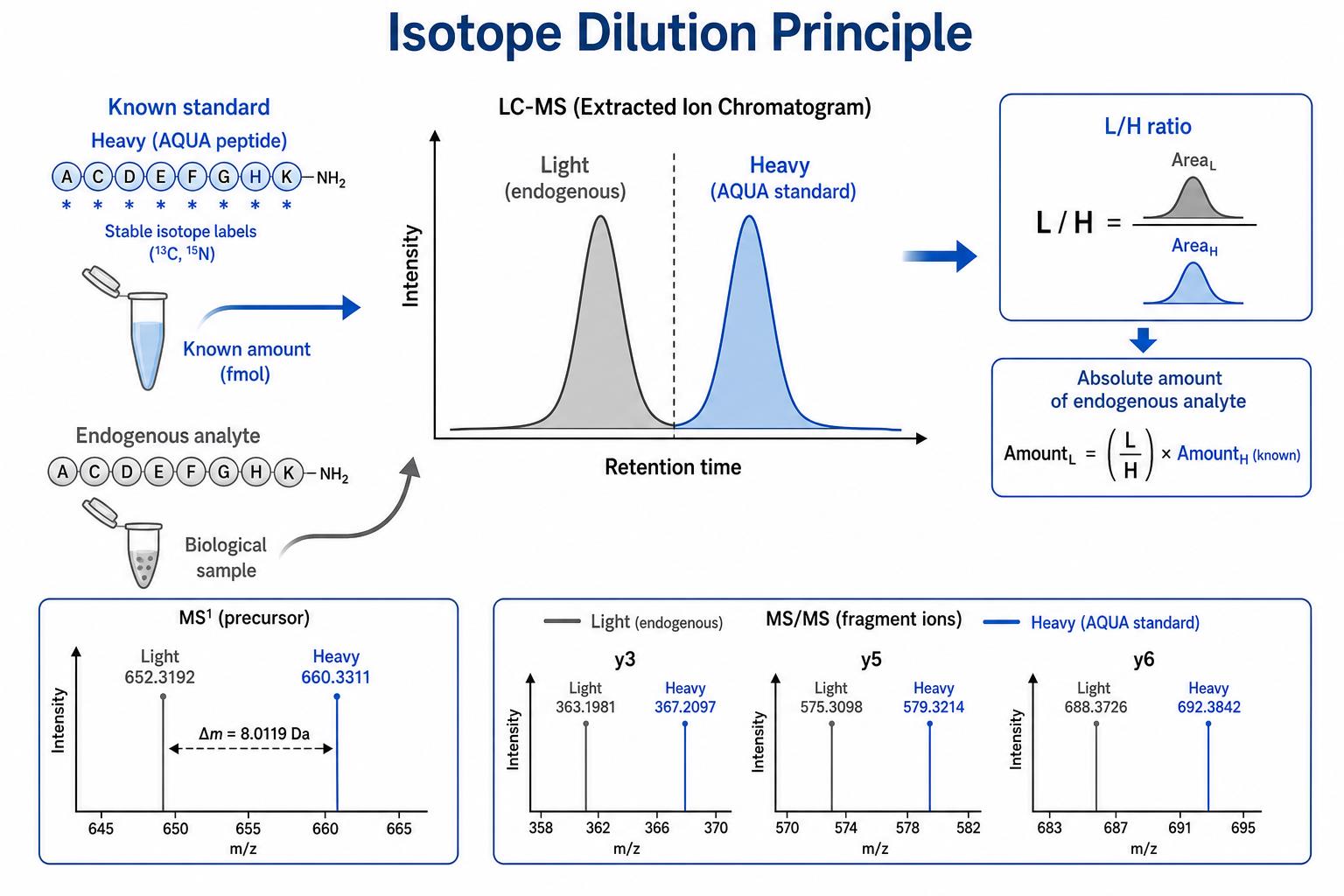
Figure 2. A known amount of AQUA peptide spiked into sample enables light-to-heavy ratio measurement and absolute amount calculation.
Spike level matters. If the heavy peak is too low, ratio precision suffers. If it is too high, the light signal may be compressed or matrix effects may distort response. Spike optimization in the study matrix is usually part of assay development rather than a one-time guess.
Technical Advantages and Limitations
1. Technical Advantages
Defined quantitative anchor.
The AQUA peptide provides a known amount reference rather than relying on sample normalization alone.
Isotope dilution precision.
Stable isotope labeling reduces ionization bias between standard and analyte when acquisition is optimized.
Compatibility with MRM and PRM.
AQUA peptides integrate cleanly into targeted panels when transitions or fragment ions are validated.
Multi-peptide scalability.
Separate AQUA peptides can support panel-level absolute quantitation when each surrogate is qualified.
2. Limitations
Requires sequence-matched synthesis.
Each target peptide needs a correctly labeled synthetic standard.
Purity and storage sensitivity.
Impurities or degradation can distort heavy-peptide signal and ratio stability.
Surrogate peptide assumptions.
Quantitation reflects the measured proteotypic peptide, not necessarily every isoform or modified form of the protein.
Matrix effects remain.
Suppression or recovery issues still require matrix pilot testing even with a high-quality AQUA peptide.
A precise but poorly chosen AQUA peptide sequence can still produce misleading absolute values if the surrogate does not represent the intended protein reliably in matrix.
Typical Applications
Researchers commonly use AQUA peptides in these settings:
-
Biomarker peptide quantitation. Report candidate protein surrogates in plasma or serum with defined units.
-
Biopharmaceutical product and impurity monitoring. Quantify product-related peptides against internal or regulatory limits.
-
Modified peptide quantitation. Support PTM site measurement when a labeled standard matches the modified sequence.
-
Multi-analyte targeted panels. Combine several AQUA peptides in one selective acquisition method.
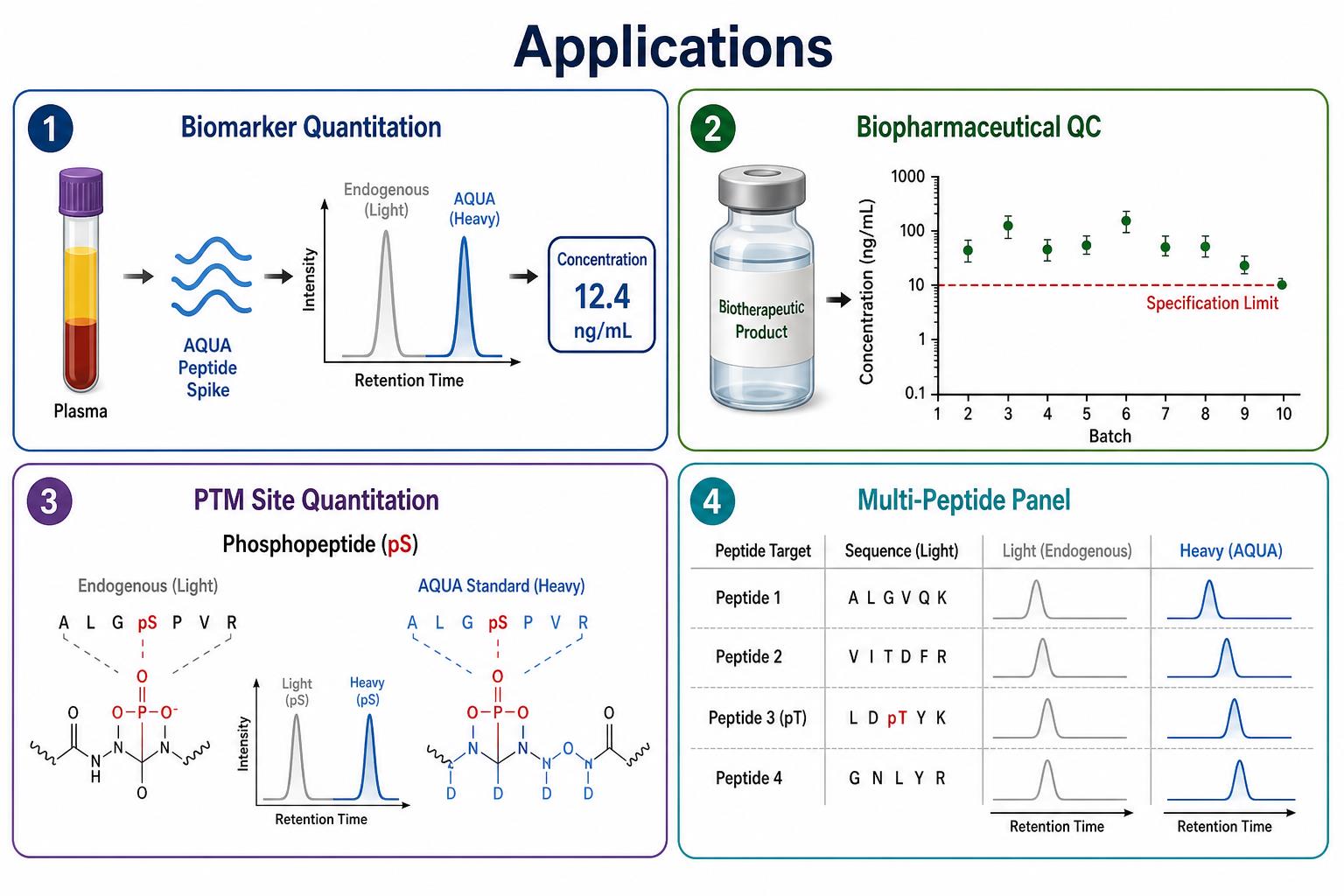
Figure 3. Biomarker quantitation, biopharmaceutical QC, and modified peptide measurement are common AQUA peptide applications.
Sample and Standard Requirements
Reliable AQUA peptide performance depends on standard quality and spike design at submission.
|
Requirement |
Why It Matters |
|---|---|
|
Exact sequence match to proteotypic peptide |
Ensures co-elution and valid ratio measurement |
|
Defined isotope labeling pattern |
Supports correct mass shift and fragment confirmation |
|
Purity and identity qualification |
Reduces impurity interference on heavy-peptide signal |
|
Spike level optimization |
Improves ratio precision across the sample range |
|
Spike timing decision |
Pre-digestion vs post-digestion changes what the assay measures |
|
Platform validation |
MRM or PRM performance must be confirmed in matrix |
Feasibility review before synthesis helps avoid ordering an AQUA peptide that the selected surrogate or matrix cannot support.
Expected Deliverables
Useful AQUA peptide project reports often include:
-
light and heavy peptide peak integration data
-
AQUA peptide sequence, labeling pattern, and spike amount summary
-
absolute amount or concentration tables with defined units
-
ratio precision and QC recovery summaries
-
comments on failed or borderline targets
Define reporting units during scoping. A regulated QC workflow may require full standard qualification documentation, while an exploratory screen may accept a narrower validation package tied to a single decision gate.
For multi-batch programs, include matrix control samples and midpoint QC levels from the start. Those controls reduce ambiguity when the same AQUA peptide must remain comparable across instrument runs.
Frequently Asked Questions
1. What is the difference between an AQUA peptide and a regular synthetic peptide?
An AQUA peptide incorporates stable isotopes at defined residues for isotope dilution quantitation. A regular synthetic peptide may serve as a retention time or unlabeled external standard but does not provide the same labeled-to-unlabeled ratio anchor.
2. Can one AQUA peptide quantify the whole protein?
The AQUA peptide quantifies the measured proteotypic surrogate. Whole-protein interpretation depends on surrogate choice, digestion behavior, and any modification or isoform differences.
3. Should the AQUA peptide be spiked before or after digestion?
Depends on assay design. Pre-digestion spiking tracks whole-protein recovery. Post-digestion spiking is common for peptide-level quantitation after consistent proteolysis.
4. Can AQUA peptides be used with PRM?
Yes. PRM can quantify fragment ions from both light and heavy peptides when interference control or confirmation requirements favor high-resolution acquisition.
5. How many AQUA peptides can one assay include?
Panel size depends on chromatography, cycle time, and platform. Feasibility review clarifies realistic multiplexing for a given matrix.
Conclusion
An AQUA peptide converts targeted LC-MS signal into known amounts by combining sequence-matched stable isotope labeling, controlled spike-in, and validated MRM or PRM acquisition. When absolute reporting matters more than relative fold change alone, the AQUA peptide provides the internal standard anchor required for concentration-level decisions.
For AQUA peptide design, synthesis support, and absolute quantitation workflows, MtoZ Biolabs provides Absolute Quantitative Analysis (AQUA) Service and AQUA Proteomics Service with feasibility review before standard ordering. Contact the technical team to evaluate target sequence, matrix, and reporting requirements before sample submission.
How to order?




