






AP MS: Key Features and Applications
Introduction
AP-MS appears in methods sections under many names: tagged interactome analysis, pull-down mass spectrometry, affinity purification LC-MS/MS. The shared idea is bait-centered enrichment followed by protein identification. What changes across projects is the application goal. A kinase neighborhood screen, a drug-response interactome, and an in vitro domain-binding survey do not need the same experimental features even when they all use AP-MS.
Selecting AP-MS for a project requires more than a generic feature list. Each application depends on specific capabilities such as matched controls, quantitative contrast, reproducible bait recovery, and validation-ready shortlist design. This article maps AP-MS features to common research applications so teams can judge which format fits the current bait, contrast, and downstream claim before samples are prepared.
What Counts as an AP-MS Feature?
In project planning, a feature is an experimental capability that changes what AP-MS can support. It is not a marketing label. Bait-centered enrichment concentrates proteins associated with a defined bait before LC-MS/MS, making low-abundance partners easier to detect than in unfractionated lysate analysis. Control-based specificity filtering compares bait purifications with negative controls or related background models, converting identifications into candidate interactors.
Quantitative or semi-quantitative contrast ranks prey recovery across baits, mutants, treatments, or time points, supporting differential interaction claims rather than presence-only lists. Matched replicate design repeats bait and control purifications under comparable chemistry, separating reproducible enrichment from sporadic background. Flexible bait format support adapts capture to tagged constructs, antibody enrichment, or immobilized recombinant baits, changing which application types are feasible in the current biological system. Understanding AP-MS features in this sense helps teams ask whether the planned experiment actually uses the capabilities their application requires.
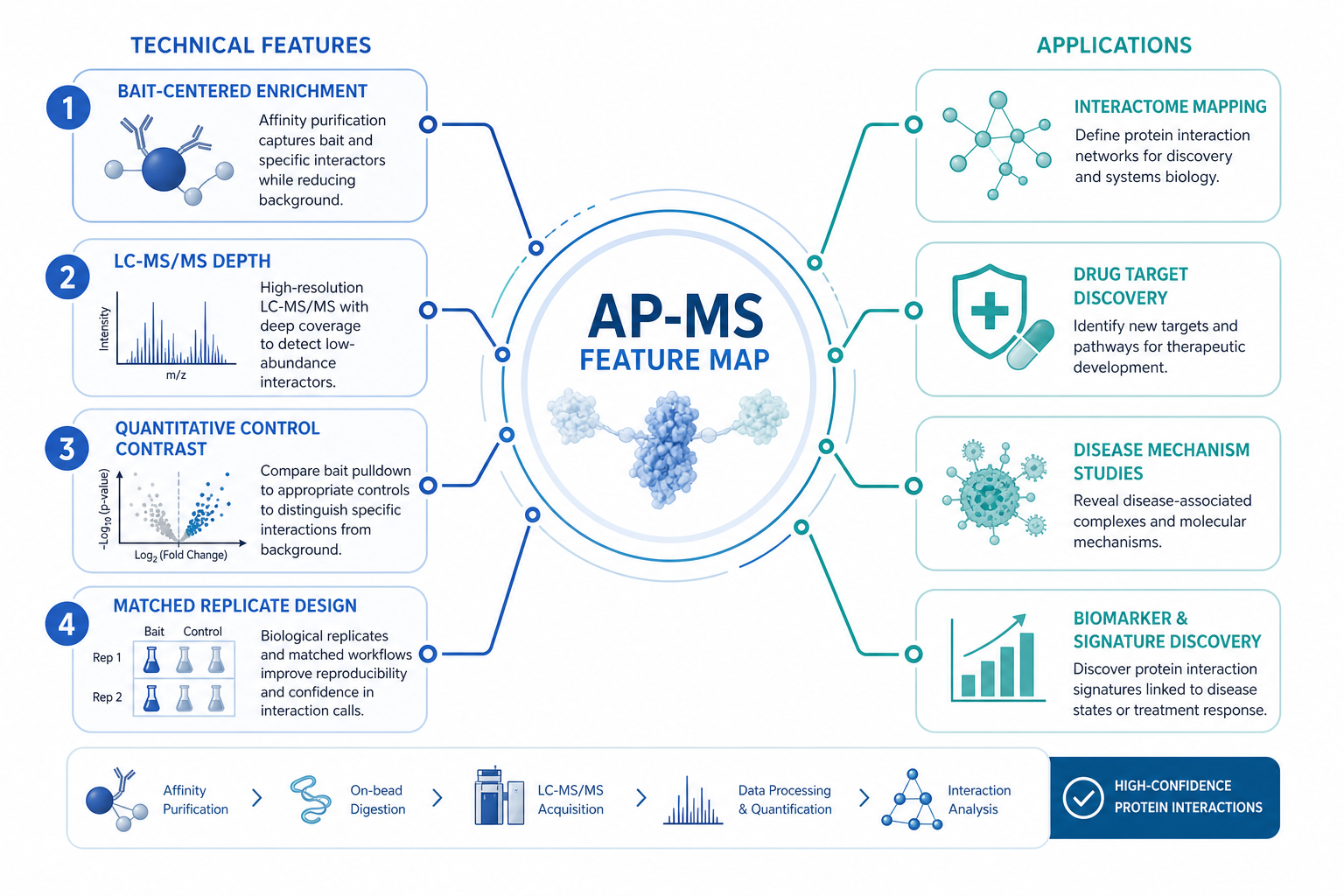
Figure 1. AP-MS application value depends on enrichment, MS readout, control contrast, and replicate structure working together.
Core AP-MS Features and the Applications They Enable
Each feature supports specific application types, and none of them alone defines a complete interaction study. Enrichment before MS supports discovery of proteins associated with a bait in complex lysate or extract, which pathway neighborhood mapping and complex component surveys rely on. Control contrast supports filtering of bead binders, tag-associated proteins, and abundant contaminants, and any application that will produce a candidate shortlist depends on this feature.
Quantitative comparison supports mutant, treatment, and time-course interaction analysis. Drug-response interactomes and wild-type versus mutant bait studies rely on this feature more than single-bait discovery alone. Replicate structure supports defensible ranking when many prey proteins are identified, and multi-bait panels and comparative interactome projects depend on it for interpretable output. Format flexibility supports tagged-cell workflows, endogenous antibody capture when available, and in vitro binding screens with immobilized bait domains, so application choice often starts with which bait format is biologically acceptable. These features explain why two AP-MS projects can share a method name yet require very different designs.
Application Scenarios and Required Feature Priorities
Different research goals place different demands on AP-MS design.
Pathway neighborhood mapping around a signaling bait
The goal is to nominate proteins associated with one bait under a defined condition. Enrichment and control filtering are the highest-priority features, and quantitative contrast matters when stimulation or inhibition arms are included. This application is a strong AP-MS fit when bait recovery is robust and empty-tag or equivalent controls are available.
Wild-type versus mutant bait comparison
The goal is to identify partners that depend on a specific bait surface, domain, or mutation. Quantitative contrast and matched bait expression are essential, and replicate design is critical because small recovery shifts can look like biology if bait levels differ. This application requires paired construct chemistry rather than unrelated one-off purifications.
Drug-response or stimulus-dependent interactome analysis
The goal is to detect interaction remodeling after compound treatment or activation. Matched purifications across treatment arms, vehicle controls, and quantitative review are essential features. Timing and bait recovery consistency often determine whether observed prey changes are interpretable.
Complex or machinery component survey
The goal is to identify proteins that copurify with a tagged subunit of a known machinery. Native-like lysis and control filtering are central. The application supports component nomination, but complex membership claims still require careful wording and often orthogonal support.
In vitro binding partner screen
The goal is to identify proteins that bind an immobilized bait domain or recombinant protein in a controlled buffer. Background control design and buffer specificity matter more than cellular context. This application can be efficient for focused binding discovery but may not represent in vivo interaction neighborhoods.
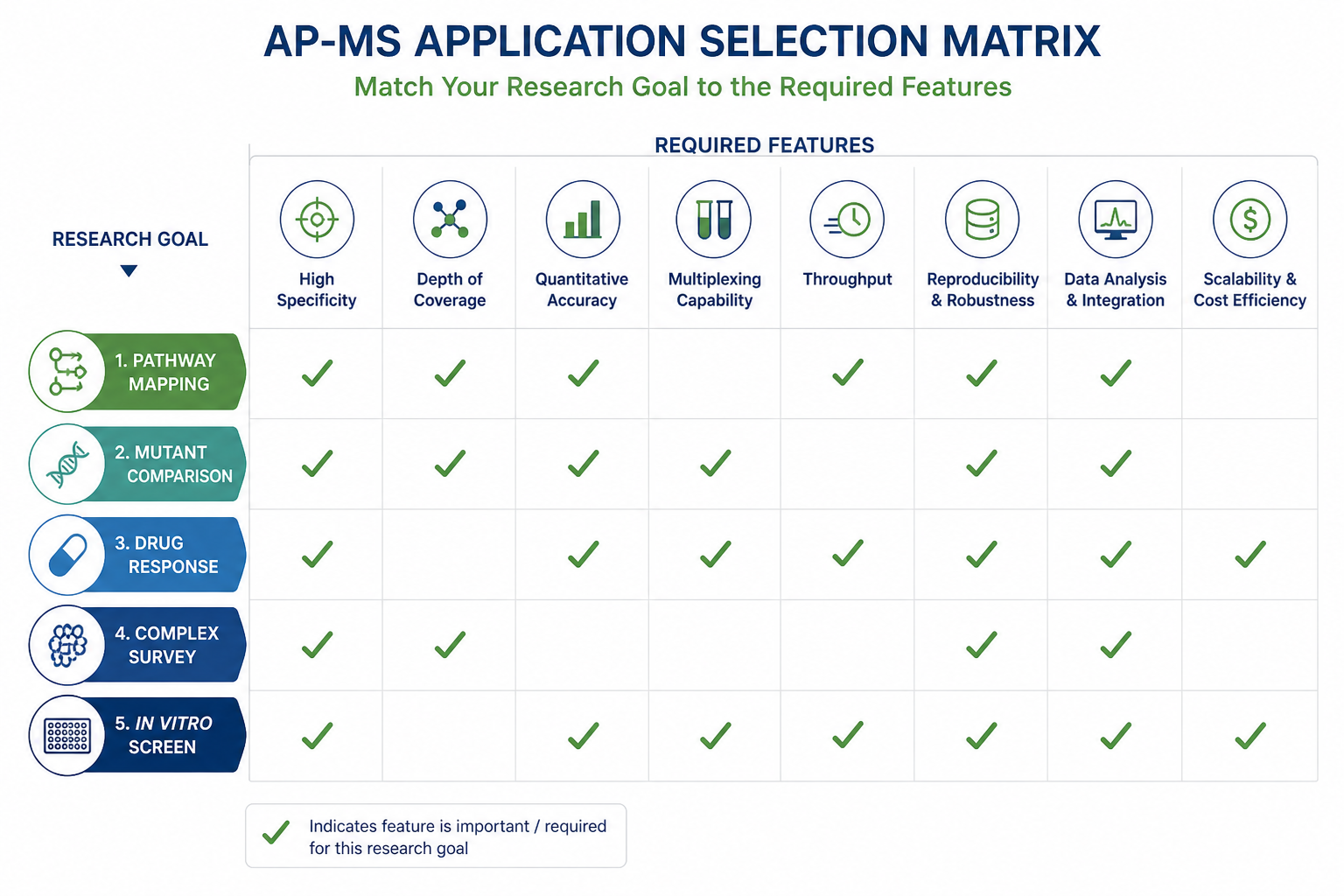
Figure 2. AP-MS application choice depends on which features are essential for the current bait and biological contrast.
Matching Features to Applications
The table links common AP-MS applications to the features that most strongly affect success. It supports method selection, not protocol copying.
|
Application |
Highest-priority features |
Typical control |
Main limitation |
|---|---|---|---|
|
Pathway neighborhood mapping |
Enrichment, control filtering |
Empty-tag or bead-only |
Co-enrichment is not direct binding proof |
|
Mutant bait comparison |
Quantitative contrast, matched expression |
Matched empty-tag control |
Expression differences mimic interaction loss |
|
Drug-response interactome |
Treatment contrast, matched chemistry |
Vehicle-treated control |
Bait recovery drift across arms |
|
Complex component survey |
Native-like enrichment, control filtering |
Bead-only or tag control |
One subunit may not capture full machinery |
|
In vitro binding screen |
Buffer-specific specificity, focused bait |
Bait-free resin |
May not reflect cellular interaction context |
Use the table to decide whether AP-MS is configured for the intended application or only for generic protein identification after pull-down.
When AP-MS Features Do Not Match the Application Goal
Some project goals expose AP-MS limits early. If the application requires endogenous bait in primary tissue and tagging is unacceptable, antibody-based IP-MS may fit better than tagged AP-MS when a suitable capture antibody exists. If the application requires confirmation of one predefined partner, targeted Co-IP or pull-down validation may be more efficient than discovery-scale AP-MS.
If the application requires direct binding proof for publication or mechanism claims, AP-MS can generate candidates but orthogonal validation remains necessary regardless of feature quality. If the application requires transient or weak interactions that are unlikely to survive stringent washing, standard AP-MS enrichment may under-recover the partners of interest unless the capture design is adjusted with that risk in mind. Feature quality cannot overcome a mismatched application choice.
Affinity Purification-Mass Spectrometry Service
MS-Based Protein-Protein Interaction Analysis Service
Related Services
Alternative
IP-MS Protein Interactomics Analysis Service
Use when the application requires endogenous bait capture and a validated antibody is available.
Complementary
Co-Immunoprecipitation Protein Interaction Analysis Service
Use after AP-MS candidate nomination when the application moves from discovery to targeted validation.
Next Step
Affinity Purification-Mass Spectrometry Service
Review AP-MS scope and confirm which application format matches the current bait and contrast design.
What to Submit for Application-Focused AP-MS Review
Before requesting a quote or sample intake review, prepare application-specific project details. State the application goal in one sentence, such as mutant partner loss, drug-induced remodeling, or pathway neighborhood discovery. Identify the bait format and whether tagging or antibody capture is acceptable. List the comparison arms and the control type planned for each arm.
Note whether the deliverable must support discovery only or validation-oriented follow-up. Describe sample types and whether enrichments already exist or still need to be generated. MtoZ Biolabs can use this information to assess whether AP-MS features align with the intended application or whether a complementary workflow should be included from the start.
Frequently Asked Questions
1. What are the main applications of AP-MS?
Common applications include pathway neighborhood mapping, mutant bait comparison, drug-response interactome analysis, complex component surveys, and in vitro binding partner screens. Each application depends on different feature priorities such as controls, quantitation, and replicate design.
2. Is AP-MS only useful for discovery projects?
No. AP-MS is widely used for discovery, but comparative applications such as mutant or treatment contrasts also depend on AP-MS when quantitative enrichment review is required. Confirmation of individual partners usually moves to targeted Co-IP or related assays.
3. Which AP-MS feature matters most?
It depends on the application. Discovery mapping prioritizes enrichment and control filtering. Mutant or drug-response studies prioritize quantitative contrast and matched bait recovery across arms.
4. Can AP-MS replace IP-MS for every application?
No. AP-MS is often preferred for tagged-bait and systematic comparative designs. IP-MS may fit better when endogenous bait capture is required and antibody performance supports the application.
5. Do all AP-MS applications need the same controls?
No. Empty-tag controls are common for tagged baits. Bead-only, isotype, vehicle-treated, or unrelated bait controls may be required depending on the application and capture format.
Conclusion
AP-MS features and applications should be selected together. Enrichment, control filtering, quantitative contrast, replicate design, and bait-format flexibility each support different research goals. Pathway mapping, mutant comparison, drug-response interactome analysis, complex surveys, and in vitro screens all use AP-MS, but they do not use the same design priorities.
The practical decision is whether the planned AP-MS setup includes the features your application requires. When the answer is unclear, compare the goal against control design, contrast structure, and validation needs before committing samples. Researchers ready to match AP-MS features to a specific application can review the Affinity Purification-Mass Spectrometry Service page or contact MtoZ Biolabs with bait details, application goal, and planned comparison arms.
How to order?




