






Antibody Glycosylation in Inflammation, Disease and Vaccination
Introduction
Antibody glycosylation is increasingly recognized as a dynamic immune variable rather than a static molecular detail. IgG Fc glycan profiles can shift during infection, chronic inflammation, cancer-associated immune states, pregnancy, aging, and after vaccination. Two individuals with similar antigen-specific antibody titers may differ in Fc glycan structure and therefore in effector potential, immune complex handling, and inflammatory signaling.
Antibody glycosylation in inflammation, disease, and vaccination refers to the study of glycan structures on immunoglobulins, especially IgG, in contexts where immune activation, pathology, or vaccine response modifies glycosylation patterns. Fc N-glycans at Asn297 can influence Fc receptor binding, complement activation, and lectin-mediated pathways that shape inflammatory outcomes. Vaccination can induce antigen-specific antibody responses whose glycosylation matures over time as germinal center reactions, cytokine environments, and B cell selection dynamics evolve.
For immunology, translational, and vaccine research teams, understanding antibody glycosylation in these settings helps explain how glycan profiling complements titer measurement, why glycan biomarkers are explored in disease monitoring, and which analytical workflows are needed for longitudinal human studies.
What Antibody Glycosylation Means in Inflammatory and Vaccine Contexts
In inflammation, disease, and vaccination research, antibody glycosylation focuses on how glycan structures on IgG and related immunoglobulins change with immune state. The central question is not only which antigens antibodies recognize, but how Fc glycan composition modulates effector function in active immunity.
Inflammatory states can alter the glycosylation machinery in B cells and plasma cells, producing IgG populations with shifted galactosylation, sialylation, fucosylation, or high-mannose content. Disease-associated immune activation may therefore produce glycan signatures that differ from healthy baseline profiles.
Vaccination induces de novo antigen-specific antibody responses that develop over weeks to months. Early vaccine-induced IgG may differ glycosylatically from later memory-phase antibodies as affinity maturation and class switching proceed. Glycan profiling can therefore add functional context to vaccine immunogenicity assessment beyond binding titer alone.
Antibody glycosylation in this context connects humoral immunity with biophysical effector modulation. It is studied in infection, autoimmune and inflammatory disease, cancer-associated immunity, metabolic and chronic disease cohorts, and post-vaccination serology programs.
Why Antibody Glycosylation Matters in Inflammation and Disease
IgG is the most abundant immunoglobulin in serum and a major mediator of effector responses through Fc receptors and complement. Glycan structure can shift those responses toward pro-inflammatory or anti-inflammatory profiles even when antigen specificity is unchanged.
Antibody glycosylation matters in inflammation and disease for several reasons.
Effector modulation can influence macrophage activation, neutrophil recruitment, immune complex clearance, and tissue inflammation during infection or chronic disease.
Disease-associated glycan shifts have been reported across inflammatory, infectious, autoimmune, and cancer-associated immune settings, supporting interest in glycan profiling as a complementary immune readout.
Treatment and recovery monitoring may benefit when glycan features change with disease activity, remission, or therapy in selected cohorts.
Mechanistic immunology uses glycan differences to study how cytokine environment and B cell biology shape humoral effector function.
Therapeutic antibody development also draws on this knowledge because Fc glycosylation engineering can tune effector activity in products used to treat inflammatory disease or enhance vaccine-adjacent immune strategies.
Glycosylation does not explain all immune pathology. T cell help, innate activation, complement regulation, and tissue context all contribute. However, Fc glycan structure is now widely viewed as a modulator of inflammatory antibody function.
Common Glycan Features Studied in Inflammatory and Disease Cohorts
Research across inflammatory and disease settings often examines a recurring set of IgG glycan attributes.
Galactosylation changes
Terminal galactose content on Fc glycans is one of the most frequently studied features. Reduced galactosylation, often described as agalactosyl IgG, has been associated with active inflammation in multiple disease contexts. Increased galactosylation may appear during recovery or in less inflammatory immune states depending on cohort and timing.
Sialylation changes
Terminal sialic acid on IgG Fc glycans has been linked to anti-inflammatory effector signaling in experimental systems. Low sialylation has been observed in inflammatory states and may contribute to pro-inflammatory Fc profiles in selected settings. Sensitive analytical methods are often required because sialylated glycoforms can be low in abundance.
Fucosylation variation
Core fucose content modulates Fc gamma receptor IIIa binding and antibody-dependent cellular cytotoxicity. Fucosylation has been studied in infection, vaccination, and disease-associated IgG subsets where effector cell engagement is relevant.
High-mannose and broader glycoform shifts
High-mannose and hybrid glycan content may change with B cell activation state and acute immune responses. Broader glycoform profiling captures shifts that extend beyond one terminal sugar feature and supports comparison across time points or treatment groups.
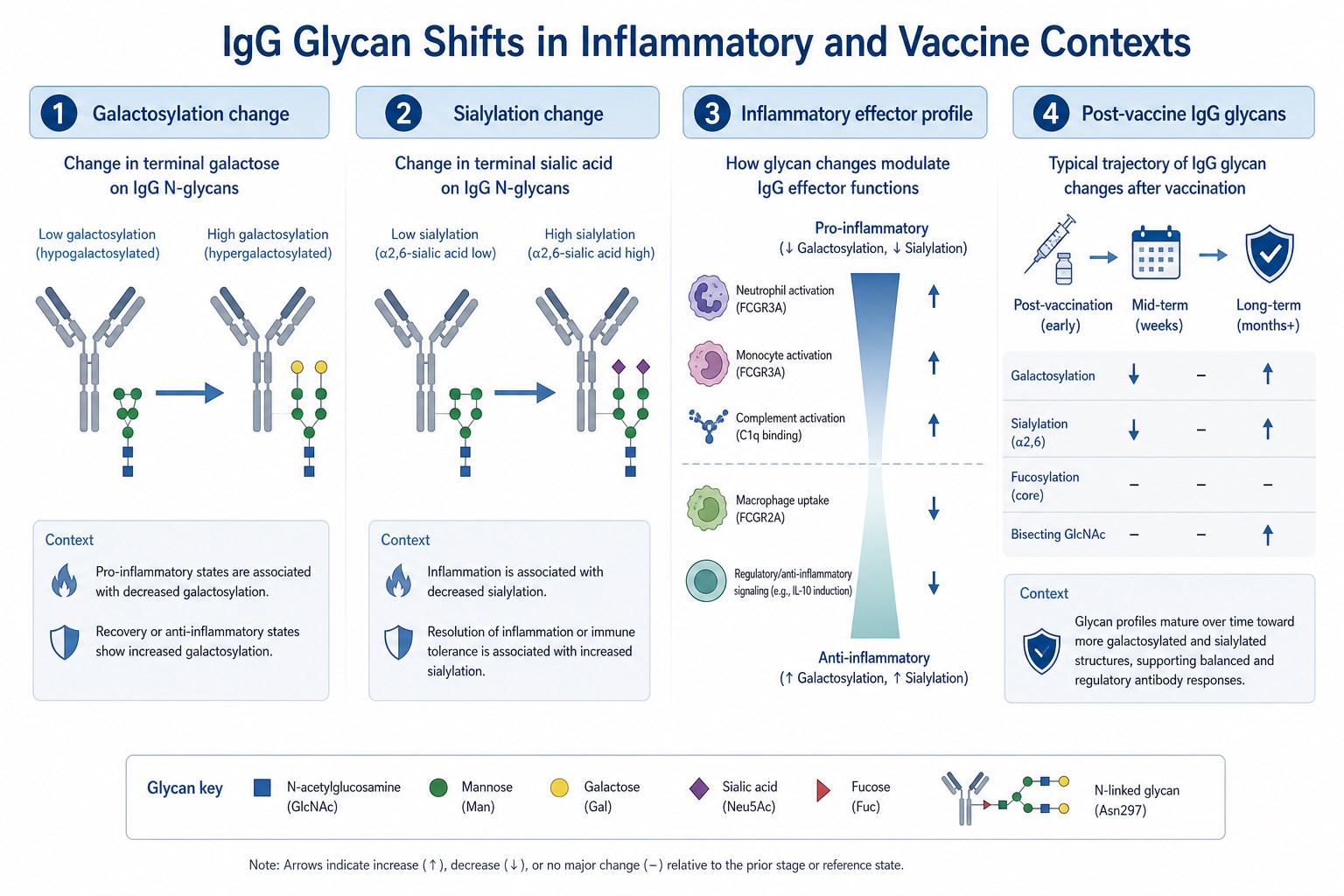
Figure 1. Inflammatory and vaccine-associated IgG populations may show glycan shifts in galactosylation, sialylation, and broader Fc glycoform profiles.
Antibody Glycosylation in Disease Settings
Antibody glycosylation has been studied across a wide range of disease contexts beyond any single diagnostic category.
Infection and acute immune activation
Acute infection can remodel IgG glycosylation as part of the broader immune response. Pathogen-specific and total IgG glycan profiles may shift during illness and convalescence. Glycan analysis can complement serology when effector quality of the antibody response is under study.
Chronic inflammatory and autoimmune disease
Chronic inflammation in rheumatoid arthritis, inflammatory bowel disease, systemic lupus erythematosus, and related conditions has been associated with altered IgG glycosylation. Glycan features may track disease activity or treatment response in selected cohorts, although validation requirements remain substantial.
Cancer-associated immunity
Tumor-associated immune environments can influence B cell glycosylation patterns and produce disease-associated IgG glycan signatures in research cohorts. Glycan profiling may add context to studies of humoral immunity in oncology and immunotherapy settings.
Metabolic, aging, and other chronic states
IgG glycosylation changes have also been reported in aging, pregnancy, and metabolic disease research. These settings highlight that antibody glycosylation reflects systemic immune and physiological state rather than pathology alone.
Disease context strongly affects interpretation. Glycan associations must be evaluated with attention to comorbidity, treatment, sampling time, and whether total IgG or antigen-specific antibodies are analyzed.
Antibody Glycosylation in Vaccination
Vaccination provides a defined immunological stimulus that makes antibody glycosylation especially informative in longitudinal studies.
Early versus mature vaccine responses
Early vaccine-induced antibodies may differ glycosylatically from later memory-phase responses. As germinal center reactions proceed, affinity maturation and changes in B cell selection environment can alter Fc glycan processing on antigen-specific IgG.
Effector quality beyond titer
Vaccine immunogenicity is often measured by binding titer or neutralization, but glycan profiling can assess effector potential of the induced antibody population. This is relevant when Fc-mediated functions such as antibody-dependent cellular cytotoxicity or complement activation may contribute to protection.
Booster and repeat vaccination
Booster doses can change the magnitude and glycosylation profile of recall responses. Serial glycan profiling before and after primary series or boosters helps characterize how repeated antigen exposure shapes humoral effector quality.
Vaccine platform comparisons
Different vaccine platforms may induce antigen-specific antibodies with distinct glycosylation patterns depending on adjuvant, delivery route, and immune context. Glycan profiling can therefore support comparative immunology studies when standardized sampling and methods are applied.
Vaccination studies require careful temporal sampling because glycan profiles can evolve after the peak titer is reached.
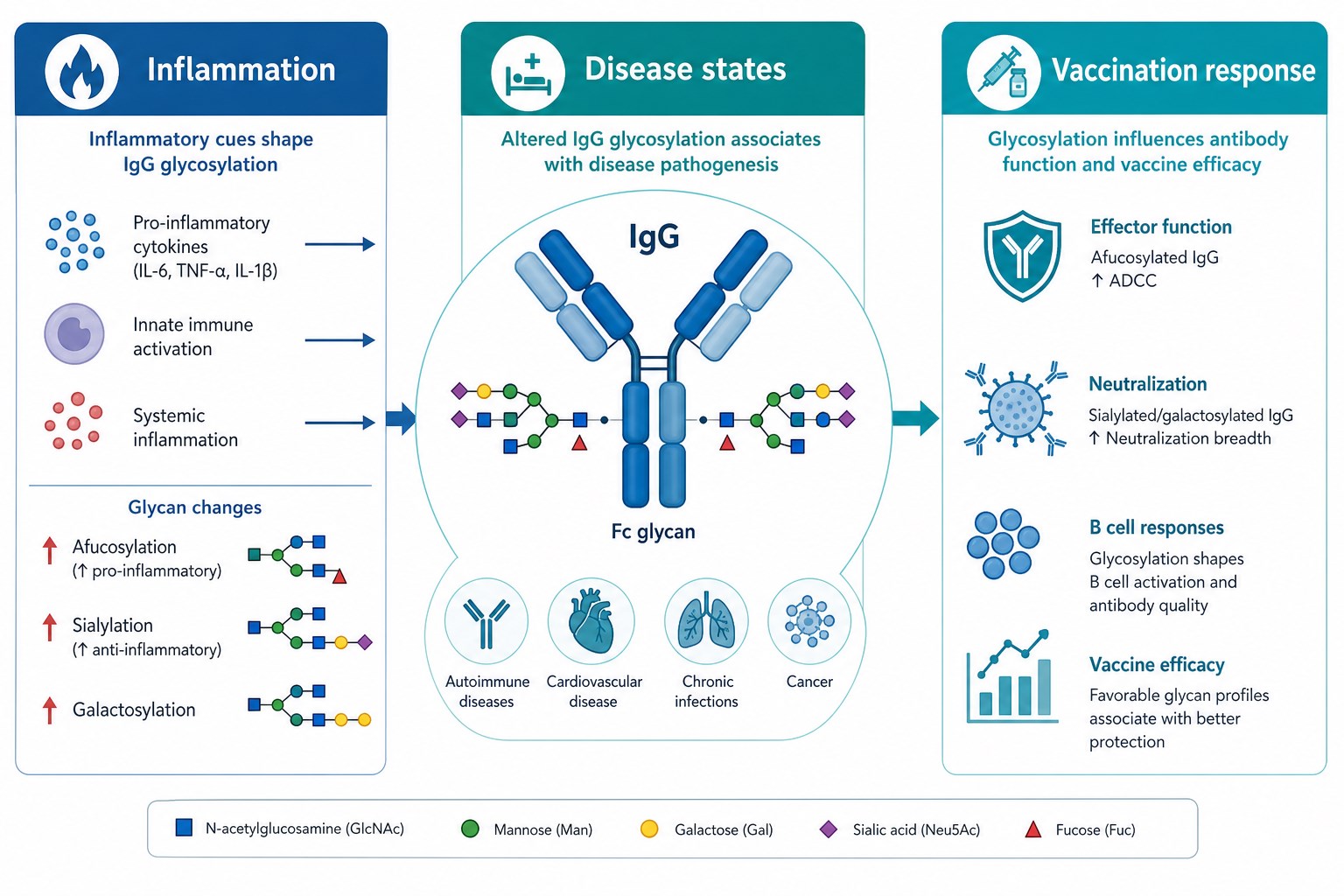
Figure 2. Antibody glycosylation research spans inflammation, disease-associated immune states, and vaccination-induced humoral responses.
Mechanistic Links Between Glycosylation and Inflammatory Effector Pathways
Antibody glycosylation can influence inflammation through several Fc-dependent and glycan-lectin pathways.
Fc gamma receptor engagement on myeloid cells can promote phagocytosis, cytokine release, and tissue inflammation when IgG immune complexes are present. Glycan structure modulates receptor binding and activation threshold.
Complement activation through the classical pathway may be affected by IgG glycan features including galactosylation status, influencing immune complex clearance and local inflammation.
Sialylated IgG has been explored in relation to anti-inflammatory Fc signaling through lectin and related pathways in experimental systems, providing a mechanistic framework for glycan-function studies.
Immune complex behavior including deposition, clearance rate, and cellular uptake depends on both antibody specificity and Fc glycan context, linking glycan structure to tissue-level inflammatory outcomes.
Mechanistic claims require pairing glycan profiling with functional assays and appropriate controls because glycan effects can vary by subclass, antigen density, and local tissue environment.
Research Workflow for Inflammation, Disease, and Vaccination Studies
Studying antibody glycosylation in these settings requires cohort design and analytical planning matched to the biological question.
Cohort definition should document diagnosis, vaccination history, disease activity, treatment status, and sampling time because each factor can influence IgG glycosylation. Longitudinal designs are especially valuable in vaccination and recovery studies.
Sample selection may use serum, plasma, total IgG, or antigen-specific antibody fractions depending on whether population-level or antigen-focused glycan analysis is required.
Serial sampling captures glycan evolution after infection, flare, treatment initiation, or vaccination. Single time-point studies may miss dynamic glycan maturation.
Glycan profiling may use released N-glycan analysis for population comparisons, glycopeptide LC-MS/MS for site-specific Fc assignment, or intact IgG glycoform review when appropriate for the sample type.
Immune correlation links glycan features with titer, neutralization, cytokine profiles, cell-mediated readouts, or clinical endpoints when translational relevance is the goal.
Translational readout evaluation determines whether glycan associations are exploratory biomarker signals or candidates for further validation in larger cohorts.
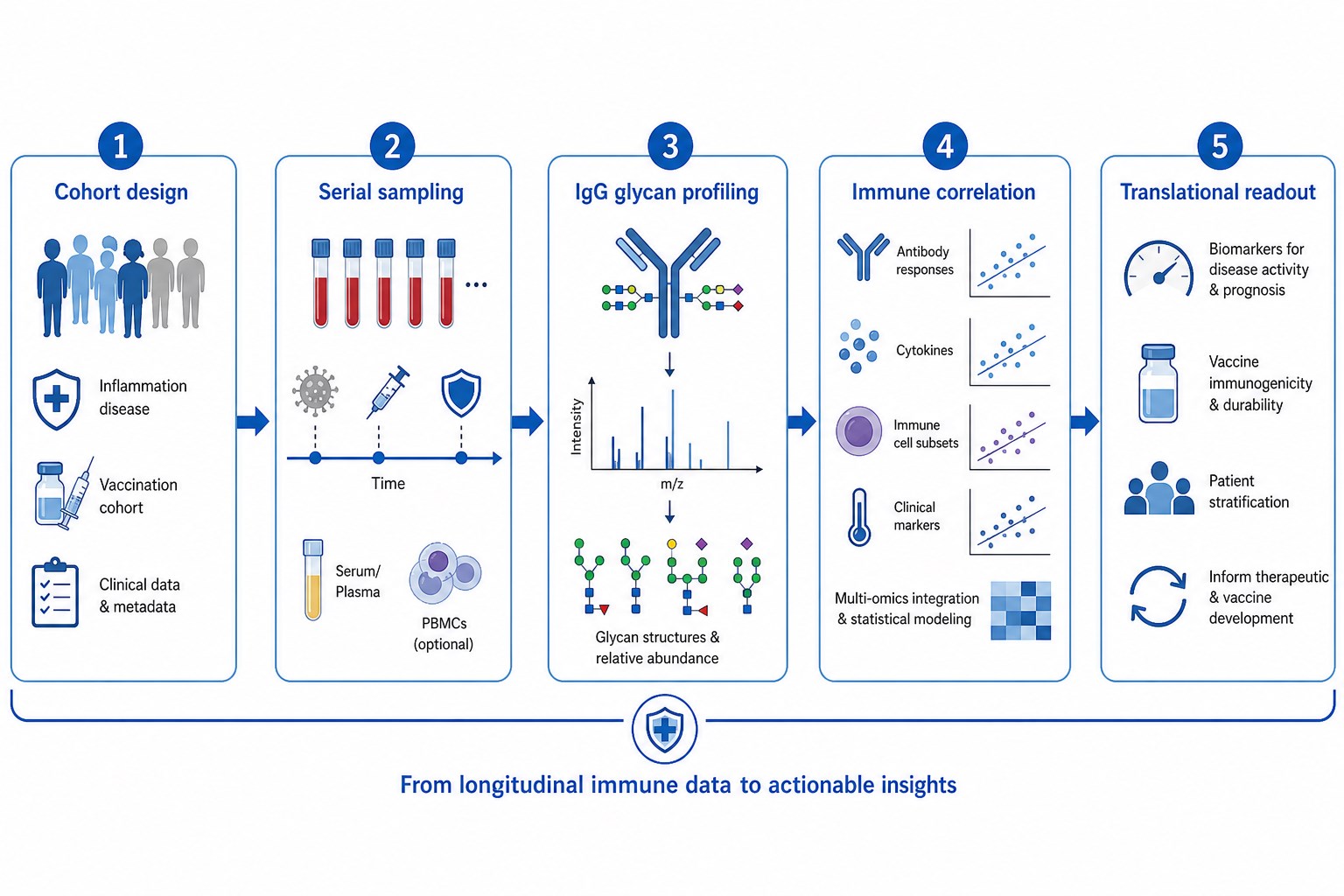
Figure 3. Studies of antibody glycosylation in inflammation, disease, and vaccination typically include cohort design, serial sampling, glycan profiling, immune correlation, and translational interpretation.
Related Services
Protein Glycosylation Analysis Service
Glycosylation Site Analysis Service
Comprehensive Glycosylation Analysis Service
Protein Drug Glycosylation Analysis Service
Research teams studying antibody glycosylation in inflammation, disease, or vaccination can consult MtoZ Biolabs to review sample strategy, longitudinal design, and glycan profiling depth for the study goal.
Analytical Approaches by Study Context
Different study contexts favor different analytical emphasis.
|
Study Context |
Common Analytical Focus |
Typical Workflow Emphasis |
|---|---|---|
|
Acute inflammation or infection |
Total IgG glycan shift |
Released glycan profiling with serial samples |
|
Chronic disease monitoring |
Disease activity association |
Quantitative IgG glycan comparison across visits |
|
Vaccine immunogenicity |
Antigen-specific effector quality |
Antigen-specific enrichment plus glycan profiling |
|
Recovery or remission |
Normalization of glycan features |
Longitudinal comparison to baseline |
|
Translational biomarker discovery |
Correlation with clinical endpoints |
Standardized profiling with cohort metadata |
Total IgG profiling captures systemic immune state but may dilute antigen-specific signals. Vaccine studies often benefit from antigen-specific enrichment when sample volume and assay feasibility allow.
Core Research Value and Current Limitations
Core Research Value
Adds effector context to serology and vaccine readouts.
Glycan profiling complements titer and neutralization by describing Fc functional potential.
Supports longitudinal immune monitoring.
Serial glycan data can track maturation after vaccination or changes during disease course.
Links humoral immunity with biophysical modulation.
Glycosylation analysis connects clinical immunology to Fc effector mechanism research.
Enables cross-study comparison when methods are standardized.
Documented workflows improve reproducibility across inflammation and vaccine cohorts.
Informs therapeutic antibody design in inflammatory medicine.
Disease-associated glycan biology supports rational Fc engineering in immunology therapeutics.
Current Limitations
Cohort heterogeneity complicates interpretation.
Treatment, comorbidity, timing, and prior immunity confound glycan associations.
Antigen-specific analysis can be sample-intensive.
Enrichment of vaccine-induced or pathogen-specific antibodies requires adequate volume and robust workflows.
Functional translation is not automatic.
Observed glycan shifts require validation before biomarker or mechanistic claims are extended.
Subclass diversity adds complexity.
IgG subclass distribution varies across responses and affects glycan interpretation.
Harmonization across laboratories remains incomplete.
Method differences can limit cross-study comparison unless protocols are aligned.
Implications for Vaccine Research and Translational Immunology
Antibody glycosylation research in vaccination and disease has several translational implications.
Vaccine correlates of protection research may explore whether glycan features on induced antibodies add predictive value beyond titer in selected settings.
Precision immunology programs may use glycan profiling to stratify responders or characterize recall response quality after booster vaccination.
Biomarker discovery in inflammatory disease may incorporate IgG glycan signatures when replicated cohort data support association with activity or treatment response.
Therapeutic development in inflammatory medicine continues to use glycoengineering strategies informed by natural IgG glycan biology observed in disease and vaccination studies.
Teams should define whether glycan data will support hypothesis generation, immune monitoring, or validated biomarker development before selecting analytical depth.
Sample and Study Design Considerations
Inflammation, disease, and vaccination glycosylation studies should address several design factors early.
- study context: infection, chronic disease, cancer-associated immunity, or vaccination
- longitudinal versus cross-sectional sampling design
- sample matrix: serum, plasma, or purified IgG
- total IgG versus antigen-specific antibody analysis
- vaccination history, booster timing, and disease treatment at sampling
- required glycan attributes and need for functional follow-up
- storage, processing, and freeze-thaw consistency across cohorts
Incomplete metadata is a common source of irreproducible glycan associations in human immune studies.
Frequently Asked Questions
1. Why study antibody glycosylation in inflammation and disease?
IgG glycosylation can modulate inflammatory effector function, providing functional context beyond antibody titer or specificity alone.
2. How does vaccination affect antibody glycosylation?
Vaccination induces antigen-specific antibodies whose Fc glycan profiles can change as the humoral response matures over time after primary immunization or booster doses.
3. Which glycan features are most studied in inflammatory IgG?
Galactosylation, sialylation, fucosylation, and high-mannose content are among the most commonly studied Fc glycan attributes in inflammatory and disease cohorts.
4. Can glycan profiling improve vaccine immunogenicity assessment?
Glycan profiling can complement titer and neutralization by describing effector quality of induced antibodies, although study design and validation requirements determine translational utility.
5. What samples are used in these studies?
Serum and plasma are common. Purified total IgG or antigen-specific antibody fractions may be used when deeper subset analysis is required.
6. Which analytical methods are commonly applied?
Released glycan profiling, glycopeptide LC-MS/MS, and intact IgG glycoform analysis are widely used depending on whether global or site-specific glycan data are needed.
Conclusion
Antibody glycosylation in inflammation, disease, and vaccination examines how Fc glycan structures on IgG and related immunoglobulins change with immune activation, pathology, and induced humoral responses. Glycan features such as galactosylation, sialylation, and broader Fc glycoform shifts provide effector context that titer measurement alone may not capture, making glycan profiling increasingly relevant in infection research, chronic disease monitoring, and vaccine immunology.
Reliable studies depend on well-defined cohorts, appropriate longitudinal sampling, glycan profiling methods matched to the research question, and careful interpretation of glycan changes within biological and clinical context. As translational immunology continues to link Fc glycan structure with disease activity and vaccine response quality, standardized analytical support becomes essential. Research teams studying antibody glycosylation in inflammation, disease, or vaccination can contact MtoZ Biolabs to review sample strategy and glycan profiling scope for their program.
How to order?




