






Affinity Purification Mass Spectrometry (AP-MS)
Introduction
Protein interaction and complex biology projects often begin with a bait protein and a simple question. Which proteins associate with the bait under defined conditions? Which partners change after drug treatment, mutation, or stimulation? Which components copurify with a tagged fusion construct in cell lysate or in vitro? Affinity capture can enrich those candidates, but enrichment alone does not identify them at sequence level or distinguish specific binders from background contaminants.
Affinity purification mass spectrometry (AP-MS) combines bait-directed protein capture with LC-MS/MS identification and quantification of copurified proteins. The bait may be an antibody target, tagged recombinant protein, immobilized domain, or other affinity reagent. After binding, washing, and elution, enriched proteins are digested and analyzed by mass spectrometry to generate peptide evidence for interactor identification and comparative review across bait and control conditions.
This article explains what AP-MS is, how the workflow operates, how it differs from related interaction methods, and where it adds the most value in protein interaction research.
What AP-MS Is
AP-MS is an interaction proteomics workflow in which a bait protein or affinity reagent is used to enrich associated proteins from a complex sample, followed by mass spectrometry analysis of the enriched material.
The term affinity purification mass spectrometry is often used broadly for tagged pull-down MS, bait purification followed by LC-MS/MS, and related interaction discovery workflows. The common element is selective enrichment before MS rather than analysis of the entire proteome without prior capture.
AP-MS output is typically a list of proteins identified in the bait sample with comparison against one or more control purifications. Quantitative ratios, replicate consistency, and contaminant filtering are used to nominate likely interactors rather than treating every identified protein as a true binding partner.
AP-MS identifies candidate interaction partners. It does not by itself prove direct physical contact, binding affinity, or in vivo functional relevance without orthogonal validation.
How AP-MS Differs from Co-IP MS and General Proteomics
AP-MS is related to but not identical to other common workflows.
Co-immunoprecipitation MS often uses antibody capture of an endogenous or expressed target in cells or lysates. AP-MS is frequently used for tagged bait purification with recombinant or engineered constructs, although the boundary between the terms is not rigid in practice. Standard discovery proteomics analyzes unfractionated lysate or tissue without bait enrichment and is better suited to global composition or expression profiling. Pull-down MS is closely related and sometimes used interchangeably with AP-MS when a tagged bait is immobilized on beads and binding partners are recovered for MS analysis.
The distinguishing value of AP-MS is targeted enrichment of bait-associated proteins before LC-MS/MS, which increases the chance of detecting low-abundance interactors that would be masked in whole-proteome analysis.
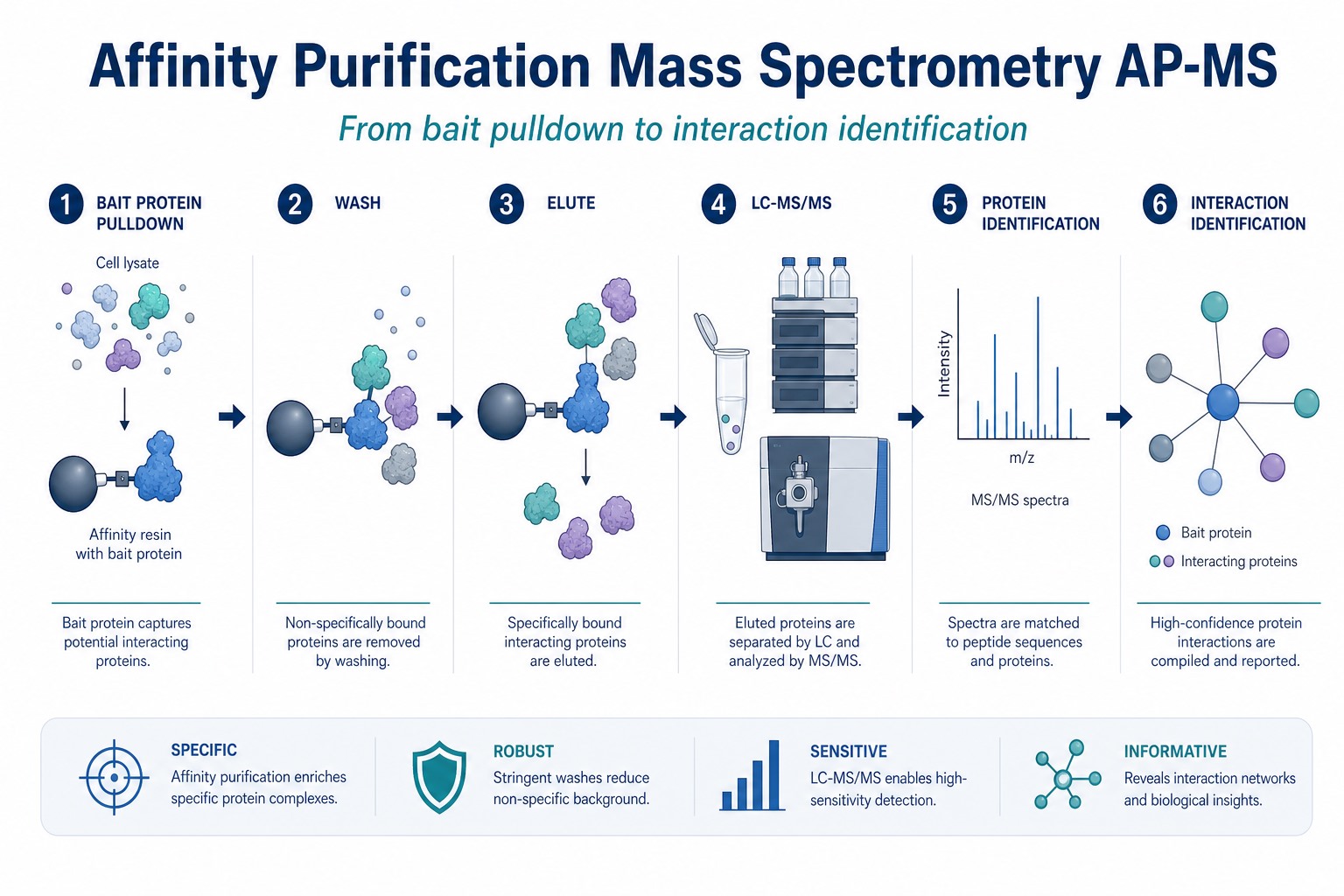
Figure 1. AP-MS links bait-directed affinity purification to LC-MS/MS identification of copurified proteins.
Why AP-MS Is Used in Interaction Proteomics
AP-MS is widely used because it connects selective biochemistry with sequence-level readout.
It can identify proteins that copurify with a bait under defined experimental conditions. It can compare bait purifications against empty vector, untagged control, or nonspecific antibody controls to reduce background. It can support drug target engagement studies when bait binding partners change after compound treatment. It can map subunits or associated factors in protein complexes when complex integrity survives purification conditions. It can generate candidate interactor lists for follow-up validation by Co-IP, pull-down, mutagenesis, or structural methods.
AP-MS is especially useful when the goal is discovery of associated proteins rather than confirmation of one predefined partner alone.
Standard AP-MS Workflow
A practical AP-MS workflow follows a linked sequence of steps.
Bait design defines the tagged construct, immobilization strategy, or antibody reagent and fixes control conditions before sample processing. Sample preparation generates lysate or binding material under conditions intended to preserve relevant interactions while limiting excessive nonspecific binding. Affinity capture incubates the bait with sample material and collects bound proteins on beads or resin. Washing removes weakly bound or nonspecific proteins using buffer stringency matched to the interaction type. Elution and cleanup release captured proteins in a form compatible with digestion and LC-MS/MS. Digestion and LC-MS/MS convert enriched proteins into peptides for identification and optional quantification. Data analysis compares bait and control purifications, applies false discovery rate filtering, and reviews candidate interactors against contamination databases and biological context.
Weak control design at the capture stage cannot be fully corrected later by advanced MS acquisition alone.
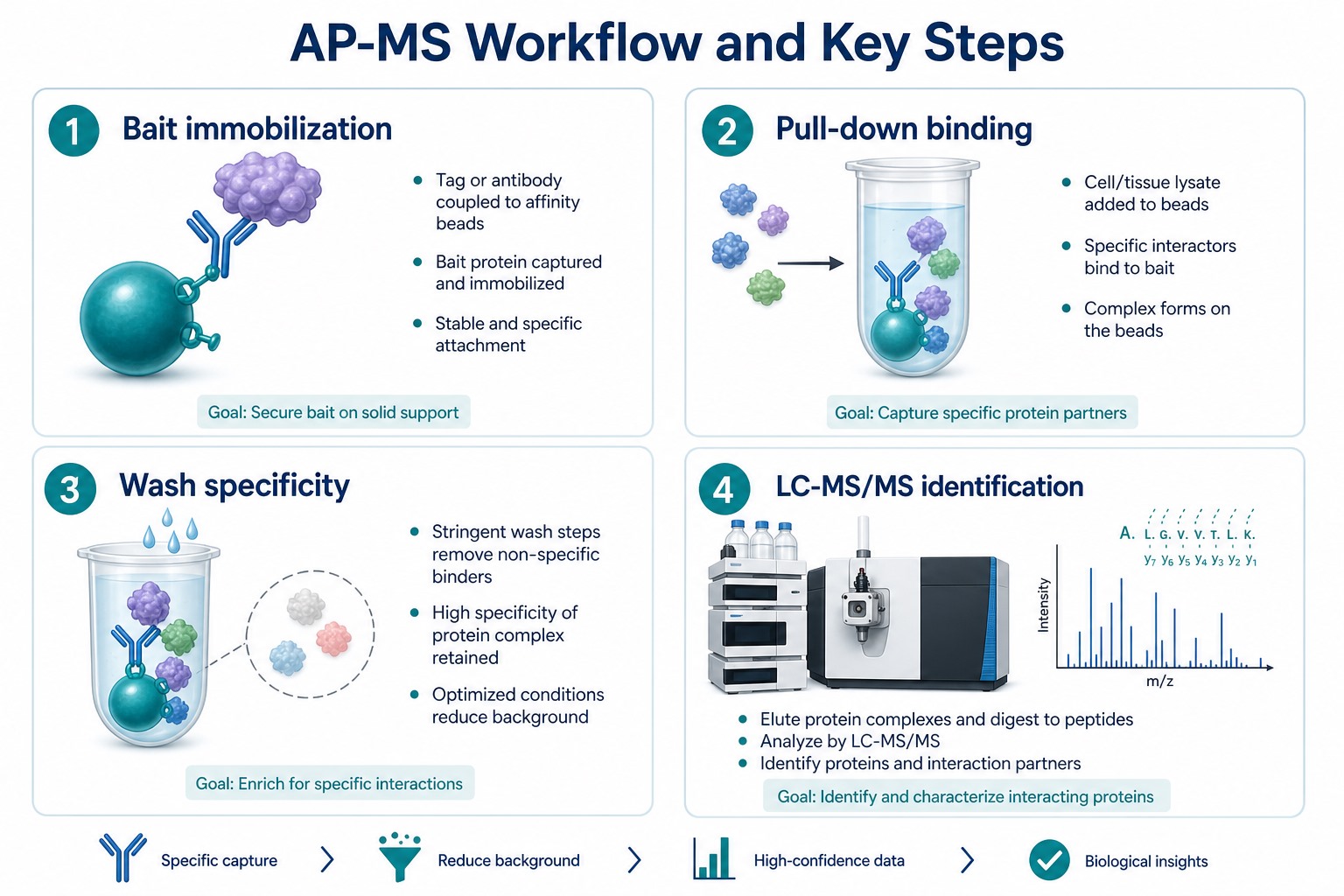
Figure 2. A standard AP-MS workflow includes bait capture, washing, elution, digestion, LC-MS/MS, and interactor review.
Related Services
Fusion Protein Interaction Analysis Service | Pull-Down and MS
Pull Down based Protein Analysis Service with Mass Spectrometry
Co-Immunoprecipitation Protein Interaction Analysis Service
LC-MS Analysis of Pull-down Proteins
Protein Identification Service
Researchers planning AP-MS or related interaction proteomics projects can consult MtoZ Biolabs to review bait design, control strategy, and LC-MS/MS analysis options matched to the study goal.
Controls and Specificity Review
AP-MS specificity depends heavily on control design.
Common controls include empty tag vector, untagged cell lysate, nonspecific antibody, and bead-only purifications. Replicate bait and control runs help separate reproducible interactors from stochastic background. Quantitative comparison improves specificity when bait-to-control ratios are reviewed rather than presence alone. Contaminant databases and literature-curated background lists help flag frequent false positives such as keratins, cytoskeletal proteins, and RNA-binding proteins.
A long interactor list without control contrast is one of the most common reasons AP-MS results appear informative yet fail validation.
AP-MS Format Selection by Study Goal
Different interaction questions favor different AP-MS setups.
|
Study Goal |
Typical AP-MS Format |
Key Control |
|---|---|---|
|
Tagged bait interactor discovery |
Affinity purification of fusion protein |
Empty tag vector |
|
Complex subunit mapping |
Tagged bait under native-like conditions |
Bead-only control |
|
Drug-induced interaction change |
Bait AP-MS with treatment groups |
Vehicle-treated control |
|
In vitro binding partner screen |
Recombinant bait pull-down |
Bait-free beads |
|
Antibody-targeted enrichment |
Antibody capture AP-MS |
Isotype control |
Bait and control choices should be defined before sample intake.
Core Technical Advantages and Current Limitations
Core Technical Advantages
Targeted enrichment before MS.
AP-MS increases detection opportunity for bait-associated proteins in complex backgrounds.
Sequence-level interactor identification.
LC-MS/MS provides peptide evidence rather than band-based estimates alone.
Comparative analysis across conditions.
Bait-control and treatment comparisons support specificity review.
Scalable discovery of associated proteins.
AP-MS can nominate many candidate partners in one experiment.
Current Limitations
Background binding remains common.
Nonspecific interactors require control and replicate review.
Indirect associations may copurify.
AP-MS identifies copurifying proteins, not necessarily direct binders.
Condition sensitivity.
Wash stringency, detergent, and lysis conditions affect which interactions survive.
Validation is still required.
Follow-up experiments are needed for direct interaction claims.
Applications in Protein Interaction Research
AP-MS supports several research and discovery applications.
Protein-protein interaction discovery identifies candidate partners of a bait protein in signaling, structural biology, or disease pathway studies. Complex mapping characterizes subunits and associated factors that copurify with tagged components. Target engagement studies compare interaction profiles after drug treatment or genetic perturbation. Biologics and fusion protein analysis reviews proteins associated with engineered constructs during development. Candidate validation pipelines use AP-MS lists to prioritize follow-up Co-IP, mutagenesis, or structural experiments.
Application fit depends on bait quality, control design, and whether the interaction type is expected to survive the purification conditions used.
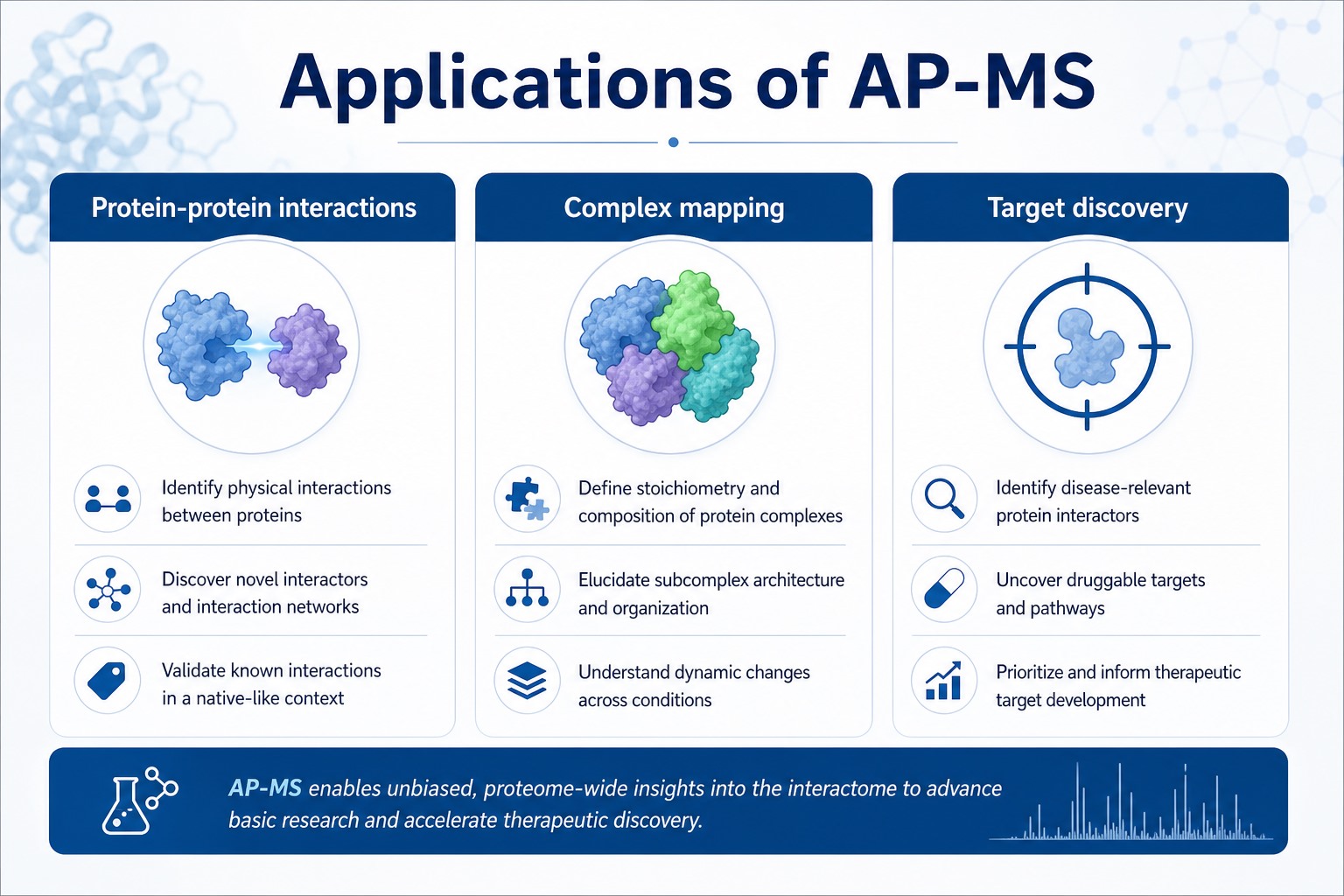
Figure 3. AP-MS supports protein interaction discovery, complex mapping, and target discovery workflows.
Expected Deliverables from an AP-MS Project
A useful AP-MS report should contain more than a protein name list.
Typical deliverables include identified proteins in bait and control purifications with peptide evidence. Quantitative bait-control ratios or comparative scores when replicate design supports them. A filtered interactor list separating likely specific binders from common contaminants. Method and control summaries documenting bait format, wash conditions, and analysis workflow. Optional follow-up recommendations for validation priorities based on specificity and biological context.
Reporting should distinguish candidate interactors from confirmed binding partners.
Frequently Asked Questions
1. What is AP-MS in simple terms?
It is a workflow that uses a bait protein to pull down associated proteins and then identifies them by mass spectrometry.
2. Is AP-MS the same as Co-IP MS?
They overlap, but AP-MS often emphasizes tagged bait purification, while Co-IP MS more commonly refers to antibody-based co-immunoprecipitation followed by MS.
3. Does AP-MS prove direct protein-protein interaction?
No. It identifies proteins that copurify with the bait. Direct binding requires additional validation.
4. What controls are essential for AP-MS?
Empty tag, bead-only, nonspecific antibody, or equivalent control purifications matched to the bait design.
5. What samples work best for AP-MS?
Cell lysates, tagged fusion expression systems, and in vitro binding setups with well-defined bait and control conditions.
Conclusion
Affinity purification mass spectrometry combines bait-directed enrichment with LC-MS/MS to identify proteins associated with a target protein or complex. It is a core tool in interaction proteomics because it converts complex samples into enriched protein pools that mass spectrometry can identify and compare across bait and control conditions. AP-MS is strongest when bait design, wash stringency, and control strategy are matched to the interaction question and when results are reported as candidate interactors rather than as confirmed direct binding events.
Programs that define controls and specificity criteria before AP-MS analysis obtain more actionable interactor lists and move more efficiently into validation. Researchers planning AP-MS or pull-down MS projects can contact MtoZ Biolabs to review bait format, control design, and LC-MS/MS analysis suited to their interaction study. For teams advancing from AP-MS discovery to validated interaction models, MtoZ Biolabs can also help connect enrichment output with follow-up interaction analysis workflows.
How to order?




