






Absolute vs Relative Protein Quantification
Introduction
Quantitative proteomics projects often fail at route selection because the reporting goal is unclear. A biomarker team may need protein concentration in ng/mL for a validation cohort. A pharmacology group may need fold-change comparison across treatment arms without a specification limit. A biopharmaceutical team may need ppm-level impurity reporting in one phase and relative pathway comparison in another. Each scenario requires a different balance of calibration effort, standard design, and reporting format.
Absolute protein quantification reports protein abundance in defined units through calibrated assays, commonly using stable isotope-labeled peptides such as AQUA (Absolute QUAntification) standards with selective MRM or PRM acquisition. Relative protein quantification compares abundance across samples using normalization strategies without anchoring every result to known calibrator amounts. Both routes can use targeted LC-MS workflows, but they answer different quantitative questions.
Choosing the wrong route can waste standards investment, delay decisions, and produce data that do not match the reporting need. Absolute quantitation is poorly suited when fold change alone is sufficient. Relative quantitation cannot support specification comparison when concentration units are required. The more suitable workflow is the one that matches reporting goal, matrix complexity, and whether calibrated concentration evidence is needed.
Related Services
Researchers comparing absolute and relative protein quantification can consult MtoZ Biolabs to review reporting goals, target list, and matrix requirements before assay development begins.
When Researchers Face This Decision
This comparison usually appears when a project must move from exploratory measurement toward a defined reporting format. Common scenarios include biomarker programs that must decide between cohort fold-change analysis and concentration reporting, biopharmaceutical teams comparing impurity limits with treatment-response panels, and pathway studies that later require specification-level documentation.
In each case, the practical question is whether the decision depends on concentration units or on relative abundance comparison across groups. Answering that question before standard synthesis or cohort submission reduces method mismatch and repeat analysis.
Typical decision scenarios include:
-
A specification or acceptance limit is predefined. Absolute protein quantification is usually the route to evaluate first.
-
The primary readout is fold change across conditions. Relative protein quantification is often sufficient.
-
A predefined panel is fixed, but reporting depth is still undecided. Targeted MRM or PRM can support either route after quantitation goal is defined.
-
The project may move from screening to specification reporting later. A staged relative-to-absolute plan may be required.
Four Comparison Dimensions That Matter Most
A useful comparison should focus on decision variables rather than generic platform preference.
1. Reporting Output
Absolute protein quantification reports concentration in defined units such as ng/mL, fmol, or ppm. Relative protein quantification reports abundance ratios, fold change, or normalized panel values across samples.
2. Calibrator Requirement
Absolute workflows require known standard amounts, calibration design, and QC review. Relative workflows can use normalization strategies without full concentration calibration.
3. Study Stage
Absolute quantitation fits validation, QC, specification testing, and cross-study alignment. Relative quantitation fits comparative studies, pathway tracking, and staged screening before calibrated reporting is required.
4. Documentation Depth
Absolute assays usually require calibration curves, recovery review, and range documentation. Relative assays may require less calibration documentation but still need panel performance and normalization review.
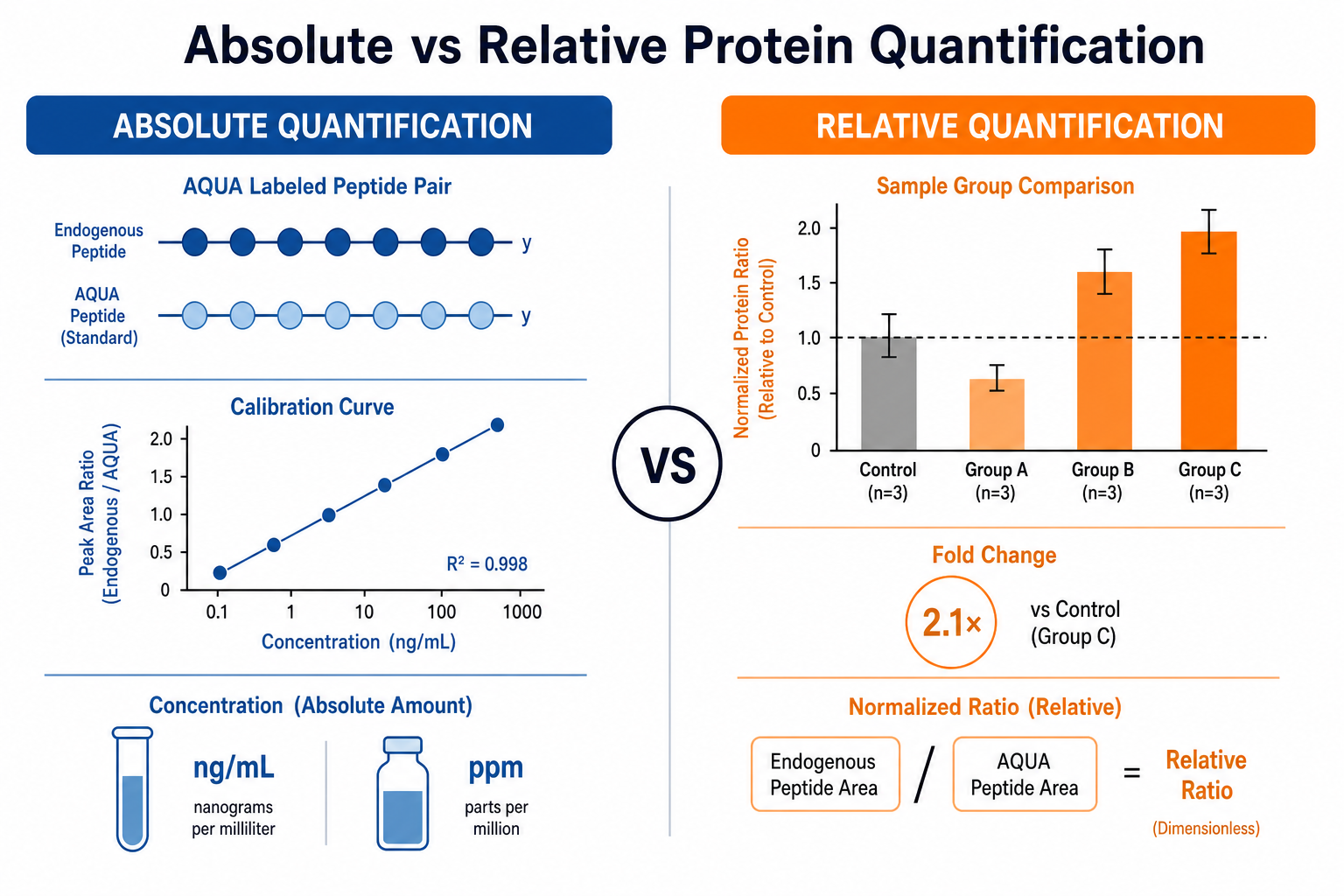
Figure 1. Absolute protein quantification reports concentration in defined units, while relative protein quantification compares abundance across samples without full calibration.
How Absolute Protein Quantification Works
Absolute protein quantification converts selective peptide measurement into concentration-level reporting through calibrated standards and validated LC-MS acquisition.
Common elements include:
-
selection of proteotypic peptides that represent the target protein in the project matrix
-
stable isotope-labeled standards such as AQUA peptides spiked at known amounts
-
matrix-matched calibration curves across the expected sample concentration range
-
selective acquisition through MRM or PRM on light and heavy peptide pairs
-
QC review of linearity, precision, recovery, and range compliance
Absolute protein quantification is valuable when results must be compared against specification limits, expressed in pharmacokinetic or stoichiometric units, or aligned across batches, operators, or sites. The main limitation is upfront assay design: standard synthesis, calibration validation, and matrix testing add planning effort beyond relative quantitation.
How Relative Protein Quantification Works
Relative protein quantification compares protein or peptide abundance across samples without converting every result into a calibrated concentration value.
Common elements include:
-
predefined target proteins translated into proteotypic peptides
-
selective LC-MS acquisition through MRM, PRM, or related targeted modes
-
normalization using internal standards, total protein input, or other project-specific rules
-
reporting of fold change, relative abundance, or normalized panel values across groups
Relative protein quantification is valuable when the decision depends on treatment response, pathway comparison, or ranking across conditions rather than on concentration against a fixed limit. The main limitation is interpretability outside the study design: relative results cannot directly answer specification questions without later calibration.
Side-by-Side Comparison
The principles above explain why reporting goal should come before platform preference. The table below adds practical differences in output type, planning needs, and documentation focus.
|
Dimension |
Absolute Protein Quantification |
Relative Protein Quantification |
|---|---|---|
|
Primary readout |
Concentration in defined units |
Fold change or relative abundance |
|
Calibrator requirement |
Required |
Optional or normalization-based |
|
Standard strategy |
AQUA or other labeled standards common |
Internal standard normalization common |
|
Calibration curve |
Usually required |
Usually not required |
|
Target definition |
Required upfront |
Required upfront |
|
Typical study stage |
Validation, QC, specification testing |
Comparative studies with fixed panel |
|
Cross-study alignment |
Improved when calibration is controlled |
Limited without absolute anchor |
|
Upfront planning |
Higher due to calibration design |
Lower when panel already exists |
|
Main strength |
Concentration-level interpretability |
Efficient group comparison |
|
Main limitation |
Higher setup and standard cost |
Cannot directly support specification limits |
This comparison shows why neither workflow is universally more suitable. The appropriate route follows whether concentration units or relative comparison is required for the project decision.
Which Approach Fits Different Study Goals
Choose absolute protein quantification when results must be reported in ng/mL, fmol, ppm, or similar units, specification or acceptance limits are predefined, or calibrated documentation is required for QC or method transfer.
Choose relative protein quantification when the primary readout is fold change across groups, calibrator development is not yet justified, or a predefined panel must be measured efficiently for comparative analysis.
Consider a staged relative-to-absolute plan when candidates are first compared relatively and later move into concentration reporting once specification needs are confirmed.
Use targeted MRM or PRM in either route when the protein panel is predefined and selective acquisition is required. Platform choice should follow matrix complexity, not quantitation goal alone.
Researchers should also define whether internal standard normalization is sufficient or whether matrix-matched calibration is required before assay development begins.
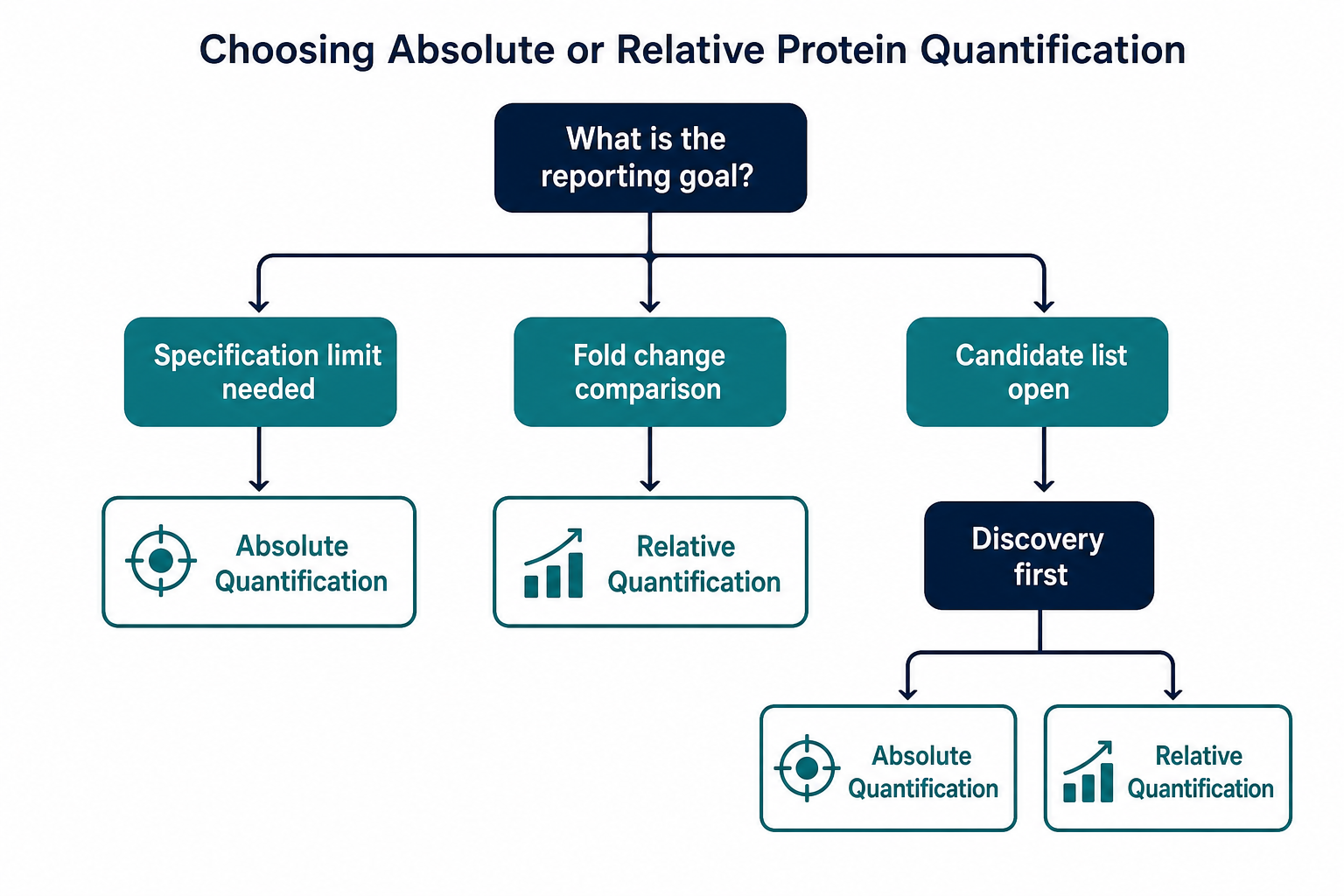
Figure 2. Reporting goal and specification requirements determine whether absolute or relative protein quantification is the more suitable route.
Decision Recommendations by Project Type
The decision flow above provides quick route-selection logic. The table below adds project-specific guidance for teams that already know their primary goal.
|
Project Situation |
More Suitable Approach |
Suggested Service Direction |
|---|---|---|
|
Plasma biomarker with predefined clinical cutoff |
Absolute protein quantification |
AQUA-based calibrated assay in matrix-matched plasma |
|
Treatment-response study with fixed pathway panel |
Relative protein quantification |
Targeted MRM or PRM with normalization |
|
Host cell protein near ppm specification |
Absolute protein quantification |
Calibrated assay with recovery QC |
|
Early panel screening across conditions |
Relative protein quantification |
Relative targeted quantitation before calibration investment |
|
Cross-site method transfer with concentration units |
Absolute protein quantification |
Documented calibration and QC package |
|
Candidate panel not yet validated for reporting format |
Staged relative-to-absolute workflow |
Relative screening followed by AQUA calibration |
These recommendations are starting points. Matrix complexity, sample number, and documentation depth can shift the final plan.
Combined Workflows and Continuity Planning
A strict either-or decision is not always necessary. Many quantitative proteomics programs plan continuity before the first sample is analyzed.
A practical staged plan may look like this:
-
Use relative targeted quantitation to compare predefined peptides across conditions or groups.
-
Review which targets require concentration-level reporting for the next decision.
-
Develop AQUA standards and matrix-matched calibration for priority analytes.
-
Expand validated absolute reporting across the cohort or QC workflow.
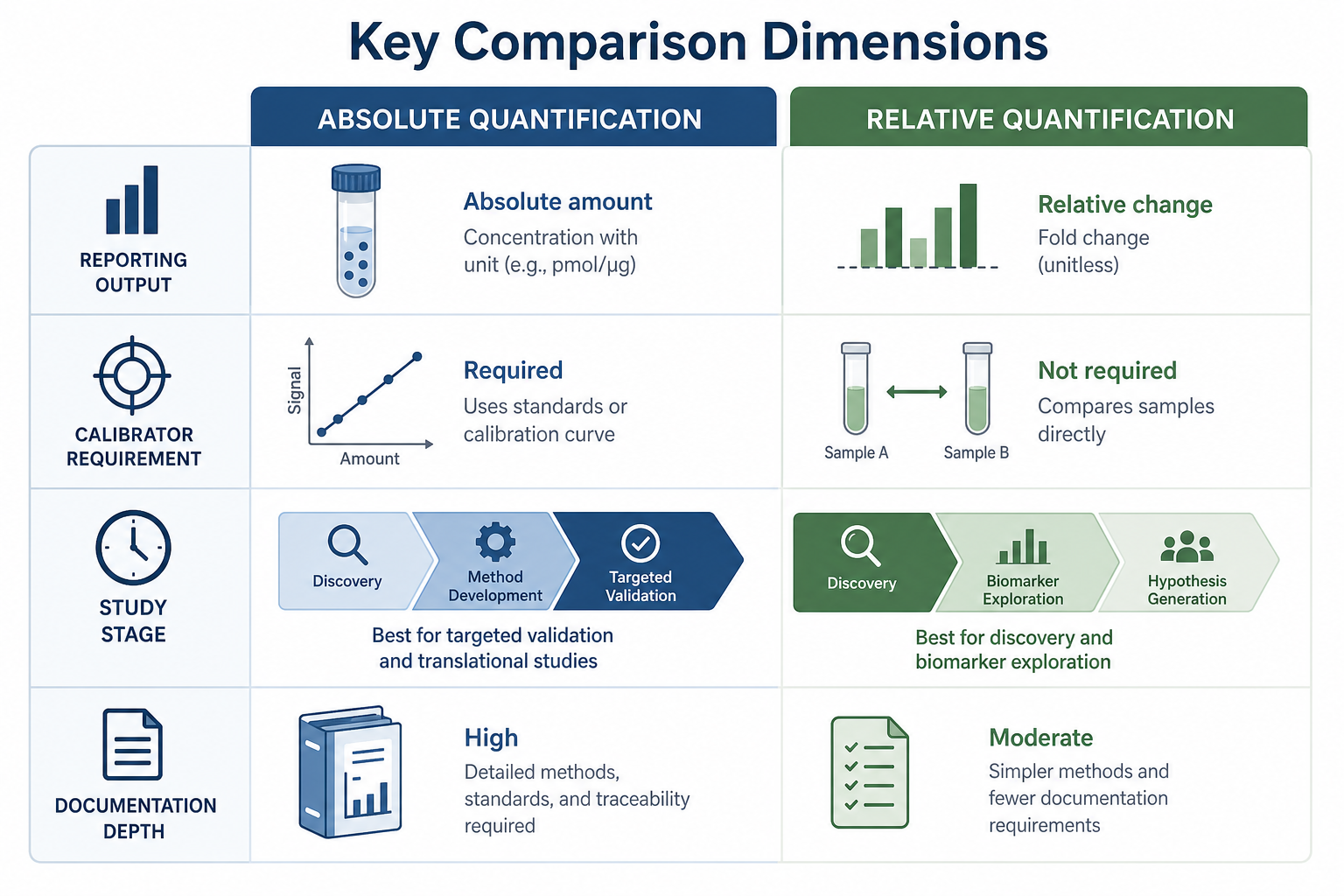
Figure 3. Reporting output, calibrator requirement, study stage, and documentation depth are the main dimensions for comparing the two quantitative routes.
Some projects also run a matrix pilot on the same priority peptides using both relative normalization and calibration-oriented design before committing the full cohort. Teams uncertain about route selection can request feasibility review from MtoZ Biolabs to test whether specification reporting is feasible in the study matrix before investing in the wrong quantitative model.
Limitations to Keep in Mind
Absolute protein quantification depends on surrogate peptide choice, calibration range, standard quality, and matrix validation. A precise calibration curve in buffer does not guarantee accurate reporting in plasma, tissue, or formulation matrix without project-specific review.
Relative protein quantification depends on normalization strategy, panel stability, and assay reproducibility. Efficient group comparison does not automatically provide concentration evidence when stakeholders later request specification-level reporting.
Researchers should avoid comparing routes only by setup effort. A lower-effort relative assay is not more suitable when concentration units are required. A more complex absolute assay may still be necessary when specification comparison is the project decision.
Neither route replaces discovery profiling when the protein list is still open. Both usually require predefined targets and targeted assay design once the panel is fixed.
Practical Selection Checklist
Before choosing between absolute and relative protein quantification, answer these questions:
-
Must results be reported in concentration units or only as relative comparison?
-
Are specification or acceptance limits predefined?
-
Is the protein panel already defined?
-
Is cross-study or cross-site alignment required?
-
Has matrix-specific peptide performance been reviewed?
-
Is calibrated documentation required for QC or method transfer?
If concentration units or specification comparison is required, absolute protein quantification should be planned from the start or added through a staged calibration step. If fold change across groups is sufficient, relative protein quantification may be the more direct route.
Frequently Asked Questions
1. Is absolute protein quantification the same as AQUA?
AQUA is a common strategy for absolute quantitation using stable isotope-labeled synthetic peptides. Absolute protein quantification is the broader reporting goal of expressing protein amount in defined units.
2. Can a project start with relative quantitation and move to absolute later?
Yes. Many programs use relative targeted quantitation during comparative screening and develop calibrated absolute assays when concentration reporting becomes required.
3. Does absolute quantitation always require more setup effort?
Usually yes, because standard design, calibration validation, and QC documentation add planning steps beyond relative quantitation.
4. Can relative quantitation use MRM or PRM?
Yes. Relative and absolute workflows can both use selective MRM or PRM acquisition. The difference is whether calibrated concentration reporting is required.
5. How can teams avoid choosing the wrong route?
Define the reporting goal, specification needs, and documentation depth before standards are ordered or the full cohort is submitted.
Conclusion
Absolute protein quantification and relative protein quantification serve different reporting needs within the same broader quantitative workflow. Absolute methods deliver concentration-level evidence through calibrated standards and validated MRM or PRM assays. Relative methods compare predefined panels efficiently when fold change or normalized comparison is sufficient. More reliable outcomes come from matching route to reporting goal, specification requirements, and documentation depth rather than platform preference alone. Researchers comparing absolute and relative protein quantification for biomarker work, pathway analysis, or biopharmaceutical monitoring can contact MtoZ Biolabs to review target list, reporting units, and matrix requirements before assay development and sample analysis begin.
How to order?




