



Absolute protein quantification reports protein or peptide amount in defined units by converting measured signal through calibrated standards, most often stable isotope-labeled peptides such as AQUA (Absolute QUAntification) standards. Typical routes combine isotope dilution with matrix-matched calibration and targeted acquisition by multiple reaction monitoring (MRM) or parallel reaction monitoring (PRM). Relative discovery methods such as label-free quantification (LFQ), data-independent acquisition (DIA), or tandem mass tags (TMT) answer fold-change questions without concentration units. Absolute assays answer concentration, stoichiometric, or specification questions for a closed target list. The reported amount reflects the measured proteotypic surrogate under the stated spike timing and calibration model (Gerber et al. 2003).
Researchers who already have a closed target list and required reporting units can also review the MtoZ Biolabs Absolute Quantitative Analysis (AQUA) Service for project-specific feasibility and assay planning.
What Absolute Quantification Covers
Absolute quantification is a calibrated claim, not a single instrument mode. Known standard amounts convert light peptide signal into concentration or amount per input. Common reporting units include ng/mL in plasma, fmol per microgram of protein, and ppm for selected process impurities when the assay is designed for that unit.
It differs from relative targeted MRM or PRM without standards, which can still confirm fold change across cohorts. It also differs from intensity-based absolute proxies such as iBAQ, which rank proteins within a sample under model assumptions and are not interchangeable with a spiked AQUA calibration curve.
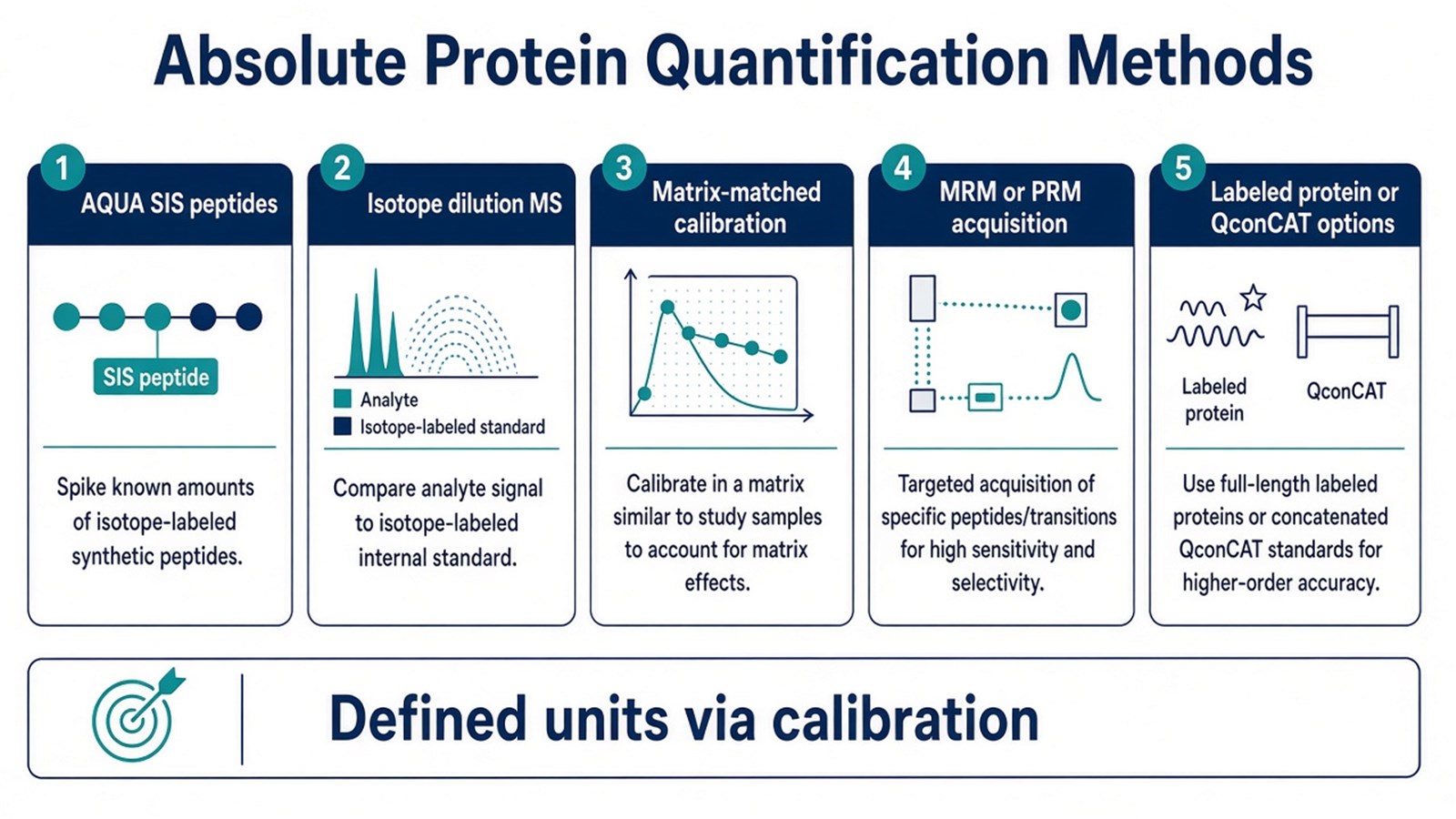
Figure 1. Absolute protein quantification is a family of calibrated MS routes; AQUA peptides plus MRM or PRM are the most common proteomics implementation.
Without matched standards and a stated calibration model, targeted peak areas remain relative.
Core Methods and How They Relate
1. AQUA and other SIS peptides
AQUA uses synthetic peptides labeled with stable isotopes that match the sequence of a proteotypic target peptide (Gerber et al. 2003). The heavy peptide is spiked at a known amount and acquired with the endogenous light peptide. Related terms include stable isotope-labeled standard (SIS) peptides and isotope dilution peptide assays. Peptide-level AQUA does not automatically correct protein-level digestion losses unless the spike and recovery design address that claim.
2. Isotope dilution with matrix-matched calibration
Isotope dilution compares endogenous analyte response with a matched labeled internal standard. Many absolute assays add calibrator levels prepared in a matrix similar to study samples so that ion suppression and recovery effects are built into the curve. Samples outside the calibrated interval need dilution, enrichment, or curve extension before the concentration claim is valid.
3. MRM or PRM as the acquisition layer
MRM on a triple quadrupole monitors predefined transitions for light and heavy pairs (Lange et al. 2008). PRM on a high-resolution analyzer records full fragment spectra for scheduled precursors and extracts quantitative ions after acquisition (Peterson et al. 2012). Neither platform alone creates absolute units; both support absolute reporting when standards and calibration are included. Researchers comparing those platforms can refer to PRM vs. MRM: Comparative Analysis in Quantitative Proteomics.
4. Protein-level or concatenated standards
Labeled full-length proteins or concatenated peptide standards (for example QconCAT-style constructs) can better capture digestion and enrichment when those steps define the scientific claim. They still require proteotypic peptide readout and a calibration model. Metabolic labeling such as SILAC can support stoichiometric comparison in cultured cells, but it is often impractical for clinical or formulation matrices.
Method route |
Typical fit |
Main strength |
Main limit |
|---|---|---|---|
AQUA/SIS with MRM |
Closed panels in manageable matrices |
Efficient light/heavy transition pairs |
Transition locking and interference review |
AQUA/SIS with PRM |
Complex matrices needing fragment review |
Post-run ion selection at high resolution |
Cycle-time and panel-size limits |
Matrix-matched curve |
Specification or concentration reporting |
Anchors response in study-like background |
Range must bracket samples |
Protein or QconCAT standards |
Digestion/recovery-sensitive claims |
Closer to protein processing path |
Higher design and synthesis burden |
Relative LFQ/DIA/TMT only |
Fold-change discovery |
Broader coverage without standards |
No concentration units |
AQUA Assay Workflow in Practice
A workable absolute project follows a fixed order. Skipping peptide selection or range design cannot be repaired by higher instrument resolution alone.
1. Close targets and proteotypic peptides
Define proteins, isoforms, or modification states of interest. Prefer unique peptides with usable chromatography and fragment ions. Shared peptides report gene-family ambiguity rather than a single protein.
2. Choose standard strategy and spike timing
Select AQUA/SIS peptides or a protein-level labeled standard. Record whether the standard is added before digestion, after digestion, or after enrichment. An SIS added after failed digestion cannot reconstruct the lost protein.
3. Build calibration and acquire selectively
Prepare calibrator levels across the expected range. Acquire light and heavy signals by MRM or PRM with QC samples. Fit the calibration model, review residuals and recovery, and report only values inside the validated range.
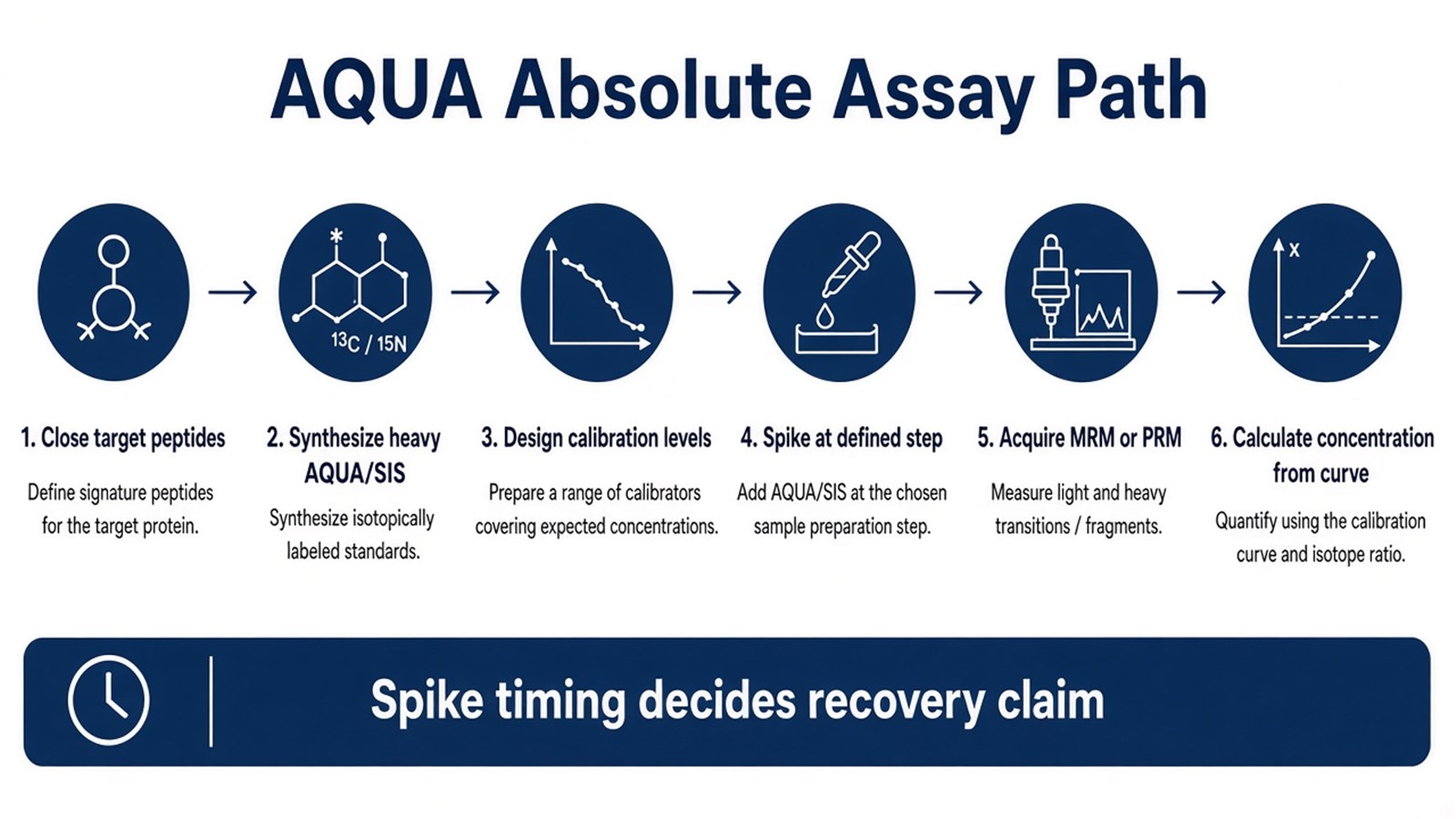
Figure 2. AQUA absolute assays convert light/heavy peptide signals into concentration only after spike timing and calibration are defined.
Judgment Criteria: When Absolute Quantification Fits
Study need |
Absolute / AQUA often fits |
Reassess before ordering standards |
|---|---|---|
Decision type |
Concentration, stoichiometry, or specification units |
Fold change alone is enough |
Target status |
Closed, mature peptide list |
Open discovery inventory still required |
Matrix and range |
Expected amounts can be bracketed by calibrators |
Abundance unknown by orders of magnitude |
Platform |
MRM or PRM available for the panel |
Only discovery acquisition is planned |
Claim scope |
Surrogate peptide under stated recovery design |
Whole-proteome absolute amounts without standards |
Prefer absolute quantification when reporting units are part of the scientific or QC decision. Prefer relative LFQ, DIA, or TMT while candidates are still open. Prefer relative MRM or PRM when confirmation of direction matters more than concentration.
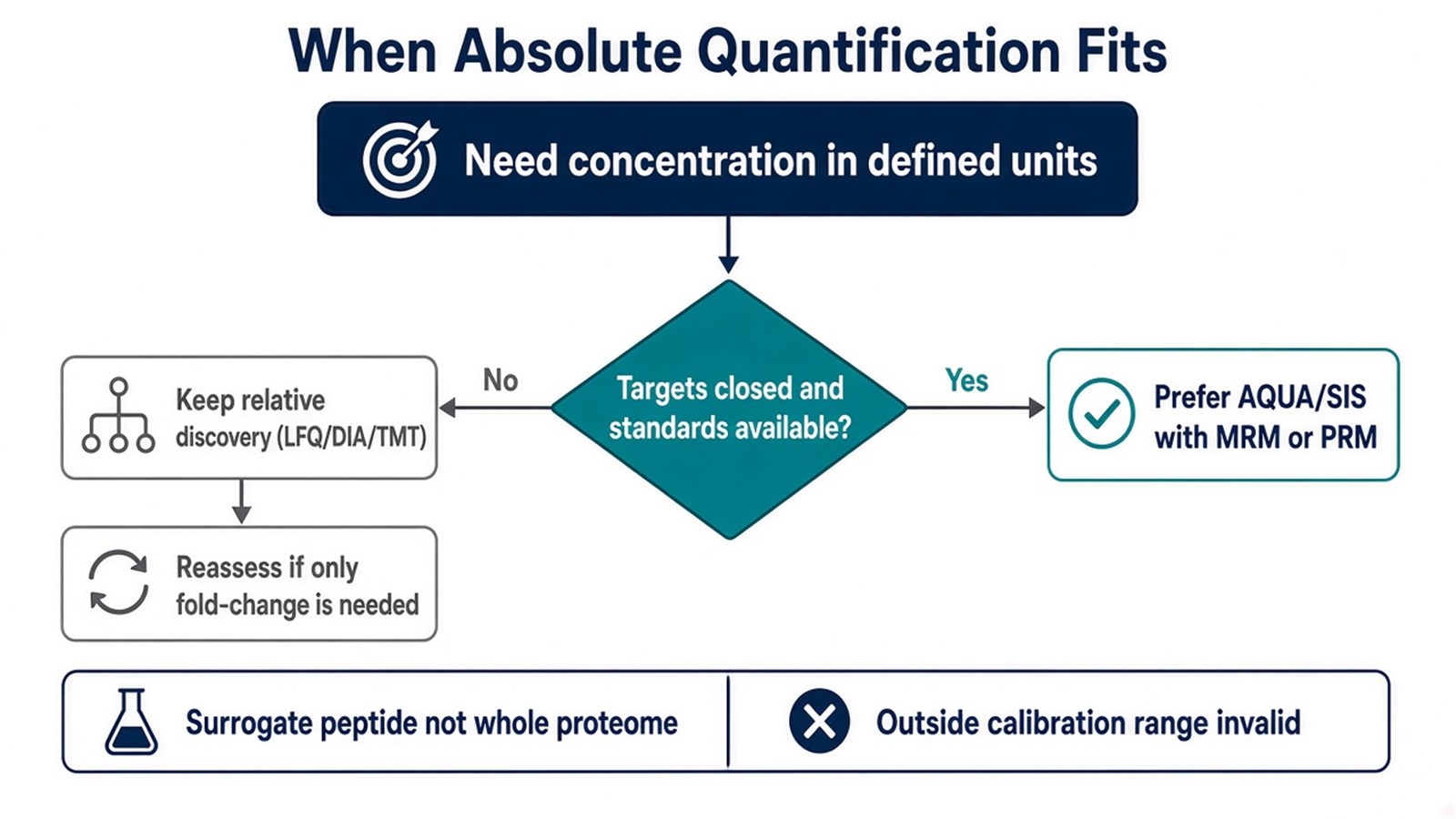
Figure 3. Absolute quantification fits when targets are closed and defined units are required; keep relative discovery when only fold change is needed.
Limits and Application Boundaries
Absolute assays quantify only scheduled surrogates. A precise peptide amount can still misstate the intended protein if the wrong isoform, missed cleavage, or modification state is measured. Dynamic range, solubility of the synthetic peptide, and matrix interference remain project-specific. Calling any AQUA result a clinical diagnostic cutoff or a regulated release method overstates ordinary research reporting unless a separately validated assay framework is in place.
Typical uses are plasma or tissue biomarker concentration reporting, selected host cell protein or impurity peptide monitoring when units are defined, pathway stoichiometry for a short protein panel, and method-transfer documentation for the same calibrated readout across runs. Discovery proteome depth is not the goal of these assays.
Once the target list, reporting units, standard strategy, and MRM-versus-PRM choice are defined, the project can be evaluated as an absolute quantification study. Researchers can review the MtoZ Biolabs Absolute Quantitative Analysis (AQUA) Service for sample evaluation, standard planning, and workflow design. For acquisition platforms, see the SRM-MRM Quantitative Proteomics Services and Parallel Reaction Monitoring (PRM) Service.
Frequently Asked Questions
1. Is AQUA the same as absolute protein quantification?
AQUA is a common standard strategy that uses heavy synthetic peptides. Absolute quantification is the broader claim of reporting amount in defined units, often implemented with AQUA or related SIS designs.
2. Do MRM or PRM alone provide absolute amounts?
No. They provide selective measurement. Absolute units require matched standards and a calibration model.
3. Can LFQ or DIA replace an AQUA assay?
Not for concentration claims. Ordinary LFQ or DIA intensities support relative change across comparable runs.
4. Does spike timing change the scientific claim?
Yes. Pre-digestion spikes and post-digestion spikes answer different recovery questions and must be stated with the result.
5. Is absolute quantification required for every targeted panel?
No. Relative targeted confirmation is enough when fold change, not concentration, drives the decision.
Reference
- S.A. Gerber, J. Rush, O. Stemman, M.W. Kirschner, S.P. Gygi (2003). Absolute quantification of proteins and phosphoproteins from cell lysates by tandem MS. Proc. Natl. Acad. Sci. U.S.A., 100, 6940-6945. https://doi.org/10.1073/pnas.0832254100
- V. Lange, P. Picotti, B. Domon, R. Aebersold (2008). Selected reaction monitoring for quantitative proteomics: a tutorial. Mol. Syst. Biol., 4, 222. https://doi.org/10.1038/msb.2008.61
- A.C. Peterson, J.D. Russell, D.J. Bailey, M.S. Westphall, J.J. Coon (2012). Parallel reaction monitoring for high resolution and high mass accuracy quantitative, targeted proteomics. Mol. Cell. Proteomics, 11, 1475-1488. https://doi.org/10.1074/mcp.O112.020131
