






Absolute Protein Quantification by LC-MS/MS: How AQUA Peptides and Calibration Curves Convert Peptide Signal to Concentration
Introduction
Many proteomics projects stop at relative abundance. A treatment group may show a two-fold increase in a pathway protein, yet the result cannot be translated into concentration, clearance, or specification limits. Biomarker programs may need plasma levels in ng/mL. Biopharmaceutical teams may need host cell protein amounts in ppm. Pharmacology groups may need stoichiometric readouts that support dose-response modeling rather than fold change alone.
Absolute protein quantification addresses that gap by converting peptide signal into defined concentration units through calibrated assays. Workflows based on absolute quantification of peptides using AQUA (Absolute QUAntification) standards, matrix-matched calibrators, and selective LC-MS acquisition such as MRM or PRM can report protein abundance as fmol, ng/mL, or ppm depending on study design. The method builds on targeted proteomics but adds the calibration layer required for specification-driven decisions.
Teams planning concentration-level reporting should define units, calibrator strategy, and matrix feasibility before assay lock-in. MtoZ Biolabs can Review absolute quantitation feasibility before standards are ordered or samples are submitted.
Related Services
What Absolute Protein Quantification Measures
Absolute protein quantification reports protein abundance in defined units rather than relative ratios alone. The readout may be expressed as peptide concentration, protein concentration in matrix, or normalized amount per input such as fmol per microgram of total protein.
The workflow differs from Relative Protein Quantitative Service, MS Based, which compares abundance across samples without anchoring results to known calibrator amounts. It also differs from Label-Free Quantitative Proteomics Service, MS Based, which prioritizes broad profiling rather than validated concentration reporting for predefined targets.
Absolute protein quantification typically answers one of these questions:
-
What is the concentration of a biomarker protein in plasma or serum?
-
Does a product-related or impurity peptide meet an absolute specification limit?
-
How much host cell protein remains at a defined process stage?
-
Can pathway proteins be compared on a stoichiometric scale across conditions?
When reporting must support QC documentation, comparability, or cross-study alignment, absolute protein quantification is often the required route.
How an AQUA-Based Workflow Is Built
Most absolute protein quantification projects follow a structured sequence built on targeted peptide measurement.
Phase 1: Target and peptide selection.
Proteins of interest are translated into proteotypic peptides suitable for selective acquisition and stable isotope standard pairing.
Phase 2: AQUA standard preparation.
Synthetic peptides incorporating stable isotopes (commonly 13C and 15N) are prepared to match the target sequence and serve as internal or external calibrators.
Phase 3: Calibration design.
Known amounts of standard are spiked across a concentration range in matrix-matched or surrogate matrix backgrounds to define the quantitative response curve.
Phase 4: LC-MS acquisition.
MRM or PRM assays monitor predefined transitions or fragment ions for both endogenous and labeled peptides.
Phase 5: Concentration calculation and reporting.
Peak areas or labeled-to-unlabeled ratios are fit to the calibration model and converted into reported concentration units.
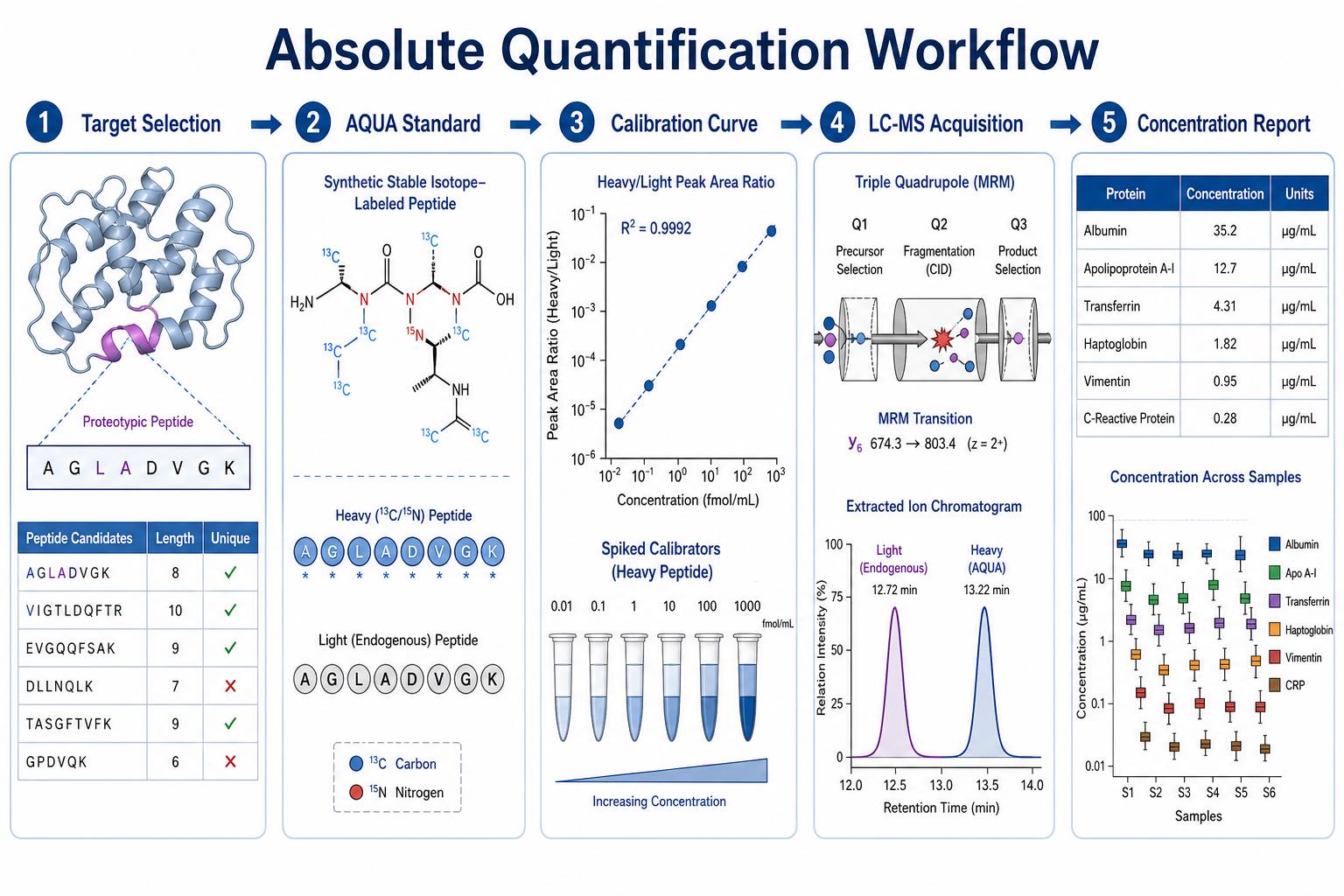
Figure 1. Absolute protein quantification links AQUA standards, calibration curves, and selective LC-MS acquisition to concentration-level reporting.
AQUA peptides can be spiked before or after digestion depending on assay design. Pre-digestion spiking is common when whole-protein recovery must be tracked. Post-digestion spiking is often used when the assay quantifies a defined proteotypic surrogate after consistent proteolysis.
Calibration and Isotope Dilution in Brief
The quantitative core of absolute protein quantification is the relationship between known standard amount and measured signal.
Calibrator levels.
Multiple concentration points across the expected sample range define linear or fit-validated response.
Isotope dilution.
Endogenous light peptide signal is compared with known heavy AQUA peptide signal to reduce ionization bias.
Matrix matching.
Calibrators prepared in study-relevant matrix improve accuracy when suppression or recovery effects are present.
Regression and QC.
Calibration fit, replicate precision, and recovery at quality control levels support acceptance of the final concentration values.
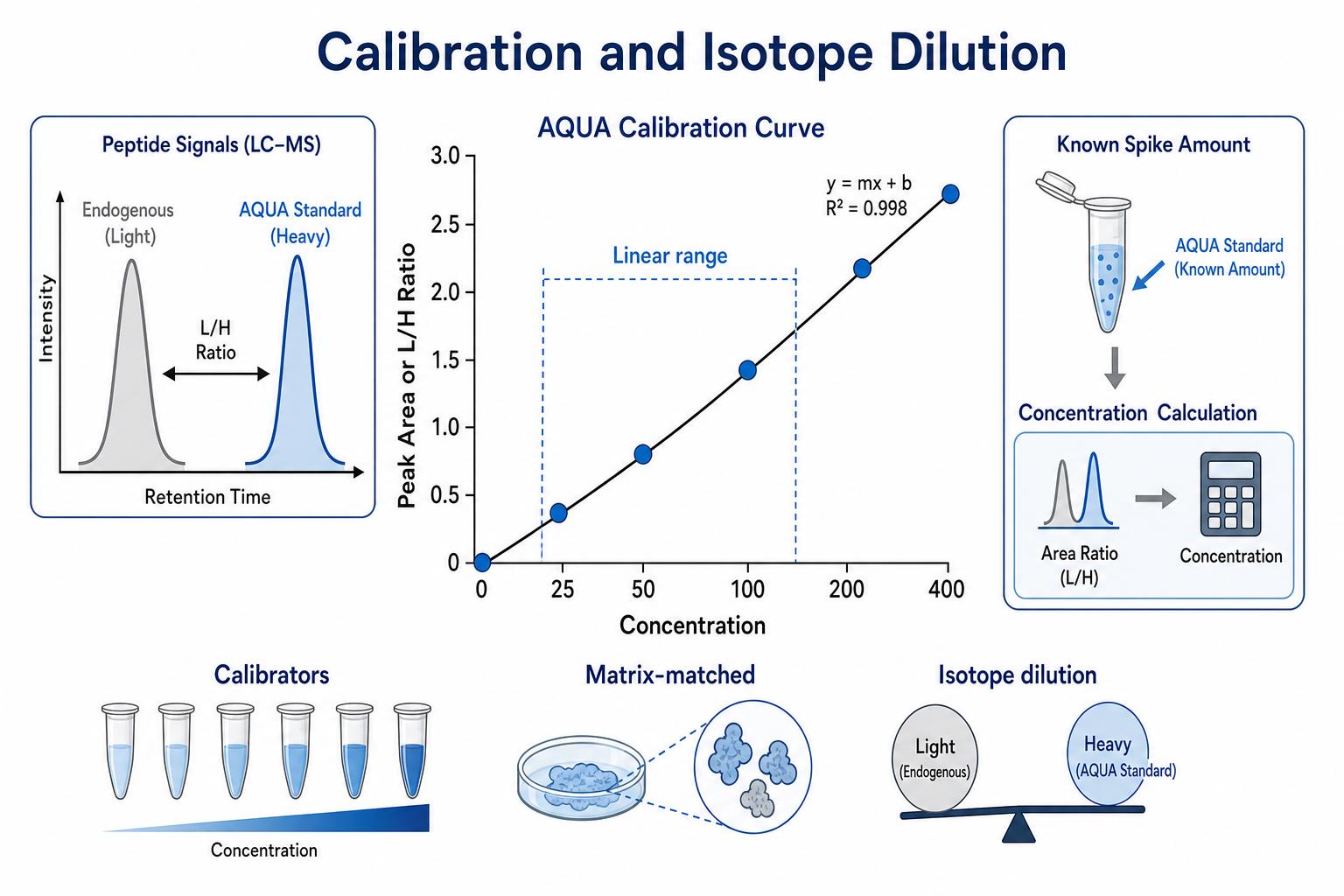
Figure 2. Known AQUA standard amounts and matrix-matched calibrators convert peptide peak response into absolute concentration.
Poor calibration design is one of the most common reasons absolute assays fail specification review. Calibrator levels must bracket the expected sample range, and quality control samples should sit within the validated interval rather than at the curve extremes alone.
Technical Advantages and Limitations
1. Technical Advantages
Concentration-level reporting.
Results can be expressed in units that support specifications, pharmacokinetic modeling, and cross-laboratory comparison.
Isotope dilution precision.
AQUA standards reduce ionization variability for predefined peptides in targeted acquisition.
Selective acquisition efficiency.
MRM and PRM focus instrument time on validated targets rather than full spectral surveying.
QC-friendly documentation.
Calibration curves, recovery data, and QC metrics support regulated or internal validation workflows.
2. Limitations
Requires upfront assay development.
Peptide selection, standard synthesis, and calibration validation add setup effort beyond relative quantitation.
Dynamic range constraints.
Samples outside the calibrated interval require dilution, enrichment, or curve extension.
Surrogate peptide assumptions.
Quantitation reflects the measured proteotypic peptide, not necessarily every isoform or modified form of the protein.
Matrix sensitivity remains.
Complex backgrounds still require pilot testing even when calibrators are matrix matched.
Absolute protein quantification improves interpretability but does not remove the need for sound proteotypic peptide choice. A precise yet poorly representative surrogate can still misstate the intended protein amount in matrix.
Typical Applications
Researchers commonly apply absolute protein quantification in these settings:
-
Clinical and translational biomarker measurement. Report candidate protein levels in plasma or serum with defined units.
-
Biopharmaceutical product and impurity monitoring. Quantify product-related peptides or process impurities against specification limits.
-
Host cell protein absolute quantitation. Measure residual HCP levels in drug substance or process intermediates when ppm-level reporting is required.
-
Pathway stoichiometry and dose-response studies. Compare signaling proteins on an absolute scale across treatment conditions.
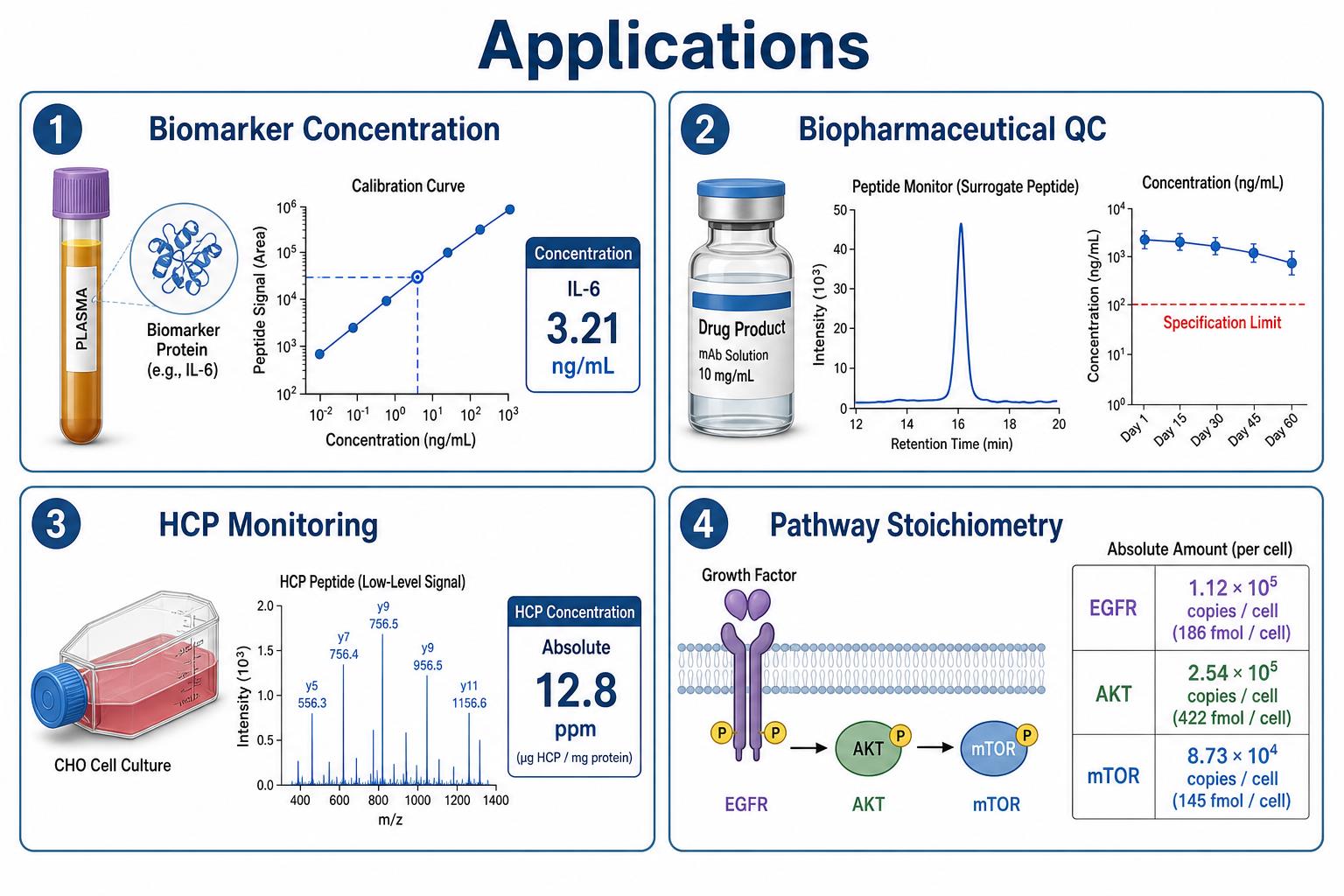
Figure 3. Biomarker concentration reporting, biopharmaceutical QC, and HCP monitoring are common absolute protein quantification applications.
Sample and Assay Requirements
Reliable absolute protein quantification depends on calibrator design and sample quality at submission.
|
Requirement |
Why It Matters |
|---|---|
|
Defined protein or peptide target list |
Drives AQUA standard design and assay scope |
|
Reporting units |
ng/mL, fmol, ppm, or per-input normalization must be agreed before analysis |
|
Sample matrix type |
Plasma, tissue, lysate, and formulation each affect calibration and recovery |
|
Expected concentration range |
Determines calibrator levels and whether enrichment is needed |
|
Internal standard strategy |
AQUA peptide amount and spike point affect accuracy and precision |
|
Platform preference |
MRM or PRM selection depends on matrix interference and confirmation needs |
Feasibility review before standard synthesis helps avoid building a calibration model that sample chemistry or abundance range cannot support.
Expected Deliverables
Useful absolute protein quantification reports often include:
-
concentration tables with defined units across samples
-
calibration curve data and fit statistics
-
AQUA standard and acquisition method summary
-
QC sample recovery and precision summaries
-
comments on samples outside the validated range
Define acceptance criteria during scoping. A regulated QC workflow may require full calibration documentation, while an exploratory absolute screen may accept a narrower validation package tied to a single decision gate.
For programs comparing batches or sites, include matrix control samples and midpoint QC levels in the acquisition plan from the start. Those controls reduce ambiguity when the same absolute assay must remain comparable across instrument runs.
Frequently Asked Questions
1. What is the difference between AQUA and absolute protein quantification?
AQUA refers to quantification using stable isotope-labeled synthetic peptides as standards. Absolute protein quantification is the broader goal of reporting protein amount in defined units, often achieved through AQUA-based targeted LC-MS assays.
2. Can absolute protein quantification use PRM instead of MRM?
Yes. Both platforms can support absolute assays when transitions or fragment ions are validated and calibration is performed in the study matrix.
3. Is absolute quantitation required for every targeted proteomics project?
No. Relative quantitation is sufficient when the decision depends on fold change across groups rather than concentration against a specification.
4. How many calibrator levels are typically needed?
Most assays require multiple levels across the expected range plus QC samples at low, mid, and high concentrations within the validated interval.
5. Can absolute protein quantification work for low-abundance targets?
Sometimes, with enrichment, alternate proteotypic peptides, or PRM when interference limits MRM performance. Feasibility review clarifies realistic detection limits in the study matrix.
Conclusion
Absolute protein quantification converts selective peptide measurement into concentration-level reporting through AQUA standards, matrix-aware calibration, and validated MRM or PRM acquisition. When specifications, cross-study alignment, or stoichiometric interpretation matter more than relative fold change alone, this workflow provides the quantitative anchor required for the next decision.
For AQUA standard design, calibration validation, and concentration reporting, MtoZ Biolabs provides Absolute Quantitative Analysis (AQUA) Service with feasibility review and report-ready deliverables. Contact the technical team to evaluate target list, reporting units, and matrix requirements before sample submission.
How to order?




