






Why PhIP-Seq Candidates Require Orthogonal Validation
Introduction
PhIP-Seq can return long lists of enriched peptides after a single cohort run. Project teams often want to move quickly from discovery to publication, biomarker planning, or assay development. A rheumatology program may treat top-ranked citrullinated peptides as confirmed synovial autoantigens. A neurology cohort may report CSF enrichment as compartment-specific reactivity before independent testing. A translational team may design ELISA panels from raw hit lists without reviewing background or mapping context.
PhIP-Seq (phage immunoprecipitation sequencing) is a strong discovery platform, but enrichment under library conditions is not the same as confirmed autoantibody reactivity in vivo. Peptide display, immunoprecipitation stringency, library composition, and sample matrix all shape what appears enriched. Orthogonal validation uses independent assays and cohort logic to test whether a PhIP-Seq candidate represents real, reproducible autoantibody binding.
This article explains why PhIP-Seq candidates require orthogonal validation, which false-confidence sources validation must address, and how to structure a practical confirmation path.
What PhIP-Seq Actually Reports
PhIP-Seq measures antibody capture of phage-displayed peptides under a defined experimental workflow. Sample antibodies bind displayed peptides, captured phage are sequenced, and read counts reveal which peptides are enriched relative to input library representation and control samples.
The output is peptide-level discovery evidence. It indicates that antibodies in the sample bound a displayed peptide under the assay conditions used. It does not directly prove that the full-length source protein is the disease autoantigen. It does not confirm that the same reactivity will appear in an independent assay format. It does not replace clinical diagnostic validation.
Treating enriched peptides as confirmed autoantigens without orthogonal testing risks overinterpretation at the most decision-sensitive stage of the project.
Why Discovery Enrichment Is Not Confirmation
Discovery and confirmation answer different questions in autoantibody research.
Discovery asks which peptide targets show enriched capture in a screened cohort under a specific library framework. Confirmation asks whether the same reactivity is reproducible, specific, and biologically meaningful when tested by an independent method. A peptide can pass discovery thresholds because of clone abundance, background binding, or promiscuous immunoglobulin reactivity rather than disease-specific autoantibody biology.
Orthogonal validation closes this gap by testing candidates outside the original PhIP-Seq workflow. Without that step, discovery output remains provisional no matter how strong the fold change appears.
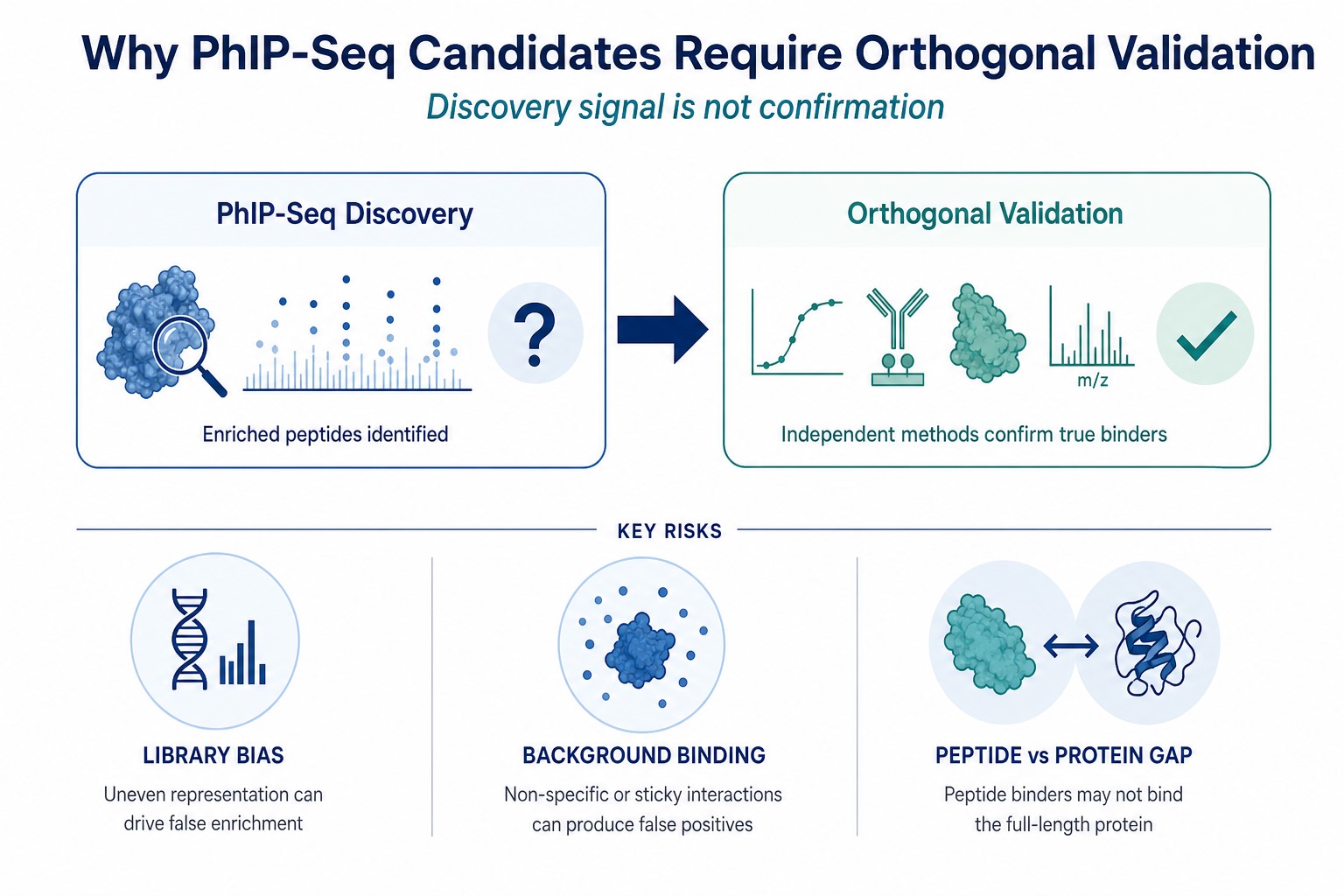
Figure 1. PhIP-Seq generates discovery-stage peptide enrichment. Orthogonal validation is required before candidates are treated as confirmed autoantibody reactivity.
Sources of False Confidence in PhIP-Seq Hits
Several technical factors can make weak or nonspecific peptides look like strong autoantigen candidates.
Clone abundance bias can inflate read counts for peptides overrepresented in the input library. Nonspecific immunoprecipitation background can create apparent enrichment when bead-only, no-antibody, or healthy control handling is insufficient. Single-replicate runs can elevate unstable signals that do not repeat across technical or biological replicates. Promiscuous antibody binding can enrich unrelated peptide motifs in samples with high total immunoglobulin reactivity. Linear display bias means a peptide hit may not reflect reactivity to folded protein, domain context, or glycan-dependent epitopes in vivo. Modified peptide ambiguity can occur when PTM variant enrichment reflects generic motif binding rather than true neo-epitope specificity.
Orthogonal validation is required because no enrichment table alone can exclude all of these sources of false confidence.
Related Services
PhIP-Seq Antibody Analysis Service
Identification of Peptide Biomarkers Service
Antibody Epitope Mapping Analysis Service
Peptide Array-Based Epitope Mapping Service
Researchers advancing PhIP-Seq hit lists toward confirmed autoantibody evidence can consult MtoZ Biolabs to review validation design, assay selection, and reporting tiers matched to project stage.
What Orthogonal Validation Means in Practice
Orthogonal validation means testing PhIP-Seq candidates using methods that differ in format, readout, or sample handling from the original discovery workflow.
The assay should use synthesized peptides, printed arrays, recombinant proteins, or domain constructs rather than phage display alone. Controls should include healthy donors, blank or secondary-only conditions, and modified versus unmodified peptide pairs when PTM hits are involved. Replicate testing should confirm that reactivity is stable across runs. Independent cohort testing should show that signal is not limited to the original discovery set.
Validation is orthogonal when it can falsify a discovery hit rather than merely repeat the same binding format under the same assumptions.
Validation Pathways by Candidate Type
Different PhIP-Seq candidates require different confirmation strategies.
Peptide-level hits are commonly validated by peptide array, ELISA with synthesized peptides, or dose-response binding review under non-phage conditions. Protein-level questions require recombinant full-length protein, domain constructs, or complementary protein array testing when the discovery goal is autoantigen confirmation rather than epitope mapping alone. Modified epitope hits require paired modified and unmodified testing plus, when relevant, mass spectrometry-supported PTM review. High-priority translational candidates should be tested in an independent cohort before being reported as disease-associated autoantibody reactivity.
Validation depth should match the claim. Peptide reactivity confirmation requires less than full autoantigen status confirmation, but both require assays outside PhIP-Seq.
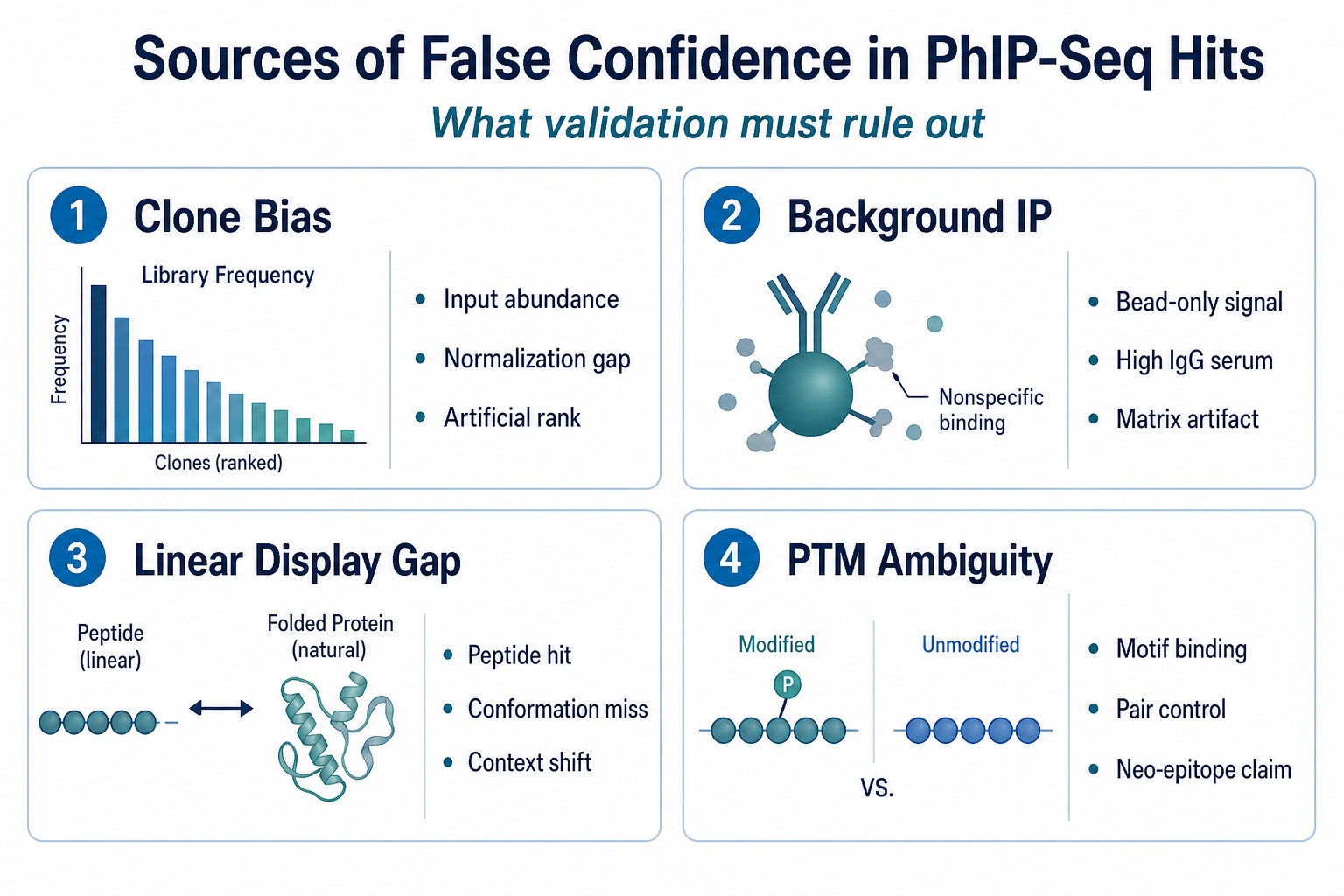
Figure 2. Orthogonal validation must address clone bias, background binding, linear display limits, and modified peptide ambiguity.
Phased Validation Framework
A practical validation framework usually moves in linked phases rather than jumping from enrichment list to final claim.
Phase 1 confirms peptide reactivity using array or ELISA under non-phage conditions. Phase 2 tests whether reactivity extends to recombinant protein, domain context, or additional epitope regions when autoantigen status is the goal. Phase 3 evaluates reproducibility in an independent sample set with predefined success criteria. Reporting should label each candidate as confirmed, provisional, or exploratory based on validation depth completed.
This phased structure protects project credibility and prevents weak discovery hits from entering biomarker or diagnostic planning too early.
Validation Requirements by Project Claim
The validation burden should match the statement the project intends to make.
|
Intended Claim |
Minimum Orthogonal Validation Expected |
|---|---|
|
Peptide reactivity exists outside PhIP-Seq |
Peptide array or ELISA with controls |
|
Epitope region is defined on a protein |
Array or ELISA plus mapping review |
|
Modified neo-epitope reactivity is real |
Paired modified and unmodified validation |
|
Full-length protein is an autoantigen |
Recombinant protein or domain confirmation |
|
Disease-associated autoantibody target |
Independent cohort replication |
Stronger claims require stronger validation. Discovery enrichment alone supports none of these claims fully.
Core Technical Advantages of Orthogonal Validation
Why Validation Adds Scientific Value
Separates discovery signal from artifact.
Independent assays test whether enrichment reflects true antibody binding rather than library or IP background.
Tests reactivity in a new format.
Peptide array, ELISA, and protein binding assays remove phage display context from the conclusion.
Supports specificity review.
Healthy controls, isotype controls, and irrelevant cohorts can be built into validation design.
Enables proportionate claims.
Teams can report peptide reactivity, epitope mapping, or autoantigen association at the level supported by data.
Protects downstream investment.
Biomarker, diagnostic, and therapeutic follow-up should begin only after validated candidates are defined.
Common Validation Mistakes to Avoid
Several errors weaken PhIP-Seq programs even when discovery data are strong.
Repeating phage display under slightly different conditions is not orthogonal validation. Validating only the highest fold-change peptides without control review recreates discovery bias. Skipping modified peptide pair testing overstates neo-epitope claims. Moving directly from discovery to diagnostic language without cohort replication creates trust and compliance risk. Mixing confirmed and exploratory peptides in one report obscures what the data actually support.
A clear validation plan should be defined before discovery hits are promoted externally.
Applications Where Validation Is Especially Critical
Orthogonal validation is especially important in several autoantibody research settings.
Translational biomarker programs need validated peptide or protein reactivity before assay development proceeds. Modified epitope discovery in rheumatology, neurology, or cancer autoimmunity requires paired PTM confirmation. CSF or paired matrix studies need validation that compartment-associated claims are reproducible outside the original screen. Publication and grant reporting require distinction between discovery enrichment and confirmed reactivity. Diagnostic exploration must not treat PhIP-Seq hits as clinical proof without appropriate assay and cohort validation.
In each setting, orthogonal validation converts discovery output into evidence that can support the next decision.
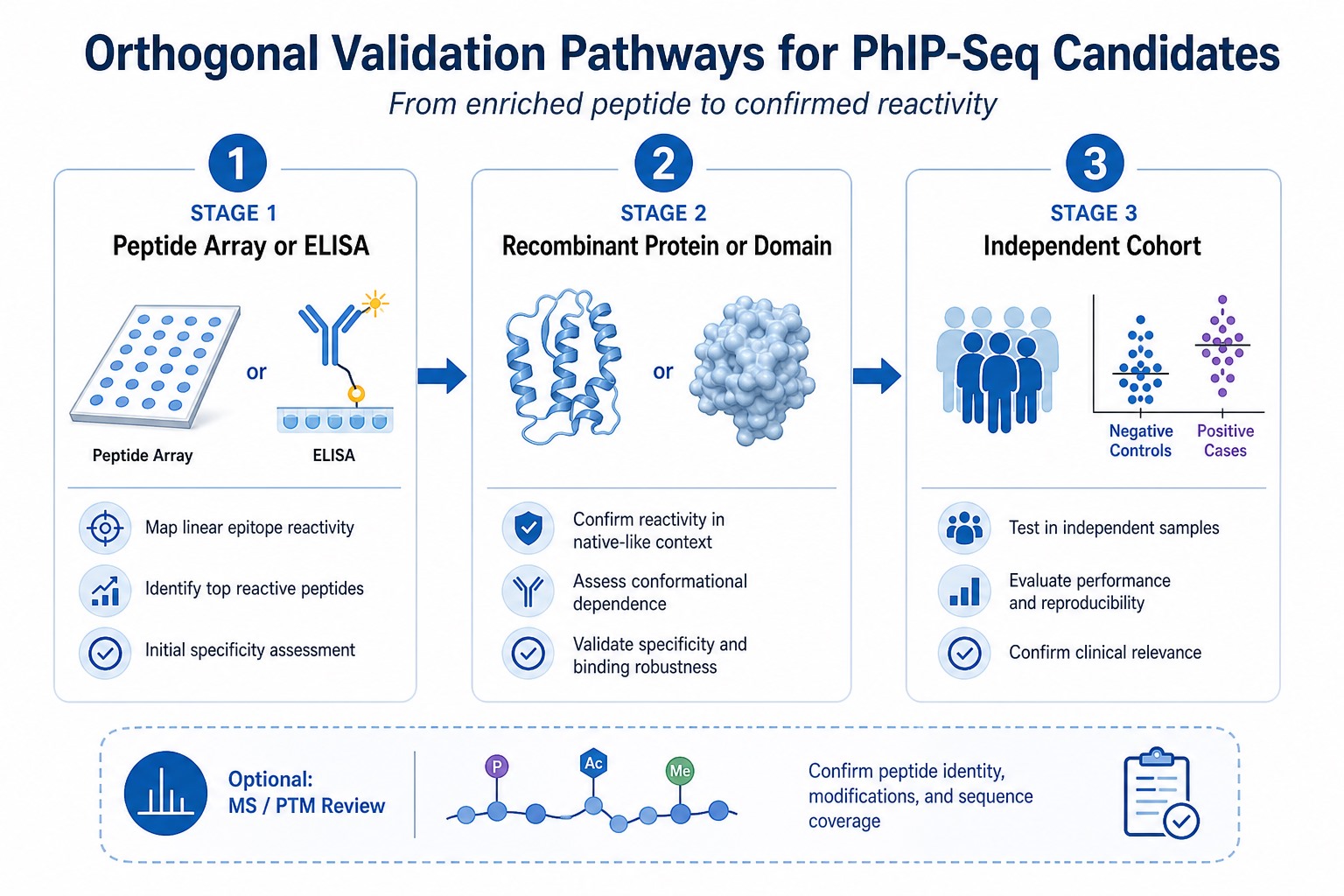
Figure 3. A practical validation path moves from peptide-level confirmation to protein context testing and independent cohort review.
Frequently Asked Questions
1. Why is PhIP-Seq enrichment not enough to confirm an autoantigen?
Because enrichment reflects peptide capture under phage display and immunoprecipitation conditions. Independent assays are needed to test reactivity, specificity, and reproducibility.
2. What counts as orthogonal validation?
Assays that use a different format from PhIP-Seq, such as peptide array, ELISA, recombinant protein binding, or independent cohort testing with predefined controls.
3. Do all enriched peptides need full protein validation?
No. Validation depth should match the claim. Peptide reactivity requires peptide-level confirmation. Autoantigen status requires protein-level and cohort support.
4. How should modified peptide hits be validated?
Test modified and unmodified peptide pairs in an independent assay and review whether PTM-specific reactivity is supported before reporting a neo-epitope.
5. When can a PhIP-Seq candidate be called confirmed?
When reactivity is reproduced in orthogonal assays, specificity is supported by controls, and independent cohort testing matches the intended claim.
Conclusion
PhIP-Seq candidates require orthogonal validation because discovery enrichment is not confirmation. Library bias, background binding, linear display limits, and modified peptide ambiguity can all produce credible-looking hits that fail independent testing. Orthogonal assays provide the separate evidence needed to support peptide reactivity, epitope mapping, or autoantigen association at an appropriate level of certainty.
Programs that define validation criteria before promoting discovery hits move more safely into biomarker development, publication, and follow-up assay design. Researchers planning validation after PhIP-Seq can contact MtoZ Biolabs to align peptide array, ELISA, epitope mapping, and cohort confirmation with their candidate list. For teams reporting modified epitope or protein-level autoantigen claims, MtoZ Biolabs can also help connect discovery output with PTM review and staged validation follow-up.
How to order?




