






What Makes an Antibody Suitable for IP-MS
Introduction
Researchers planning IP-MS experiments often encounter a common challenge. The target protein may already be defined, yet an antibody that performs well in Western blot may show weak target recovery or high nonspecific binding during immunoprecipitation. Another antibody may recover the bait but also enrich substantial nonspecific background, making LC-MS/MS results difficult to interpret. An antibody may be described as suitable for IP without evidence that it supports target enrichment for downstream mass spectrometry analysis.
What makes an antibody suitable for IP-MS is therefore not general antibody quality alone. Suitability means that the antibody can immunoprecipitate the intended target and generate an enriched sample suitable for interpretable MS analysis. Terms such as IP-MS-validated antibody, antibody validated by IP-MS, and antibody validated for IP-MS are meaningful only when supported by evidence of target enrichment, specificity, and compatibility with the intended experimental conditions. This article explains the technical attributes that determine IP-MS suitability and how to evaluate them when comparing candidate antibodies.
What Suitability Means in an IP-MS Context
An antibody suitable for IP-MS must do more than recognize a band on a blot. It must capture the target protein from the lysate, maintain stable target binding during enrichment and washing, and recover sufficient bait protein for LC-MS/MS identification.
In practical terms, suitability has three linked outcomes. The intended target should be enriched in the IP eluate. Nonspecific background should remain manageable enough to support reliable MS interpretation. The antibody format and available amount should be compatible with the selected capture system, negative controls, and planned replicates. IP-MS validation provides stronger evidence of suitability when target recovery and background control are documented rather than indicated only by a reported application.
Suitability also depends on the experimental objective. Bait recovery for interaction discovery, PTM-focused enrichment, and tagged-protein IP do not place identical demands on epitope, clonality, and wash tolerance. The shared requirement is reliable target capture with MS-compatible enrichment quality.
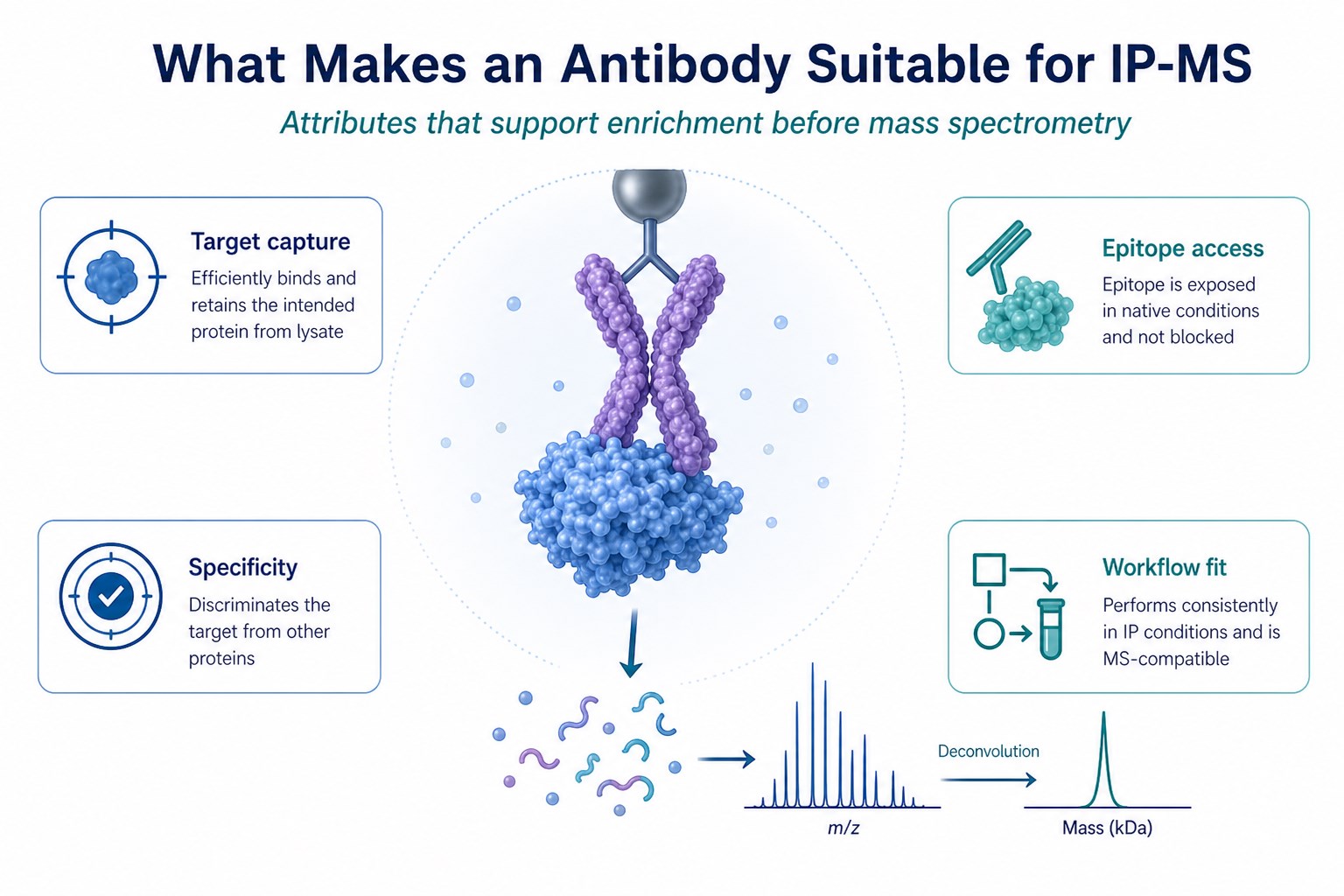
Figure 1. An antibody suitable for IP-MS supports target capture, manageable background, and enrichment quality compatible with LC-MS/MS.
Core Attributes That Make an Antibody Suitable for IP-MS
Demonstrated Performance in an IP-MS Workflow
The strongest suitability signal is direct evidence that immunoprecipitation with the antibody recovers the intended protein in an MS workflow. An IP-MS-validated antibody should show more than a gel band. Useful evidence includes MS identification of the bait and documentation that nonspecific background remains manageable under the reported conditions.
Specificity Matched to the Target Identity
Suitable antibodies distinguish the intended protein from close homologs and abundant off-targets when possible. Knockout, knockdown, overexpression, or peptide-competition data can strengthen confidence that the enriched MS signal corresponds to the intended target rather than an off-target protein.
Epitope Accessibility Under IP Conditions
IP-MS usually starts from native or native-like lysates. An epitope that is available only after strong denaturation may support Western blot yet fail in IP. Antibodies suitable for IP-MS recognize epitopes that remain accessible during capture.
Species and Isoform Compatibility
The immunogen should match the species and isoform present in the sample. An isoform mismatch may explain why an antibody performs well in a published experimental system but shows weaker recovery in the intended sample type.
Format Compatibility With Enrichment Chemistry
The antibody host species, isotype, and conjugation state should be compatible with the selected Protein A/G resin or antibody-coupling method. An antibody with good target specificity may still perform poorly if it cannot be efficiently captured or immobilized using the selected enrichment system.
Sufficient Antibody Availability and Lot Consistency
IP-MS often needs multiple IPs for controls and replicates. The available antibody amount should support the required controls and replicates, while lot consistency is important for studies performed across multiple batches.
Why Western Blot Success Is Not Enough
Western blot validation answers whether an antibody can detect a protein after electrophoresis and membrane transfer. IP-MS asks whether the antibody can pull that protein out of a complex lysate before digestion and MS.
These experiments stress different properties. Blotting can expose linear epitopes that are hidden in folded proteins. IP depends on binding in solution, bead capture, and wash survival. An antibody validated by IP-MS has been tested in the enrichment context that matters for proteomics. A WB-only antibody may still work, but suitability remains unproven until IP recovery is confirmed.
When evaluating an antibody, use Western blot data as supporting information rather than evidence of IP-MS suitability.
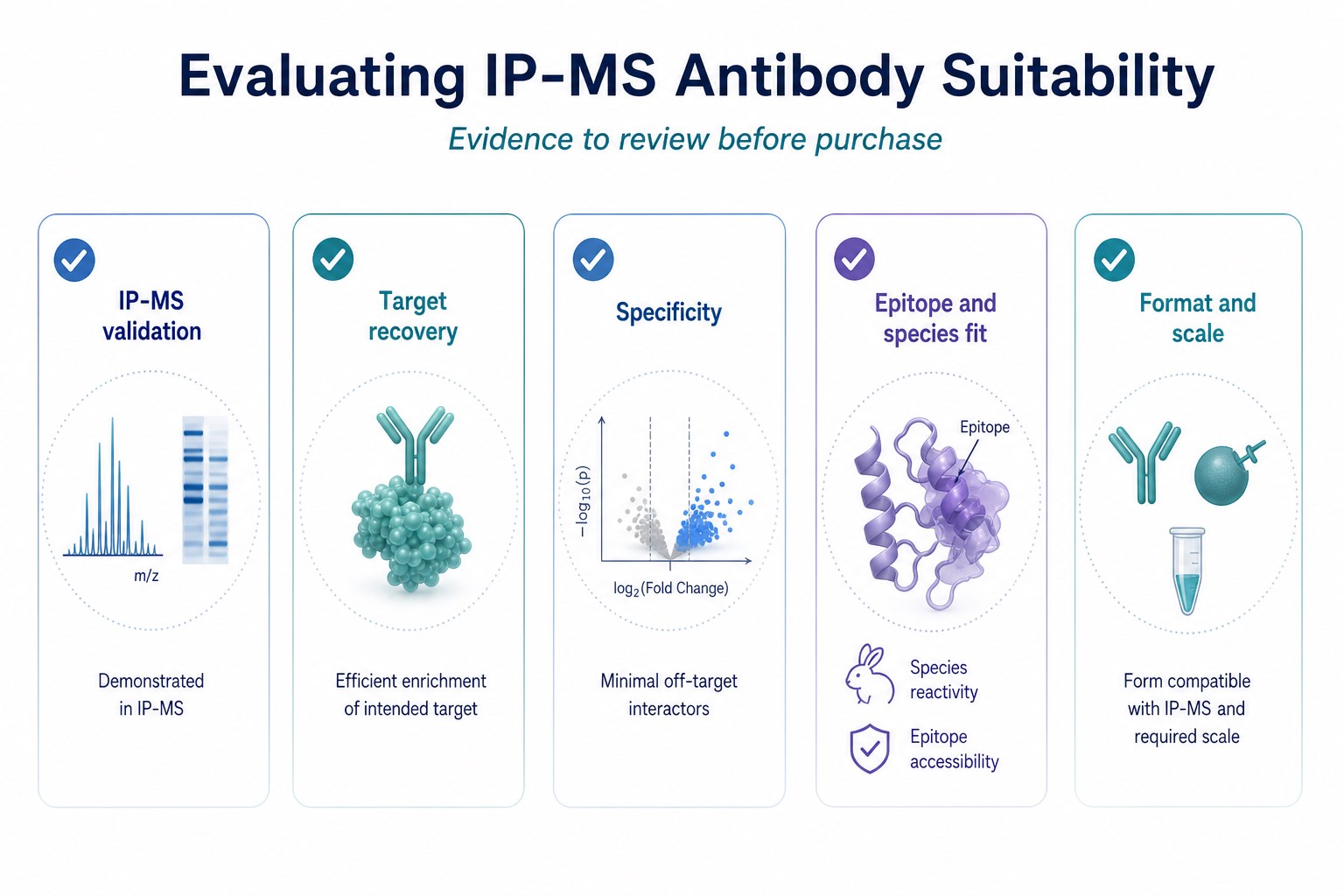
Figure 2. Suitability evaluation weighs IP-MS validation evidence, specificity, epitope fit, and enrichment workflow compatibility.
How to Evaluate Antibody Suitability Before Ordering
A practical evaluation focuses on evidence quality and workflow fit.
| Suitability Factor | What Good Evidence Looks Like | What Raises Concern |
|---|---|---|
| Reported application | IP-MS validated or IP with MS support | Western blot data only, or an IP designation without supporting evidence |
| Target recovery | Clear bait enrichment and MS identification | Weak or undocumented recovery |
| Specificity | KO, KD, or strong orthogonal support | Broad cross-reactivity risk |
| Epitope and species fit | Matches sample isoform and species | Immunogen mismatch |
| Format and scale | Compatible host species, capture system, and sufficient antibody amount | Format or amount limitations |
When two antibodies are both reported to support IP, the antibody with transparent IP-MS enrichment evidence is generally the stronger candidate for an IP-MS experiment.
Related Products
IP-MS Validated NLRP3 Antibody
Researchers comparing antibodies for IP-MS can consult MtoZ Biolabs to evaluate target characteristics, validation evidence, and antibody suitability for the intended enrichment conditions.
Suitable Antibody Profiles for Common IP-MS Goals
Different IP-MS goals emphasize different suitability traits.
Endogenous Bait Recovery
Prioritize antibodies with strong IP-MS validation and clear specificity because target recovery depends directly on the performance of the target-specific antibody.
Interaction Discovery Around a Bait
Prioritize antibodies that recover the bait with manageable nonspecific background, because excessive background can obscure candidate interaction proteins.
PTM-Oriented Enrichment
When enriching a specific modified form, antibody suitability also depends on PTM specificity, recognition-site context, and potential interference from neighboring modifications.
Tagged Constructs
Tag antibodies can support IP-MS analysis of validated tagged constructs with adequate expression. However, their performance does not establish the suitability of a target-specific antibody for endogenous protein enrichment.
In each case, the antibody should be evaluated according to its relevance to the intended enrichment objective rather than the number of antibody products available.
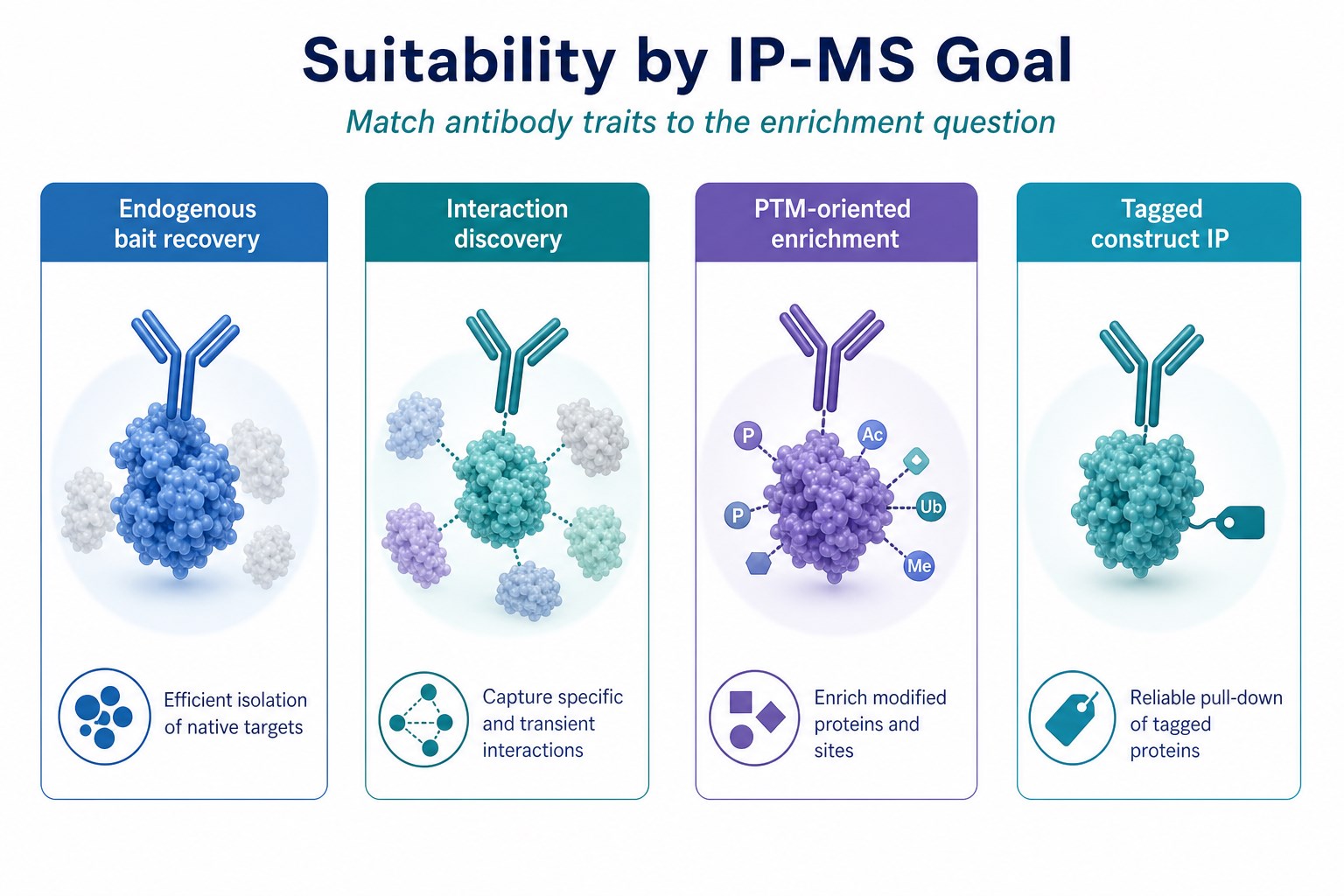
Figure 3. Different IP-MS goals emphasize different suitability traits, from endogenous bait recovery to interaction discovery and PTM-focused enrichment.
Frequently Asked Questions
1. What Makes an Antibody Suitable for IP-MS?
It must immunoprecipitate the intended target with enough specificity and recovery to support interpretable LC-MS/MS enrichment data.
2. What Does IP-MS Validated Antibody Mean?
It usually means the antibody has been tested in an immunoprecipitation workflow with mass spectrometry evidence of target recovery.
3. Is Antibody Validated by IP-MS the Same as Antibody Validated for IP-MS?
In practice, both point to IP-MS suitability. The key consideration is the supporting enrichment evidence rather than the specific term used to describe the antibody.
4. Why Can a Good Western Blot Antibody Fail in IP-MS?
WB can detect denatured epitopes that are poorly accessible during native IP, or it may not predict bead capture and wash performance.
5. Does an IP-MS-Validated Antibody Guarantee a Specific Interaction Profile?
No. It can improve bait recovery and background control, but the identified interaction candidates also depend on sample preparation, wash conditions, negative controls, and data analysis.
Conclusion
An antibody suitable for IP-MS is defined by enrichment performance in an IP-to-MS workflow. The decisive attributes are demonstrated target recovery, specificity, epitope accessibility under IP conditions, species and isoform fit, format compatibility, and practical supply for controlled replicates. Western blot success alone does not establish that suitability.
For researchers already focused on a target protein, selecting an antibody supported by relevant IP-MS evidence can reduce the risk of poor target recovery before LC-MS/MS analysis. Researchers can review the IP-MS Validated Antibodies and Target Protein Antibodies categories, then compare individual antibodies according to evidence relevant to the intended sample type and enrichment conditions. Researchers planning an IP-MS experiment can contact MtoZ Biolabs to discuss target characteristics, antibody validation evidence, and the intended enrichment conditions.
How to order?




