






What is LC-MS in proteomics?
Introduction
Researchers entering proteomics often encounter the term LC-MS before the full workflow is clear. A grant reviewer may ask how proteins will be measured. A service quote may list LC-MS/MS analysis without explaining what the abbreviation means in practice. A collaborator may request LC-MS data when what they actually need is peptide identification, protein quantitation, or both. The term appears frequently, but its meaning is not always defined in plain analytical language.
LC-MS in proteomics refers to the combination of liquid chromatography and mass spectrometry used to separate and measure peptides or proteins in biological samples. Liquid chromatography resolves complex peptide mixtures before they enter the mass spectrometer. Mass spectrometry records ion mass and intensity, and in LC-MS/MS mode also captures fragment ions that support sequence assignment. Together, LC-MS provides the measurement platform behind most modern protein identification and quantitation workflows.
This article explains what LC-MS means in proteomics, how liquid chromatography and mass spectrometry work together, and how LC-MS differs from LC-MS/MS in common project settings.
What LC-MS Means in Proteomics
LC-MS stands for liquid chromatography coupled to mass spectrometry. In proteomics, the technique is used to analyze peptides generated from protein digestion or, in some workflows, intact proteins and larger fragments.
The LC component separates analytes in time so that fewer peptides enter the ion source at once. The MS component measures the mass-to-charge ratio and signal intensity of those ions. When tandem MS is used, the workflow is called LC-MS/MS because selected ions are further fragmented in a second mass analysis stage.
In most bottom-up proteomics projects, LC-MS or LC-MS/MS is the central analytical step that converts a digested protein sample into peptide measurements that software can match to protein sequences. The final proteomics report, whether it is a protein list, a quantitative comparison table, or a peptide coverage map, is built from those LC-MS measurements.
What Liquid Chromatography Does in Proteomics
Liquid chromatography separates peptides by physicochemical properties before mass spectrometry analysis. Reversed-phase LC is the most common mode in proteomics because digested peptides are readily separated by hydrophobicity across an organic solvent gradient.
Chromatographic separation serves three practical functions in proteomics. It reduces ion suppression by preventing too many peptides from being ionized simultaneously. It improves dynamic range by distributing abundant and low-abundance peptides across different retention times. It provides a reproducible time dimension that supports label-free quantitation when peptide ion intensities are compared across runs.
Gradient length, column type, and sample loading influence how many peptides are detected and how consistently they are measured. LC quality directly affects both identification depth and quantitative reproducibility in proteomics.
What Mass Spectrometry Does in Proteomics
Mass spectrometry detects peptide ions and records their mass-to-charge ratio and abundance. In a standard LC-MS experiment, the instrument performs survey scans as peptides elute from the chromatography column.
In LC-MS/MS, selected precursor ions are isolated and fragmented to produce product ions. Those fragment ions provide sequence information used to assign peptide-spectrum matches through database searching or spectral library matching. Without MS/MS fragmentation, proteomics projects usually cannot confirm peptide sequence identity with the same confidence.
Mass spectrometry therefore provides two layers of information in proteomics. The MS layer reports which ions are present and how intense they are. The MS/MS layer, when used, reports fragment patterns that support identification and modification localization.
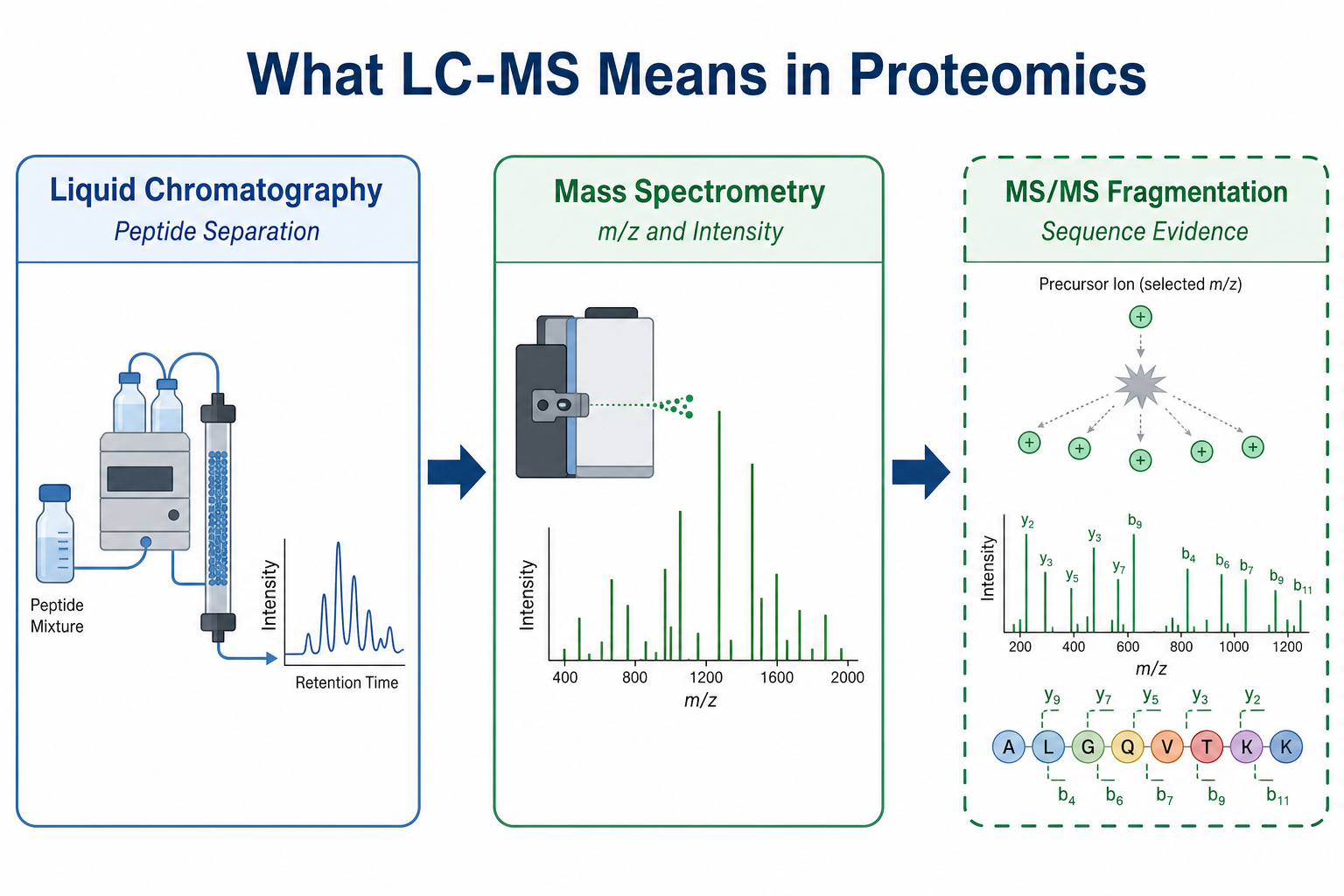
Figure 1. LC-MS in proteomics combines liquid chromatography separation with mass spectrometry measurement and optional MS/MS fragmentation for peptide analysis.
LC-MS versus LC-MS/MS in Proteomics
The terms are related but not identical. LC-MS refers to chromatography coupled to mass spectrometry measurement. LC-MS/MS adds a fragmentation step that generates sequence-informative product ions.
In practice, most proteomics identification projects use LC-MS/MS because protein and peptide identity depends on fragment ion evidence. LC-MS alone may be sufficient for some targeted quantitation workflows when peptides are already known and only intensity monitoring is required.
|
Feature |
LC-MS |
LC-MS/MS |
|---|---|---|
|
Main measurement |
Precursor ion m/z and intensity |
Precursor plus fragment ion spectra |
|
Primary use in proteomics |
Targeted quantitation of known peptides |
Protein and peptide identification |
|
Sequence evidence |
Limited without fragmentation |
Strong when fragment ions are interpretable |
|
Typical output |
Ion chromatograms and intensity traces |
Peptide-spectrum matches and protein lists |
|
Common project type |
PRM assay monitoring |
Discovery identification and PTM mapping |
Researchers should specify whether a project requires LC-MS/MS identification or LC-MS-based targeted quantitation because the reporting goals and method setup differ.
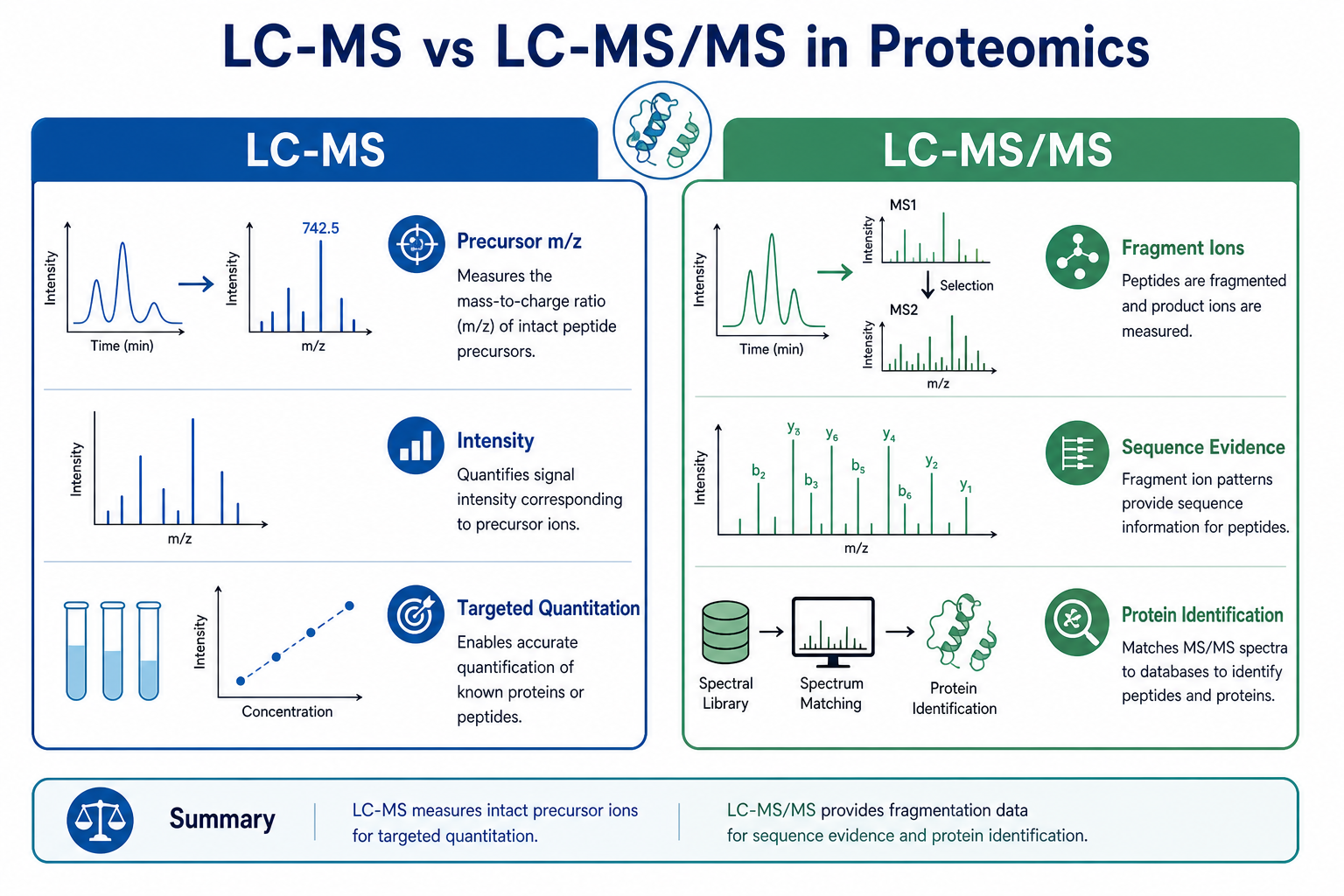
Figure 2. LC-MS and LC-MS/MS differ in fragmentation use, sequence evidence, and typical proteomics applications.
Related Services
Protein Identification Service
Label-Free Quantitative Proteomics Service, MS Based
Quantitative Proteomics Service
Researchers new to LC-MS proteomics can consult MtoZ Biolabs to review sample type, project goal, and whether LC-MS/MS identification or quantitative LC-MS analysis is the better fit.
What LC-MS Produces in a Proteomics Project
LC-MS proteomics does not automatically produce a single universal report. Outputs depend on workflow design.
Discovery projects typically generate peptide-spectrum match tables, protein identification lists, and optional quantitative comparison across sample groups. Biologics characterization projects may generate peptide coverage maps against a reference sequence. Targeted projects may generate reproducible intensity values for a selected peptide panel. PTM projects may generate modified peptide assignments with localization scores.
All of these outputs begin with LC-MS measurements. Interpretation software converts raw spectral data into tables that support biological or quality conclusions.
Common Uses of LC-MS in Proteomics
LC-MS is used across many proteomics settings because it handles complex peptide mixtures efficiently.
|
Use Case |
Why LC-MS Is Used |
Typical Sample |
|---|---|---|
|
Protein discovery |
Identifies many proteins in one run |
Cell lysate or tissue extract |
|
Quantitative comparison |
Compares peptide intensity across groups |
Treatment versus control samples |
|
Biologics peptide mapping |
Confirms sequence coverage |
Purified antibody or protein |
|
PTM analysis |
Detects modified peptides after enrichment |
Stimulated cells or purified protein |
|
Targeted monitoring |
Measures selected peptides reproducibly |
Plasma, lysate, or product sample |
The same LC-MS platform can support these uses when sample preparation and acquisition mode are matched to the question.
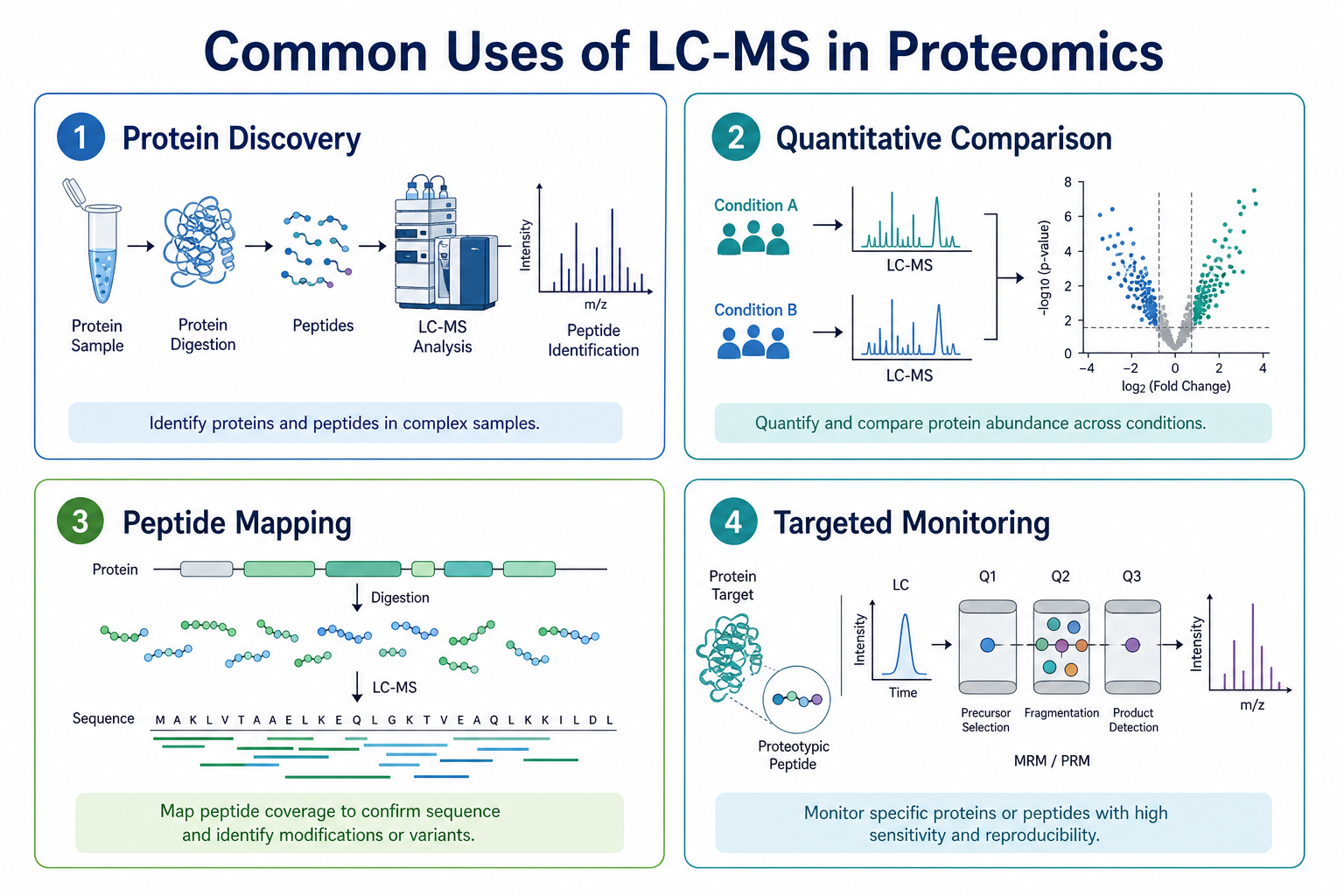
Figure 3. LC-MS in proteomics supports protein discovery, quantitative comparison, peptide mapping, and targeted monitoring.
Why LC-MS Is Widely Used in Proteomics
LC-MS has become a standard proteomics platform for several practical reasons.
It provides sequence-level evidence when LC-MS/MS fragmentation is used. It can measure many peptides in one experiment without requiring antibodies for each protein. It supports both unbiased discovery and focused targeted analysis. It is compatible with label-free, isobaric, metabolic labeling, and PRM quantitation strategies. It can be applied to cell lysates, tissues, biofluids, and purified proteins with adapted preparation methods.
Other methods such as western blot and ELISA remain important for routine target measurement when qualified reagents exist. LC-MS is often selected when broader protein coverage, sequence confirmation, or flexible comparison across conditions is required.
Frequently Asked Questions
1. What is LC-MS in proteomics?
LC-MS in proteomics is the combination of liquid chromatography and mass spectrometry used to separate and measure peptides or proteins in biological samples for identification or quantitation.
2. Is LC-MS the same as LC-MS/MS?
No. LC-MS measures precursor ions. LC-MS/MS adds fragmentation to generate product ions that support peptide sequence identification.
3. Why is liquid chromatography needed before mass spectrometry?
Liquid chromatography separates peptides in time, which reduces ion suppression and improves the number and quality of peptides detected in complex mixtures.
4. What types of samples are analyzed by LC-MS proteomics?
Common samples include cell lysates, tissues, plasma, serum, and purified proteins or biologics.
5. Can LC-MS both identify and quantify proteins?
Yes. LC-MS/MS is commonly used for identification, and peptide ion intensities from LC-MS runs support quantitation in the same or related workflows.
Conclusion
LC-MS in proteomics is the analytical platform that links sample preparation to protein-level results. Liquid chromatography separates peptides before mass spectrometry measurement, and LC-MS/MS adds fragmentation for sequence identification when required. The technique supports protein discovery, quantitative comparison, biologics peptide mapping, PTM analysis, and targeted monitoring across many sample types.
Understanding what LC-MS measures and how it differs from LC-MS/MS helps researchers interpret service quotes, plan experiments, and evaluate proteomics reports more clearly. Teams beginning an LC-MS proteomics project can contact MtoZ Biolabs to review sample type, analytical goal, and the workflow best suited to identification, quantitation, or both.
How to order?




