






What Determines the Cost of a Mitochondrial Proteomics Study?
The cost of a mitochondrial proteomics study is driven mainly by how many samples you run, how complex the sample and design are, which acquisition path the comparison needs, and which report elements are included. The final quotation reflects the complete project scope, including cohort size, preparation difficulty, the complexity of the comparison, and the agreed analytical deliverables.
No universal list price fits every project, because feasibility still depends on the specific sample set. Contact MtoZ Biolabs for a free initial consultation to discuss your sample type, sample number, preparation status, group design, research goals, and required deliverables. After the project scope and feasibility are reviewed, we can provide a project-specific quotation.
Cost Is a Scope Question First
A mitochondrial proteomics service quote is not one fixed package for every mitochondrial question. Two projects can both be labeled “mitochondrial proteomics” and still differ substantially if one is a small identification-focused set and the other is a multi-group quantitative cohort with added interpretation requirements.
Before asking for cost, lock four scope items:
- Sample class and approximate amounts.
- Number of samples, groups, and biological replicates.
- Whether the endpoint is identification, quantification, or both.
- Which files and report elements must be delivered.
Those items determine work volume more reliably than broad phrases such as “full mitochondrial analysis.”
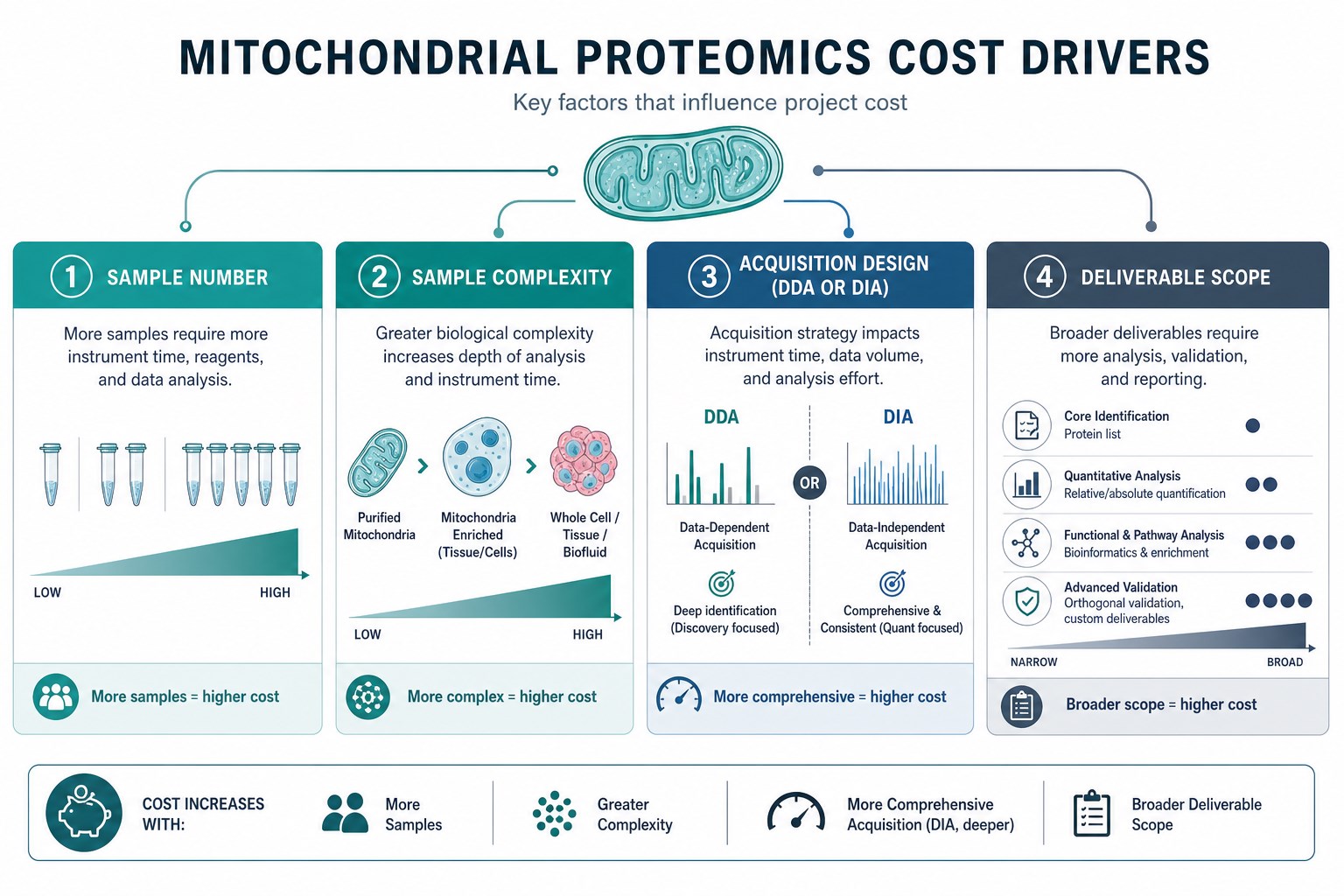
Figure 1. Cost follows sample number, sample complexity, acquisition design, and deliverable scope.
Sample Number and Study Design
Cohort size is usually the largest visible cost driver.
More samples mean more preparation, acquisition, and data handling. Adding groups and biological replicates improves differential confidence, but it also expands the study. Technical repeats, if requested, add further acquisition load without replacing biological replication.
Design choices that commonly change scope include:
- Inventory-style work on a limited sample set versus multi-group quantitative comparison.
- Balanced designs that need careful run-order or multiplex planning.
- Follow-up comparisons added after an initial pilot.
If budget is constrained, decide whether a smaller well-powered contrast is better than a broad underpowered panel. Cutting replicates to save cost can make the resulting differentials harder to defend, which may create rework later.
Sample Type, Amount, and Feasibility Effort
Not every mitochondrial input has the same handling demand.
Cells, animal tissue, and extracted mitochondrial solutions sit in different planning classes. Current planning references are about 5×10^7 cells, about 200 mg tissue, or extracted mitochondrial protein of at least about 50 µg with about 80-100 µg commonly planned, at a concentration commonly planned around 1 µg/µL. Meeting those anchors reduces failed-start risk. Falling short may trigger feasibility review, redesign, or sample replacement discussions before acquisition can proceed.
Unusual matrices, borderline amounts, degraded material, or unclear preparation history can increase pre-analytical effort because risk and accept-or-not decisions are sample-specific. That feasibility work is part of what a realistic quote has to absorb, even when no formal price table is published in advance.
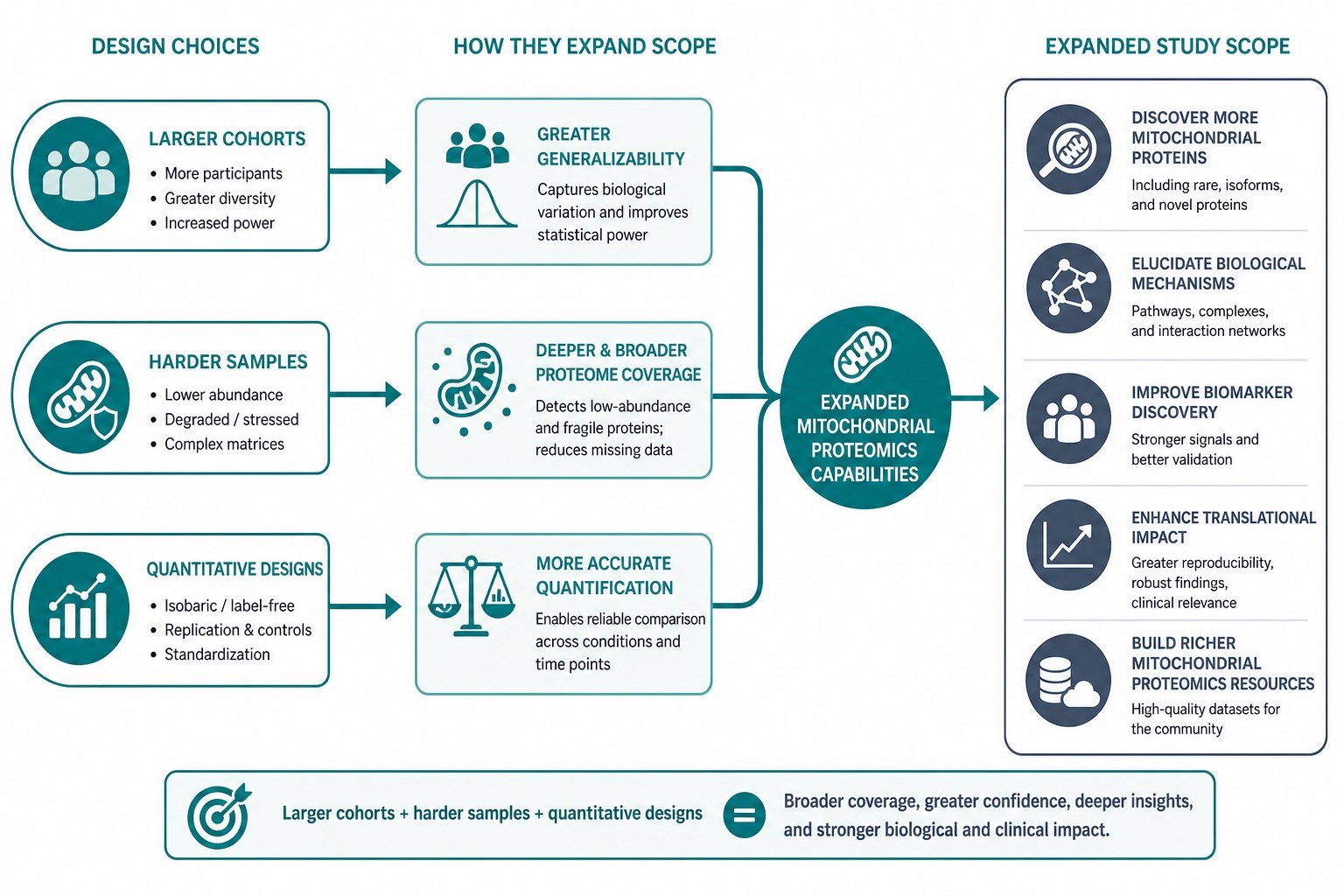
Figure 2. Larger cohorts, harder samples, and quantitative designs expand scope before acquisition begins.
Acquisition Path and Deliverable Depth
Acquisition mode affects both scientific fit and project scope.
DDA paths, commonly processed with MaxQuant or Proteome Discoverer, and DIA paths, commonly processed with Spectronaut or DIA-NN, support different comparison needs. Platform options for this service line include Orbitrap Exploris 480, timsTOF Pro, and Orbitrap Astral. Choosing a path should start from the study question. A mode mismatch can waste budget by generating the wrong kind of evidence for the decision you need.
Deliverable depth also matters. A base package centered on raw files, identification outputs, quantification matrices when designed, differential tables, and a project report is not identical to a project that adds extra interpretation layers. Pathway or annotation add-ons should be confirmed project by project rather than assumed as automatic inclusions. If they are required for your decision, put them in the scope list at quote time.
Planning guidance for turnaround is about 4 weeks, with timing still dependent on sample condition and complexity. Faster or expanded requests, if feasible at all, are scope changes and should be discussed explicitly.
What Should Not Be Assumed Into the Proteomics Quote
A frequent budget error is assuming functional mitochondrial assays are bundled into proteomics cost.
Outside this proteomics service scope are oxidative phosphorylation or respiration panels, membrane-potential assays, ROS assays, respiratory-chain enzyme tests, calcium or permeability-transition assays, injury or toxicity panels, electron microscopy, and high-content imaging. If those readouts are required for the paper or go or no-go decision, budget them as separate workstreams.
Also avoid assuming a guaranteed protein count or a guaranteed mechanism conclusion. Coverage depends on input and design; interpretation still needs ranked evidence and, where needed, orthogonal validation.
|
Cost driver |
What increases scope |
What keeps scope controlled |
|---|---|---|
|
Sample number |
More groups, replicates, or add-on cohorts |
A focused contrast with adequate replicates |
|
Sample difficulty |
Borderline amount, unusual matrix, weak documentation |
Inputs within planning anchors and clear prep records |
|
Acquisition design |
Mode changes, complex quantitative layouts |
One coherent DDA or DIA path matched to the goal |
|
Deliverables |
Extra interpretation modules added late |
Report contents confirmed at kickoff |
|
Out-of-scope assays |
Function or imaging work assumed into proteomics |
Separate budget for phenotype assays |
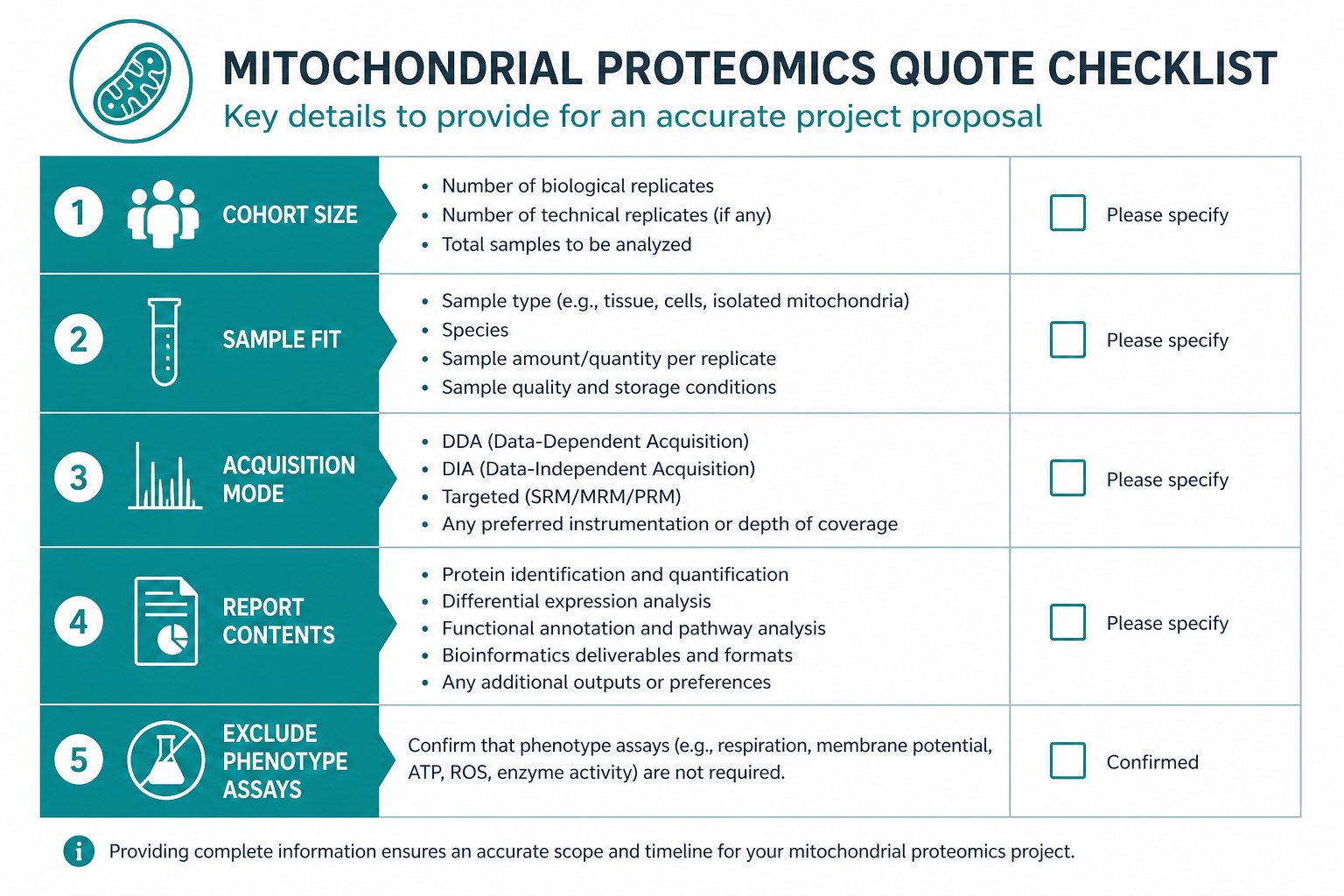
Figure 3. Confirm cohort, sample fit, mode, deliverables, and exclusions before requesting a quote.
When requesting cost guidance, send sample type and counts, approximate amounts, group map, preferred DDA or DIA path if known, required report files, and any functional assays planned outside proteomics. MtoZ Biolabs can translate that scope into a project-specific quote without treating mitochondrial proteomics as a one-price commodity.
Related Services
Teams aligning budget scope to organelle proteomics options can review the services below while the quote package is still open.
Mitochondrial Proteomics Service
The main route for mitochondrial protein analysis once sample number, design, and deliverables are defined for quoting.
Subcellular Proteomics Service
Use this when the funded question spans multiple subcellular fractions rather than a mitochondria-only design.
Subcellular Structure and Organelle Proteomics Service
A broader organelle proteomics option when mitochondrial work is one funded part of a multi-compartment study.
Frequently Asked Questions
1. What determines the cost of a mitochondrial proteomics study?
Sample number, sample complexity, acquisition design, deliverable depth, and whether out-of-scope assays are mistakenly assumed into the package.
2. Is there one standard price for all mitochondrial proteomics projects?
No. Quotes are scope-specific because sample feasibility and design differ by project.
3. Are OXPHOS or membrane-potential assays included in proteomics cost?
No. Those phenotype assays are outside this proteomics service scope and need separate planning if required.
4. How Can I Manage the Budget Without Weakening the Study Design?
Define one clear contrast, size biological replicates adequately, meet sample planning anchors, and confirm report contents before kickoff.
Conclusion
What determines the cost of a mitochondrial proteomics study is project scope: how many samples, how difficult they are to run, which acquisition path the question needs, and which deliverables are truly required. Treating cost as a scope checklist produces better quotes than asking for a generic mitochondrial price.
If exclusions such as functional assays are also stated early, budgets stay aligned with the evidence the study can actually deliver. Teams ready for a scope-based quote can review the checklist with MtoZ Biolabs before the mitochondrial proteomics study is scheduled.
How to order?




