






Using Mitochondrial Proteomics to Study OXPHOS and Energy Metabolism
Mitochondrial proteomics helps OXPHOS and energy-metabolism studies by showing how proteins linked to oxidative phosphorylation and mitochondrial energy pathways change in abundance across conditions. It does not replace OXPHOS activity assays. In practical terms, mitochondrial protein analysis can rank remodeling of respiratory-chain subunits and related metabolic proteins, while respiration, enzyme activity, membrane potential, and ROS readouts remain separate functional measurements.
Use proteomics when the question is which OXPHOS-associated proteins differ between states. Use dedicated activity panels when the question is whether mitochondria are respiring, polarized, or enzymatically impaired. Teams deciding which layer they need can share the energy-metabolism claim, model design, and any parallel functional assays with MtoZ Biolabs before the project path is set.
The Decision Hinge: Protein Remodeling Versus Functional Output
OXPHOS and energy metabolism research often mixes two claims:
- Protein-level claim: subunits or metabolic enzymes in the mitochondrial preparation changed.
- Function-level claim: respiratory capacity, complex activity, membrane potential, or ROS handling changed.
Mitochondrial proteomics answers the first claim. It cannot, by itself, certify the second. A lower abundance of selected complex subunits can support a hypothesis about OXPHOS remodeling, but flux and activity still need orthogonal assays.
That hinge prevents a common mismatch: requesting a mitochondrial proteomics service while expecting a bundled respiration or enzyme-activity report. Those phenotype readouts are outside this proteomics scope and should be planned separately if the manuscript depends on them.
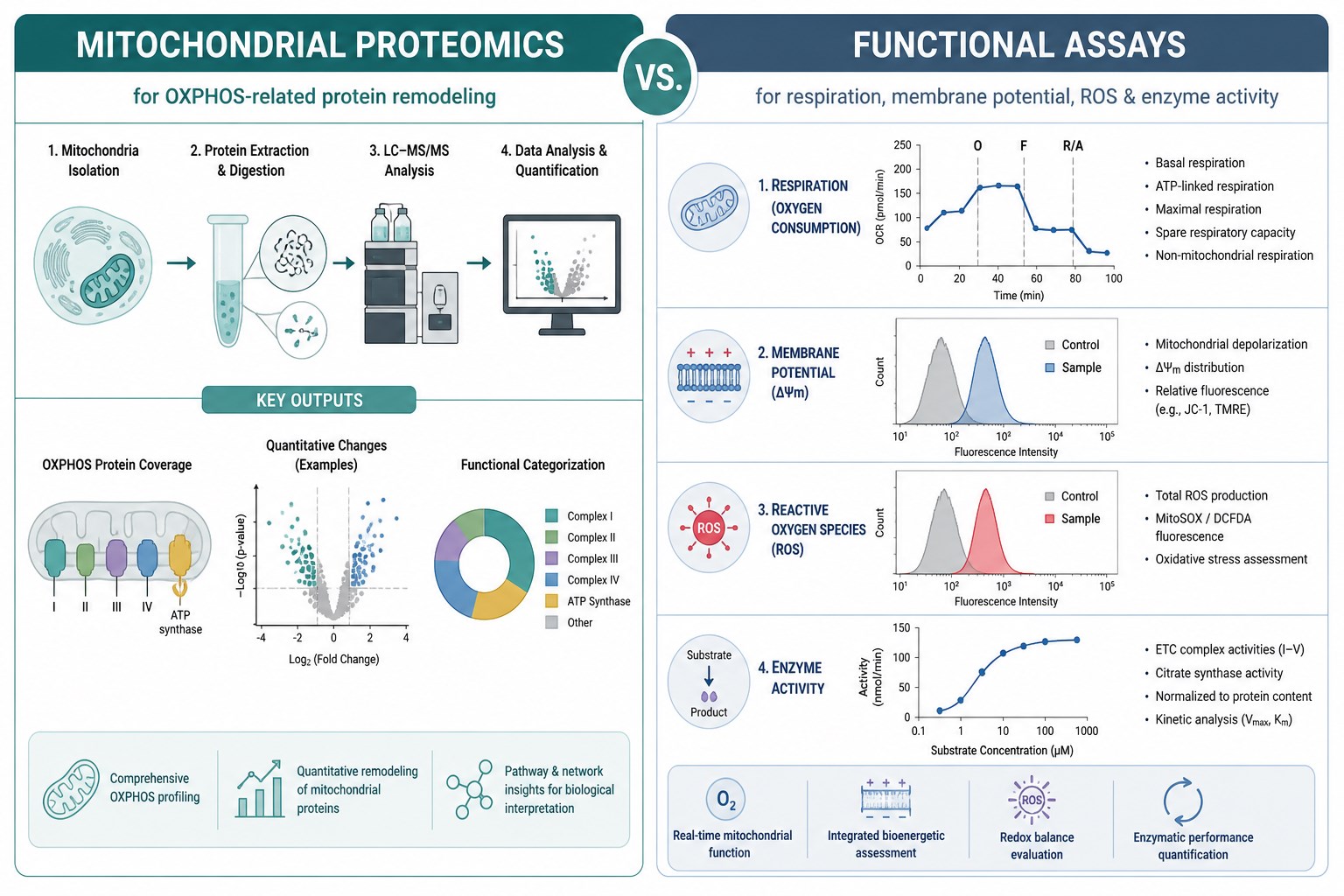
Figure 1. Use proteomics for OXPHOS-related protein changes; use dedicated assays for respiration, potential, ROS, or enzyme activity.
What Proteomics Can Show in OXPHOS and Energy-Metabolism Studies
For energy-focused projects, mitochondrial proteomics can provide:
- Identification of proteins recovered from cells, tissue, or extracted mitochondrial preparations under metabolic stress or disease-relevant conditions.
- Quantitative comparisons of OXPHOS-associated and energy-metabolism-associated proteins across designed groups.
- Ranked candidates that point follow-up toward specific complexes, transporters, or metabolic enzymes.
- A report package with raw files and result tables for review.
Acquisition options include Orbitrap Exploris 480, timsTOF Pro, and Orbitrap Astral. DDA paths are commonly processed with MaxQuant or Proteome Discoverer; DIA paths with Spectronaut or DIA-NN. Choose the mode from whether the priority is flexible discovery or consistent cohort quantification. No fixed protein total should be assumed for every energy-metabolism model.
Sample planning still limits what can be seen. Planning references are about 5×10^7 cells, about 200 mg animal tissue, or extracted mitochondrial protein of at least about 50 µg with about 80-100 µg commonly planned, at a concentration commonly planned around 1 µg/µL. Keep amounts matched across metabolic contrasts so input gaps do not look like OXPHOS biology.
Study Designs That Fit Energy-Metabolism Questions
Proteomics is most useful when the metabolic contrast is already defined.
Useful designs include:
- Nutrient stress versus control under matched culture or feeding conditions.
- Disease or genotype models with suspected OXPHOS remodeling versus matched references.
- Drug or toxicant exposure expected to alter mitochondrial energy machinery versus vehicle.
- Time points after a metabolic challenge when protein remodeling, not only acute flux, is the endpoint.
In each case, state the intended claim before kickoff. If the claim is “complex I activity fell,” plan an activity assay. If the claim is “complex I subunits and related mitochondrial proteins remodeled,” proteomics is on target.
Functional assays that remain outside this proteomics service include oxidative phosphorylation or respiration panels, membrane-potential assays, ROS assays, respiratory-chain enzyme activity tests, calcium or permeability-transition assays, mitochondrial injury or toxicity panels, electron microscopy, and high-content imaging. They can complement proteomics in a full energy-metabolism study, but they are not generated by the proteomics data package.
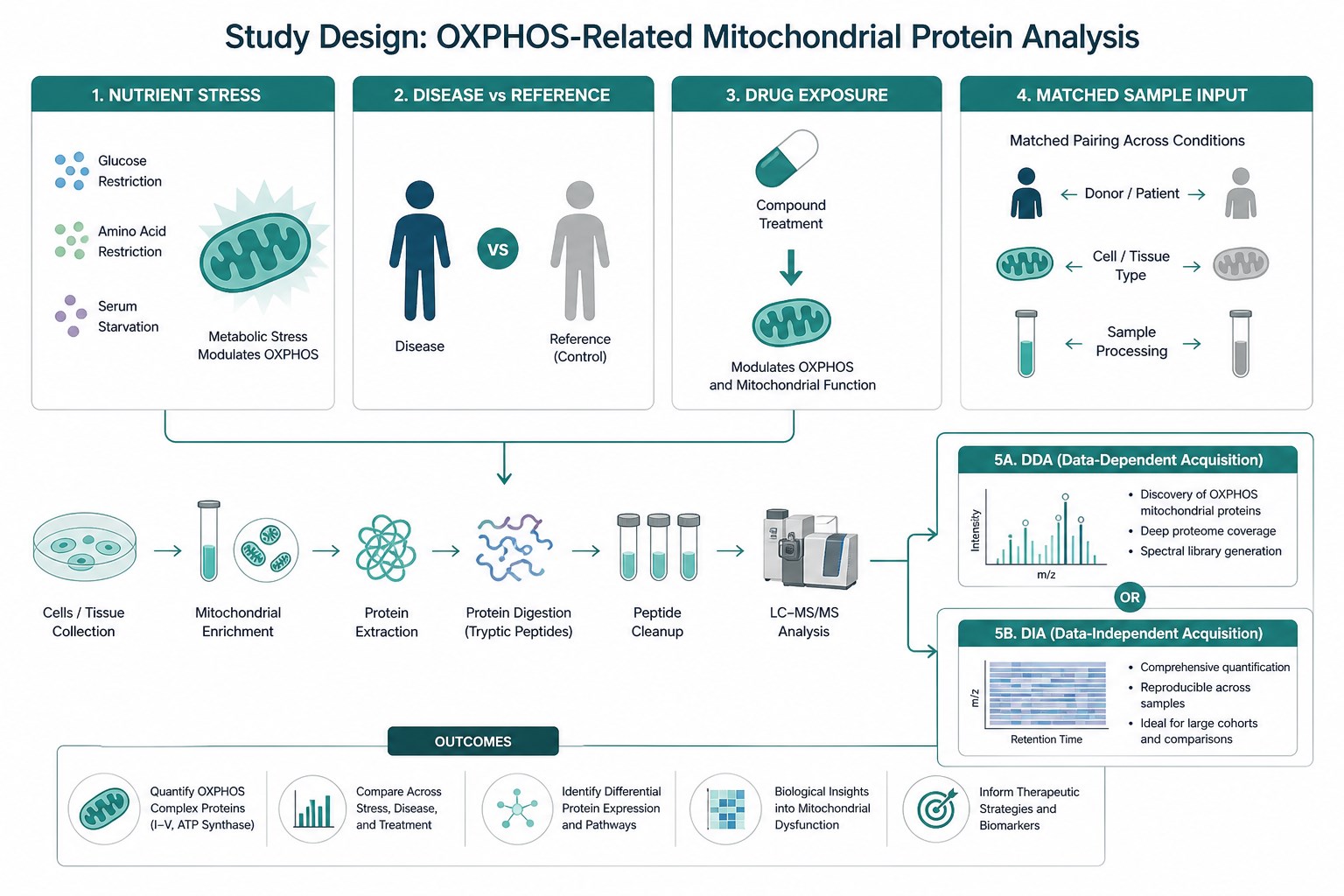
Figure 2. Build clear metabolic contrasts first, then keep sample input and DDA or DIA acquisition matched across groups.
Interpreting OXPHOS-Related Proteomics Without Overreach
Read energy-metabolism proteomics results as protein evidence.
A coordinated decrease or increase among respiratory-chain subunits can support follow-up on OXPHOS composition. Changes in TCA-cycle enzymes, substrate transporters, or other mitochondrial metabolic proteins can refine the shortlist. None of those patterns alone proves impaired ATP production, altered membrane potential, or a specific complex activity defect.
A practical sequence for OXPHOS-focused work is:
- Define whether the endpoint is protein remodeling, functional output, or both.
- Design groups and biological replicates around the metabolic contrast.
- Confirm sample amounts and whether mitochondria are already extracted.
- Run mitochondrial proteomics to rank OXPHOS- and metabolism-associated changes.
- Move priority findings into activity, respiration, or other orthogonal assays when function must be claimed.
Planning guidance for the proteomics segment is about 4 weeks, with timing still dependent on sample condition and project complexity. Borderline inputs should be reviewed case by case before an energy-metabolism timeline is finalized.
|
Research question |
Proteomics contribution |
Separate assay needed |
|---|---|---|
|
Did OXPHOS-related proteins remodel? |
Quantitative candidate ranking |
Not necessarily |
|
Is respiratory capacity reduced? |
Supportive context only |
Respiration or OXPHOS activity panel |
|
Is membrane potential altered? |
Not measured by proteomics |
Membrane-potential assay |
|
Which proteins to validate next? |
Ranked shortlist |
Targeted follow-up on top proteins |
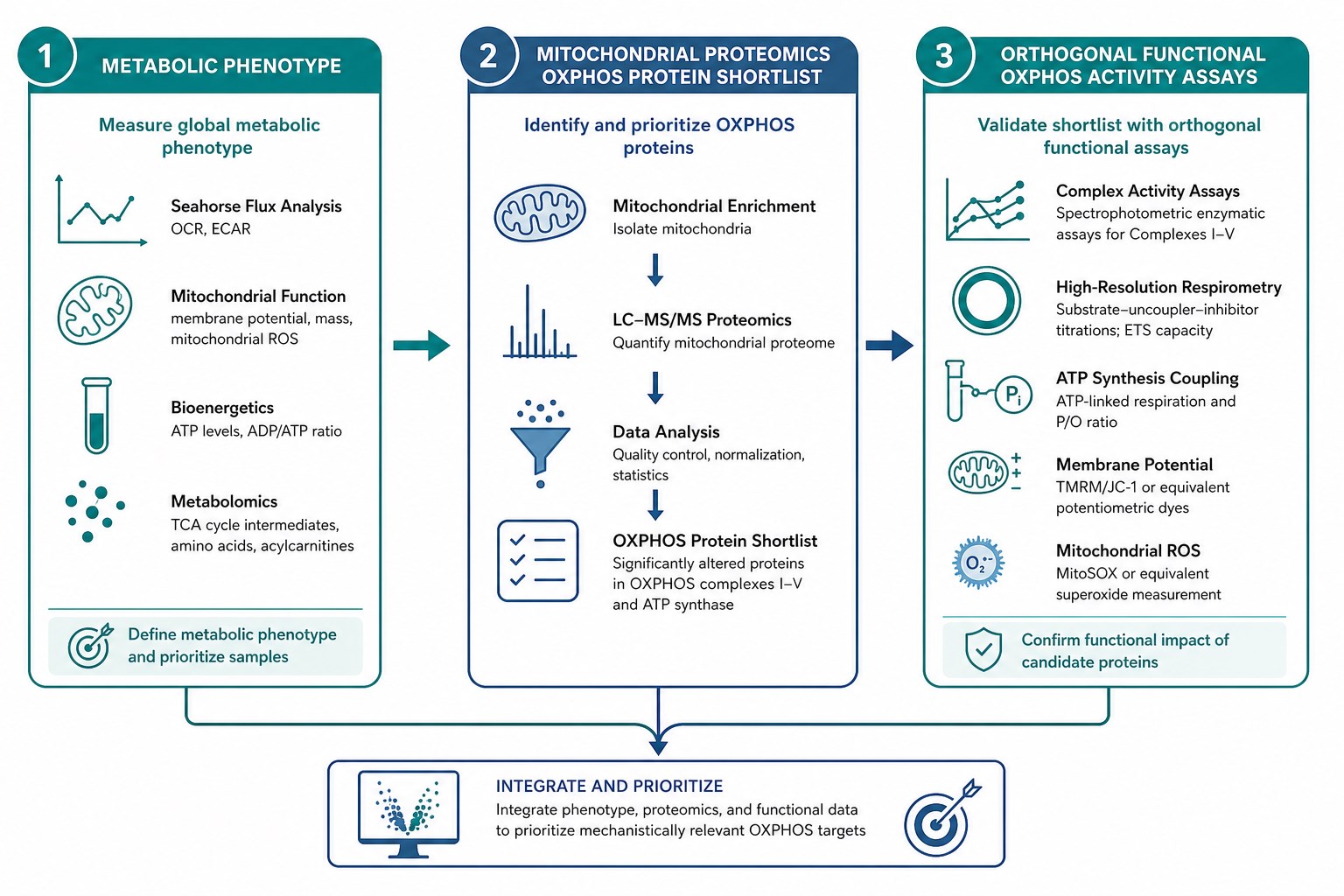
Figure 3. Proteomics prioritizes OXPHOS-related protein changes; functional assays test energy output and activity.
When requesting an OXPHOS-oriented plan, send the metabolic claim sentence, model details, group map, sample type and amounts, preferred DDA or DIA path if known, and which activity assays will run in parallel. MtoZ Biolabs can confirm whether mitochondrial proteomics is the right layer for that energy-metabolism question or whether functional testing should lead.
Related Services
Teams mapping energy-metabolism questions to organelle proteomics options can review the services below while scope is still open.
Mitochondrial Proteomics Service
The main route for mitochondrial protein analysis when OXPHOS- and energy-metabolism-related protein remodeling is the required evidence.
Subcellular Proteomics Service
Use this when metabolic questions span multiple subcellular fractions rather than a mitochondria-focused design alone.
Subcellular Structure and Organelle Proteomics Service
A broader organelle proteomics option when mitochondrial energy-related changes are compared with other compartments.
Frequently Asked Questions
1. Can mitochondrial proteomics measure OXPHOS activity?
No. It measures protein identification and abundance changes. OXPHOS activity and respiration need dedicated functional assays.
2. How can proteomics still help energy-metabolism research?
It can show whether OXPHOS-associated and related metabolic proteins remodel across conditions and rank candidates for follow-up.
3. What design works best for these studies?
Clear metabolic contrasts with matched handling, adequate sample amounts, and biological replicates.
4. How much sample is typically needed?
Planning references are about 5×10^7 cells, about 200 mg tissue, or about 50 µg protein minimum for extracted mitochondria, with about 80-100 µg commonly planned.
5. What should I send to decide between proteomics and activity assays?
Share your research question, model, group design, sample type, and intended endpoint. Use proteomics to compare protein-abundance patterns and functional assays to measure respiration, membrane potential, ROS, or enzyme activity. A mechanism-oriented study may require both.
Conclusion
Using mitochondrial proteomics to study OXPHOS and energy metabolism works when the goal is protein remodeling evidence, not when the goal is a direct activity certificate. The method can prioritize OXPHOS-related protein changes and guide follow-up, while respiration and enzyme assays remain the tools for functional claims.
Keeping that boundary clear at kickoff makes both the proteomics package and any parallel functional work easier to interpret. Teams ready to split protein and activity layers can review the plan with MtoZ Biolabs before mitochondrial protein analysis begins.
How to order?




