






Urine Peptideomics Service
- Identification and Quantification of Endogenous Peptides: Obtain large-scale peptide information from urine, including sequences, intensities, and variation trends
- Differential Peptide Screening: Support comparative studies such as disease versus control, intervention versus control, and pre- versus post-treatment
- Biological Function Insights: Provide source protein characteristics, potential pathway associations, and interpretation of peptide changes
- Peptide Structural Feature Analysis: Present amino acid composition, cleavage preferences, and potential biological relevance of peptides
- Support for Multi-Omics Integration: Enable correlation analysis with proteomics, metabolomics, and kidney function assessments
MtoZ Biolabs provides professional urine peptideomics service based on high-resolution LC-MS/MS, multi-level quality control procedures, and peptide-tailored analytical strategies to deliver systematic identification, quantitative analysis, and biological interpretation of endogenous urinary peptides for research institutions and pharmaceutical development clients. This service supports a wide range of applications, including disease research, biomarker development, and therapeutic response monitoring.
Why Urine Peptideomics Matters
Urine naturally contains a large number of low molecular weight peptides generated from processes such as protein degradation, enzymatic activity, immune regulation, metabolic changes, and tissue microenvironment remodeling. These endogenous peptides sensitively and directly reflect multilayer physiological and pathological dynamics in the body. As a biological matrix with simpler composition and fewer interfering substances, urine provides a clearer view of low-abundance regulatory peptide fluctuations, making it easier to capture subtle but biologically meaningful signals.
Urinary peptide profiles reflect kidney function, metabolic status, inflammatory injury, and early disease changes, making urine an ideal noninvasive source for biomarker discovery. With the advancement of high-resolution mass spectrometry, urine peptidomics has demonstrated broad potential in kidney disease research, cardiovascular studies, metabolic disorders, cancer investigation, and drug evaluation.
Urine Peptideomics Service at MtoZ Biolabs
Workflow of Urine Peptideomics Service
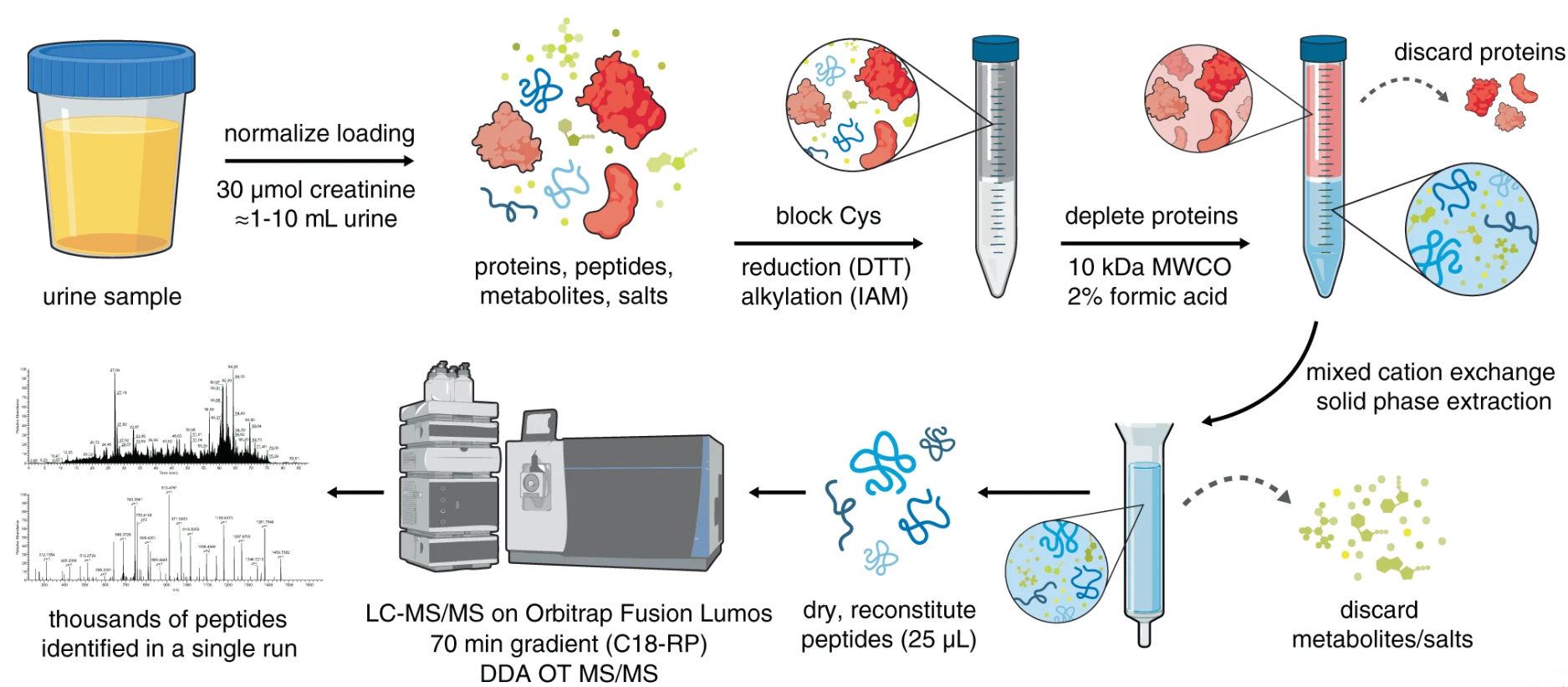
Palanski, BA. et al. Nat Commun. 2022.
Why Choose MtoZ Biolabs
☑️ Sample Processing Strategies Tailored to the Urine Matrix:
☑️ High-Sensitivity Mass Spectrometry Platforms:
☑️ Dedicated Data Analysis Pipeline for Endogenous Peptides:
☑️ Experienced Scientific Team:
☑️ One-Time Charge: Our pricing is transparent, with no hidden fees or additional costs.
Applications of Urine Peptideomics Service
● Kidney Disease Research and Early Diagnostic Clue Discovery:
● Monitoring Inflammation, Metabolism, and Tissue Injury:
● Cancer-Related Urinary Biomarker Exploration:
● Drug Mechanism and Efficacy Evaluation:
● Multi-Omics Integrative Research:
Deliverables
● Urinary peptide identification list (Excel)
● Peptide quantification matrix and differential peptide results
● LC-MS/MS raw mass spectrometry files
● Data quality control plots and visualization figures
● Basic functional annotation and source protein suggestions
● Standardized PDF report including methods, statistical strategies, and major findings
FAQs
Q1: What types of samples are suitable?
MtoZ Biolabs accepts human and animal urine samples collected under standard clinical or laboratory procedures. Freshly collected midstream urine is preferred to ensure the integrity of endogenous peptides. Avoid samples that are visibly turbid, contaminated, or contain excessive cellular debris.
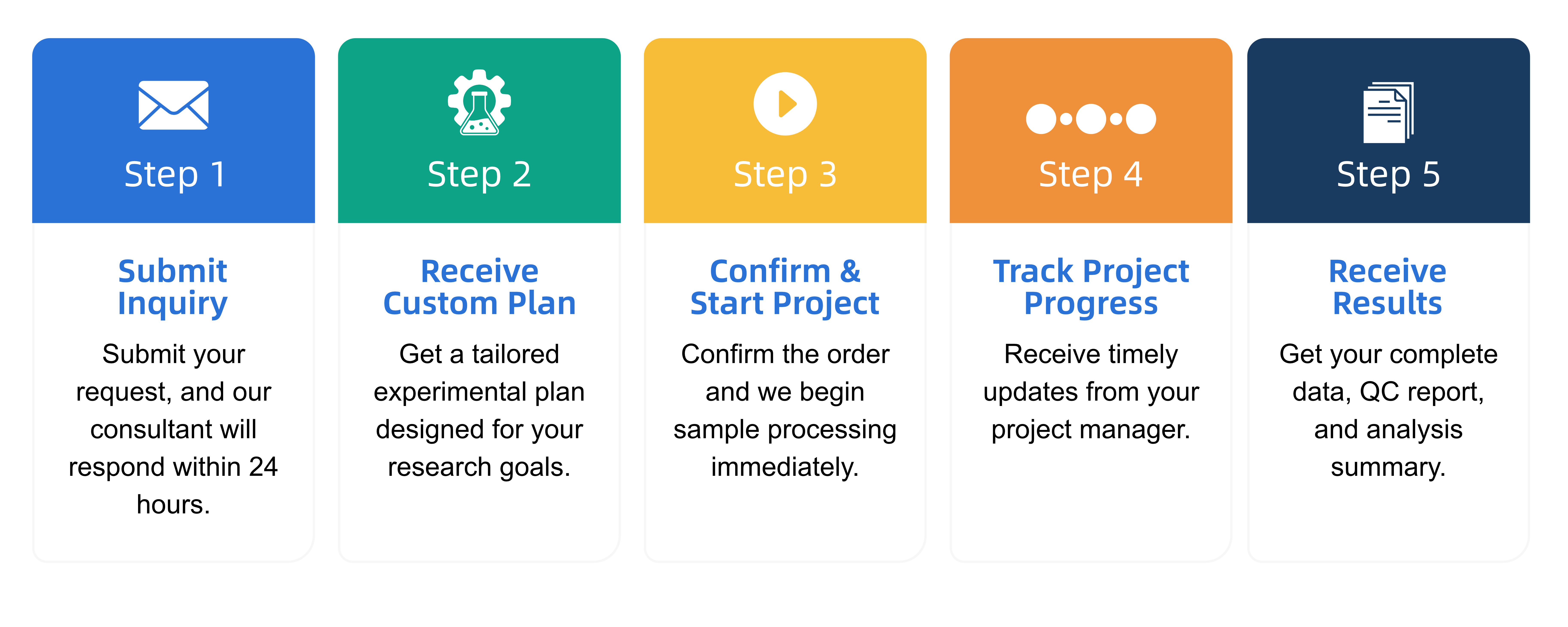
Q2: What is the service's general workflow?
Q3: What data formats are provided?
MtoZ Biolabs provides results in multiple standard formats to ensure compatibility with analysis and visualization tools. Deliverables typically include
● Raw data files generated from LC-MS/MS platforms
● Processed data tables in CSV or Excel format containing identified and quantified urinary peptides
● Summary reports in PDF format including analytical methods, QC results, and key findings
● Figures, chromatograms, and QC plots in high-resolution formats such as TIFF or PNG
Additional file formats or customized data structures can be provided upon request to meet publication or project-specific requirements.
Q4: How should I prepare my samples?
To ensure accurate and reproducible results, MtoZ Biolabs recommends preparing urine samples according to the following guidelines
1. Sample Type: Use first-morning or midstream urine whenever possible. For animal studies, collect urine under controlled conditions to avoid contamination.
2. Sample Purity: Avoid adding detergents, protease inhibitors, or preservatives that may affect endogenous peptide extraction or ionization. Remove large particulates by gentle centrifugation if necessary.
3. Volume Requirement: Provide at least 1 mL of urine per sample. Additional volume may be required for deeper profiling or replicate analyses.
4. Storage and Shipping: Freeze samples at −80°C immediately after collection. Ship on dry ice in leak-proof containers to prevent peptide degradation.
5. Documentation: Include sample origin, collection conditions, fasting status if applicable, storage duration, and grouping information.
For more information, please refer to Sample Submission Guidelines for Proteomics and Sample Submission Guidelines for Metabolomics.
If you are unsure about your sample preparation, our technical team can provide personalized pre-analysis consultation and a sample submission guide to help you optimize preparation and shipping conditions.
Start Your Project with MtoZ Biolabs
MtoZ Biolabs offers reliable and high-quality urine peptidomics solutions supported by a mature mass spectrometry platform, standardized workflows, and professional data analysis capabilities. If you are planning related research, please contact us. We look forward to supporting your scientific discovery and innovation.
How to order?




