






Urine EV Proteomics: Sample Collection and LC-MS/MS Planning Considerations
-
collection conditions and subject metadata
-
clarification before freezing or isolation
-
freeze-thaw exposure
-
EV or exosome isolation chemistry
-
QC evidence for particle and purity context
-
collection protocol and sample type definition
-
planned or completed clarification and storage conditions
-
isolation status and method
-
estimated urine volume or isolated EV yield
-
available QC data
-
study goal: profiling or comparative analysis
-
group design, replicate plan, and key clinical or experimental metadata
Introduction
Urine is an attractive matrix for extracellular vesicle research because collection is noninvasive and repeat sampling is often feasible. At the same time, urine EV proteomics and urine exosome proteomics are sensitive to pre-analytical choices. Collection timing, clarification steps, storage temperature, and isolation method can change particle recovery and the soluble protein background that later enters LC-MS/MS.
Teams planning urine-derived vesicle proteomics therefore need more than a generic exosome checklist. They need a matrix-specific plan that connects urine collection to EV enrichment, QC review, and LC-MS/MS design. This article outlines practical sample collection and planning considerations for urine EV proteomics before analysis begins. For project-specific evaluation of urine-derived EV samples, researchers can review the Exosome / Extracellular Vesicle Proteomics Service page and prepare collection, isolation, QC, and study design information before inquiry.
Why Urine EV Proteomics Needs Matrix-Specific Planning
Urine contains extracellular vesicles along with soluble proteins, salts, metabolites, cellular debris, and variable amounts of uromodulin and other matrix components. These co-existing materials can affect isolation efficiency and increase non-vesicle protein signal in proteomics datasets.
As a result, urine exosome proteomics outcomes depend heavily on whether the laboratory controlled:
Without those controls, differential protein lists may reflect handling differences rather than biology.
Sample Collection Considerations for Urine EV Studies
1. Collection Type and Timing
Define whether samples are first-morning, random-spot, timed, or pooled collections. Consistency across subjects and visits matters more than choosing one universally perfect protocol. Mixed collection types inside one comparative cohort should be avoided unless the contrast is intentional and documented.
2. Volume Planning
Required urine volume depends on expected EV yield, isolation method, and whether the study is profiling or comparative. For MtoZ Biolabs project planning, 50 mL of urine is a reference input for quantitative proteomics, while 50–100 mL is listed for EV characterization. Actual requirements may vary with sample preparation status and study design. Volume planning should cover all replicates and planned QC aliquots, not only a single isolation attempt.
3. Preservatives and Additives
If preservatives, protease inhibitors, or stabilizers are used, record product identity and final concentration. Some additives help preserve proteins but may affect downstream isolation or MS compatibility. Undocumented additives are a common source of intake delay.
4. Clarification Before Storage or Isolation
Low-speed centrifugation is commonly used to reduce cells and debris before urine is frozen or processed for EVs. The clarification scheme should be identical across the study. Incomplete or inconsistent pre-clearing increases debris carryover into vesicle preparations.
5. Aliquoting and Freeze-Thaw Control
Aliquot urine before long-term −80°C storage whenever possible. Repeated freeze-thaw of the same primary tube can change recoverable vesicle signal and soluble protein background. Record thaw history for every aliquot used in urine EV proteomics, and ship on dry ice.
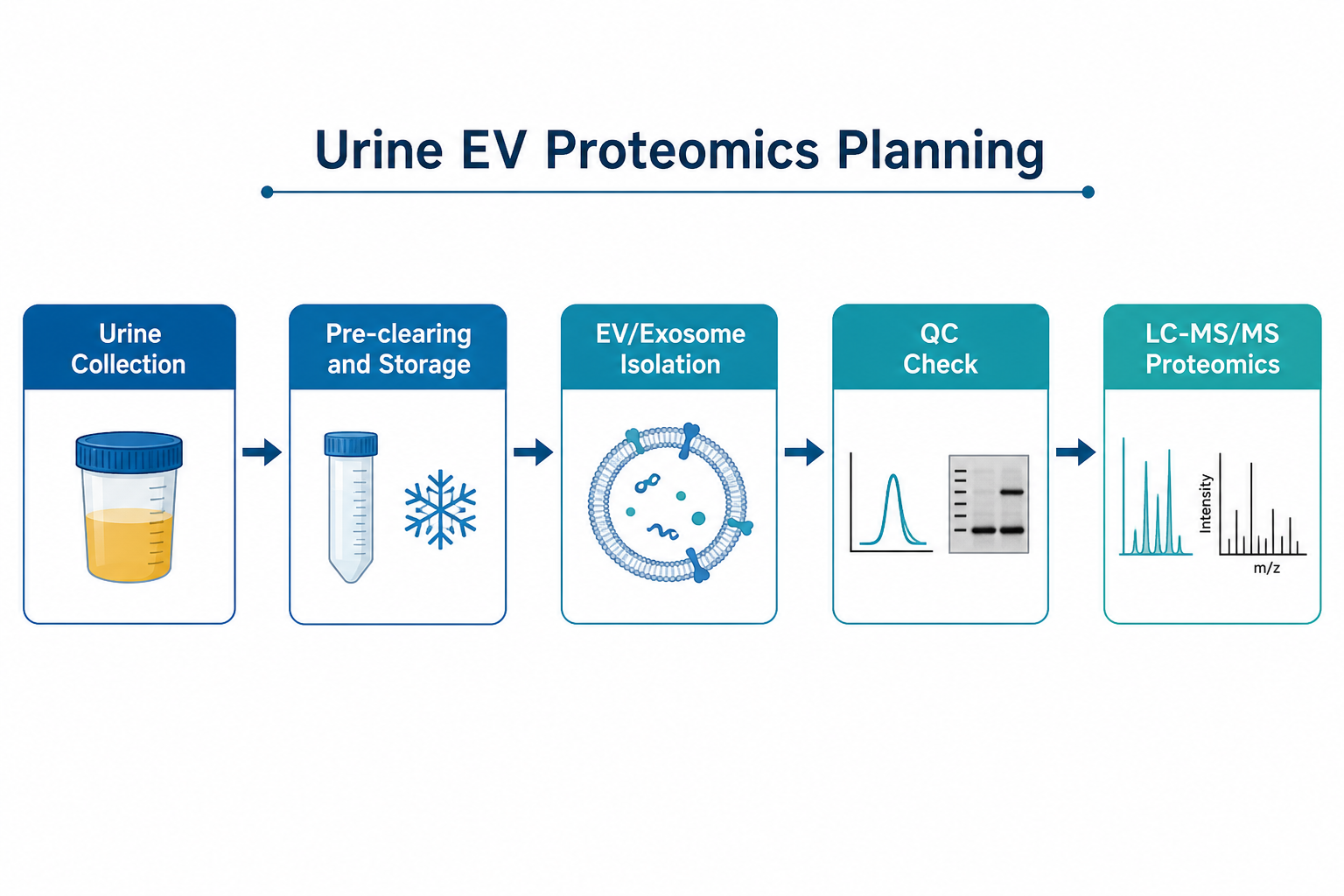
Figure 1. Urine EV proteomics planning connects collection, storage, vesicle isolation, QC, and LC-MS/MS in one controlled path.
Isolation and QC Planning Before LC-MS/MS
1. Isolation Method Selection
Ultracentrifugation, density gradient, size exclusion chromatography (SEC), precipitation, filtration, affinity capture, microfluidic enrichment, and combined protocols can be used for urine EV or exosome enrichment. Each method recovers a different balance of vesicles and co-isolating proteins. For comparative urine EV proteomics, keep the isolation method fixed across groups unless method comparison is the study goal.
2. What to Document After Isolation
Record isolation method, starting urine volume, final resuspension buffer, estimated particle or protein yield, and storage temperature of the isolate. These metadata are part of the proteomics interpretation package.
3. Minimum Useful QC Context
NTA particle size and concentration estimates, TEM or cryo-EM morphology evidence when available, and Western blot marker support for proteins such as CD9, CD63, or CD81 help determine whether the isolate is suitable for LC-MS/MS. These data help evaluate preparation quality and interpret proteomics results, but they do not prove that every detected protein is exclusive EV cargo.
LC-MS/MS Planning Considerations for Urine-Derived Vesicles
1. Profiling vs Comparative Design
Profiling is appropriate when the need is cargo inventory from a urine EV preparation. Comparative urine exosome proteomics requires matched collection and isolation across groups, plus replicate structure sufficient for enrichment ranking.
2. Background Expectations
Urine isolates may still contain abundant soluble proteins if enrichment is incomplete. Planning should include how background will be reviewed in the report and whether additional purification is needed before discovery comparison.
3. Input Adequacy
Low-yield urine EV preparations may support only limited identification depth. Confirm yield against the intended design before committing a full comparative cohort to LC-MS/MS.
4. Metadata Required for Interpretation
Useful metadata include collection type, clarification protocol, isolation method, clinical or experimental group labels, and any normalization approach planned for urine concentration differences. Proteomics alone cannot reconstruct missing collection metadata.
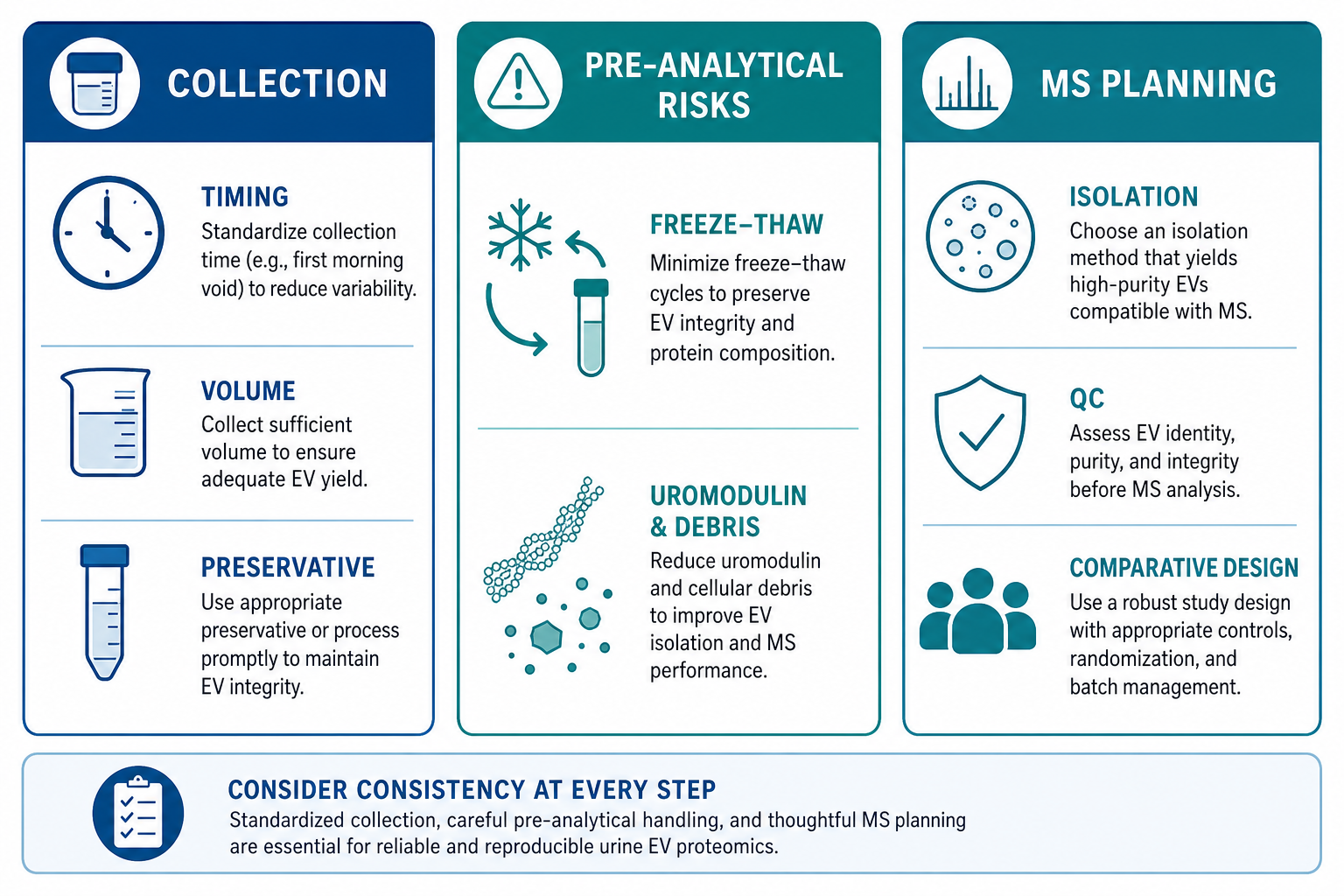
Figure 2. Collection controls, pre-analytical risk management, and MS study design jointly determine urine EV proteomics feasibility.
Common Pre-Analytical Risks in Urine EV Proteomics
|
Risk |
Why It Matters |
Planning Response |
|---|---|---|
|
Mixed collection timing across groups |
Adds non-biological variance |
Standardize collection windows |
|
No debris clarification |
Increases non-vesicle material |
Use a fixed pre-clearing step |
|
Repeated freeze-thaw |
Changes recovery and background |
Aliquot early and record thaw count |
|
Switching isolation methods mid-study |
Confounds comparative cargo |
Lock one method for the cohort |
|
Missing QC |
Weakens readiness decisions |
Attach particle or marker data when possible |
|
Underspecified buffer |
May affect digestion or LC |
Disclose resuspension components |
What to Prepare Before Starting a Urine EV Proteomics Project
Assemble the following before inquiry or shipment:
These details can be submitted through the Exosome / Extracellular Vesicle Proteomics Service page for workflow review. MtoZ Biolabs supports urine-derived exosome and extracellular vesicle proteomics planning, including review of collection documentation, isolation readiness, and LC-MS/MS study design. The technical team can help determine whether current urine samples or isolates are suitable for direct proteomics or need additional preparation first.
To plan urine EV proteomics or urine exosome proteomics, contact MtoZ Biolabs with your collection protocol, isolation status, estimated yield, QC summary, and whether the priority is cargo profiling or group comparison.
Frequently Asked Questions
1. Is urine suitable for EV proteomics analysis?
Yes, urine can support EV and exosome proteomics when collection, clarification, isolation, and QC are controlled. Feasibility depends on preparation quality and study design, not on matrix identity alone.
2. Should I submit raw urine or isolated urine EVs?
Either path can work. Isolated vesicles are efficient when method and QC are documented. Raw urine is appropriate when isolation support is needed before LC-MS/MS.
3. What collection variable most often confounds comparative urine EV proteomics?
Inconsistent collection timing and inconsistent pre-analytical handling across groups are frequent confounders. Method drift in isolation is another major risk.
4. Do I need both NTA and TEM before urine exosome proteomics?
Not always, but particle data are highly useful and morphology evidence strengthens readiness review. Partial QC can still support planning if limitations are stated.
5. Can urine concentration differences affect proteomics interpretation?
Yes. Hydration and collection timing can change matrix composition. Record metadata and discuss normalization strategy during study planning.
Conclusion
Urine EV proteomics is feasible when sample collection and LC-MS/MS planning are treated as one workflow. Collection consistency, clarification, freeze-thaw control, isolation documentation, and QC context determine whether protein cargo differences are interpretable.
Teams that lock these matrix-specific details before acquisition reduce avoidable variance and improve the value of urine exosome proteomics outputs. For project planning, MtoZ Biolabs can review urine collection records, EV isolation status, available QC information, and intended profiling or comparative goals. For project-specific feasibility review, researchers can submit the urine collection method, EV preparation status, available QC information, and study design through the Exosome / Extracellular Vesicle Proteomics Service page.
Related Services
Exosome / Extracellular Vesicle Proteomics Service
Exosomal Protein Isolation and Profiling Service
Exosome Quantitative Proteomics Service
How to order?




