



TMT 10-plex, 11-plex, and 18-plex formats are commercial channel counts for isobaric tandem mass tag labeling. Each format lets a closed set of digests share one LC-MS/MS analytical block and report relative abundance from reporter ions after fragmentation. Higher plex size increases how many arms can sit in one mix. It does not convert TMT into an open-enrollment method, and it does not erase co-isolation or incomplete labeling. Researchers comparing kit sizes for a frozen multi-arm design can review the MtoZ Biolabs TMT Quantitative Proteomics Analysis Service for channel-map feasibility before labeling begins.
Shared Principle Across Plex Formats
1. Structure of TMT Labels
TMT reagents share three functional parts:
- Reporter group: releases channel-specific ions during MS2 or MS3 fragmentation for quantification.
- Mass balance group: keeps labeled peptides isobaric at MS1 so channels co-appear as one precursor peak.
- Reactive group: covalently labels peptide N-termini or lysine amines.
Sequence ions identify the peptide. Reporter ions quantify the channels. Tags in one kit are not separated by different intact masses in the survey scan.
2. Quantification Workflow
- Label each digest with a unique channel.
- Pool equal peptide amounts into one mixture.
- Fractionate when depth requires it, then acquire LC-MS/MS.
- Extract reporter intensities and summarize protein-level relative ratios inside the plex map.
General tag chemistry is summarized in Tandem Mass Tag (TMT).
Plex format changes channel capacity; the quantitative claim remains relative ratios inside one closed mix.
Distinctions Among 10-plex, 11-plex, and 18-plex
1. TMT 10-plex
TMT 10-plex supports up to 10 channels in one labeling event. It often fits small- to medium-scale designs such as control-versus-treatment arms with biological replicates that can all enter one kit. Reporter resolution requirements are platform-dependent and should be confirmed during method setup rather than assumed from kit marketing alone.
2. TMT 11-plex
TMT 11-plex adds one more channel than 10-plex. That extra channel is frequently reserved for a bridge, pooled reference, or QC sample when the study anticipates more than one plex later. The kit itself does not create cross-batch normalization. Bridge design and consistent prep across plexes do. An 11-channel kit still holds only 11 samples or fewer when a bridge occupies a channel.
3. TMT 18-plex
TMT 18-plex, commonly associated with TMTpro reagent generations, can place up to 18 channels in one mix. It fits larger closed panels that would otherwise split awkwardly across two smaller kits. Higher plex density can increase reporter crowding and method-review burden, so instrument resolution, MS2 or SPS-MS3 strategy, and impurity correction should be planned with the channel map. An 18-channel kit does not cover a 50-sample cohort in one run; leftover enrollment still needs additional plexes and a stated bridge plan.
Detail focused on the 18-channel format is available in TMT 18plex.
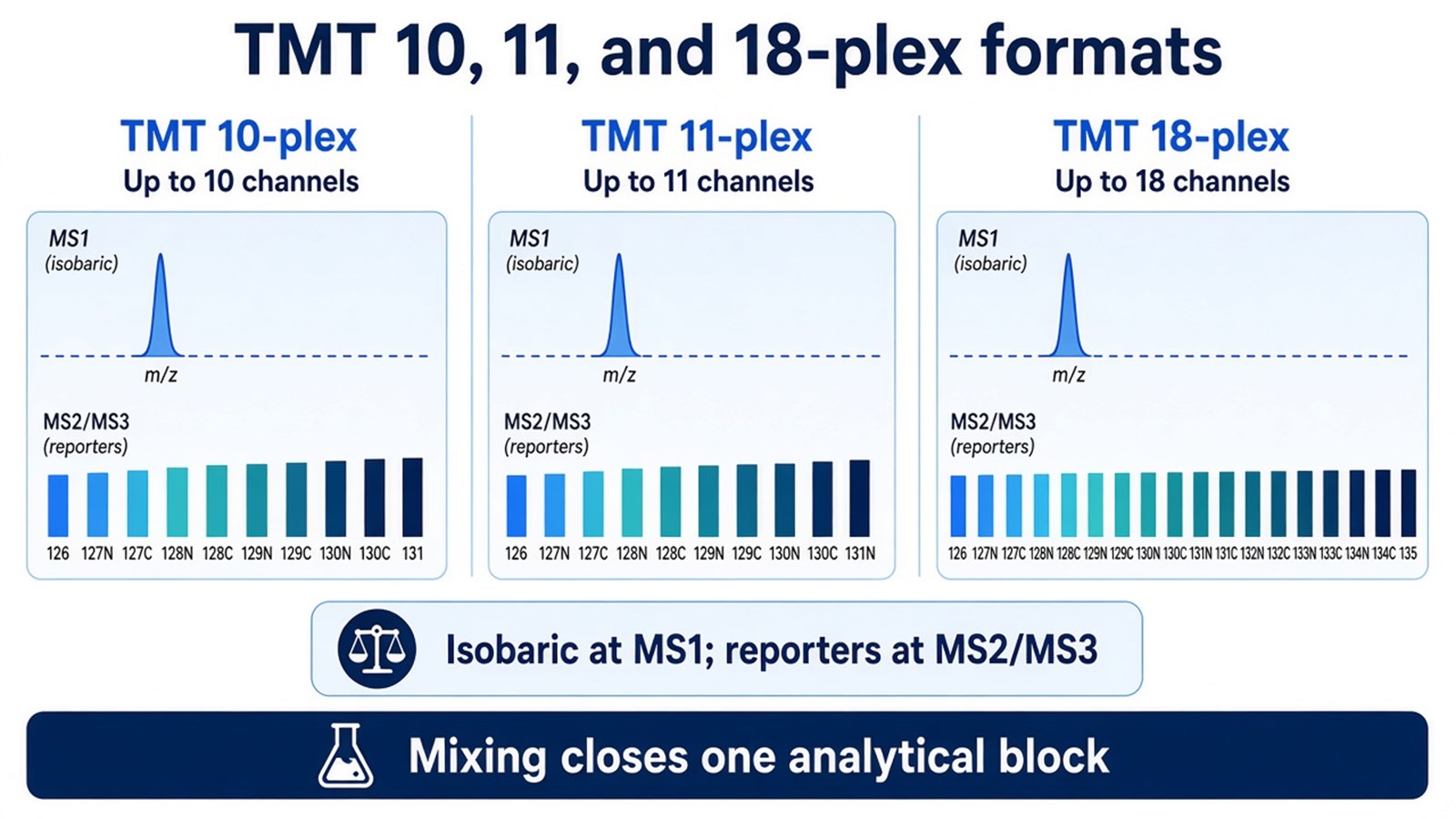
Figure 1. TMT 10-, 11-, and 18-plex formats differ in channel count; all remain isobaric at MS1 and quantify from reporters after fragmentation.
How to Choose Among Plex Formats
Project constraint |
Format that often fits |
Reassess |
|---|---|---|
All arms fit in 10 channels |
TMT 10-plex |
Forcing unrelated samples into empty channels |
Need one in-kit bridge or QC channel within about 11 slots |
TMT 11-plex, or reserve a channel in another kit |
Assuming 11-plex covers 10 to 20 biological samples alone |
Up to 18 arms ready before mixing |
TMT 18-plex |
Open enrollment after the pool is mixed |
More samples than any single kit |
Multiple plexes with bridge channels |
Expecting one 18-plex run to remove all batch structure |
Absolute concentration required |
Calibrated SIS assay, not plex size alone |
Reading reporter ratios as ng/mL |
Sample count alone is not enough. Count biological arms, replicates, bridges, and blanks that must share the mix. For cohorts larger than the kit, plan plex number and bridge placement before ordering reagents.
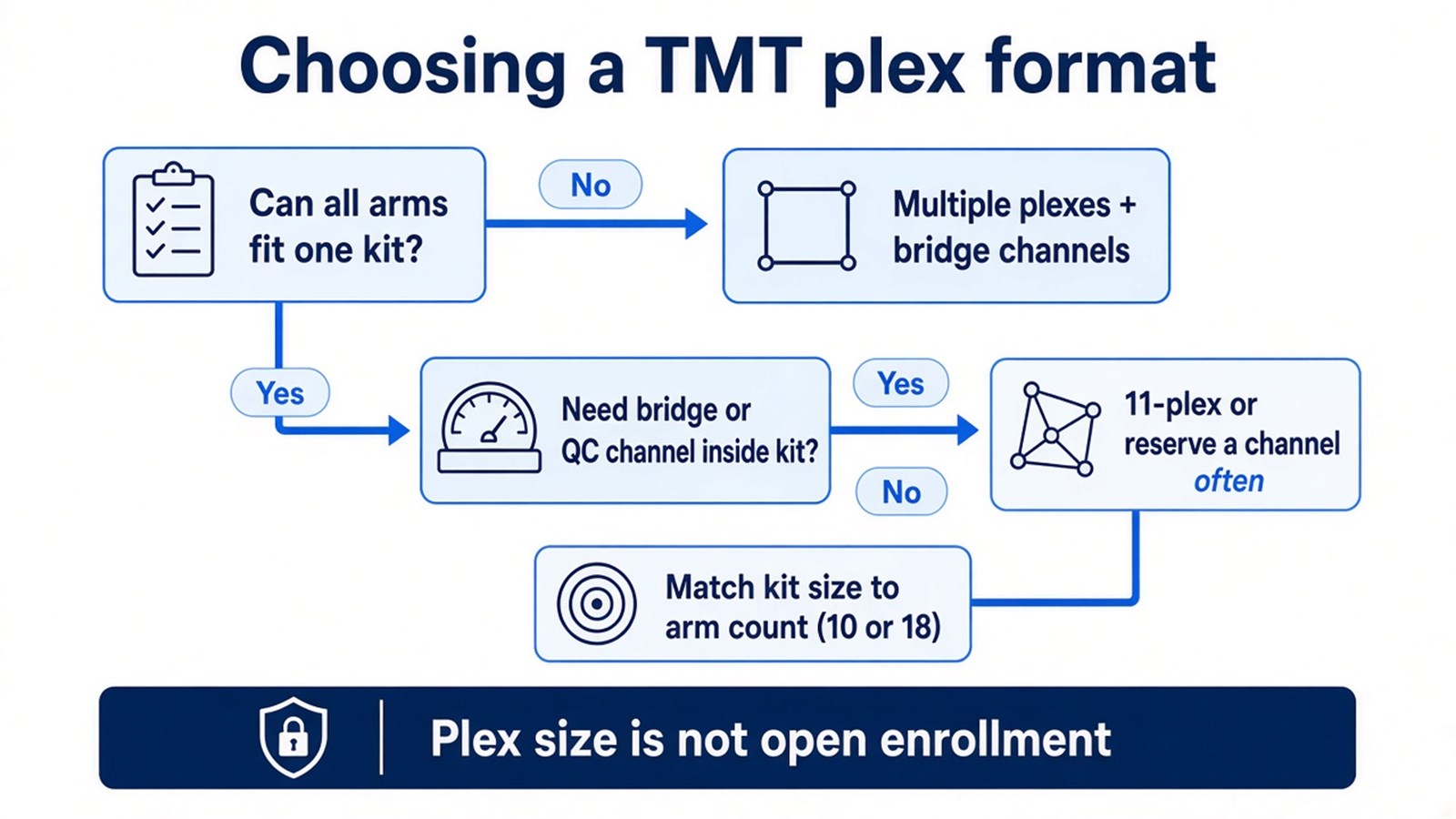
Figure 2. Choose plex size from the closed channel map; samples beyond one kit need multiple plexes and bridge design.
Budget and instrument class matter, but they should follow the channel map. A smaller kit can be the better scientific choice when the contrast is already closed. A larger kit lowers the number of mixes only when those extra channels are truly filled with planned arms rather than leftover fillers.
Application Scenarios
1. Disease Biomarker Candidate Discovery
Disease-versus-control or stage panels that can be labeled together fit TMT when relative discovery inside one or a few plexes is the goal. Differential proteins remain candidates until orthogonal confirmation is added.
2. Drug Response and Mechanism Hypotheses
Dose or time-course arms that are complete before labeling can share one plex for coordinated relative readouts. Mechanism language should stay proportional to the reporter table and QC.
3. Multi-omics Integration
TMT can supply the proteome layer for joint interpretation with transcriptomics or metabolomics when sample IDs and contrasts match across assays. Integration does not require 18-plex specifically; it requires matched design and relative claims that the plex can support.
4. Larger Closed Research Cohorts
When many arms are already in hand, higher plex formats reduce the number of mixes relative to repeated small kits. Multi-center clinical decision cutoffs and release testing sit outside ordinary research TMT reporting unless a separately validated assay framework is declared.
Conclusion
TMT 10-plex, 11-plex, and 18-plex technologies share one isobaric labeling principle and differ mainly in how many channels can occupy a single closed mix. 10-plex fits compact designs, 11-plex often helps when an in-kit bridge or QC channel is planned, and 18-plex fits larger frozen panels. Reliable selection counts every biological arm and bridge before ordering kits, and uses multiple plexes when enrollment exceeds one reagent set. Researchers planning multiplex TMT projects can contact MtoZ Biolabs to review channel maps and acquisition needs, and can also consult the MtoZ Biolabs TMT Quantitative Proteomics Analysis Service for project-specific feasibility and workflow planning.
