






Targeted Disulfide Bond Mapping Service
MtoZ Biolabs provides dedicated Targeted Disulfide Bond Mapping Service that focuses on the precise identification and characterization of disulfide linkages in a specific protein of interest. This service is ideal for researchers who have defined protein targets, such as antibodies, receptors, or enzymes, and require detailed information on their native disulfide connectivity.
Disulfide bonds are essential for maintaining protein folding, structural stability, and biological activity. Accurate mapping of these linkages provides critical insight into protein conformation, folding efficiency, and quality consistency. Using high-resolution LC-MS/MS platforms, including Thermo Fisher Orbitrap Fusion Lumos and Q Exactive HF systems, MtoZ Biolabs delivers site-resolved, reproducible, and publication-ready data that support both research and biopharmaceutical development.
What are Disulfide Bonds?
Disulfide bonds are covalent linkages between cysteine residues that help stabilize protein structure and maintain biological activity. For example, in immunoglobulin G (IgG), these bonds connect the heavy and light chains, supporting proper folding and functional conformation. In insulin, disulfide linkages hold the A and B chains together, ensuring correct assembly and receptor recognition.
Such covalent connections are vital for structural stability, folding fidelity, and biological performance. Disruption or mispairing of disulfide bonds can lead to misfolded proteins, loss of activity, or instability. Therefore, analyzing disulfide bonding patterns in specific proteins is essential for confirming molecular correctness, assessing folding quality, and verifying the consistency of recombinant or therapeutic products.
Principles of Targeted Disulfide Bond Mapping
Targeted disulfide bond mapping is performed through comparative LC-MS and LC-MS/MS analysis under non-reducing and reducing conditions. Intact proteins are first alkylated with N-ethylmaleimide (NEM) to protect cysteine residues, followed by reduction and re-alkylation to break and stabilize disulfide linkages.
The mass difference between reduced and non-reduced states indicates the number of disulfide bonds, with each bond contributing a predictable mass shift. Enzymatic digestion then generates peptide fragments containing native disulfide linkages. LC-MS/MS analysis of these peptides provides detailed structural evidence of bond connectivity through characteristic fragment ions.
This two-level strategy, combining intact protein mass measurement and peptide-level verification, allows precise identification of intra- and inter-chain disulfide bonds and provides a complete understanding of protein folding and redox stability.
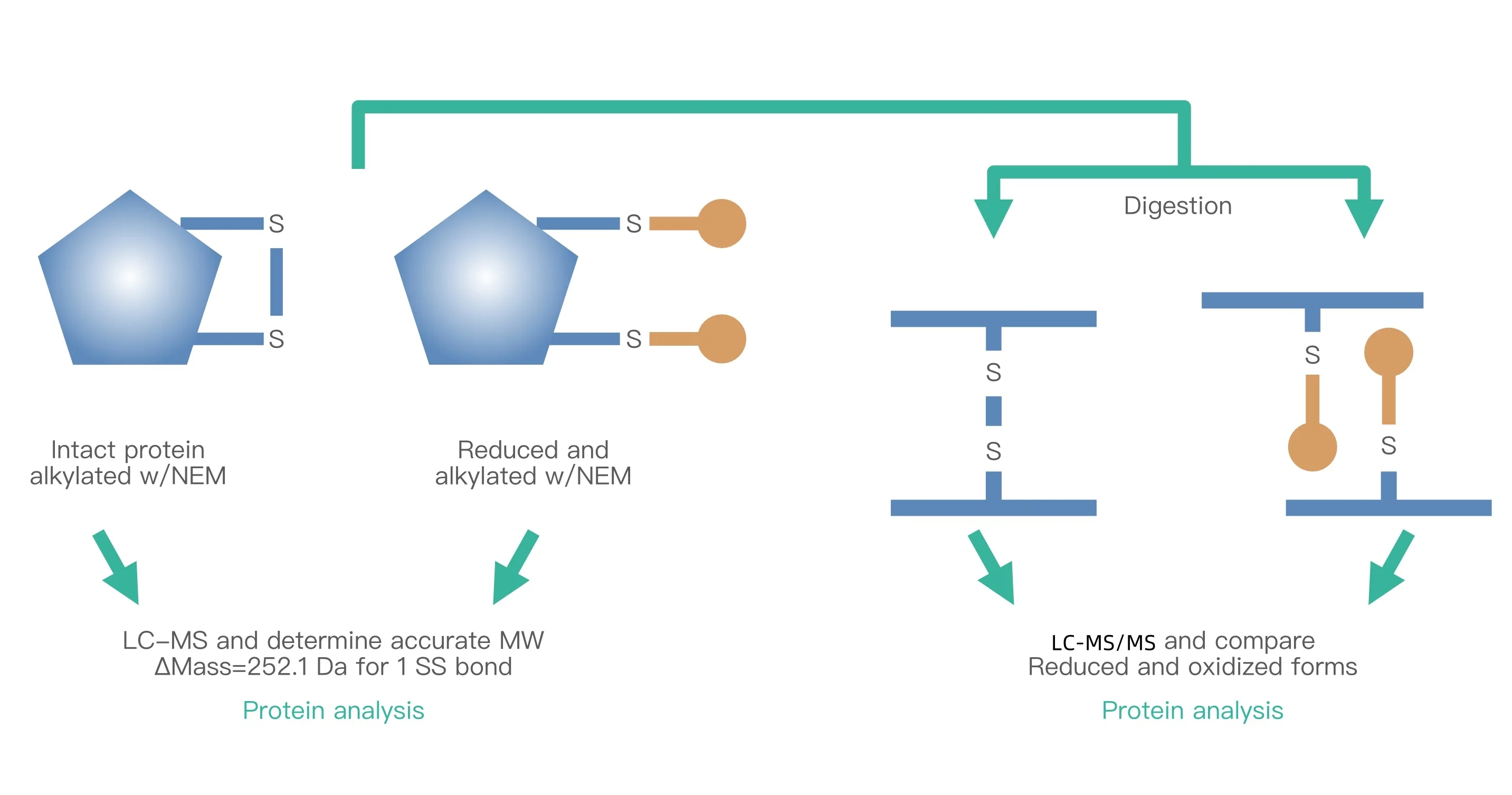
Figure 1. Principle of Disulfide Bond Mapping Analysis
Targeted Disulfide Bond Mapping Service at MtoZ Biolabs
MtoZ Biolabs offers customized analytical solutions to map and validate disulfide linkages in defined protein targets. Our Targeted Disulfide Bond Mapping Service includes:
Identification and confirmation of disulfide bonds in specific proteins supplied
Comparison of native and reduced states to verify bond completeness and structural integrity
Evaluation of disulfide patterns to assess folding, redox balance, and production consistency
All analyses are conducted under strictly controlled conditions to preserve native structures, ensuring accurate and reproducible disulfide characterization.
Why Choose MtoZ Biolabs?
1. Advanced Analytical Platforms
MtoZ Biolabs operates Thermo Fisher Orbitrap Fusion Lumos and Q Exactive HF systems, providing the resolution and sensitivity required for accurate disulfide bond identification and molecular confirmation.
2. Comprehensive Analytical Coverage
Our workflows integrate intact protein mass analysis with peptide-level LC-MS/MS, ensuring complete disulfide connectivity mapping across entire protein molecules.
3. Broad Sample Compatibility
We handle diverse proteins, including antibodies, receptors, enzymes, and multi-domain constructs, ensuring reliable results across various molecular systems.
4. Customized Project Design
Each project is tailored to the client’s protein target, experimental goals, and application requirements, ensuring relevant and accurate analytical results.
5. Transparent One-Time Pricing
All costs are clearly defined prior to project initiation. Our one-time charge model ensures transparent pricing with no hidden fees.
Sample Submission Guidelines
|
Sample Type |
Recommended Amount |
|
Purified Proteins |
≥ 50 µg |
|
Recombinant Proteins |
≥ 50 µg |
|
Glycoprotein Mixtures |
≥ 100 µg |
|
Serum or Plasma |
≥ 100 µL |
|
Cell Lysates |
≥ 500 µg |
· Store samples at −80 °C and ship on dry ice in sealed containers.
· Avoid buffers containing detergents, salts, or denaturants that may inhibit enzymatic digestion.
· For low-abundance proteins, lectin affinity (e.g., Jacalin, VVA) or immunoprecipitation is recommended before LC-MS/MS.
· Provide the protein name, molecular weight, and any known or predicted O-glycosylation regions when available.
For more information, please refer to Sample Submission Guidelines for Proteomics.
Applications of Targeted Disulfide Bond Mapping Service
✅ Structural verification of disulfide linkages in defined protein targets (e.g., PD-1, EGFR, antibodies, or enzymes)
✅ Confirmation of correct cysteine pairing in recombinant biologics and fusion proteins
✅ Evaluation of disulfide bond integrity under stress, formulation, or storage conditions
✅ Comparison of disulfide patterns across cell lines or production processes
✅ Quality control and consistency testing in biopharmaceutical manufacturing
Start Your Project with MtoZ Biolabs
Contact us to discuss your project or request a quote. Whether you are confirming disulfide connectivity in a therapeutic protein or evaluating folding integrity in a specific target, MtoZ Biolabs provides precise, reproducible, and high-quality analytical solutions to advance your research and product development.
What Could be Included in the Report?
1. Comprehensive Experimental Details
2. Materials, Instruments, and Methods
3. Total Ion Chromatogram & Quality Control Assessment
4. Data Analysis, Preprocessing, and Estimation
5. Bioinformatics Analysis
6. Raw Data Files
Related Services
How to order?




