






Targeted Post-Translational Modification (PTM) Detection Service
MtoZ Biolabs provides Targeted Post-Translational Modification (PTM) Detection Service for precise characterization of defined post-translational modifications on specific proteins provided by clients. This service enables residue-level identification, quantification, and structural interpretation of PTMs, offering detailed insights into how modifications regulate protein function, activity, and stability. Combining advanced LC-MS/MS analysis with optimized enrichment workflows, MtoZ Biolabs delivers accurate and reproducible results to support mechanism studies and biopharmaceutical research.
Overview
Post-translational modifications (PTMs) play a central role in controlling protein function, localization, and molecular interactions. Multiple PTMs can occur on the same protein, collectively shaping its biological behavior. Targeted Post-Translational Modification (PTM) Detection Service focuses on defined proteins of interest to precisely identify and quantify site-specific modifications under relevant biological conditions.
Proteins such as PD-L1, EGFR, p53, STAT3, NF-κB, Histone H3, and AKT are frequently analyzed due to their importance in signaling regulation, gene expression, and disease development. Characterizing these modifications helps uncover how phosphorylation, acetylation, methylation, ubiquitination, SUMOylation, and glycosylation contribute to pathway control and therapeutic response.
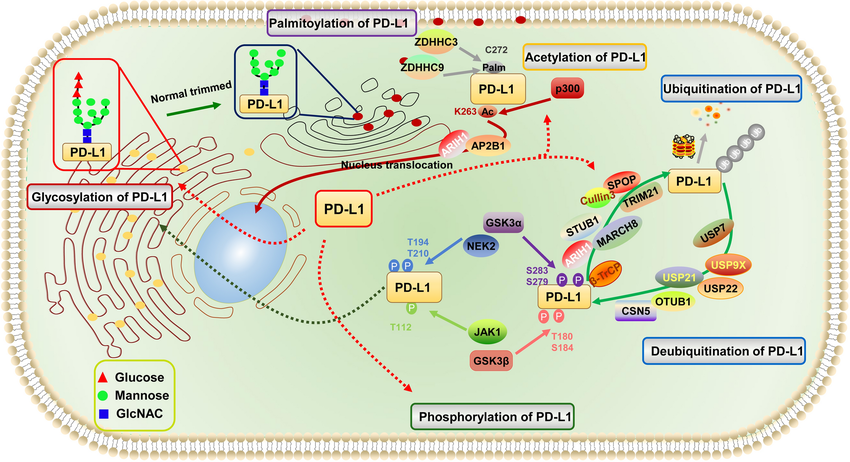
Shen, D. D. et al. CMLS. 2022.
Figure 1. Glycosylation, phosphorylation, ubiquitination, palmitoylation and acetylation of PD-L1
Targeted Post-Translational Modification (PTM) Detection Service at MtoZ Biolabs
MtoZ Biolabs combines specialized enrichment approaches and high-resolution LC-MS/MS systems to analyze multiple PTM types on defined protein targets. Each workflow is tailored to the biochemical characteristics and modification patterns of the protein.
Our targeted PTM detection platform includes:
- Targeted Glycosylation Analysis Service
- Targeted Phosphorylation Analysis Service
- Targeted Acetylation Analysis Service
- Targeted Methylation Analysis Service
- Targeted Ubiquitination Analysis Service
- Targeted SUMOylation Analysis Service
- Targeted Disulfide Bond Mapping Service
All analyses are performed under stringent quality control, with comprehensive reports ensuring reproducibility and scientific accuracy.
Why Choose MtoZ Biolabs?
✅ Protein-Specific Workflow Design
Each analysis is tailored to the biochemical nature and modification characteristics of the protein, ensuring accurate detection and quantification of site-specific PTMs.
✅ Wide Protein Coverage
MtoZ Biolabs supports PTM analysis for a wide range of proteins across various biological systems. Commonly analyzed proteins include PD-L1, EGFR, AKT, STAT3, p53, NF-κB, and Histone H3, as well as kinases, receptors, and therapeutic antibodies.
✅ Comprehensive PTM Profiling
Our analytical framework enables simultaneous characterization of multiple PTM types, including phosphorylation, glycosylation, acetylation, methylation, ubiquitination, SUMOylation, and disulfide bonding.
✅ Advanced Analysis Platform
MtoZ Biolabs utilizes state-of-the-art analytical platforms, including Thermo Fisher Orbitrap Fusion Lumos and Q Exactive HF systems, to achieve high sensitivity, resolution, and mass accuracy for precise modification identification and quantification.
✅ Expert Scientific Support
Our experienced proteomics specialists deliver validated analytical reports with modification maps, quantitative summaries, and functional annotations suitable for publication or regulatory submission.
Applications of Targeted Post-Translational Modification (PTM) Detection Service
1. Mechanistic Studies: Identify and quantify site-specific PTMs to elucidate regulatory mechanisms governing protein function and signaling pathways.
2. Cancer and Immunology Research: Characterize PTMs on key targets such as PD-L1, EGFR, and p53 to explore tumor progression, immune modulation, and drug response.
3. Biopharmaceutical Characterization: Assess PTM profiles of therapeutic proteins to ensure structural integrity, functional activity, and batch consistency.
4. Signal Transduction Analysis: Evaluate phosphorylation and related modifications involved in receptor activation and intracellular signaling regulation.
5. Epigenetic Regulation Studies: Analyze modification states of histones and transcriptional regulators to investigate chromatin dynamics and gene expression control.
Start Your Project with MtoZ Biolabs
MtoZ Biolabs offers high-quality targeted PTM detection services for defined protein targets, helping researchers uncover how specific modifications influence molecular structure and biological function.
Contact us today to discuss your research goals or request a customized quotation. Our expert team will design a workflow that delivers accurate and reproducible PTM data for your study.
FAQ
Q1: What types of samples are suitable?
- Purified proteins: ≥100 µg, stored at −80°C in MS-compatible buffer
- Cell lysates or tissue extracts: ≥500 µL, free of detergents and reducing agents
- Affinity-purified complexes: ≥50 µg, prepared fresh when possible
Both recombinant and endogenous proteins are suitable if sufficient quantity is provided for digestion and LC-MS/MS analysis.
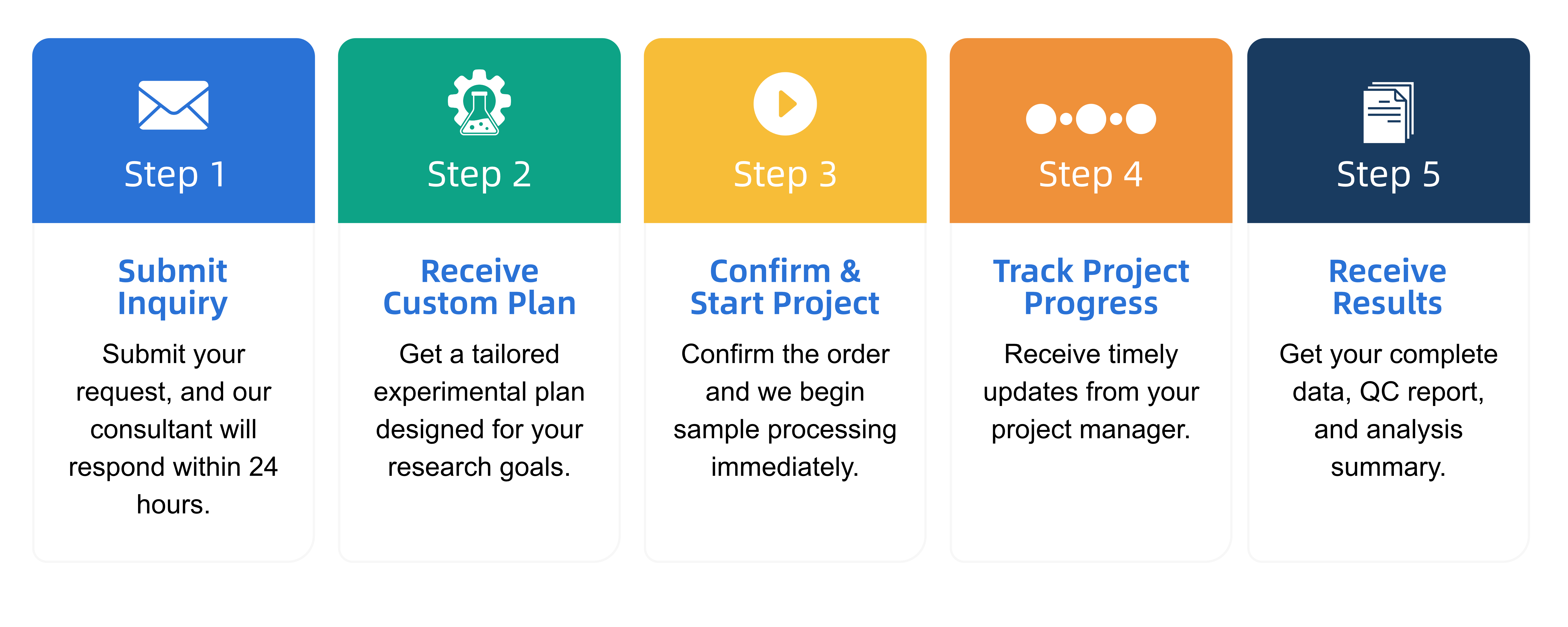
Q2: What is the service general workflow?
Q3: What data formats are provided?
MtoZ Biolabs provides results in multiple standard formats to ensure compatibility with various analysis and visualization tools. Deliverables typically include:
- Raw LC-MS/MS files (.raw)
- Processed data tables (CSV or Excel format) containing identified and quantified PTMs
- Summary reports in PDF format, including analytical methods, quality control results, and key findings
- Figures and chromatograms in high-resolution image formats (TIFF or PNG)
Additional file formats or data structures can be provided upon request to meet specific research or publication requirements.
Q4: How should I prepare my samples?
- Store samples at −80°C immediately after preparation.
- Avoid detergents, acids, and chaotropes that affect modification stability.
- Use MS-compatible volatile buffers such as ammonium bicarbonate.
- For cell lysates, apply protease and phosphatase inhibitors to preserve PTMs.
For more information, please refer to Sample Submission Guidelines for Proteomics. If you are unsure about sample preparation, our team is available for consultation and can guide you through the process to ensure optimal results.
Related Services
How to order?




