






Subcellular Structures Protein Identification Service
Subcellular structures refer to the organelles and micro-domains within a cell, such as the nucleus, mitochondria, endoplasmic reticulum, Golgi apparatus, lysosomes, cytoskeleton, and lipid rafts. Each of these components has distinct morphology and specific functions. Working together, they maintain essential processes including cellular metabolism, signal transduction, and stress response. Analyzing the protein composition of these structures helps to elucidate their functional mechanisms and contributes to the identification of biomarkers and validation of drug targets. As a result, subcellular protein identification has become a critical area of modern proteomics research.
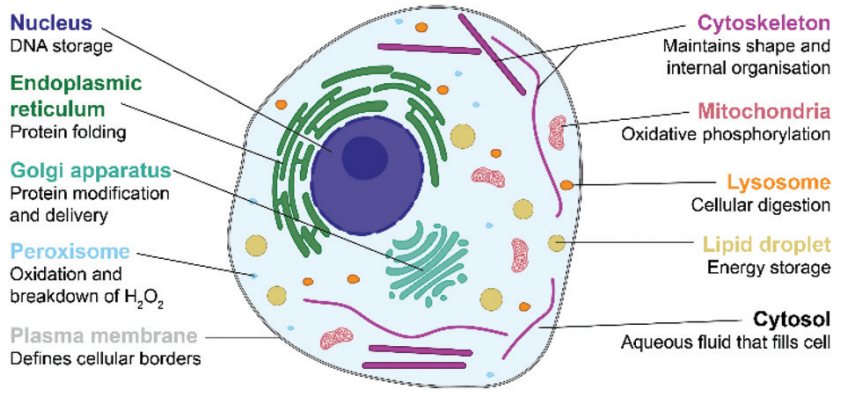
Lin, J. et al. Org Biomol Chem. 2021.
Figure 1. The Subcellular Structure
Leveraging high-resolution mass-spectrometry platforms and extensive fractionation expertise, MtoZ Biolabs has launched the Subcellular Structures Protein Identification Service to deliver high-quality, reproducible subcellular protein profiles that illuminate the cellular micro-environment and molecular networks.
Services at MtoZ Biolabs
The Subcellular Structures Protein Identification Service integrates purification, high-sensitivity MS, and rigorous bioinformatics:
1. Fractionation and Purification: We tailor differential centrifugation, density gradients, immuno-magnetic enrichment, and membrane fractionation to the target structure to obtain highly pure subcellular structures and proteins.
2. Proteome Identification: Nano-LC coupled with Orbitrap or timsTOF platforms collects deep coverage data in DDA or DIA mode.
3. Quantification and Annotation: Choose TMT/iTRAQ, label-free (LFQ), or SILAC strategies; downstream analyses include GO/KEGG enrichment, subcellular localization prediction, and interaction-network construction.
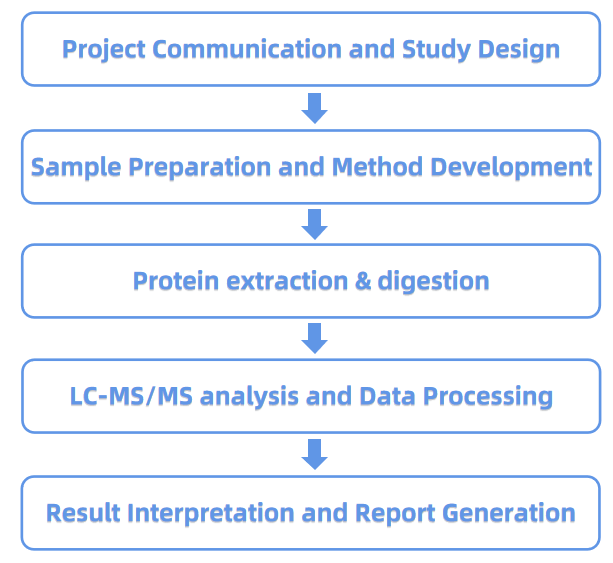
Analysis Workflow
Services Advantages
1. Multi-strategy Fractionation
Our Subcellular Structures Protein Identification Service combines differential and density centrifugation with immuno-affinity capture to achieve micro-domain resolution. Electron microscopy and mass spectrometry are used to verify the purity of subcellular protein fractions, minimizing cross-contamination and ensuring reliable, traceable results.
2. Broad Proteome Coverage
Dual platforms such as Orbitrap Fusion Lumos and timsTOF HT combine ultra-high resolution with ion mobility separation, enhancing the detection of low-abundance and hydrophobic proteins across diverse sample types.
3. Flexible Quantification
SILAC, TMT/iTRAQ, and label-free methods can be mixed and matched by batch, time-course, or dosage to support differential screening, dynamic tracking, and PTM quantification.
4. End-to-End Quality Control
QC checkpoints span receipt, fractionation, digestion, and MS acquisition, covering recovery rates, peptide length distribution, and instrument drift; QC data are delivered with each report.
5. Expert Bioinformatics and Support
PhD-led teams versed in cell biology and systems analysis provide a complimentary online results-interpretation session plus figure optimization, manuscript outlines, and follow-up experiment advice.
Applications
1. Disease-mechanism studies Compare mitochondrial or lysosomal proteomes in healthy vs. disease models to dissect pathological pathways.
2. Drug-target validation Evaluate compound effects on organelle proteomes to refine target selection.
3. Signal-pathway mapping Track protein relocalization between nucleus and cytoplasm to reveal regulatory networks.
4. Stress-adaptation research Monitor subcellular remodeling under stress to uncover metabolic rewiring.
5. Biomarker discovery Mine exosomes or micro-regions for early diagnostic candidates.
FAQs
Q1. Will purification cause protein loss?
Key steps use stabilizers and low-temperature handling; recovery-rate QC reports ensure losses remain within acceptable limits.
Q2. What is the typical turnaround time for Subcellular Structures Protein Identification Service?
Standard projects are delivered in 3–4 weeks; complex quantification runs may require longer.
Q3. Is my data confidential?
All client data reside on encrypted servers with access limited to authorized staff; full NDAs are executed before work begins.
Sample Submission Suggestions
1. Type Cells, tissues, or subcellular fractions; avoid strong detergents (SDS) and high salt (>300 mM).
2. Amount ≥100 µg total protein per sample; ≥2 µg/µL, minimum 10 µL.
3. Storage & transport Snap-freeze at −80 °C, ship on dry ice; tissues should be de-blooded and pre-lysed on ice.
For any constraints, contact the MtoZ Biolabs technical team for customized guidance.
Deliverables
1. RAW MS data and peak lists (mzML/mgf)
2. Protein ID & quant tables (Excel)
3. Functional annotation & pathway report (PDF)
4. QC metrics and workflow summary
5. Editable graphics package (PPT/PNG)
Subcellular-level protein insights are a vital puzzle piece in cell biology. The MtoZ Biolabs Subcellular Structures Protein Identification Service combines rigorous protocols, expert analysis, and dedicated support to help you uncover profound biological patterns efficiently.
Contact us today and let robust data propel your research and innovation forward!
How to order?




