






Single vs Combined Abiotic Stress: How Should You Design a Plant Proteomics Study?
Single and combined abiotic stress studies should not use the same experimental layout. A single-stress design usually compares one treated group with a matched untreated control. A combined-stress design needs extra arms so researchers can tell which protein changes come from each stress alone and which appear mainly when the stresses act together.
If your question is whether drought, heat, or salt each leaves a clear proteome mark, start with single-stress comparisons. If your question is what happens when two stresses co-occur in the field, plan a factorial layout: untreated control, stress A alone, stress B alone, and A plus B. Keep tissue, genotype, growth stage, treatment duration, and harvest timing matched across every arm. Choose quantitative plant stress proteomics only after the arms, replicate plan, and sample availability look realistic.
Because combined-stress proteomics depends heavily on arm structure and harvest timing, it is useful to review the stress pair, tissue type, arm list, harvest windows, replicate plan, and approximate sample amount before collection. MtoZ Biolabs can help assess whether the planned design supports a single-stress comparison, combined-stress interpretation, or a staged pilot.
Why Combined Stress Is Not Two Single Stresses Added Together
In the field, drought and heat often arrive together, and salt stress can coincide with high temperature or water limitation. Researchers therefore ask whether the proteome under combined stress simply mirrors the stronger single stress, or whether a distinct response appears.
Protein abundance data can help with that question, but only if the design separates three classes of change:
-
Changes shared with stress A alone
-
Changes shared with stress B alone
-
Changes that appear mainly in the combined arm
Without the single-stress arms, a combined-versus-control comparison can show that something changed, yet it cannot show whether the change is unique to the combination. That is the main reason combined abiotic stress experiments need a different structure from ordinary single-stress screens.
Treat the protein list as a candidate map. Pathway enrichment can organize candidates into functional themes, but it does not by itself prove that two stresses interact physiologically. If the goal is to claim a combination-specific response, define the comparison logic before analysis.
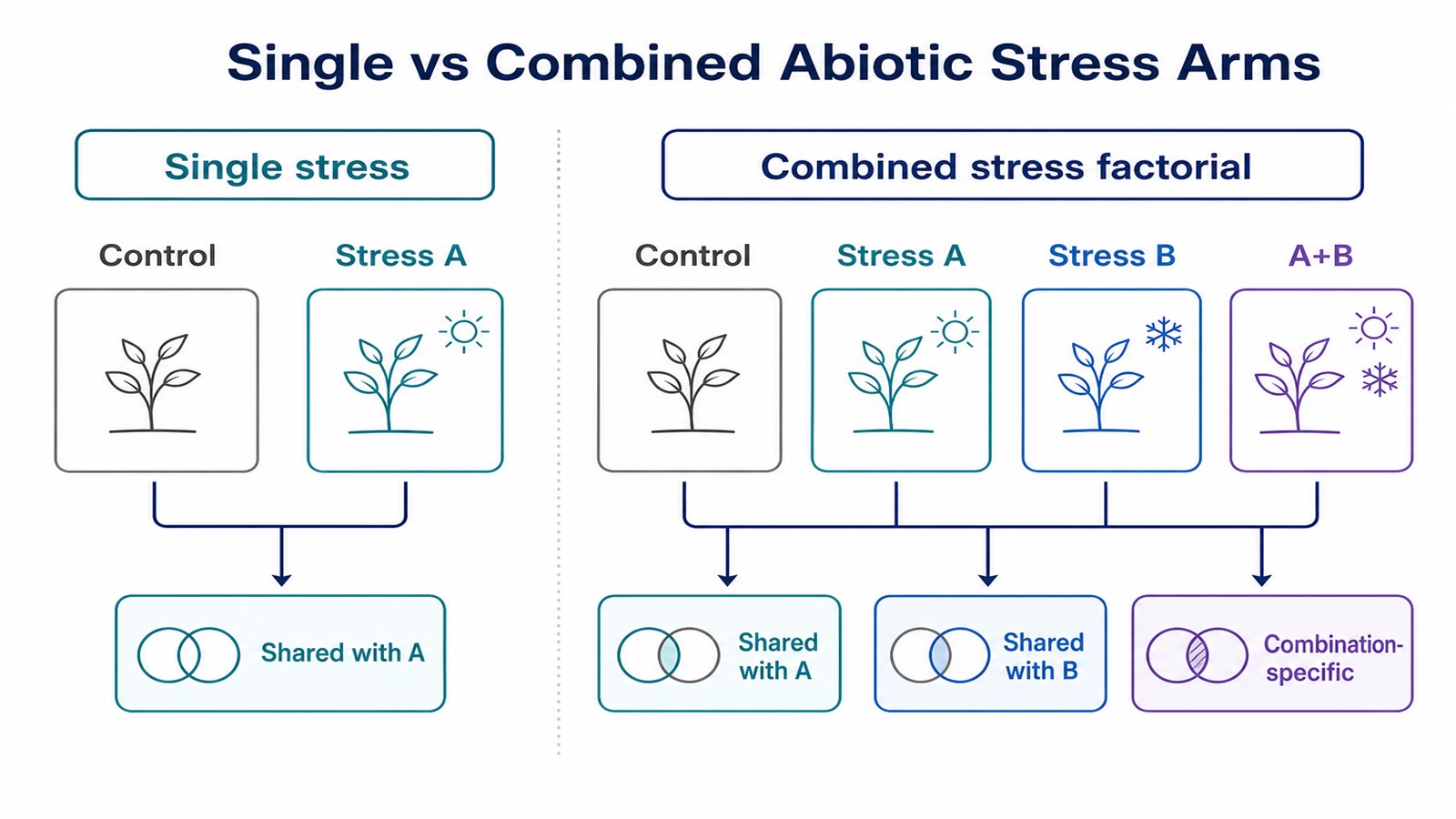
Figure 1. Combined stress needs single-stress arms so shared and combination-specific protein changes can be separated.
Single First or Combined First
Use the study question to choose the sequence. Many teams save time by stabilizing each single stress first, then building the combination once intensity and harvest timing are more reliable.
| Research Question | Better Starting Design | Why |
| Does drought, heat, or salt change the proteome in this tissue? | Single stress vs matched control | Cleaner attribution to one stress factor |
| Do two stresses together produce protein changes not seen in either stress alone? | Control, A, B, and A+B | Needed to identify combination-specific candidates |
| Is one stress much stronger than the other under your conditions? | Single stresses first, then combined | Helps prevent one factor from masking the second |
| Field conditions usually involve two stresses together | Combined design with single-stress reference arms | Reflects the biological setting without losing interpretability |
A practical pattern is Phase 1 single-stress pilots at one tissue and one harvest window, followed by Phase 2 combined abiotic stress using the same genotype and tissue. Jumping directly to a large combined-stress proteomics map is reasonable only when both single stresses are already well characterized in your system.
Arms, Intensity, and Timing That Keep the Contrast Clean
Write the arm names before plants are treated. For a combined-stress experiment, the minimum interpretable set usually includes:
-
Untreated control
-
Stress A alone
-
Stress B alone
-
Stress A plus stress B
Match everything that is not the intended stress contrast: genotype, potting mix, photoperiod, nutrient regime, tissue position, and time of day at harvest. If leaf tissue is the target organ for a foliar drought-heat study, do not mix root samples into the same arm.
Intensity and timing need special care in combinations. If drought is severe and heat is mild, the combined arm may look like drought alone. Set each single stress at a level that produces a measurable phenotype on its own, then apply those same levels together. Record a short phenotype note at harvest for every arm, using the same scoring language. The note is not a proteomics result, but it later helps show whether a protein change sits with a balanced combination or with one dominant stress.
Harvest timing should also be deliberate. Early windows often capture rapid defense, signaling, and regulatory shifts. Later windows more often reflect metabolic adjustment, growth effects, or stress damage. Do not pool early and late tissue into one combined arm. If both windows matter, label them as separate arms.
Sample planning should be discussed before harvest because plant matrices differ widely in protein yield, water content, interfering compounds, and downstream analysis route. Leaves, flowers, roots, seeds, fruits, pollen, and woody tissues may require different collection plans. Keep one tissue type and one storage path across arms. Degraded, contaminated, or repeatedly freeze-thawed material is not recommended. Infectious plant material is not accepted.
MtoZ Biolabs can support plant proteomics workflows involving protein extraction, digestion, LC-MS/MS acquisition, and bioinformatics analysis when they fit the submitted sample type and study design. Standalone preparation-only requests should be confirmed separately.
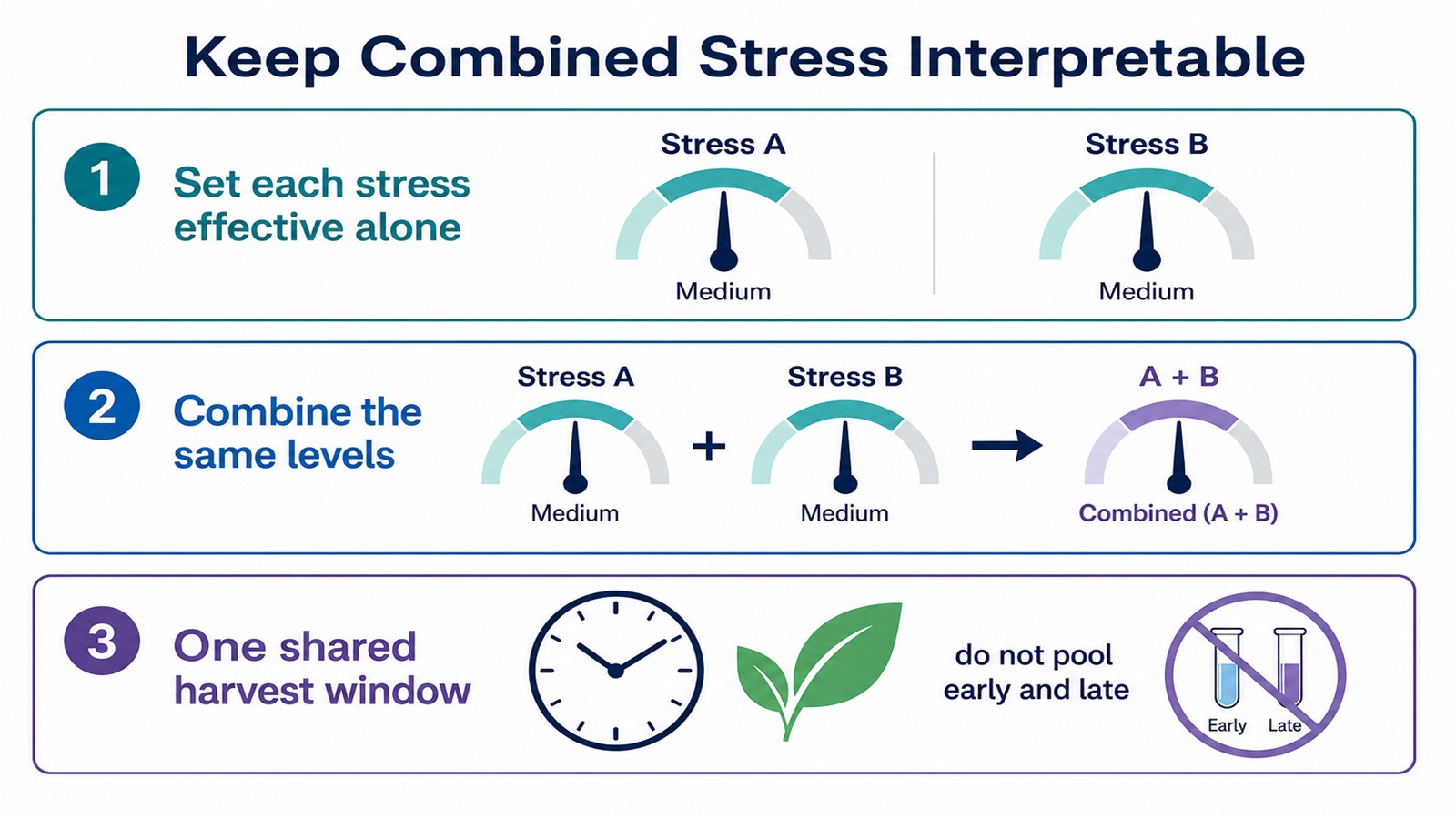
Figure 2. Keep each single stress effective on its own, then combine those same levels at a shared harvest window.
Choosing the Analysis Route After the Arms Are Fixed
Plant stress proteomics for this question is usually quantitative. Protein identification alone can list proteins present in a tissue, but it cannot rank which proteins differ among control, single-stress, and combined-stress arms.
DDA is often useful for discovery-oriented pilots, method development, or studies where protein identification depth is the first concern. DIA is often preferred when matched multi-arm cohorts require more consistent quantification across control, single-stress, and combined-stress groups. The final route should be selected after the number of arms, replicate plan, species database quality, and quantitative objective are clear.
Platform discussion can include Orbitrap Exploris 480, timsTOF Pro, and Orbitrap Astral once the cohort size and project objective are clear. Software direction commonly includes MaxQuant or Proteome Discoverer for DDA workflows and Spectronaut or DIA-NN for DIA workflows.
Report content for quantitative plant studies can include differential protein analysis, functional annotation, GO and KEGG enrichment, and protein interaction or pathway context when suitable databases are available for the studied species. Use those outputs to rank candidates for validation. Do not read a pathway hit as proof of stress interaction.
If secondary metabolism is central to the combined-stress story, plan plant metabolomics as a companion study rather than inferring metabolites from proteins alone. If early signaling becomes the next question, plant phosphoproteomics can follow after the abundance comparison is stable.
Related Services
Plant Phosphoproteomics Analysis Service
Frequently Asked Questions
Can I compare only combined stress versus control?
You can, but the result mainly shows that the combined treatment changed the proteome. It cannot separate shared single-stress responses from combination-specific candidates. Add A-alone and B-alone arms when that separation matters.
Should a combined-stress design always come after single-stress pilots?
Not always, but it is often safer. Single-stress pilots help set intensity and harvest timing so one factor does not dominate the combined arm.
Is DIA or DDA better for combined abiotic stress proteomics?
DIA is often useful for matched multi-arm studies because it supports consistent quantification across many samples. DDA can still support discovery-oriented pilots or method setup. The better choice depends on the number of arms, replicate plan, species database quality, and quantitative goal.
How many biological replicates are needed?
Use independent plants or pots as biological units, and keep a similar replicate count in every arm. Leaves from the same plant are not independent biology for a plant-level claim. Exact replicate numbers should be set with phenotype variability and the statistics plan.
How much tissue should be collected?
Sample amount should be confirmed before harvest because plant tissues differ in protein yield, water content, and interfering compounds. Share the plant species, tissue type, treatment arms, analysis route, and available material so the collection plan can be reviewed before sample preparation.
What should be shared before starting the proteomics project?
Share the stress pair, tissue type, full arm list, harvest windows, biological replicate plan, phenotype notes if available, and approximate sample amount. MtoZ Biolabs can then check whether the design supports a single-stress comparison, combined-stress interpretation, or staged pilot strategy.
Conclusion
Single-stress studies ask what one environmental factor does. Combined abiotic stress studies ask what is shared, what is unique, and whether the combination produces a distinct proteome pattern. That second question needs control, A-alone, B-alone, and A+B arms, matched intensity and timing, and quantitative plant stress proteomics after the cohort is realistic. Keep pathway maps in the candidate lane, and validate priority proteins before claiming a combined-stress mechanism.
If you are building this design now, review the stress pair, tissue type, experimental arms, harvest windows, replicate plan, and sample availability with MtoZ Biolabs before collection.
How to order?




