






Saliva Peptideomics Service
- Raw LC MS/MS data files for reanalysis
- Processed peptide identification and quantification tables in CSV or Excel format
- Differential peptide analysis results, if applicable
- A PDF technical report including methods, quality control, key findings, and interpretation
- High-resolution figures in TIFF or PNG format, such as volcano plots, heatmaps, and peptide distribution plots
MtoZ Biolabs provides saliva peptideomics service using high-resolution mass spectrometry platforms, saliva-optimized endogenous peptide enrichment strategies, and multi-dimensional computational analysis methods. This service supports researchers, clinical scientists, and pharmaceutical developers by enabling systematic detection and interpretation of salivary endogenous peptides, proteolytic fragments, and microbe-derived peptides. It helps capture both local oral changes and systemic physiological signals to support disease research, biomarker discovery, and noninvasive diagnostic development.
Why Saliva Peptideomics Matters
Saliva is one of the most promising noninvasive biofluids. Its components originate from oral tissues, salivary gland secretions, immune-derived proteins and peptides, and molecules that diffuse from plasma. It naturally contains bioactive peptides, host protein degradation fragments, microbial peptides, and inflammation-related molecules that reflect immune status, tissue integrity, microbial imbalance, and metabolic changes.
Saliva peptidomics enables systematic profiling of these endogenous peptides through high-sensitivity mass spectrometry. It can detect oral inflammation, glandular functional changes, microbial activity, and molecular signals associated with systemic diseases. Compared with traditional proteomics, peptide-level analysis more directly reflects proteolysis, local microenvironmental changes, and functional regulation. It is highly suitable for oral disease studies, biomarker screening, and noninvasive disease monitoring. Therefore, saliva peptidomics is becoming an important analytical direction in precision medicine and early disease detection.
Saliva Peptideomics Service at MtoZ Biolabs
Based on an understanding of saliva’s high protease activity, microbial interference, and abundant high-concentration proteins, MtoZ Biolabs has developed a peptideomics platform tailored to the characteristics of saliva. The platform covers sample handling, peptide enrichment, mass spectrometry analysis, and in-depth data interpretation. Our service includes:
1. Systematic Identification of Endogenous Bioactive Peptides in Saliva
Comprehensive detection of antimicrobial peptides, immune regulatory peptides, tissue repair peptides, signaling peptides, and secretion-related peptides to reveal salivary function and local immune status.
2. Expandable Targeted Peptide Quantification
High sensitivity quantification of specific peptides to support biomarker screening, validation, and therapeutic response monitoring.
3. Proteolytic Feature and Fragment Pattern Analysis
Using cleavage sites and precursor protein mapping of endogenous peptides to delineate natural proteolytic patterns in saliva. These patterns reflect inflammation, tissue changes, and glandular function.
4. Peptide Signature Profiling and Classification Analysis
Establishing characteristic peptide signatures based on peptide sequences and abundance patterns to support state classification, disease differentiation, and candidate peptide panel development.
Workflow of Saliva Peptideomics Service
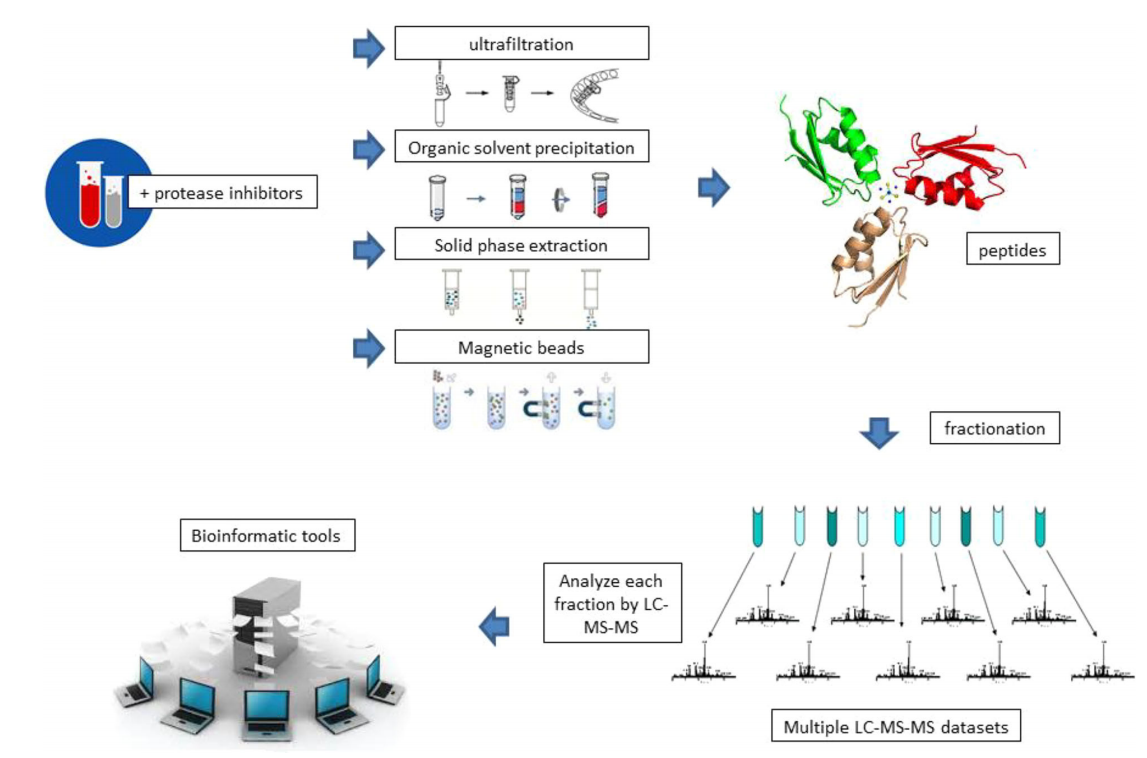
Maes, E. et al. Mass Spectrom Rev. 2019.
Why Choose MtoZ Biolabs
1. Detection System Optimized for Saliva: Addresses high protease activity and rapid degradation to ensure that detected peptides represent true biological states.
2. High Abundance Protein Interference Control: Optimized enrichment workflows reduce interference from proteins such as amylase and mucins and improve low abundance peptide detection.
3. Customized Project Design: Tailored experimental design, sample collection guidance, and data analysis strategies based on research models, hypotheses, sample scale, and biomarker goals.
4. Professional Scientific Support Team: A team of mass spectrometrists, bioinformaticians, and peptideomics specialists supports the entire project process and provides publication-ready data interpretation and figures.
Applications of Saliva Peptideomics Service
1. Oral and Periodontal Disease Research:
2. Glandular Dysfunction and Sjogren’s Syndrome Studies:
3. Microbial Infection and oral Microecology Imbalance:
4. Noninvasive Monitoring of Systemic Diseases:
5. Biomarker Discovery and Validation:
6. Drug Response and Therapeutic Evaluation:
Deliverables
1. Salivary peptide identification lists including sequence, m/z, intensity, retention time, and source attribution
2. Differential analysis and statistical results (if applicable)
3. Functional annotation, proteolytic pattern analysis, and microenvironment-related interpretation
4. High-quality figures and a PDF technical report
5. Raw mass spectrometry data and processed files
FAQs
Q1: What types of samples are suitable?
It is recommended to submit early morning fasting whole saliva or glandular saliva. Samples should not be contaminated by food, blood, or mouthwash.
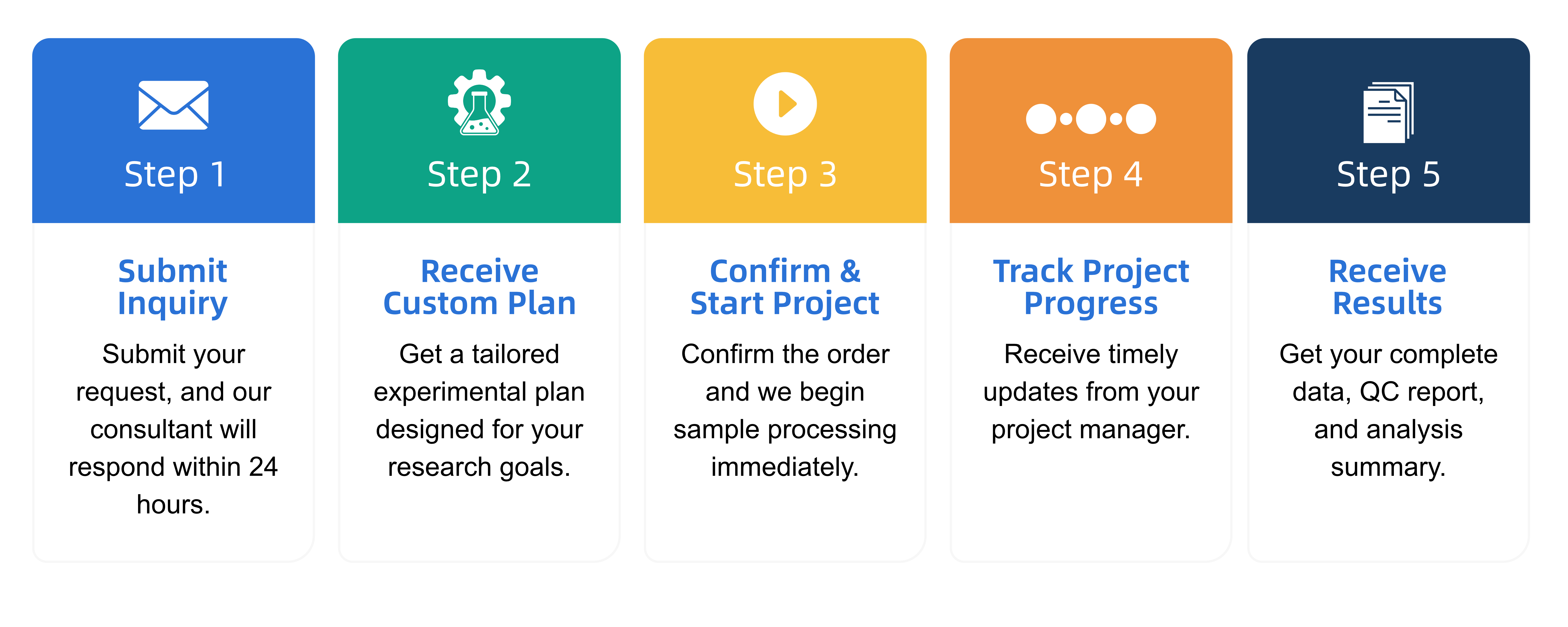
Q2: What is the service's general workflow?
Q3: What data formats are provided?
To support downstream analysis, reproducibility, and figure preparation, MtoZ Biolabs provides several standard data formats, including:
Custom formats can be provided upon request.
Q4: How should I prepare my samples?
To ensure accuracy and reproducibility, please follow these guidelines:
1. Sample Type: Collect fasting whole saliva or glandular saliva. Avoid saliva-containing mouthwash or stimulants.
2. Sample Purity: Avoid blood contamination, food debris, and excessive viscosity. Do not add detergents or antimicrobial rinses.
3. Volume: Provide at least 200 to 300 μL. Larger volumes are recommended for replicates or targeted analysis.
4. Storage and Shipping: Cool samples immediately after collection, aliquot, store at -80℃, and ship on dry ice in sealed containers.
5. Documentation: Provide collection time, conditions, processing steps, and study purpose to support accurate data interpretation.
For more information, please refer to Sample Submission Guidelines for Proteomics and Sample Submission Guidelines for Metabolomics.
If you are unsure about your sample preparation, our technical team can provide personalized pre-analysis consultation and a sample submission guide to help you optimize preparation and shipping conditions.
Start Your Project with MtoZ Biolabs
Contact us today to discuss your research needs. We support oral disease studies, noninvasive biomarker discovery, and saliva peptideomics projects with customized workflows and reliable, publication-grade data.
How to order?




