






Resources
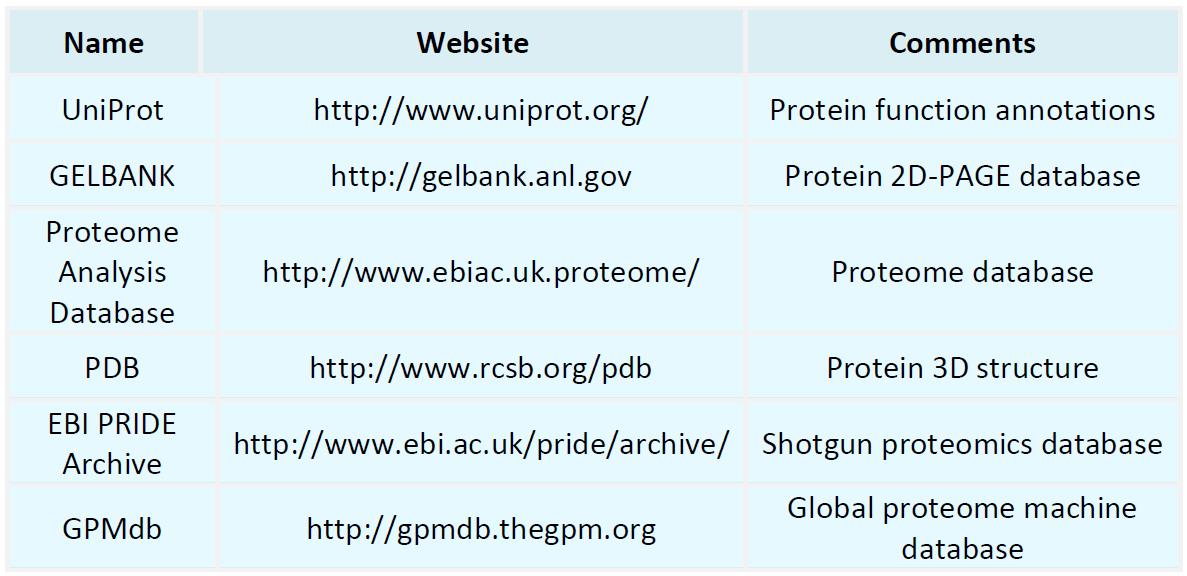
Proteomics Databases
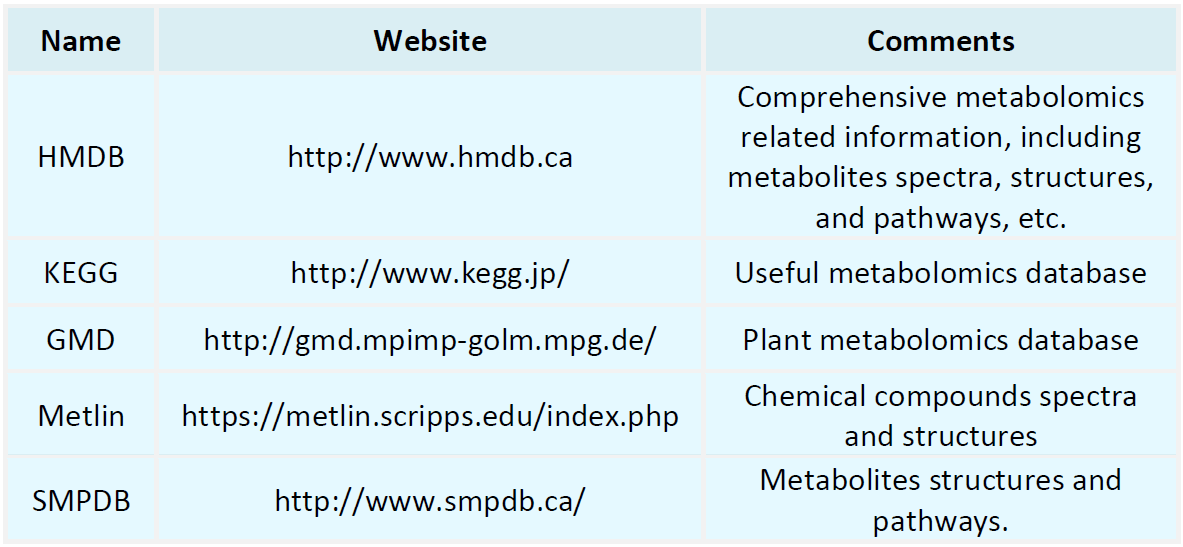
Metabolomics Databases
-
• Mass Spectrometry-Based Proteomics and Metabolomics Analysis Techniques
Mass Spectrometry-Based Proteomics and Metabolomics Analysis Techniques are two fundamental branches of systems biology that are widely used in biomedical research, disease mechanism exploration, drug development, and biomarker discovery. Both rely on mass spectrometry (MS) to identify and quantify biomolecules within biological samples; however, they focus on different types of biomolecules. While proteomics investigates proteins and their modifications, interactions, and functions, metabolomics focu......
-
• Mass Spectrometry and Proteins
Mass spectrometry analysis has been widely employed in various research areas, including the identification and quantification of proteins, the analysis of epigenetic modifications, and the investigation of protein interaction networks. This technique allows for the precise measurement of the mass of proteins or peptides, facilitating the determination of their structure and composition. Basic Principles of Mass Spectrometry and Proteins Analysis 1. Sample Preparation Protein samples are usually sub......
-
• Utilization of Unbiased Protein Identification by Mass Spectrometry in Biopharmaceutical Research
Unbiased protein identification by mass spectrometry is a high-throughput method for protein identification that leverages mass spectrometry analysis. The technique involves isolating proteins from biological samples and analyzing them through mass spectrometry to identify and quantify the protein components present. Compared to traditional methods, this approach offers superior accuracy and sensitivity, with the added advantage of simultaneously identifying a large number of proteins. Principle of ......
-
• Mass Spectrometry-Based Protein Identification Case Study
Mass Spectrometry-Based Protein Identification Case Study Involves the Following Steps Mass spectrometry-based protein identification is a widely used technique in proteomics research. The typical workflow involves several critical steps: 1. Sample Preparation Proteins are extracted from the biological sample and enzymatically digested, usually with trypsin, to produce peptide fragments. 2. Mass Spectrometry Analysis The peptide mixtures are then analyzed using liquid chromatography-tandem mass sp......
-
• Protein Analysis via Mass Spectrometry
Protein analysis via mass spectrometry is a widely used technique in proteomics and includes the following steps: Sample Preparation Proteins are extracted and purified through methods such as gel electrophoresis and liquid chromatography. Protein Digestion Proteins are enzymatically digested into peptide fragments, typically using enzymes like trypsin. Mass Spectrometry Analysis The peptide fragments are ionized, with common methods being MALDI and ESI. Their mass-to-charge ratio (m/z) is then me......
-
• What Sample Types Can be Analyzed by Protein Mass Spectrometry?
Protein mass spectrometry is a powerful analytical tool used to study various biological samples, with applications ranging from protein expression profiling to interaction mapping. The following sections outline the main sample types suitable for this technique and their corresponding research applications. Cells and Tissues Cells and tissues are among the most commonly analyzed samples for protein mass spectrometry. Proteins can be extracted from these sources using physical or chemical methods. T......
-
High-resolution protein mass spectrometry (HR-PMS) has emerged as a transformative analytical tool in modern proteomics, leveraging the principles of ionization and separation to measure the mass and relative abundance of ions with exceptional accuracy. The defining advantage of HR-PMS lies in its unparalleled capability to achieve precise mass measurements, enabling detailed characterization of complex protein samples. Techniques such as mass spectrometry (MS) and tandem mass spectrometry (MS/MS) are......
-
• Protein Mass Spectrometry Analysis Databases
Protein mass spectrometry analysis databases are foundational to bioinformatics resources, serving as an indispensable element for proteomics research. By seamlessly integrating proteomics and computational biology, these databases enable the accurate identification and quantification of proteins across diverse biological samples. Key Roles of Protein Mass Spectrometry Analysis Databases As repositories for identified protein mass spectrometry data, these databases store not only the mass spectromet......
-
• Protein Mass Spectrometry Isotope Peak Simulation
Protein mass spectrometry isotope peak simulation is an essential computational methodology in the analysis of biomolecules, with growing importance in biomedical research. This approach addresses the challenges of interpreting complex protein mass spectrometry data, particularly for large-scale experiments, and has emerged as a critical tool in enhancing the precision and reliability of analytical workflows. Protein mass spectrometry isotope peak simulation involves computational modeling to predic......
-
• Advancements in Protein Mass Measurement: Techniques and Applications
Proteins are macromolecules composed of amino acids linked by peptide bonds, with molecular mass variations depending on their sequence and number of amino acids. The core objective of protein mass measurement is to precisely determine the mass of these biomolecules, enabling detailed insights into their structural and functional properties. This process relies on mass spectrometry, where samples are ionized to produce charged ions for analysis. By measuring the mass-to-charge ratio (m/z) of these ion......
How to order?




