






Protein Sequencing Service Cost Guide: Price, Timeline, and Deliverables
Introduction
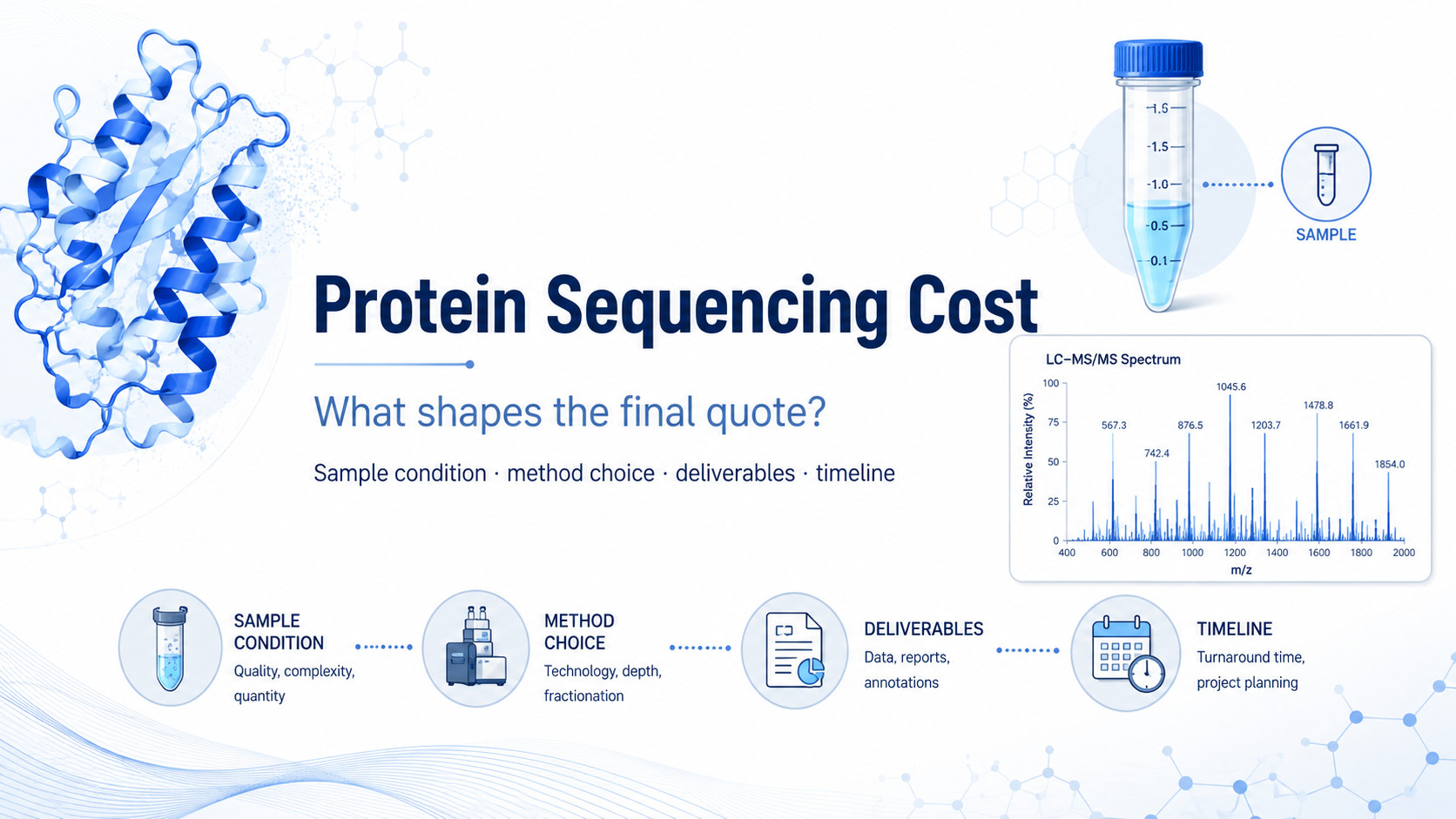
Protein sequencing cost is shaped by more than the number of samples. A simple protein identification project from a clean gel band is very different from de novo sequencing of a low-abundance protein with no reliable database. A terminal residue check is different from a primary-structure evidence package for a biologic. The same keyword can describe very different scopes of work.
For researchers, project managers, and procurement teams, the useful question is not "What is the lowest price for protein sequencing?" The better question is "What evidence do we need, and what work is required to generate it reliably?" A low quote may become expensive if it excludes sample cleanup, repeat preparation, peptide coverage review, terminal analysis, raw data, or technical interpretation.
A practical quote should connect sample condition, method choice, turnaround expectations, and reporting depth. If the result will support publication, recombinant protein confirmation, biologics characterization, or supplier comparison, the deliverables should be defined before the project starts. MtoZ Biolabs can scope a protein sequencing service request after reviewing sample type, available material, known sequence information, and decision goals.
Related Services
| Customer Need | Recommended Service Direction |
| Need a sequencing quote for protein samples | Protein Sequencing Service |
| Need identity confirmation before deeper sequencing | Protein Identification Service |
| Need terminal sequence evidence | N/C Terminal Sequencing Service |
| Need sequence coverage against a known protein | Peptide Mapping Service |
| Need unknown sequence recovery | De Novo Sequencing Service |
Main Cost Drivers
The first cost driver is sample condition. A clean, well-documented purified protein is easier to analyze than a mixed, degraded, low-volume, or buffer-incompatible sample. Additional cleanup, buffer exchange, gel excision, enrichment, desalting, or feasibility testing can increase cost. These steps may still be worthwhile if they prevent failed runs.
The second driver is method selection. Protein identification is usually narrower than full protein sequencing. LC-MS/MS protein sequencing may require digestion strategy, high-resolution MS time, peptide interpretation, and coverage review. Edman sequencing or terminal analysis may be added when the protein end is the key question. De novo protein sequencing often requires more interpretation because the workflow cannot rely fully on a database.
The third driver is deliverable depth. A simple identification result is different from a report that includes peptide lists, sequence coverage, raw spectra, terminal evidence, confidence notes, unresolved regions, and technical consultation. For research or development decisions, the evidence package may be more valuable than a short result table.
The fourth driver is project complexity. Modified proteins, glycoproteins, disulfide-rich proteins, membrane proteins, mixtures, non-model species, and proprietary constructs can require customized preparation or interpretation. The quote should state whether the workflow includes these complexities or treats them as optional add-ons.
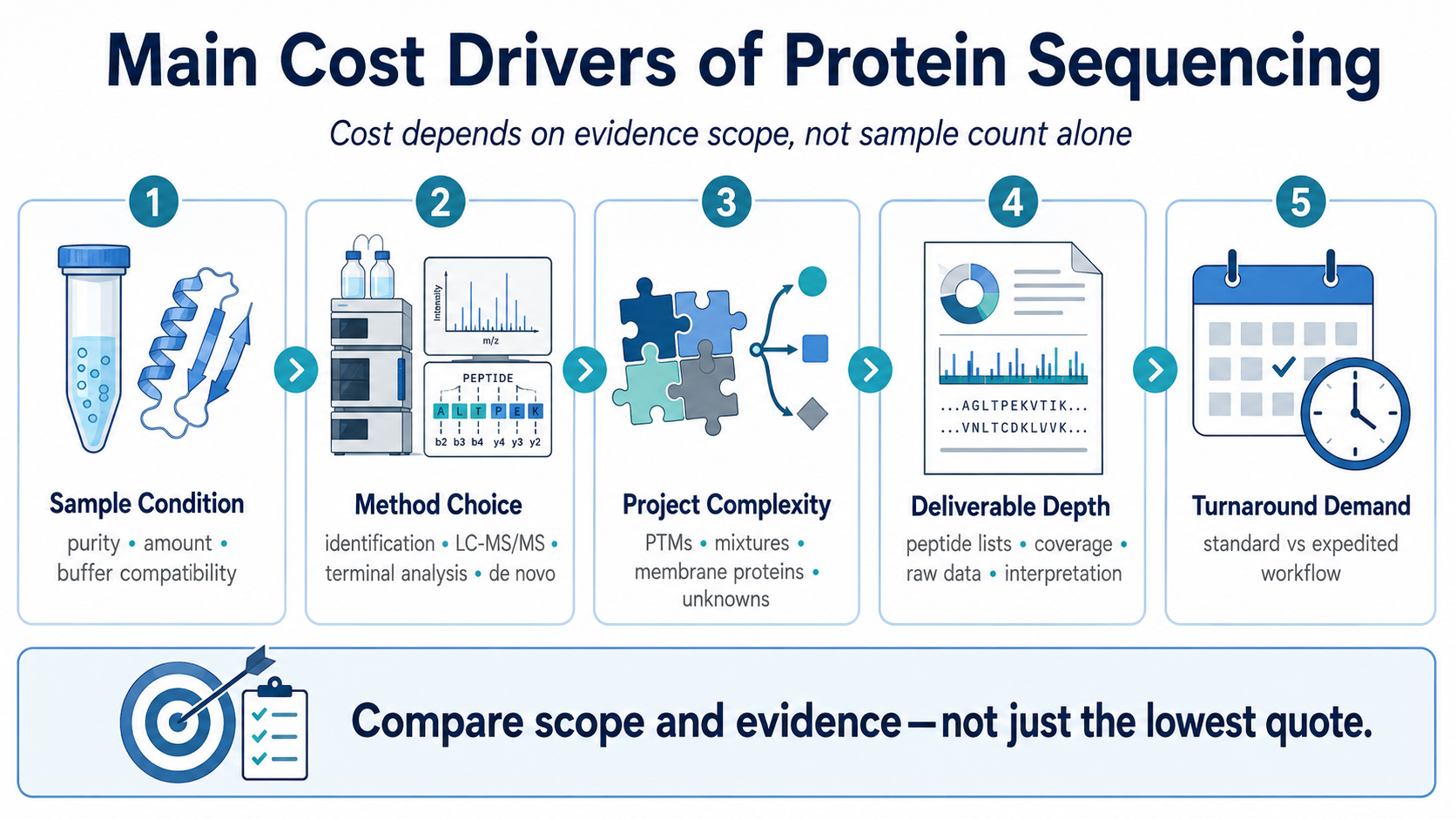
Figure 1. Turnaround depends on sample readiness, analytical complexity, data review, and reporting scope.
Why Quotes Differ Between Providers
Protein sequencing service quotes may differ because providers define scope differently. One provider may include sample cleanup, method review, raw data handover, and interpretation. Another may quote only the instrument run. These two quotes are not directly comparable.
Turnaround assumptions also affect pricing. A standard schedule allows time for feasibility review, preparation, instrument scheduling, data analysis, and quality review. Expedited service may be possible, but rush timing can add cost and may not be suitable for difficult samples. For critical samples, speed should not remove the QC steps needed to interpret the data.
Experience with similar samples matters. A provider familiar with low-abundance proteins, terminal analysis, peptide mapping, or de novo sequencing may design a better workflow from the start. A lower price can be attractive, but repeat analysis caused by poor method fit often costs more than a well-scoped project.
Cost by Project Scenario
Protein identification from a clean band is often one of the more straightforward scenarios. The goal is usually to identify which known protein is present. If the database match is strong and the project does not need broad sequence coverage, the workflow can be relatively efficient.
Protein sequencing for recombinant protein confirmation is broader. The project may need LC-MS/MS peptide evidence, coverage against an expected sequence, terminal checks, molecular weight consistency, or variant review. The cost depends on how much evidence is required and whether the sample is clean.
Terminal sequencing projects are focused but chemistry-sensitive. N-terminal sequencing may be efficient when the N-terminus is accessible. If the terminus is blocked, modified, or present in a mixture, additional MS-based strategies may be needed. C-terminal analysis may require more targeted design.
De novo protein sequencing is usually more demanding. It may need higher purity, multiple enzymes, high-quality MS/MS spectra, overlapping peptide evidence, and expert interpretation. The cost reflects the uncertainty and labor required to produce defensible sequence proposals.
Peptide mapping for biologics or quality-focused projects can require structured documentation. The report may need coverage maps, expected and observed peptides, PTM notes, variant checks, raw data, and traceable methods. This depth increases value, but it should be discussed before quotation.
Turnaround Time: What Affects the Schedule?
Turnaround time begins before the instrument run. Sample review, shipping, receipt confirmation, and feasibility discussion can affect the schedule. Missing information about buffer, amount, purity, or expected sequence may delay preparation because the team needs to clarify risk before analysis.
Sample preparation can be fast for clean material and slower for difficult samples. Gel bands, low-volume samples, buffer-incompatible proteins, mixtures, and samples requiring multiple digestion strategies may need additional handling. Each extra step should have a purpose and should be reflected in the scope.
Instrument time is only one part of the timeline. Data processing, peptide interpretation, coverage review, terminal assignment, de novo interpretation, and report preparation can take significant time. Manual review is especially important when the result will guide downstream experiments, publication claims, or development decisions.
Urgent deadlines should be shared early. Some projects can be prioritized, but a rushed workflow that skips feasibility review may create more delay later if the result is incomplete or hard to interpret.
What Should Be Included in a Quote?
A useful protein sequencing quote should specify the sample type, number of samples, required amount, acceptable buffer conditions, selected method, expected deliverables, estimated turnaround, data handover format, and assumptions. It should also explain what happens if the sample fails QC or produces incomplete evidence.
Researchers should ask whether the quote includes sample cleanup, enzymatic digestion, LC-MS/MS acquisition, database searching, de novo interpretation, peptide mapping, terminal analysis, raw data, coverage maps, and technical consultation. Not every project needs every item, but the scope should be explicit.
Procurement teams should compare evidence, not only price. A quote that includes interpretation and uncertainty reporting may look higher than a run-only quote, but it may reduce downstream risk. For decision-critical projects, the report must be understandable by scientists, managers, and external reviewers.
Deliverables That Create Real Value
The most valuable deliverables are those that make the next decision easier. For a manuscript, that may mean a clear protein ID, peptide evidence, and method description. For recombinant expression, it may mean sequence coverage and terminal processing information. For biologics characterization, it may mean a structured primary-structure report with traceable evidence.
Raw data access can matter when results need to be reviewed later. Peptide lists, spectra, coverage maps, and method parameters make the output more reusable. Confidence notes are also important. A responsible report should say where the data are strong, where they are incomplete, and which follow-up analysis could improve confidence.
Technical consultation can prevent misinterpretation. For example, missing sequence coverage may reflect digestion behavior rather than absence of a region. A blocked N-terminus may require a different approach, not a conclusion that the protein has no N-terminus. Clear explanation protects the project from false certainty.
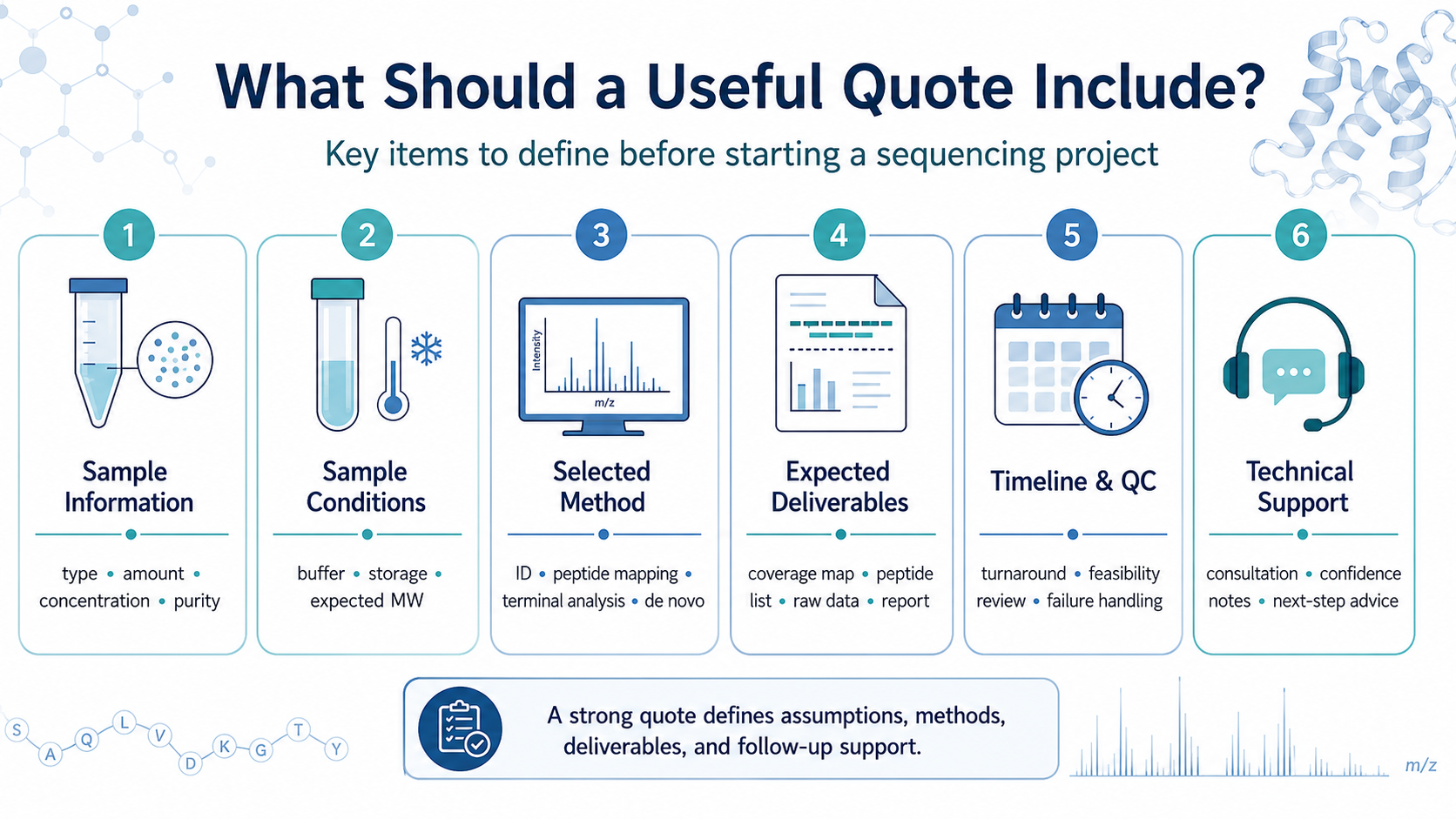
Figure 2. A useful quote should define sample assumptions, methods, deliverables, and next-step support.
How to Evaluate a Protein Sequencing Provider
A strong provider should ask questions before quoting. Important questions include what the sample is, how it was purified, what sequence is expected, whether the terminal residues matter, whether the database is reliable, and how the result will be used. These questions show that the provider is matching method to decision.
The provider should also be transparent about limits. Protein sequencing can generate powerful evidence, but it cannot guarantee complete sequence recovery from every sample. Overpromising full coverage from poor material is a warning sign. Clear uncertainty reporting is more useful than confident language without evidence.
Communication matters because sequencing projects often involve interpretation. A project manager, PI, or quality team may need to understand why a region was not covered, whether a variant is real, or whether additional analysis is justified. A provider that can explain these points may save time after the report is delivered.
Ways to Control Cost Without Reducing Quality
The first way to control cost is to submit a better sample. Improving purity, documenting buffer composition, avoiding repeated freeze-thaw cycles, and providing enough material can reduce repeat work. A small amount of preparation planning often costs less than troubleshooting after failure.
The second way is to define the decision. If the goal is identity confirmation, do not pay for unnecessary full de novo work. If the goal is unknown sequence recovery, do not start with a narrow method that cannot answer the question. Scope discipline keeps the project efficient.
The third way is to stage complex projects. Start with feasibility or identification, then expand to peptide mapping, terminal analysis, or de novo sequencing only when the first result supports it. This approach is useful for rare samples and uncertain databases.
Frequently Asked Questions
1. Why is protein sequencing cost variable?
Cost varies because sample condition, method choice, sequence complexity, data analysis depth, reporting requirements, and turnaround expectations differ between projects.
2. Is LC-MS/MS protein sequencing more expensive than protein identification?
It can be, because broader sequence coverage, peptide mapping, de novo interpretation, or confidence review may require more work than routine identification.
3. Can I get a quote without knowing the full sequence?
Yes, but the provider will need sample details and project goals. If no reliable sequence exists, de novo sequencing or staged feasibility review may be recommended.
4. What information should I provide for pricing?
Provide sample type, amount, concentration, purity, buffer, storage condition, expected molecular weight, species, known sequence information, and intended use of the result.
5. Should I choose the fastest turnaround?
Choose the fastest turnaround only if the workflow still includes appropriate QC and interpretation. For difficult samples, rushing may increase the risk of incomplete or ambiguous results.
Conclusion
Protein sequencing cost is best understood as the cost of generating usable evidence, not just running an instrument. Sample readiness, method choice, interpretation depth, reporting format, and turnaround expectations all shape the final quote. A transparent scope helps researchers compare providers fairly and avoid hidden repeat work.
When the sequence result will influence publication, development, recombinant production, or quality decisions, contact MtoZ Biolabs to define the required evidence package, estimate project timeline, and request a protein sequencing service quote matched to the sample.
How to order?




