






Protein S-Nitrosation Identification Service
Protein S-nitrosation identification based on mass spectrometry is a reliable approach for studying protein post-translational modifications (PTMs), offering precise site-level analysis of S-nitrosation patterns. S-nitrosation, also called S-nitrosylation, is a reversible redox-dependent modification in which a nitric oxide (NO) group attaches covalently to the thiol group of cysteine residues to form S-nitrosocysteine. Its occurrence depends on NO concentration, the surrounding amino acid sequence, and the protein’s three-dimensional structure. S-nitrosation regulates protein activity, localization, and transport, influencing cardiovascular health, nervous system function, immune responses, and redox signaling. Abnormal S-nitrosation has been linked to cardiovascular disease, neurodegenerative disorders, inflammation, and cancer.
MtoZ Biolabs provides high-sensitivity Protein S-Nitrosation Identification Service using Thermo Fisher Q Exactive HF, Orbitrap Fusion, and Orbitrap Fusion Lumos mass spectrometers combined with Nano-LC systems. With optimized workflows and advanced enrichment methods, we deliver accurate site-level identification to help researchers uncover the roles of this modification in health and disease.
Analysis Workflow
1. Sample Preparation: Standardized processing to preserve S-nitrosation.
2. Peptide Enrichment: Biotin-Switch or phosphine-based labeling strategies to selectively capture low-abundance peptides.
3. MS Detection: High-resolution LC-MS/MS for separation and site-specific identification.
4. Data Analysis and Reporting: Database searches and bioinformatics confirm sites with functional and pathway annotations.
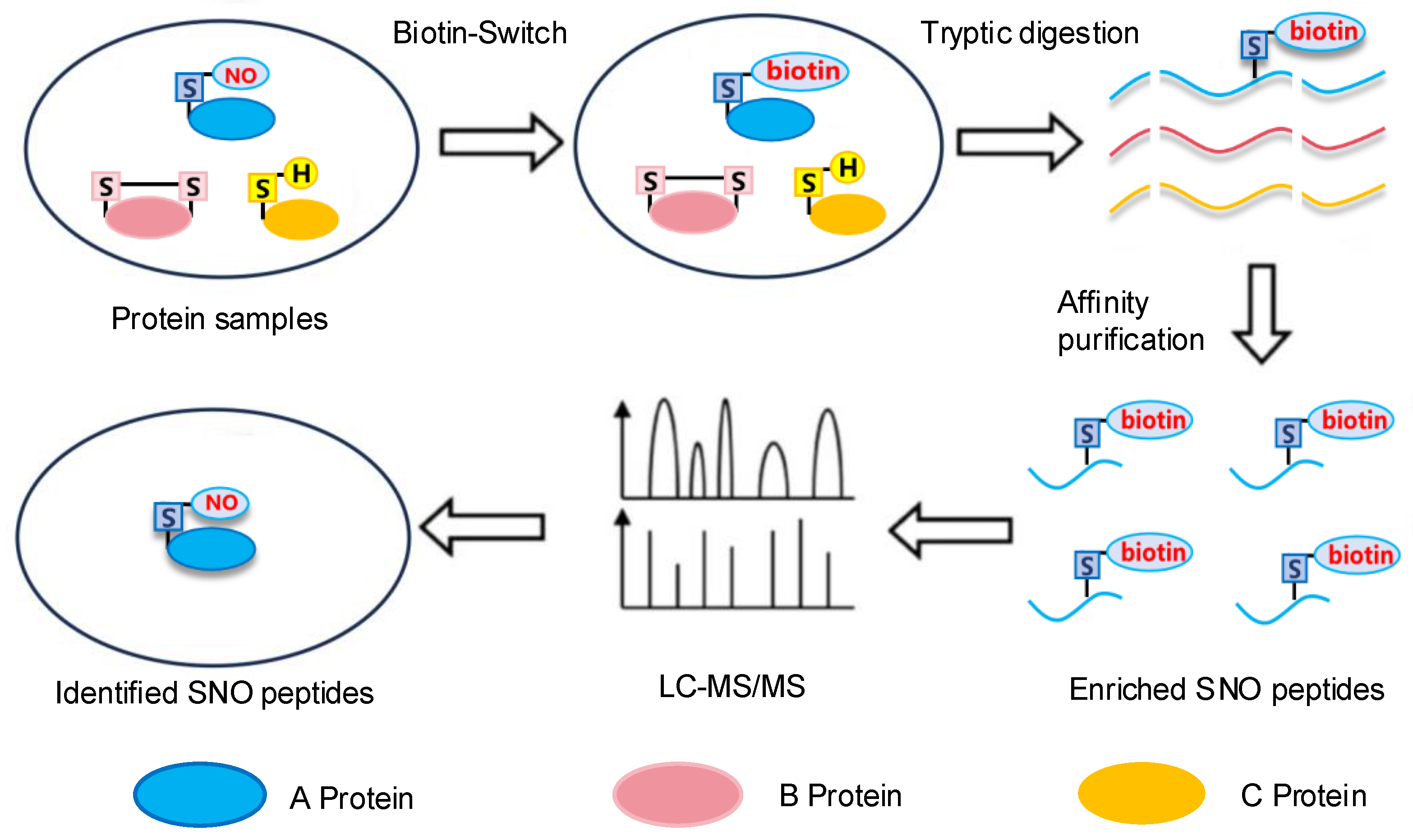
Lin, W. et al. Curr. Issues Mol. Biol. 2025.
Figure 1. Protein S-Nitrosation Identification Workflow
Why Choose MtoZ Biolabs?
✔ High-Resolution Analysis: Orbitrap MS with Nano-LC delivers sensitive and accurate detection.
✔ Broad Sample Compatibility: Applicable to cells, tissues, purified proteins, and complex biofluids such as serum and plasma.
✔ Exceptional Sensitivity and Specificity: Advanced labeling strategies enable detection of low-abundance sites while minimizing background noise.
✔ Specialized Expert Support: PTM specialists provide customized experimental design and in-depth data interpretation.
✔ Transparent One-Time Pricing: Clear cost structure with no hidden fees or additional charges.
Sample Submission Suggestions
· Types: Cell lysates, tissue extracts, purified or recombinant proteins, serum, plasma, and other biofluids.
· Amount: ≥50 μg with ≥80% purity for target proteins; ≥1 mg with ≥1 μg/μL for mixtures.
· Storage: Store at –80°C, ship on dry ice, avoid freeze-thaw cycles.
Note: Provide details on sample collection and handling. If you need further details, our technical support team is happy to assist and provide comprehensive guidance on sample submission.
What Could be Included in the Report?
1. Comprehensive Experimental Details
2. Materials, Instruments, and Methods
3. High-quality Spectra and Visualized Charts
4. Site-specific S-Nitrosation Identification with Detailed Annotation
5. Bioinformatics Analysis
6. Raw Data Files
MtoZ Biolabs Protein S-Nitrosation Identification Service provides high-confidence data to support studies in cardiovascular biology, neurology, immunology, and inflammation. Our service helps reveal signaling mechanisms, disease pathways, and potential biomarkers or drug targets. In addition, we offer identification services for phosphorylation, acetylation, methylation, ubiquitination, SUMOylation, and glycosylation, enabling comprehensive PTM profiling and accelerating research translation. Contact us today to move your project forward.
Related Services
How to order?




