






Protein Identification, Quantification, PTM Mapping, or Intact Mass: Which Mass Spectrometry Service Do You Need?
Introduction
Protein mass spectrometry service options can look interchangeable when viewed from a project summary slide. All of them use mass spectrometry, all of them analyze proteins, and all of them produce data tables that appear similarly technical in a report. Yet the analytical questions they answer are not the same. One project needs to know which proteins are present in a complex sample. Another needs to compare protein abundance across conditions. Another must localize a phosphorylation or glycosylation site. Another requires confirmation of intact molecular weight for a biologic or recombinant protein.
Choosing the wrong service does not always fail immediately. It more often produces data that are valid but not decision-ready for the question at hand. Protein identification without quantification cannot support differential expression claims. Intact mass alone cannot localize a modification site. PTM mapping without sufficient peptide coverage may miss the modification of interest. Quantification without proper identification may compare the wrong features across samples.
This article compares protein identification, quantification, PTM mapping, and intact mass services and explains which mass spectrometry service fits different project goals.
When Service Selection Becomes the Real Decision
Service selection becomes critical once the project moves from general interest in protein MS to a specific deliverable requirement.
Discovery proteomics projects need to know whether the priority is identifying proteins in a mixture or measuring abundance changes across groups. Biologics characterization projects need to decide whether intact mass, peptide mapping, or both are required for QC documentation. PTM-focused studies must determine whether enrichment, peptide mapping, or targeted MS is needed to localize modifications confidently. Comparative studies may require quantification with identification built in rather than separate one-off assays. Regulatory or publication-facing projects may require a defined report type that one service alone cannot supply.
The best service choice follows the question, not the instrument name.
Protein Identification Services
Protein identification services determine which proteins are present in a sample.
These workflows typically use bottom-up proteomics, in which proteins are digested into peptides, analyzed by LC-MS/MS, and matched to database sequences. The output is a list of identified proteins supported by peptide evidence. Identification services are central to complex mixture analysis, pull-down validation, band identification from gels, and initial characterization of unknown samples.
Protein identification answers what is present. It does not by itself quantify relative abundance across conditions or provide complete modification site assignment for every detected protein.
Protein Quantification Services
Protein quantification services measure relative or absolute abundance differences across samples.
Label-free, stable isotope, TMT, SILAC, and targeted quantification workflows can all be used depending on experimental design. Quantification services depend on reliable identification because only confidently identified peptides or proteins can be compared across runs. The output supports differential expression analysis, treatment response studies, biomarker comparison, and pathway-level interpretation when sample design is appropriate.
Quantification answers how much changed. It is not a substitute for intact mass confirmation or detailed PTM localization when those are the primary project goals.
Related Services
Protein Identification Service
Protein Molecular Weight Determination Service
Primary Structure Analysis Service
Researchers choosing among protein MS services can consult MtoZ Biolabs to review sample type, project question, and the deliverable best matched to the study goal.
PTM Mapping Services
PTM mapping services identify and localize post-translational modifications on proteins.
These workflows may include enrichment for phosphorylation, glycosylation, ubiquitination, acetylation, or other modification classes, followed by LC-MS/MS and site assignment based on fragment ion evidence. PTM mapping can be performed on purified proteins or within proteome-wide discovery experiments when enrichment and depth are sufficient. The output supports modification site reporting, comparability review, and structural characterization of biologics.
PTM mapping answers where a modification occurs. It usually requires peptide-level analysis and is not replaced by intact mass alone unless the project needs only global mass shift evidence.
Intact Mass Analysis Services
Intact mass analysis services measure the molecular weight of intact proteins or subunits without full digestion.
These workflows are widely used for biologics QC, antibody mass confirmation, fusion protein review, glycoform screening, and rapid comparison of expected versus observed product mass. Denaturing intact mass simplifies ionization for subunit measurement. Native intact mass can provide assembly and complex mass information under non-denaturing conditions when appropriate.
Intact mass answers what whole-protein mass species are present. It does not provide residue-level sequence confirmation or detailed PTM localization without complementary peptide mapping.
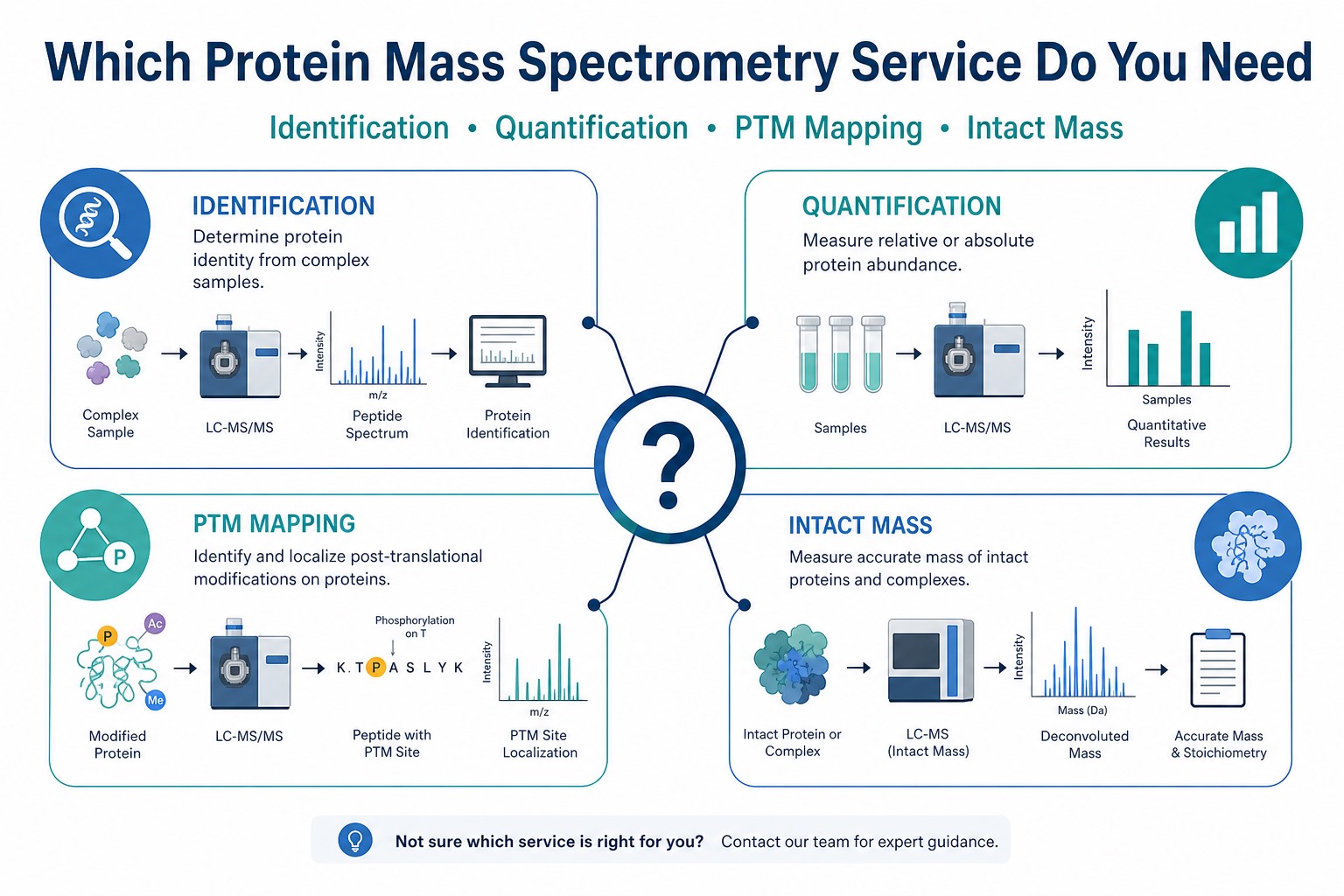
Figure 1. Protein MS service choice depends on whether the project requires identification, quantification, PTM mapping, or intact mass analysis.
Side-by-Side Service Comparison
|
Service Type |
Primary Question |
Typical Sample |
Main Output |
Best Use Case |
|---|---|---|---|---|
|
Protein identification |
What proteins are present? |
Complex mixture, gel band, pull-down |
Protein ID list with peptide evidence |
Discovery and sample composition |
|
Protein quantification |
What changed in abundance? |
Comparative sample sets |
Quantitative protein or peptide table |
Treatment, cohort, or pathway comparison |
|
PTM mapping |
Where is the modification? |
Purified protein or enriched proteome |
Modified peptide and site assignment |
Modification characterization |
|
Intact mass |
What is the whole-protein mass profile? |
Purified biologic or protein |
Intact or subunit mass distribution |
QC, comparability, mass confirmation |
No single row replaces the others when the project question spans multiple layers.
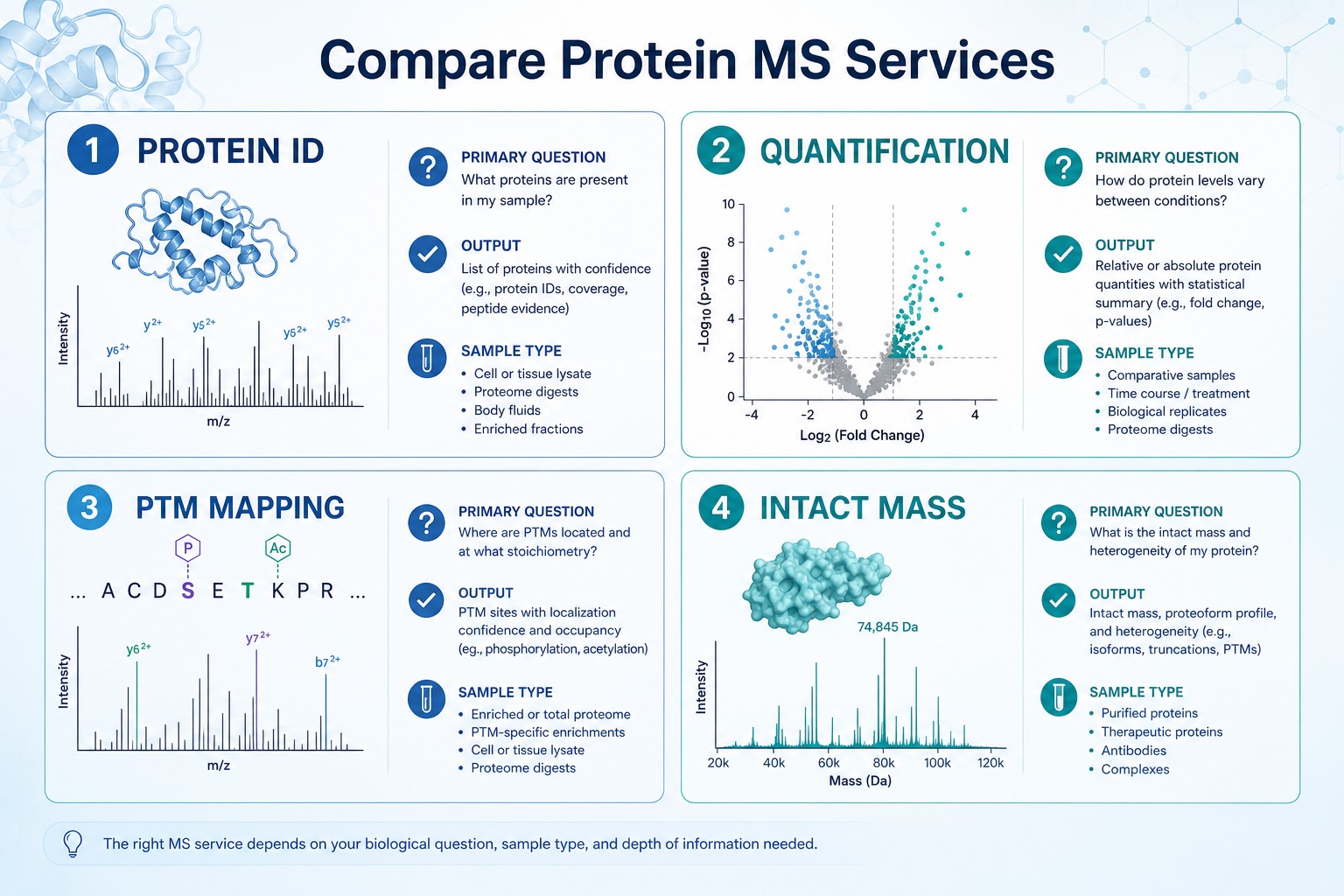
Figure 2. Identification, quantification, PTM mapping, and intact mass services answer different protein characterization questions.
How the Services Fit Together
Many complete protein characterization programs combine services rather than choosing only one.
Identification provides the protein list that quantification depends on. Quantification reveals which identified proteins change under experimental conditions. PTM mapping explains how modifications contribute to mass heterogeneity or functional differences. Intact mass confirms the global mass profile of the product or major proteoforms before or alongside peptide-level work. A biologics program may use intact mass for QC, peptide mapping for sequence and modification review, and targeted PTM analysis for critical sites.
Service selection should therefore consider whether the project needs one layer or an integrated package.
Decision Guide by Project Goal
Different project goals favor different primary services.
|
Project Goal |
Recommended Primary Service |
Common Supporting Service |
|---|---|---|
|
Identify proteins in a complex sample |
Protein identification |
Quantification if comparison is also needed |
|
Compare protein levels across conditions |
Protein quantification |
Identification for feature confidence |
|
Localize phosphorylation or glycosylation |
PTM mapping |
Identification and enrichment as needed |
|
Confirm antibody or biologic mass |
Intact mass analysis |
Peptide mapping for sequence support |
|
Biologics comparability package |
Intact mass plus peptide mapping |
PTM mapping for critical modifications |
|
Discovery with modification focus |
Identification plus PTM mapping |
Quantification for differential modified forms |
The primary service should match the decision the data must support.
Common Selection Mistakes
Several mistakes recur when teams choose protein MS services too quickly.
Requesting intact mass when the project requires modification site localization leads to inconclusive PTM conclusions. Requesting identification alone when the project requires group comparison leaves abundance questions unanswered. Requesting quantification without sufficient replicate design produces unstable ratios that look scientific but are not decision-ready. Requesting PTM mapping without enrichment or enough sample amount may miss low-abundance modified peptides. Treating one service report as a complete characterization package when the project spans multiple analytical layers creates documentation gaps.
Better service selection begins with writing down the exact question before requesting a workflow name.
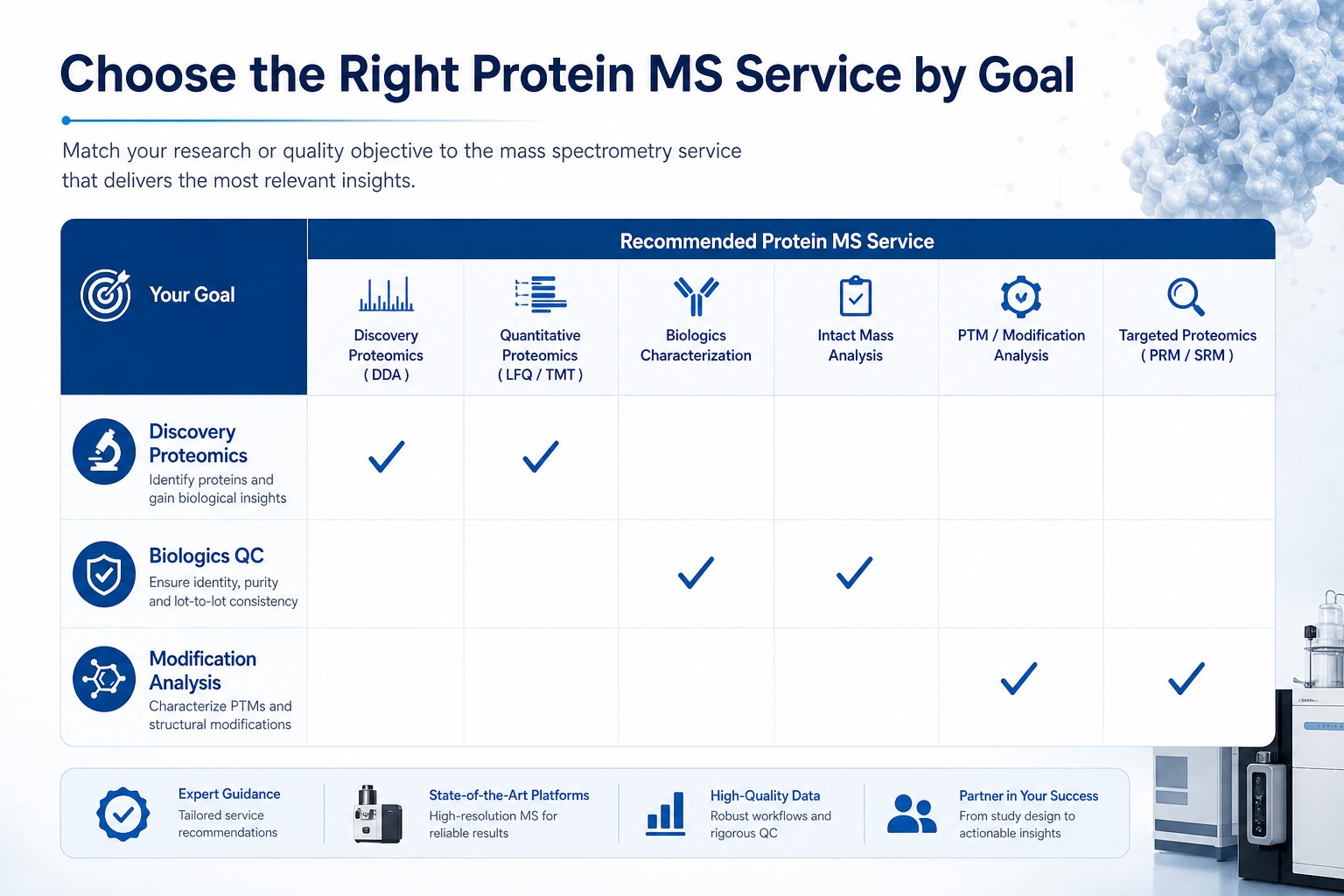
Figure 3. Project goal determines whether identification, quantification, PTM mapping, intact mass, or a combined service package is the best fit.
Core Advantages of Matching Service to Question
Why the Right Service Choice Matters
Decision-ready data.
The output format matches the conclusion the project must make.
Efficient use of sample and budget.
The correct service avoids repeating experiments with the wrong analytical layer.
Clearer reporting.
Identification, quantification, PTM, and intact mass deliverables remain distinct rather than conflated.
Better integration with downstream work.
Biologics QC, discovery analysis, and modification studies proceed with the right starting evidence.
Frequently Asked Questions
1. Which protein MS service is most common for discovery projects?
Protein identification is often the starting point, with quantification added when comparison across conditions is required.
2. Can intact mass replace PTM mapping?
No. Intact mass shows global mass heterogeneity but does not localize modification sites by itself.
3. Do I need both identification and quantification?
Yes, when the project requires both knowing what is present and knowing what changed in abundance.
4. What service is best for biologics QC?
Intact mass analysis is common for mass confirmation, often supported by peptide mapping and targeted PTM review.
5. Can one service package cover all four needs?
Some integrated projects combine services, but each layer answers a different question and should be scoped explicitly.
Conclusion
Protein identification, quantification, PTM mapping, and intact mass services answer different mass spectrometry questions and should be selected based on project goal rather than habit or naming convenience. Identification defines sample composition. Quantification compares abundance. PTM mapping localizes modifications. Intact mass confirms whole-protein mass profiles. Many strong characterization programs combine these services, but the primary choice should match the decision the data must support.
Programs that define the required deliverable before requesting a service obtain clearer results and fewer repeated runs. Researchers choosing among protein mass spectrometry services can contact MtoZ Biolabs to review sample type, study design, and the workflow best matched to identification, quantification, PTM mapping, or intact mass needs. For integrated biologics or proteomics projects, MtoZ Biolabs can also help design complementary service packages that combine the right analytical layers from the start.
How to order?




