



Plasma is one of the most clinically valuable sample types in proteomics research because of its broad availability, ease of collection, and rich representation of systemic biological information. However, the plasma proteome spans a dynamic concentration range of up to 10 orders of magnitude, and high-abundance proteins, such as albumin and immunoglobulins, account for more than 90% of the total protein mass. As a result, low-abundance proteins, particularly potential disease biomarkers, are difficult to detect and quantify accurately. Owing to its high selectivity and sensitivity, Parallel Reaction Monitoring (PRM) has become an important tool for the targeted quantitative analysis of low-abundance proteins in plasma. This article systematically examines the key advantages and technical workflow of PRM for targeted protein quantification in plasma samples. How PRM supports low-abundance protein measurement more broadly is discussed in How Does PRM Technology Facilitate the Analysis of Low-Abundance Proteins?.
Technical Challenges in Plasma Sample Analysis
- Suppression Effects Caused by the Wide Dynamic Range: High-abundance proteins lead to ion suppression and obscure low-abundance targets.
- Interference From a Complex Background: Plasma contains various interfering components, such as lipids, small molecules, and glycoproteins, which can compromise the stability of mass spectrometric analysis.
- Stringent Requirements for Reproducibility: Clinical sample analysis requires exceptionally high batch-to-batch consistency and quantitative accuracy.
- Limited Sample Input: Samples from certain clinical cohorts may be available only in limited amounts, requiring high-quality quantification under low-input conditions.
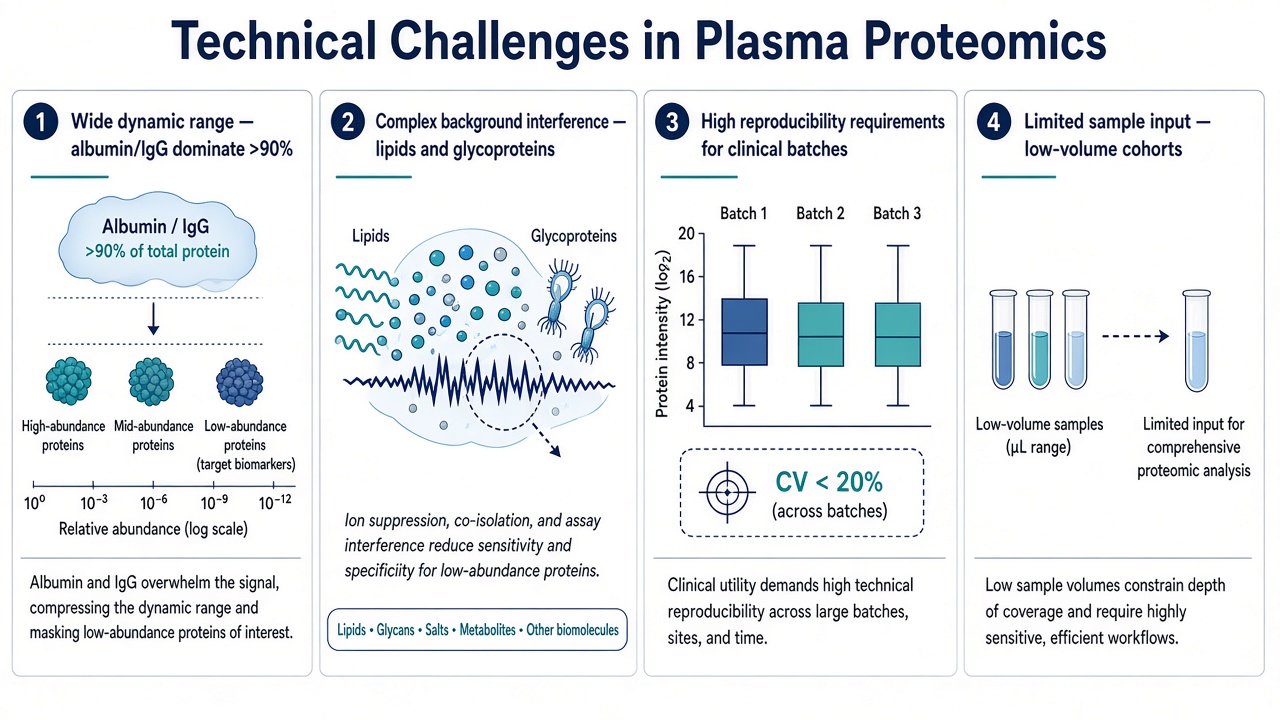
Figure 1. Plasma PRM projects must address wide dynamic range, complex matrix interference, clinical reproducibility requirements, and limited sample input.
Suitability of PRM for Plasma Protein Quantification
PRM is a targeted analytical approach based on high-resolution mass spectrometry platforms and is well suited for the precise quantification of low-abundance proteins in limited-volume, highly complex samples.
Its key advantages include:
- High-Resolution Orbitrap Acquisition: This enables effective discrimination between background ions and target ions, thereby improving the signal-to-noise ratio.
- Quantification Based on Multiple Fragment Ions: The most responsive fragment ion peaks can be selected for quantification, enhancing method robustness.
- Integration With Stable Isotope-Labeled Internal Standards: This enables absolute quantification and batch-effect correction, thereby meeting the analytical requirements of clinical samples.
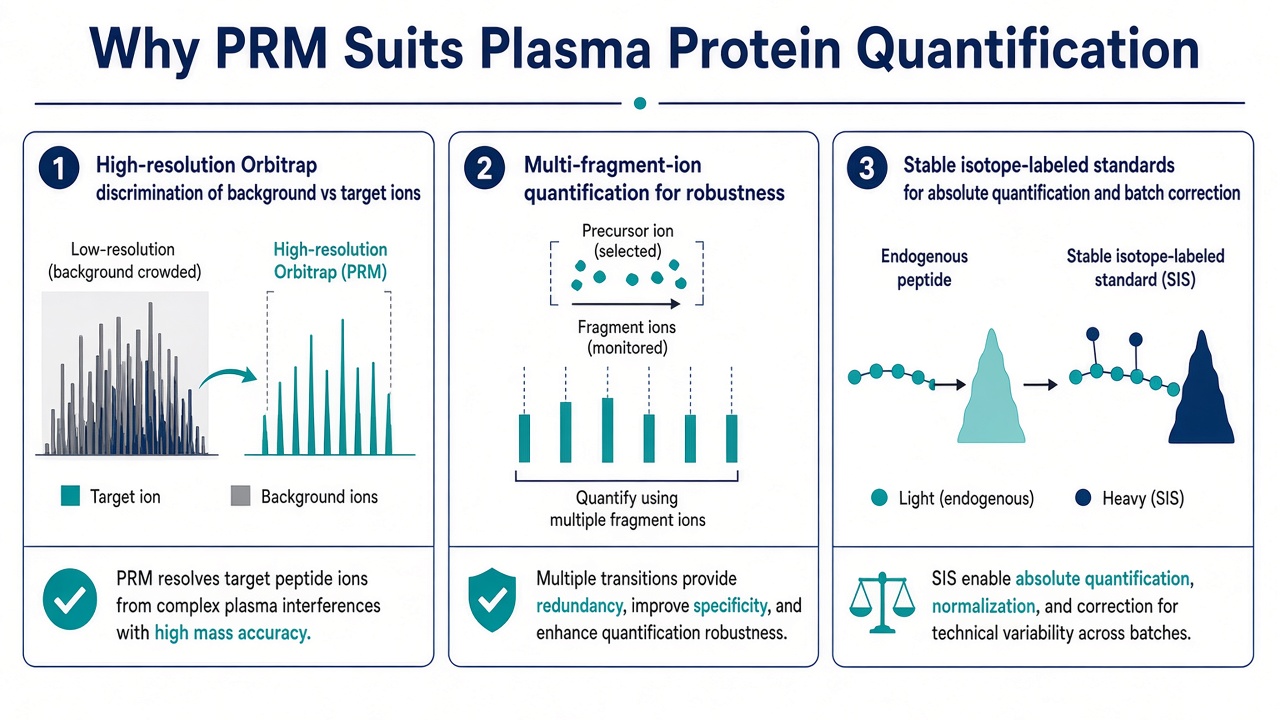
Figure 2. PRM improves plasma quantification through high-resolution ion discrimination, multi-fragment monitoring, and stable isotope-labeled standards.
Broader applications and value of PRM in protein quantification are summarized in Applications and Value of PRM Mass Spectrometry in Protein Quantification.
Standard Workflow for PRM Analysis of Plasma Samples
1. Sample Preparation
(1) Depletion of High-Abundance Proteins: Immunoaffinity columns, such as MARS, are commonly used to remove albumin and IgG.
(2) Normalization of Protein Input: BCA or Bradford assays are used to normalize protein input across samples.
(3) Denaturation, Reduction, and Alkylation: These steps improve digestion efficiency and increase peptide recovery.
2. Proteolytic Digestion and Internal Standard Addition
(1) Trypsin or Lys-C is used for complete proteolytic digestion.
(2) SIL peptides are added before digestion to ensure calibration across the entire workflow.
3. Peptide Purification and Enrichment
(1) C18 solid-phase extraction is used to remove salts and low-molecular-weight interferents.
(2) Affinity enrichment strategies, such as SISCAPA, may be incorporated according to target abundance requirements.
4. LC-PRM Mass Spectrometric Analysis
(1) High-performance liquid chromatography, such as NanoLC or μLC, is used for chromatographic separation.
(2) PRM acquisition parameters are optimized through fine adjustment of the isolation window (1–2 Da), NCE, injection time, and related settings.
5. Data Analysis and Quality Control
(1) Skyline is used for fragment ion peak identification, peak integration, and internal standard-based correction.
(2) QC samples, blanks, and repeated injections are included to monitor system stability.
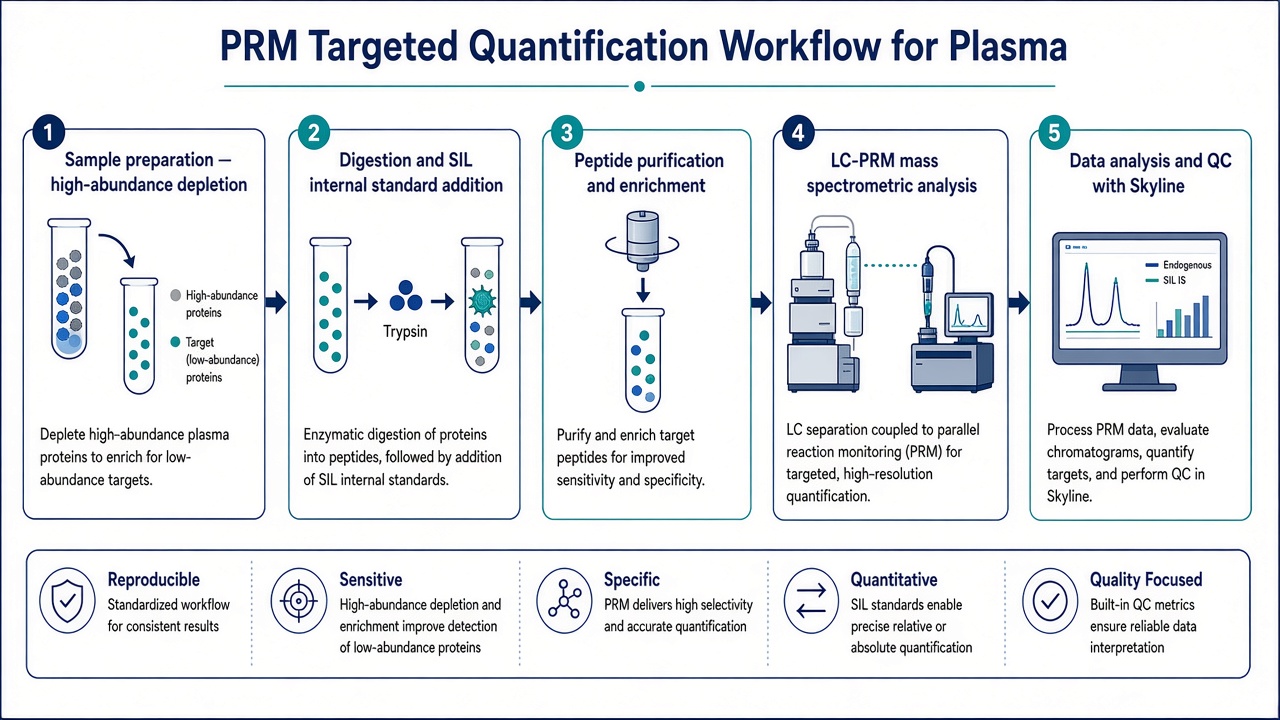
Figure 3. A plasma PRM workflow typically combines depletion, digestion with SIL standards, cleanup or enrichment, LC-PRM acquisition, and QC-focused data analysis.
MtoZ Biolabs has established a high-sensitivity, highly standardized plasma PRM quantification platform tailored to proteomics applications involving clinical samples.
Key features include:
- Curated Peptide Database: Covering more than 500 common disease-related protein targets, this resource supports rapid method development.
- High-Throughput Orbitrap Mass Spectrometry Platform: The platform supports microgram-level sample input and achieves low-femtomole sensitivity.
- Automated Data Processing Workflow: Skyline combined with Python scripts enables efficient quantification and large-scale quality control.
- Integrated Enrichment and Depletion Strategies: High-abundance protein depletion, affinity enrichment, and fractionation approaches can be flexibly combined according to project requirements.
The plasma proteome is of substantial biomedical value. PRM offers major advantages for the precise identification and quantification of low-abundance plasma proteins and is particularly well suited for biomarker validation, drug-related research, and large-cohort clinical studies. Researchers can also review the MtoZ Biolabs Parallel Reaction Monitoring (PRM) Service for project-specific plasma panel design, depletion or enrichment planning, and targeted quantification support.
