






Potato Starch Analysis Service | Pharmaceutical Excipient
MtoZ Biolabs provides Potato Starch Analysis Service, offering systematic testing and comprehensive evaluation of potato starch. Our Potato Starch Analysis Service covers chemical composition, purity and impurity profiling, physicochemical characterization, and application performance. These results support pharmaceutical excipient quality control, formulation development, food processing, and materials research. With advanced instrumentation and an experienced scientific team, we deliver accurate, reproducible, and regulatory-compliant results.
Potato starch is composed of amylose and amylopectin. Its granules are typically oval or irregular spheres with diameters of 30–100 μm, showing distinctive Maltese cross patterns under polarized light microscopy. Compared with other starches, potato starch features larger granule size, low gelatinization temperature, high viscosity, and excellent transparency. These properties make it widely useful in pharmaceuticals as a disintegrant, diluent, and binder; in food and beverages as a thickener, stabilizer, and texture modifier; and in industrial fields such as fermentation, brewing, papermaking, and biodegradable materials.
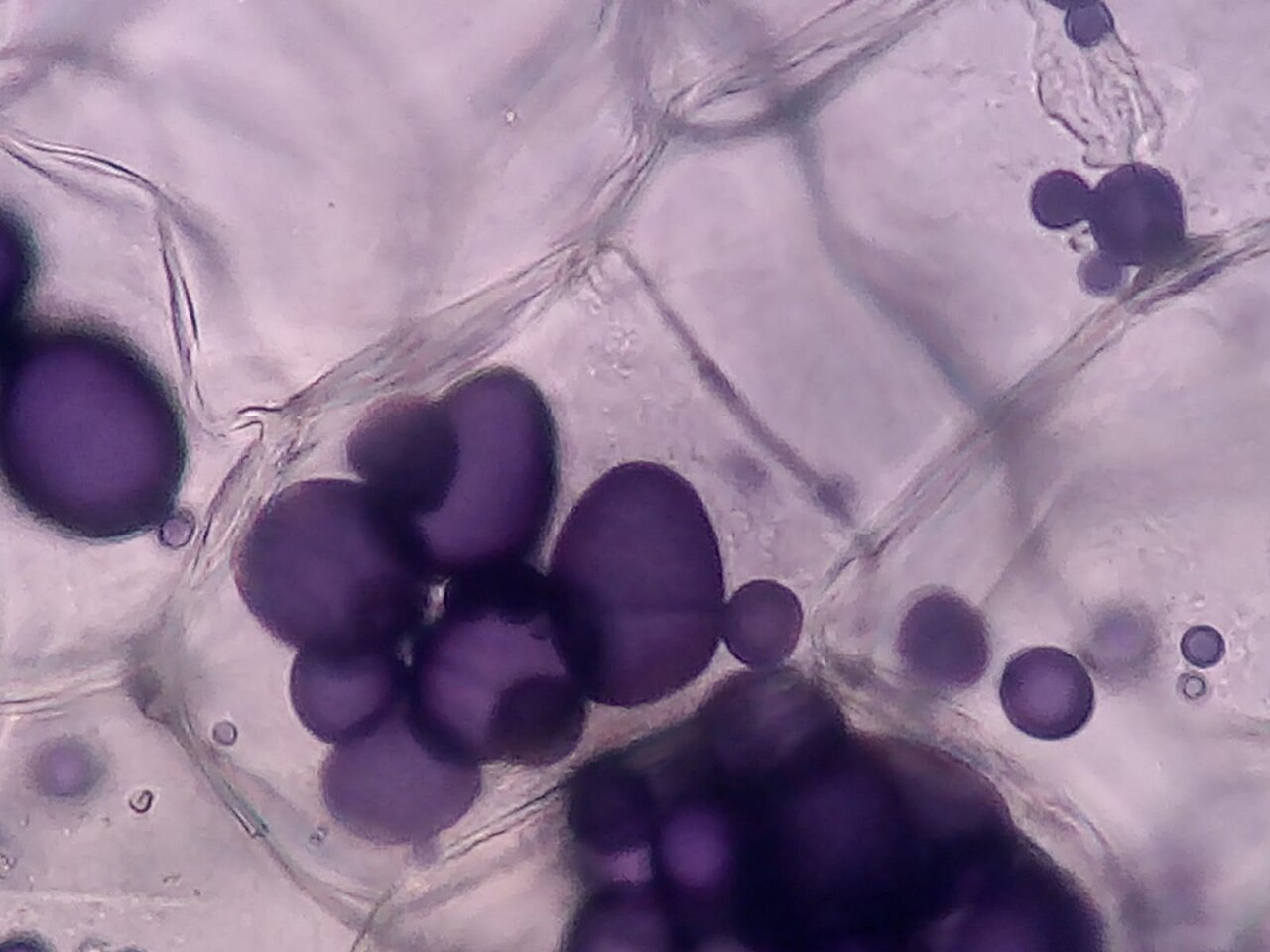
Figure 1. Potato Starch Granules in Cells of the Potato
Services at MtoZ Biolabs
MtoZ Biolabs offers a complete workflow for potato starch analysis, from basic testing to application-driven evaluations:
● Composition and Structural Characterization
Using microscopy, FTIR, NMR, and XRD, we determine amylose-to-amylopectin ratios, crystalline structure, and molecular features. Polarized light microscopy is used to verify starch type by observing granule morphology and Maltese cross patterns.
● Purity and Quality Testing
HPLC, GC, and ICP-MS detect proteins, lipids, ash, and heavy metals. Additional parameters such as pH, sulfur oxide residues, oxidant levels, moisture, ash, and iron salts are measured to provide a full assessment of overall quality.
● Physicochemical Properties
Particle size distribution, solubility, gelatinization behavior, viscosity, and gel strength are analyzed to support pharmaceutical formulation and food development.
● Microbiological Testing
Plate count, membrane filtration, and MPN methods evaluate total bacteria and fungi counts, along with indicator organisms such as E. coli, ensuring safety for excipient and food-grade applications.
● Functional Performance Evaluation
In pharmaceuticals, we test disintegration, hygroscopicity, and tablet performance. In food, we assess texture improvement, stability, and freeze-thaw resistance. In industrial settings, we explore applications in fermentation, brewing, and biodegradable materials.
Why Choose MtoZ Biolabs?
✔ Comprehensive Platforms: HPLC, GC-MS, ICP-MS, FTIR, NMR, DSC, and TGA for multi-dimensional analysis.
✔ Flexible Testing Options: Customized designs for R&D, quality control, and industrial applications.
✔ Expert Data Interpretation: Results delivered with practical insights tailored to real-world use.
✔ Focus on Quality and Safety: Evaluation includes physicochemical and microbiological parameters.
✔ Complete Reporting: Deliverables include methods, raw data, spectra, and result interpretation.
Sample Submission Suggestions
MtoZ Biolabs’ Potato Starch Analysis Service accepts raw starch powders, pharmaceutical formulations, food products, and industrial or biomaterial samples. Submission amounts and test conditions vary by matrix; contact us for detailed guidance. Seal samples to prevent moisture uptake and contamination. Powder samples typically ship at ambient temperature; composite or liquid samples may require ambient or refrigerated shipment depending on stability.
Applications
· Pharmaceutical Excipient Research: Evaluate disintegration and binding performance to improve tablet and capsule consistency.
· Food and Beverage Development: Assess thickening, stabilization, texture modification, and brewing uses.
· Formulation and Process Optimization: Study applications as a binder, matrix, or functional additive.
· Industrial and Materials Research: Explore applications in papermaking, fermentation, and biodegradable material production.
FAQ
Q1: How is potato starch testing different from wheat starch testing?
Potato starch granules are larger, gelatinize at lower temperatures, and have higher transparency. Testing focuses more on viscosity, gelatinization properties, and iron salt levels compared to wheat starch.
Potato starch is widely used as an excipient, food ingredient, and industrial material, with properties that directly affect product stability and market value. MtoZ Biolabs provides Potato Starch Analysis Service with advanced platforms and professional expertise to help clients evaluate key quality parameters. We also offer testing services for a wide range of pharmaceutical excipients, supporting drug development, formulation optimization, and regulatory compliance, ensuring smooth translation from research to application.
How to order?




