






Plant Protein Interaction Analysis: When to Use IP-MS, Co-IP-MS, or Proximity Labeling
Plant protein interaction analysis can use affinity capture–MS, including IP-MS and Co-IP-MS designs, or proximity labeling–MS depending on the biological question, bait-capture feasibility, and interaction properties. None of these approaches replaces a clear bait hypothesis, appropriate negative controls, and plant-compatible sample preparation.
Affinity capture–MS enriches a bait together with proteins that remain associated during extraction and washing. It is useful for bait-centered discovery when suitable antibodies or affinity tags are available. Reciprocal or targeted Co-IP designs can then provide additional support for selected bait–partner associations. Proximity labeling takes a different approach: it labels proteins near a bait in living plant cells or tissues before enrichment and LC-MS/MS, making it useful when weak, transient, or spatial associations are difficult to preserve by conventional IP.
If you are choosing an interaction workflow for a plant system, the key information includes the bait protein, tissue type, antibody or tag status, expected interaction behavior, and whether the project needs broad candidate discovery or focused follow-up.
Affinity Capture–MS for Bait-Centered Interaction Discovery
IP-MS and related affinity purification–MS workflows enrich a bait protein and identify co-enriched proteins by LC-MS/MS. The bait may be endogenous or tagged, provided that it can be recovered reproducibly from the plant material being studied.
This approach is particularly useful when the goal is to identify proteins associated with a defined bait, for example:
-
Which proteins co-enrich with a signaling protein after plant stress
-
How a tagged transcription-factor complex changes between conditions
-
Which candidate partners repeatedly associate with the bait across biological replicates
Affinity capture favors associations that survive tissue disruption, extraction, and washing. Weak or transient associations may therefore be lost even when they are biologically relevant. Bait recovery should be evaluated before scaling the project, especially in plant tissues where pigments, polysaccharides, cell-wall components, or other matrix features can complicate extraction and increase nonspecific background.
Input requirements should be reviewed for the specific interaction project rather than inferred from bulk plant proteomics. Tissue type, bait abundance, enrichment efficiency, replicate number, and the number of control IPs all influence how much material is needed.
Where Co-IP Adds Confidence
Co-IP is not a completely separate “confirmation technology” from IP-MS. Both rely on affinity capture, and Co-IP-MS can also identify unknown associated proteins. The distinction becomes more useful when Co-IP is used as a targeted follow-up design after candidate discovery.
For example, a candidate identified in a bait-centered IP-MS experiment may be examined using:
-
Reciprocal enrichment when suitable reagents are available for both proteins
-
Condition-matched Co-IP to test whether association changes after treatment
-
Comparison of bait–partner co-enrichment across relevant genetic backgrounds
A positive reciprocal or targeted Co-IP strengthens evidence that two proteins occur in the same recoverable complex under the tested conditions, but it still does not automatically prove direct physical binding. Additional orthogonal experiments may be required when the biological claim depends on direct interaction or function.
Bait recovery and background should be reviewed before expanding a Co-IP study. Weak or inconsistent enrichment can produce ambiguous results even when an association exists biologically.
When Proximity Labeling Is More Informative
Proximity labeling uses a bait fused to a labeling enzyme such as BioID, TurboID, or miniTurbo. Nearby proteins are biotinylated in living cells or tissues and subsequently enriched for LC-MS/MS analysis.
The output should be interpreted as a proximity-dependent candidate set, not a list of proven direct interactors. Labeled proteins may include direct binding partners, indirect members of the same complex, and other proteins that enter the bait's local labeling environment.
This approach can be particularly useful when:
-
The bait is membrane-, organelle-, or chromatin-associated
-
Weak or transient associations may be disrupted during IP washing
-
The study focuses on the local protein environment around the bait in planta
Proximity labeling requires a suitable bait–labeling-enzyme expression system, which may use stable or transient expression depending on the plant model. Bait localization, expression behavior, labeling conditions, and background labeling should be evaluated before the full experiment.
Controls may include non-tagged material, empty-tag or labeling-enzyme controls, non-labeled conditions, or other project-specific backgrounds. The exact control design should match the expression and labeling system rather than follow a single universal template.
Controls Are Part of the Interaction Experiment
Interaction proteomics produces candidate associated proteins, so background control is essential for distinguishing reproducible enrichment from nonspecific carryover.
For affinity capture–MS, appropriate negative controls may include an isotype-matched control antibody, non-tagged or empty-tag material, beads-only controls, or another project-specific background condition.
For proximity labeling, controls should distinguish bait-dependent labeling from proteins labeled by the enzyme, expression system, or cellular background itself.
No single negative-control design fits every plant interaction project. The important point is that the control reproduces the major sources of nonspecific enrichment while lacking the bait-dependent interaction signal being tested.
Candidates should then be prioritized according to reproducibility across biological replicates, enrichment over matched controls, and consistency with the biological question.
Plant Samples Can Change Interaction Recovery
Plant interaction workflows must also account for tissue composition. Cell walls, pigments, phenolics, polysaccharides, storage compounds, and abundant enzymes can influence lysis efficiency, bait recovery, and nonspecific background.
Do not assume that lysis and wash conditions optimized in another tissue or organism will transfer directly to a plant matrix. The preparation should preserve the bait complex while providing enough stringency to reduce nonspecific proteins. If bait recovery or background is uncertain, a pilot enrichment can identify whether the limiting step is extraction, capture, or washing before the full sample set is processed.
Compared groups should also use matched tissue definitions and handling procedures. A treatment-related change in bait recovery caused by inconsistent sample preparation can be mistaken for a change in biological association.
How to Choose the Interaction Route
The method should follow the biological question rather than the perceived technical complexity of the workflow.
Choose affinity capture–MS when the main goal is to discover proteins that remain associated with an enrichable bait.
Use reciprocal or targeted Co-IP when specific candidates require additional association evidence under defined conditions.
Consider proximity labeling–MS when the study focuses on in planta proximity, compartmental protein environments, or associations that may be too labile to survive conventional affinity purification.
If the actual question is which proteins change in abundance between plant genotypes, treatments, or stress conditions without reference to a specific bait, standard comparative plant proteomics is more appropriate than interaction proteomics.
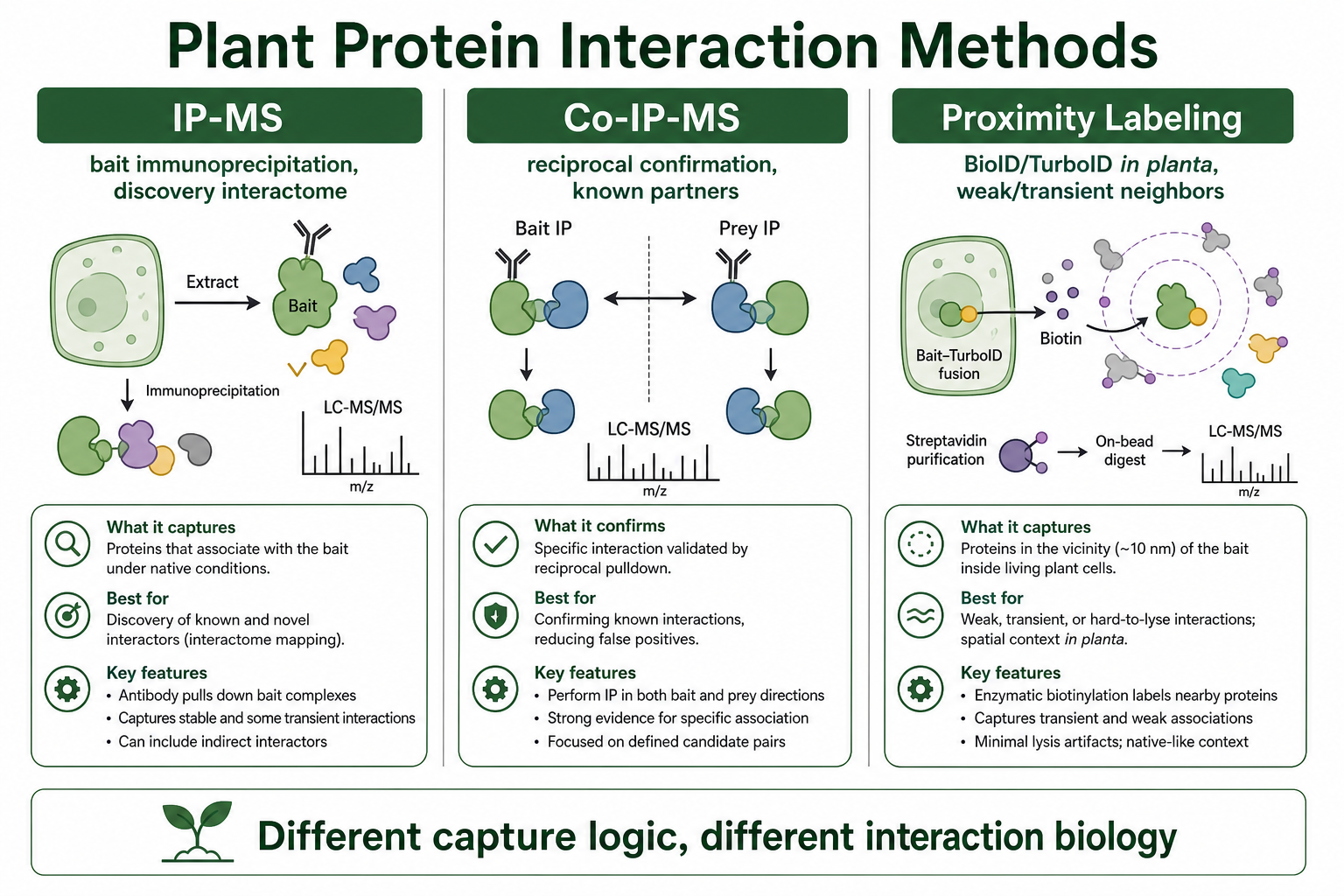
Figure 1. Affinity capture–MS enriches recoverable bait-associated complexes, whereas proximity labeling–MS records proteins entering the bait's local labeling environment in living plant systems.
How Far Can Interaction Proteomics Support a Claim?
Interaction proteomics identifies associated or proximal proteins, but the evidence level depends on the method.
Affinity capture may recover direct binders, indirect complex members, and nonspecific proteins that survive enrichment. Proximity labeling expands detection to proteins near the bait but does not establish physical binding.
Candidate interpretation should therefore include bait recovery, enrichment over matched controls, reproducibility across biological replicates, and the distinction between association, proximity, and direct binding. Functional or direct-binding claims require appropriate follow-up evidence.
Supported functional annotation or pathway analysis may help organize candidate proteins, but pathway membership does not establish interaction specificity.
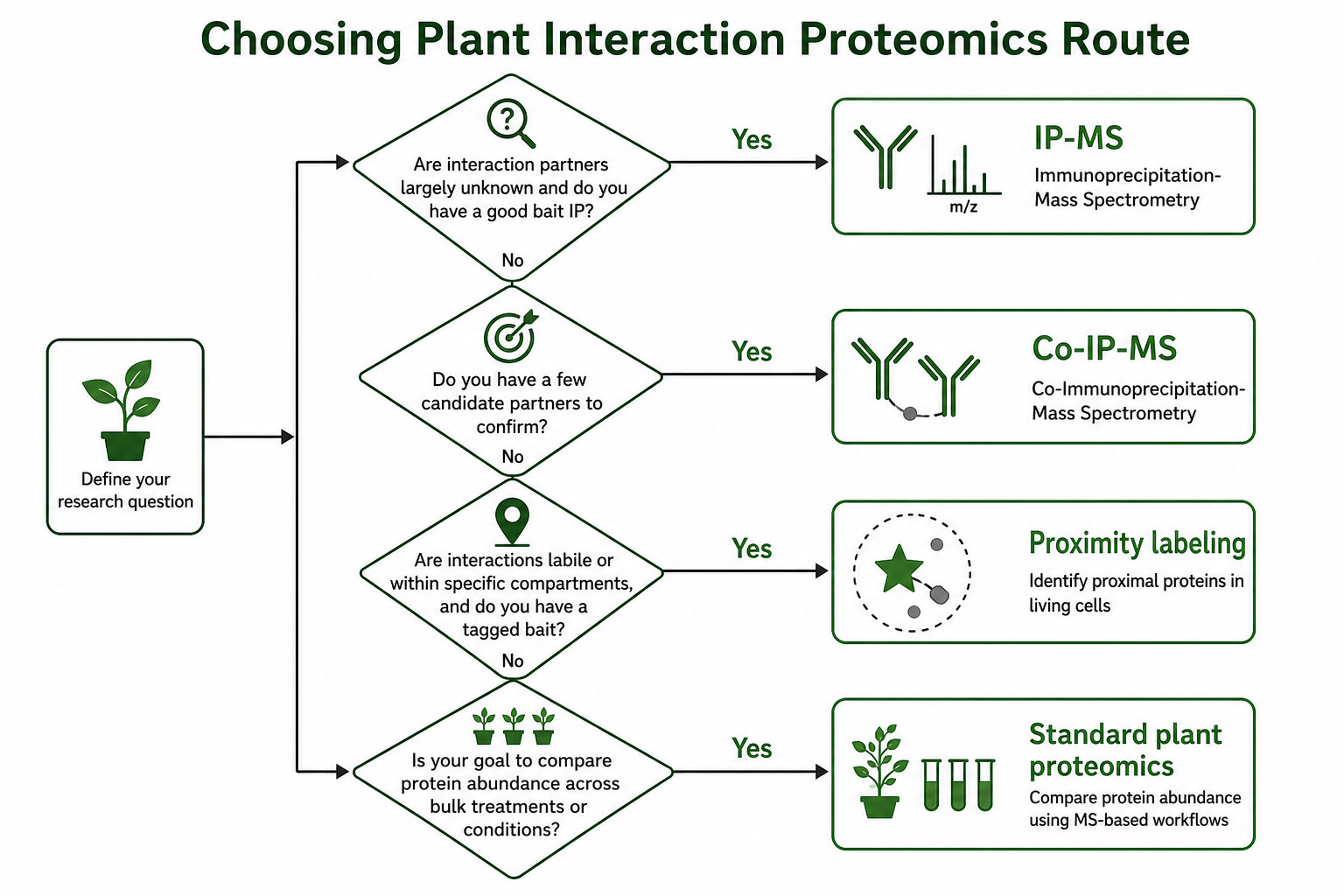
Figure 2. Interaction evidence can progress from candidate discovery to prioritized associations and then to reciprocal or orthogonal follow-up when stronger claims are required.
Related Services
IP-MS Protein Interactomics Analysis Service
Proximity Labeling Mass Spectrometry Service
Co-IP-MS Protein Interaction Analysis Service
Frequently Asked Questions
1. Does proximity labeling prove that two proteins bind directly?
No. Proximity labeling shows that proteins entered the labeling environment around the bait. Direct interaction requires additional evidence when that distinction is important to the biological conclusion.
2. What if bait enrichment is weak in plant tissue?
Review bait abundance, extraction compatibility, capture efficiency, and background before increasing sample number. A pilot IP can help determine whether the main limitation is tissue extraction, antibody or tag capture, or wash conditions.
3. Can the same interaction workflow be used for leaf, root, and seed?
Not automatically. Different plant matrices can change extraction efficiency, bait recovery, and nonspecific background. The enrichment workflow should be evaluated for the tissue used in the actual experiment.
4. When is reciprocal Co-IP useful after IP-MS discovery?
It is useful when a prioritized candidate requires additional evidence that bait and partner co-enrich under the same biological condition. Reciprocal enrichment strengthens association evidence but should not be described as proof of direct binding by itself.
5. What should be reviewed before choosing an interaction workflow?
Provide the species, tissue type, bait identity, antibody or tag status, expected interaction behavior, available controls, and whether the main goal is discovery, candidate follow-up, or proximity mapping.
Conclusion
Plant protein interaction proteomics is best viewed as a choice between affinity capture–based analysis and proximity labeling rather than three completely separate IP-MS, Co-IP-MS, and proximity-labeling technologies.
Affinity capture–MS is useful for discovering proteins that remain associated with an enrichable bait, while reciprocal or targeted Co-IP can add support for selected candidate associations. Proximity labeling–MS provides a complementary view of proteins near the bait in living plant systems, including associations that may not survive conventional IP.
The strongest workflow is therefore the one that matches the biological question, bait-capture feasibility, interaction behavior, plant tissue matrix, and required evidence level. Contact MtoZ Biolabs with the bait, tissue type, control plan, and study objective to discuss the interaction analysis strategy appropriate for the project.
How to order?




