






Plant–Pathogen Interaction Proteomics: How to Study Defense and Susceptibility
Plant–pathogen interaction proteomics compares protein abundance in plant tissue after inoculation or across resistant and susceptible genotypes to identify candidate defense- and susceptibility-associated responses. The method measures the plant proteome in a defined organ at a defined harvest stage. It does not automatically separate plant and pathogen proteins unless the experimental design and database search strategy explicitly support that distinction.
Defense and susceptibility should be interpreted from matched contrasts—such as resistant versus susceptible genotypes under the same pathogen challenge or inoculated versus mock-treated tissue at the same time point—not from treatment labels alone.
When resistant and susceptible genotypes are compared, matched mock controls are especially valuable. A resistant-versus-susceptible comparison alone cannot distinguish constitutive genotype differences from infection-induced responses.
If you are planning plant proteomics for a plant–pathogen interaction study, define the pathogen system, inoculation site, disease stage, harvest timing, and comparison structure before sample collection.
What Plant–Pathogen Interaction Proteomics Can Reveal
Quantitative plant proteomics can help identify:
-
Protein abundance shifts associated with pathogen challenge
-
Defense- or stress-related pathway themes when supported by annotation
-
Differences between resistant and susceptible genotypes under matched conditions
-
Genotype-dependent responses when mock and inoculated groups are included
-
Time-dependent remodeling from early interaction to later symptomatic stages
Standard bioinformatics analysis may include differential protein screening, functional annotation, GO and KEGG pathway views, protein interaction context, and Reactome analysis when the species is supported.
Plant–pathogen interaction proteomics does not by itself:
-
Prove that a protein is required for resistance or susceptibility
-
Replace disease scoring, pathogen quantification, or microscopy when these define the phenotype
-
Identify pathogen effectors in mixed extracts without an appropriate search and validation strategy
-
Confirm gene function or field resistance from a single experiment
Results should therefore be interpreted as candidate plant proteins and pathway priorities until replicate consistency, phenotype linkage, and follow-up experiments support stronger claims.
Defense vs Susceptibility: Comparison Designs That Work
Interaction proteomics depends strongly on how the contrast is defined.
| Comparison design | What it can highlight | Design requirements | Main interpretation risk |
| Resistant vs susceptible, same pathogen | Genotype-associated differences under infection | Matched pathogen challenge, tissue, and harvest definition | Constitutive genotype differences may be mistaken for induced defense |
| Resistant/mock, resistant/infected, susceptible/mock, susceptible/infected | Genotype effect, infection effect, and genotype-dependent response | Matched mock, inoculation, tissue, timing, and biological replicates | More groups require stronger replication and clear contrast planning |
| Inoculated vs mock, same genotype | Infection-associated protein changes | Mock should match carrier, wounding, and handling | Wounding or carrier effects may be mistaken for pathogen responses |
| Compatible vs incompatible interaction | Contrasting protein patterns associated with interaction outcome | Clear interaction classification and comparable sampling | Different disease progression may confound interpretation |
| Time course after inoculation | Changes across interaction stages | Separate time-point groups rather than pooled samples | Different genotypes may progress through disease at different rates |
| Local vs systemic tissue | Infection-site versus distal response patterns | Clearly defined sampling zones and sample labels | Different tissues may be interpreted as one response |
These designs help define what the resulting protein differences can support. They do not guarantee a specific defense or susceptibility protein list.
Why the Four-Group Design Matters
For studies comparing resistant and susceptible genotypes, a four-group structure can separate effects more clearly:
-
Resistant mock
-
Resistant infected
-
Susceptible mock
-
Susceptible infected
This structure helps distinguish:
-
Constitutive genotype differences
-
Infection-associated responses within each genotype
-
Genotype-dependent responses to infection
Without matched mock controls, a protein that is more abundant in the resistant genotype may simply represent a baseline genotype difference rather than an infection-induced resistance response.
Match Inoculation, Tissue, and Disease Stage
The pathogen entry site and sampled organ should match the biological question.
Foliar pathogens generally require leaf sampling from clearly defined regions. Root-associated pathogens require matched root tissue from relevant inoculation zones. Stem or vascular pathogens may require defined stem or bark regions when colonization in those tissues is the study focus.
At harvest, record:
-
Genotype and pathogen isolate or strain
-
Inoculation method, dose, and mock treatment
-
Sampled organ and sampling region
-
Lesion score, disease index, or other phenotype measurement
-
Hours or days after inoculation
Independent biological replicates should represent independent plants, pots, or experimental units appropriate to the claim rather than repeated subsamples from the same biological unit.
Match Time or Match Disease Stage?
These approaches answer different biological questions.
Matched clock-time sampling compares genotypes after the same duration of infection. This is appropriate when the goal is to determine how resistant and susceptible plants respond differently at the same post-inoculation time.
Phenotype- or disease-stage-matched sampling compares tissues at a similar stage of disease progression. This can help separate stage-related biology from severe damage, but infection duration may differ between genotypes.
The two designs should not be treated as interchangeable. The sampling strategy should be defined according to the biological question and reported explicitly.
Interaction Stage Changes the Meaning of the Proteome
Harvest timing influences whether the protein profile primarily reflects early host response, an established interaction, or advanced tissue damage.
| Interaction phase | Defense-oriented interpretation may involve | Susceptibility-oriented interpretation may involve | Key consideration |
| Early or pre-symptomatic | Recognition, signaling, redox, transport, or cell-wall adjustment | Reduced or altered early response relative to resistant controls | Visible disease may still be limited |
| Established interaction | Sustained defense-associated remodeling | Protein changes associated with successful colonization or symptom development | Genotypes may progress at different rates |
| Late symptomatic | Responses maintained around restricted lesions | Necrosis-, degradation-, or damage-associated changes | Damage responses should not be relabeled as resistance or susceptibility mechanisms |
| Matched mock | Baseline handling, wounding, and carrier effects | Same control requirement | Mock conditions should match inoculation handling |
The actual timing of these phases depends on the host, pathogen, inoculation method, environmental conditions, and disease progression. Fixed hour- or day-based windows should therefore not be generalized across plant–pathogen systems.
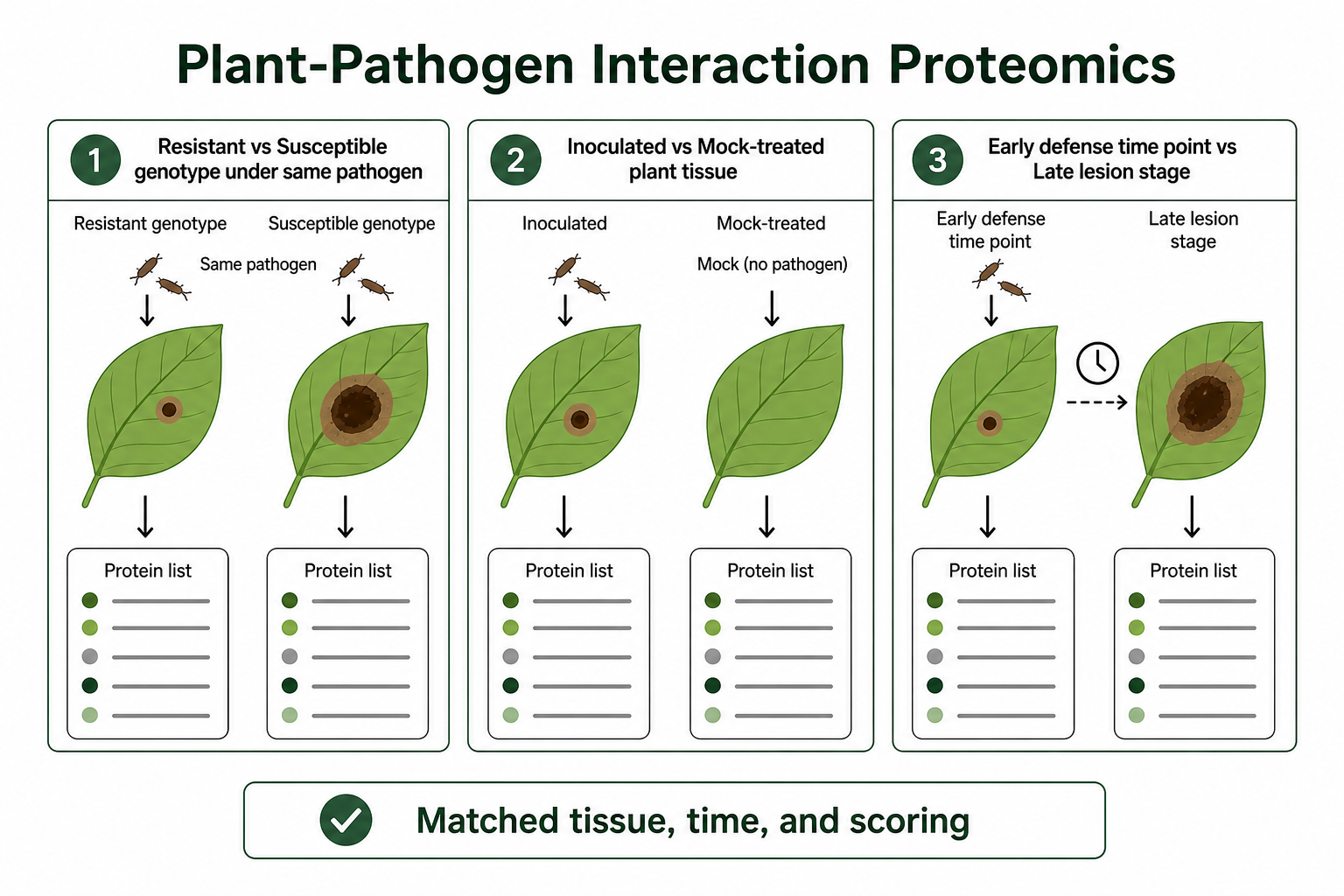
Figure 1. A resistant/susceptible × mock/infected design helps separate genotype effects, infection effects, and genotype-dependent responses.
From Differential Proteins to Defense-Associated Themes
After LC-MS/MS quantification, candidate proteins should first be reviewed at the sample level.
Prioritize candidates with:
-
Consistent direction across independent biological replicates
-
Stable quantification across most samples
-
A plausible relationship with disease or lesion measurements
-
Functional annotation relevant to the observed biological contrast when supported by the dataset
GO, KEGG, PPI, and Reactome views can help organize candidates into biological themes when the species is supported. Enrichment in defense- or stress-related processes can guide follow-up, but pathway enrichment alone does not prove a resistance or susceptibility mechanism.
Matched mock controls are particularly useful when interpreting genotype comparisons:
-
Proteins changing in both mock and pathogen-treated samples may reflect handling or wound responses
-
Proteins elevated only in severely damaged susceptible tissue may reflect tissue injury rather than susceptibility determinants
-
Reproducible genotype-dependent infection responses supported by phenotype data may be prioritized as resistance- or susceptibility-associated candidates
A candidate protein remains an association until independent functional or phenotype evidence supports a stronger conclusion.
Analytical Scope: Host Plant vs Pathogen Proteins
Most plant–pathogen interaction proteomics studies focused on host response primarily compare plant protein abundance across defined groups.
Pathogen-derived peptides may also be present in infected tissue, but their detection depends on factors such as pathogen biomass, protein abundance, peptide detectability, database completeness, and search strategy. Pathogen protein identification should therefore not be assumed from a standard host-focused plant proteomics experiment.
If the main objective is host defense or susceptibility, the comparison should remain centered on matched plant tissue groups. If pathogen proteins or effectors are also a primary target, this should be incorporated into the analytical strategy before the project begins.
Quantitative proteomics is appropriate when the research question depends on comparing protein abundance between groups, such as resistant versus susceptible plants or inoculated versus mock-treated samples.
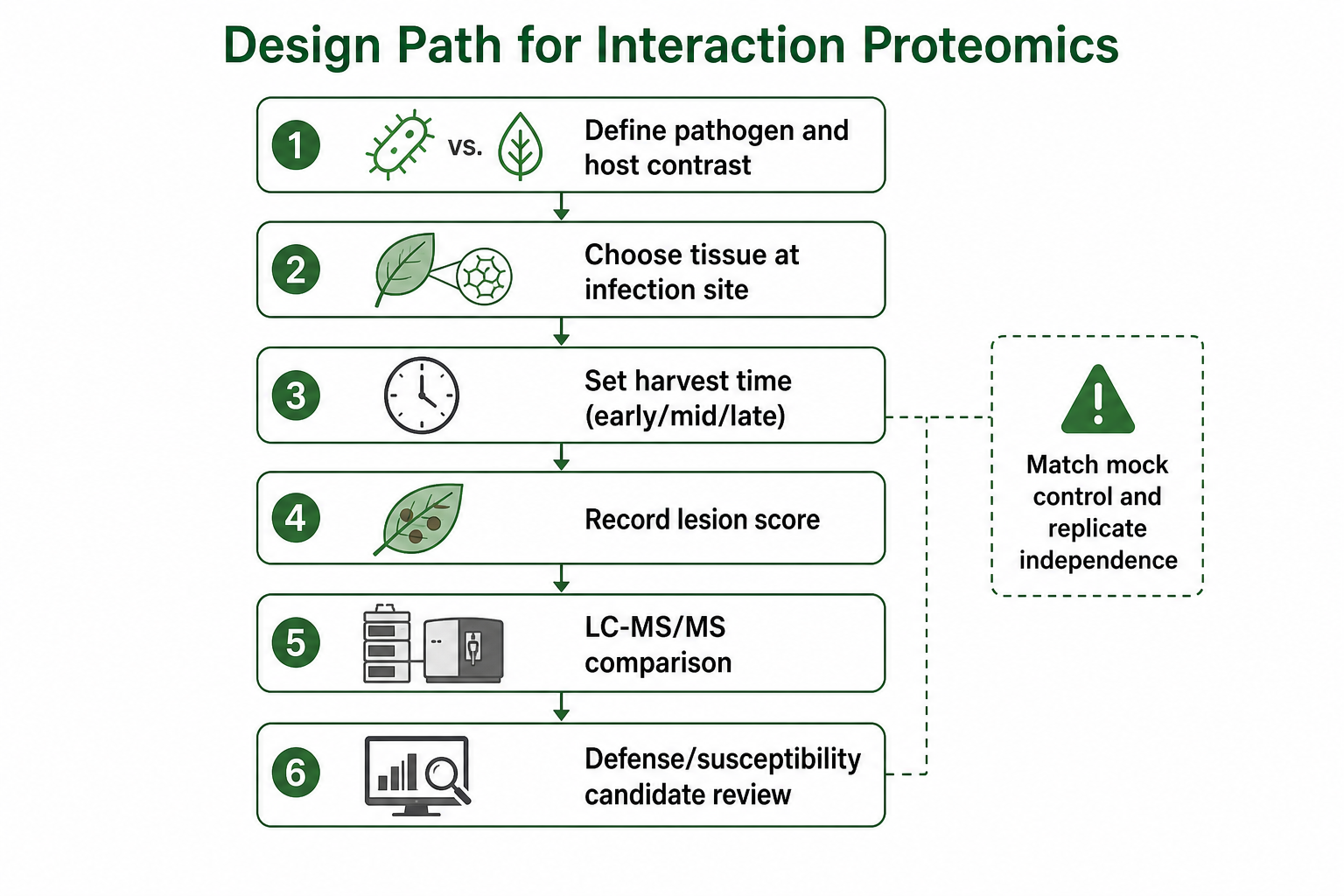
Figure 2. Define the interaction contrast, tissue, and sampling stage before interpreting defense- or susceptibility-associated proteins from LC-MS/MS results.
Related Services
Plant Phosphoproteomics Analysis Service
Integrative Transcriptomics-Proteomics Analysis Service
Frequently Asked Questions
1. Can plant proteomics distinguish defense from susceptibility responses?
It can identify protein abundance patterns associated with resistant versus susceptible genotypes or inoculated versus mock-treated plants. Matched mock controls for each genotype help distinguish constitutive genotype differences from infection-induced responses. Proteomics alone does not prove gene function.
2. Should interaction studies use leaf or root tissue?
Use the tissue where the relevant host–pathogen interaction occurs. Foliar pathogens generally require matched leaf sampling, whereas root-associated pathogens require matched root sampling.
3. Is a mock-inoculated control necessary?
Mock controls are strongly recommended when the goal is to distinguish pathogen-associated responses from wounding, carrier, or handling effects. They are especially important when comparing infection-induced responses across different genotypes.
4. Should resistant and susceptible plants be harvested at the same time?
It depends on the question. Same-time harvesting compares responses after the same infection duration. Disease-stage-matched harvesting compares tissues at similar progression stages but may involve different infection durations. These designs should be interpreted separately.
5. Will pathogen proteins always be detected in infected tissue?
No. Detection depends on pathogen biomass, protein abundance, peptide detectability, database support, and the search strategy. Host-focused projects should not assume that pathogen proteins or effectors will be identified.
6. Can inoculated plant samples be submitted for proteomics?
Sample acceptance depends on material condition and laboratory requirements. Infectious plant material cannot be accepted. Review the pathogen type and sample status with MtoZ Biolabs before shipment.
7. What information should be shared before starting a plant–pathogen interaction proteomics study?
Share the plant species and genotype, pathogen system, inoculation method, sampled tissue, disease stage, harvest timing, phenotype measurements, comparison structure, and replicate plan.
Conclusion
Plant–pathogen interaction proteomics can reveal protein abundance patterns associated with defense and susceptibility when the biological comparison is defined carefully. The most informative designs distinguish genotype effects from infection effects, use appropriate mock controls, match tissue and sampling strategy, and interpret disease progression alongside protein abundance.
The resulting differential proteins and pathway themes are candidates for further investigation rather than automatic resistance genes, susceptibility determinants, or pathogen effectors.
For project-specific planning, MtoZ Biolabs can evaluate the pathogen system, comparison design, tissue choice, sampling stage, and study objective to determine an appropriate plant proteomics strategy.
How to order?




