






Planning a Native MS Project: What to Confirm Before Submitting Protein Complex or Biologics Samples
Introduction
Native MS projects often lose time before the first spectrum is collected. A protein complex may arrive in a storage buffer that cannot be sprayed. A biologics sample may lack a clear expected oligomer model. A team may request binding-state analysis without stating whether ligand should be maintained during desalting. In each case, the instrument is ready, but the project plan is not.
Planning a native MS project means confirming the analytical question, sample state, buffer history, and expected outputs before protein complex or biologics samples are submitted. Non-denaturing mass spectrometry can report assembly, stoichiometry, and binding-related mass shifts, but only when the submitted material and the project goal are aligned. This article outlines what to confirm before submission so native MS starts with interpretable samples rather than avoidable troubleshooting.
Why Pre-Submission Confirmation Matters
Native MS is sensitive to how a sample was prepared, stored, and described. Incomplete submission information creates predictable problems.
The laboratory may need to pause analysis while buffer composition is clarified. Soft ionization settings may be selected for a complex that is already dissociated in the vial. A biologics team may expect intact assembly review while the sample is better suited first to denaturing intact mass confirmation. Shipping conditions may reduce recovery of a weak complex before analysis begins.
Pre-submission confirmation does not guarantee a successful spectrum. It reduces mismatches between the intended question and the sample that arrives. For both research complexes and biologics materials, that alignment is the practical foundation of a native MS project.
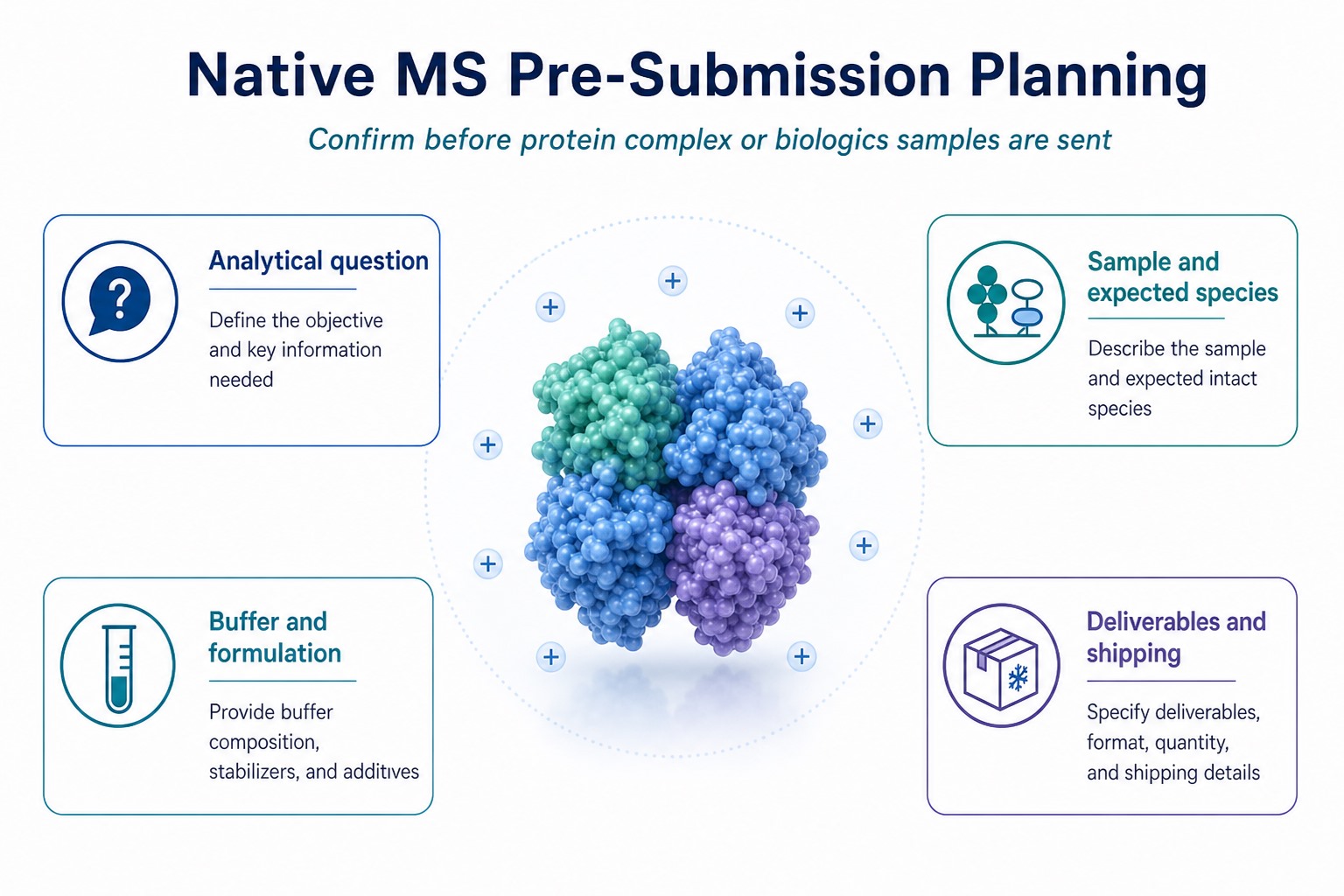
Figure 1. Before submitting samples for native MS, confirm the analytical question, sample state, buffer history, and expected deliverables.
Confirm the Analytical Question First
Every native MS submission should start with a written question, not only a request for intact mass.
Common native MS questions include whether a multi-subunit complex remains assembled, what oligomer distribution is present, whether a ligand or cofactor mass shift is retained, and whether a biologic product appears mainly as the intended intact assembly. These questions determine buffer strategy, whether partners must be preserved, and how spectra will be interpreted.
If the real need is covalent subunit molecular weight after reduction, denaturing intact mass analysis may be the better lead method. If both covalent identity and assembly context are required, plan paired native and denaturing measurements from the start. Clear question framing prevents submitting a native MS sample for a denaturing-only decision.
Confirm Sample Type and Expected Species
Protein complexes and biologics samples share native MS principles, but the submission details differ.
Protein complex samples
Confirm subunit identities, expected stoichiometry models, and whether unbound subunits were removed. Provide theoretical masses for candidate assemblies when available. Note any required metals, cofactors, or DNA or RNA partners that define the complex.
Biologics samples
Confirm product format, such as monoclonal antibody, Fc fusion, bispecific, or other intact assembly. State whether the primary goal is intact oligomer review, global heterogeneity screening, or binding-state support. Share known glycoform or modification context when it affects expected intact mass models.
In both cases, write down the expected native species before shipment. Native MS interpretation depends on comparing observed masses with planned models.
Confirm Buffer, Formulation, and Compatibility
Buffer history is one of the most important submission fields for native MS.
List the current storage or formulation buffer in full, including salts, pH, detergents, glycerol, and residual purification additives when known. Note whether the sample has already been exchanged into a volatile native-compatible buffer such as ammonium acetate. If not, state whether the protein remains soluble after desalting based on prior experience.
For biologics in formulation buffers, confirm whether surfactants or non-volatile excipients are present. These components often require additional exchange planning before native spray. For membrane-associated or detergent-stabilized complexes, state the detergent system clearly so a soluble-protein default workflow is not assumed.
Do not submit native MS samples with unknown buffer composition when alternatives exist. Incomplete buffer information is a common reason projects stall at intake.
Confirm Concentration, Purity, Amount, and Stability
Native MS needs enough intact material in a workable concentration window.
Confirm concentration on the aliquot intended for analysis, not only on an older stock value. Provide purity context from SEC, SDS-PAGE, or related checks when available. Aggregates, host-cell proteins, and nucleic acid carryover can congest native spectra even when the target band looks acceptable.
State the available sample amount and whether a backup aliquot exists. Native MS troubleshooting sometimes requires a second exchange or a paired denaturing measurement. Also confirm stability notes: freeze-thaw sensitivity, preferred storage temperature, and whether the complex or biologic is time-sensitive after buffer exchange.
If the sample precipitates in volatile buffer during prior tests, report that observation. It is more useful than discovering the same failure after shipment.
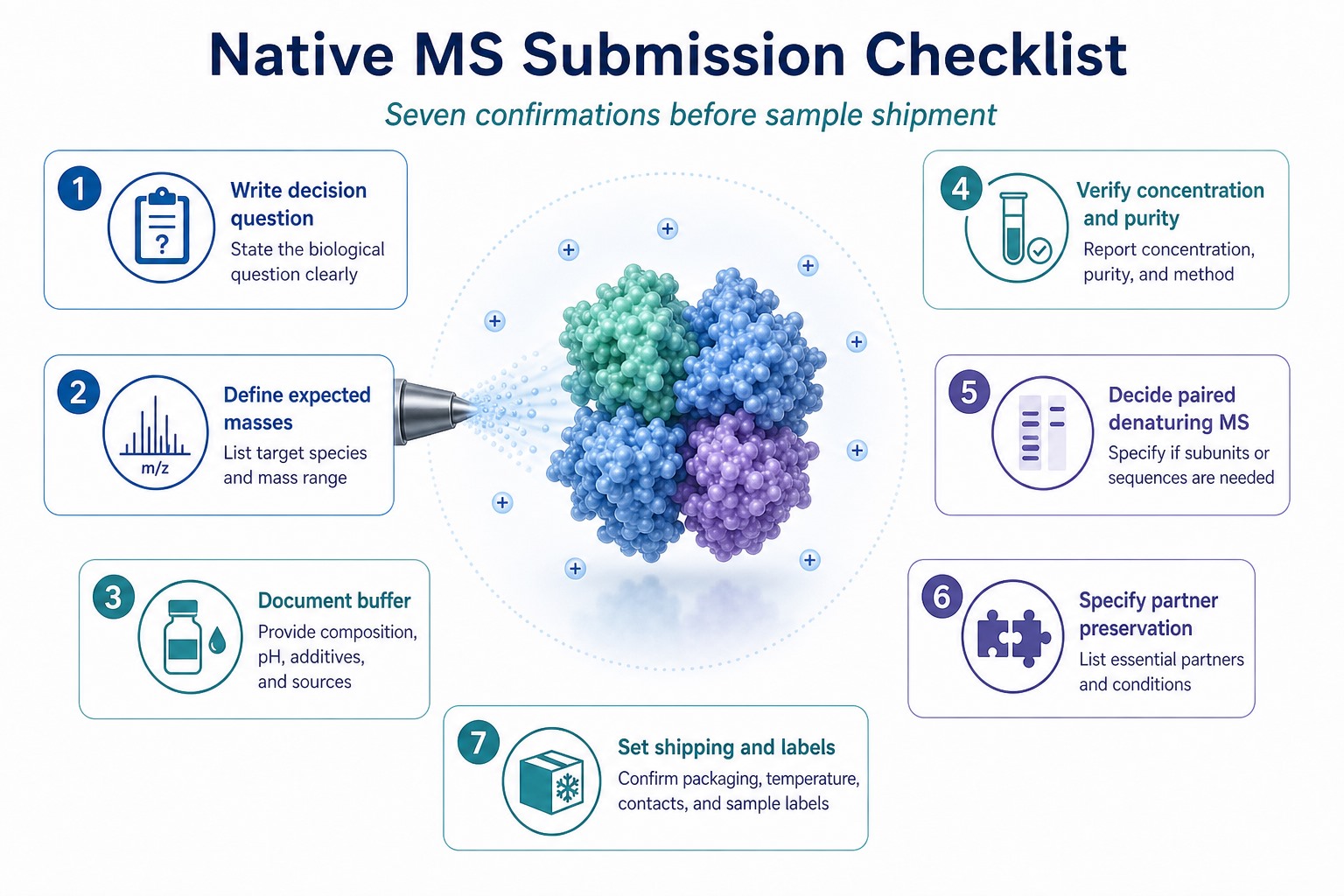
Figure 2. A native MS submission checklist covers question framing, expected species, buffer compatibility, concentration and purity, and shipping conditions.
Related Services
Therapeutics Characterization Service | Advanced Structure
Protein Molecular Weight Determination Service
Antibody Drug Analysis Service
Teams preparing protein complex or biologics submissions for native MS can consult MtoZ Biolabs to review sample documentation, expected assembly models, and whether paired denaturing intact mass should be included in the project phase.
Confirm Whether Binding Partners Must Be Preserved
If the project includes binding-state questions, state how the partner should be handled.
Some ligands or cofactors dialyze away during desalting. Others remain bound if exchange is gentle and relatively short. Confirm whether the bound form is required, whether apo comparison samples are available, and whether ligand can be maintained in a volatile-compatible manner.
For antibody-antigen or protein-protein complexes, confirm mixing ratio, incubation history, and whether excess unbound partner was removed. Native MS can report occupied masses only when the submitted material still contains the intended bound population.
Confirm Shipping and Intake Conditions
Even a well-prepared sample can fail if shipping conditions are wrong for that assembly.
Confirm whether the sample should ship frozen, refrigerated, or on cold packs according to established stability practice for that protein. Avoid unnecessary freeze-thaw during pack-out. Label vials with concentration, buffer, and special handling notes. Include a short sample information sheet that restates the analytical question and expected species.
For biologics programs with controlled materials, confirm any chain-of-custody or intake documentation needed before analysis begins. For academic complexes, a concise one-page sample note is often enough when it includes buffer, concentration, purity notes, and the intended native MS question.
Step-by-Step Confirmation Guide Before Submission
Use the following sequence when planning a native MS project.
Step 1. Write the decision question
State whether the project needs assembly confirmation, stoichiometry assignment, binding-state review, or intact biologics heterogeneity context.
Step 2. Define expected native masses
List monomer, oligomer, complex, or bound models that will be used for interpretation.
Step 3. Document buffer and formulation fully
Include salts, pH, detergents, excipients, and prior exchange history.
Step 4. Verify concentration, purity, and available amount
Measure the submission aliquot and note whether a backup exists.
Step 5. Decide on paired denaturing intact mass
Add covalent mass confirmation when stoichiometry or identity baselines are needed.
Step 6. Specify partner preservation requirements
State whether ligands or complex partners must be retained during sample handling.
Step 7. Set shipping and labeling conditions
Match transport conditions to sample stability and include a clear intake summary.
For multi-sample biologics or complex panels, MtoZ Biolabs can help standardize submission fields so each vial arrives with the same planning information.
What a Complete Submission Enables
When pre-submission confirmation is complete, native MS projects start with fewer intake delays and clearer interpretation targets.
The laboratory can select buffer exchange and soft ionization conditions matched to the stated question. Spectra can be reviewed against defined assembly or binding models rather than open-ended intact mass screening. If results show free subunits or missing ligand shifts, the team can distinguish likely sample preservation issues from incomplete project planning.
A complete submission does not remove all experimental risk. It makes the remaining risk scientific rather than logistical.
Protein complex submissions usually need stronger emphasis on stoichiometry models, cofactors, and weak-interface notes. Biologics submissions usually need stronger emphasis on product format, formulation excipients, and controlled intake or cold-chain details. Both still require a clear analytical question, expected native species, and buffer history.
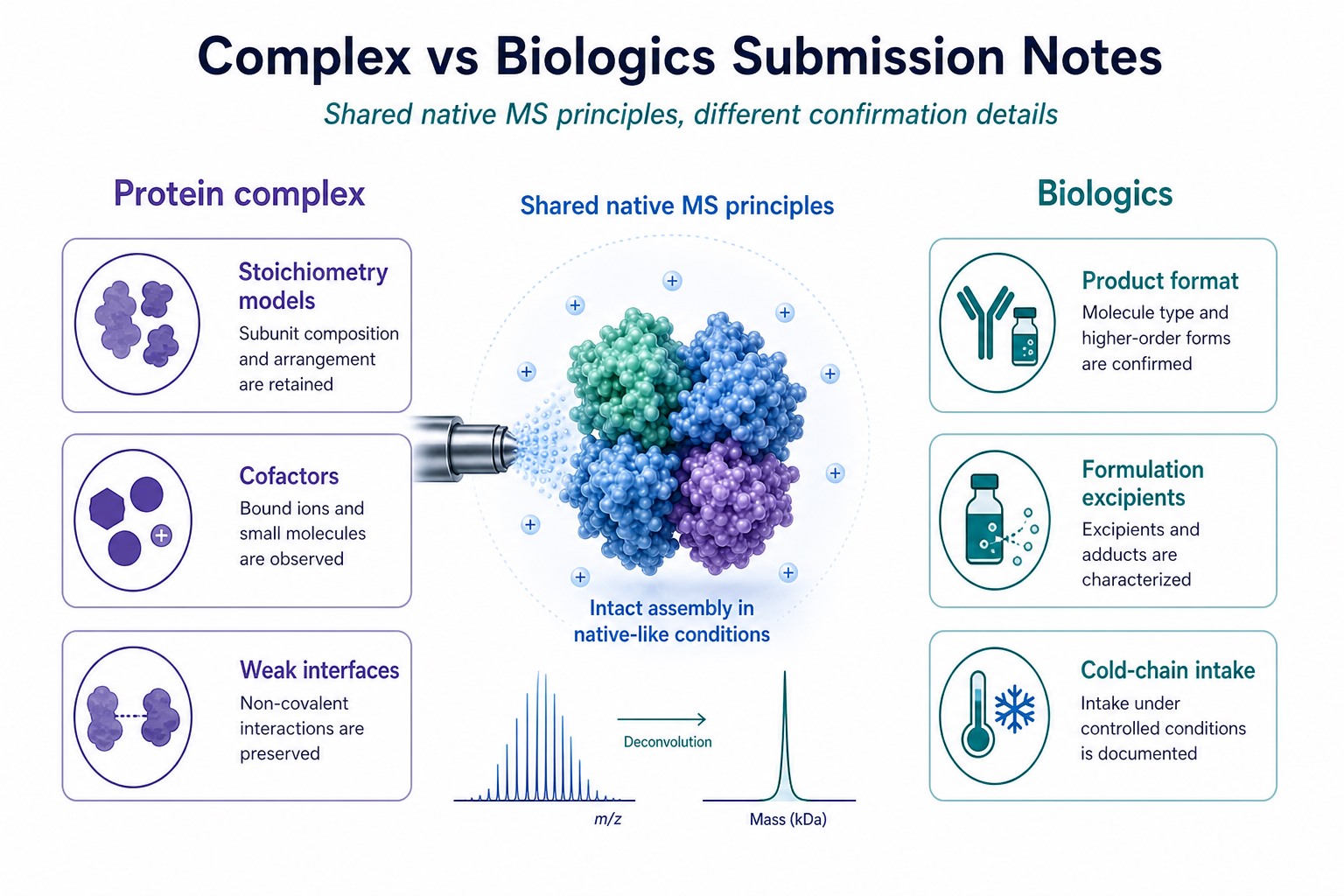
Figure 3. Protein complex and biologics submissions share native MS principles but differ in expected species, formulation detail, and handling notes.
Key Precautions Before You Submit
A few precautions prevent repeated submission issues.
Do not submit native MS samples without a stated assembly or binding question. Do not assume storage buffer is spray-ready. Do not omit detergent or surfactant details. Do not rely on outdated concentration values. Do not request binding-state conclusions if partner preservation was never planned. Do not ship unstable complexes without stability-matched conditions.
Native MS planning is sample storytelling as much as method selection. The clearer the story at submission, the more useful the spectrum after analysis.
Frequently Asked Questions
1. What should I confirm before submitting samples for native MS?
Confirm the analytical question, expected native species, buffer or formulation, concentration and purity, partner preservation needs, and shipping conditions.
2. Do protein complexes and biologics need different submission information?
They share core fields, but complexes usually need stoichiometry models and partner notes, while biologics usually need product format and formulation detail.
3. Should I exchange into ammonium acetate before shipping?
Only when the sample is known to remain stable in that buffer. Otherwise, ship in the validated storage buffer and document exchange needs at intake.
4. When should denaturing intact mass be included with native MS?
Include it when covalent subunit baselines are needed to interpret stoichiometry or to separate covalent mass changes from assembly changes.
5. What concentration information is most useful?
Provide the concentration measured on the aliquot being submitted, plus available volume and whether a backup aliquot exists.
6. What is the most common missing item on native MS submissions?
Complete buffer or formulation composition is frequently missing and often delays method planning.
Conclusion
Planning a native MS project means confirming the right information before protein complex or biologics samples are submitted. The analytical question, expected species, buffer history, concentration and purity, partner preservation needs, and shipping conditions determine whether non-denaturing mass spectrometry can answer the intended assembly or binding question.
A structured pre-submission checklist reduces intake delays and keeps interpretation tied to defined models. Researchers preparing native MS submissions can contact MtoZ Biolabs to review sample documentation and align the project plan with the current characterization phase.
How to order?




