






PhIP-Seq Study Design for Disease and Control Cohorts
Introduction
PhIP-Seq can profile autoantibody reactivity across large peptide libraries, yet cohort design often determines whether the results are interpretable. A rheumatology study may compare treated and untreated patients without a matched healthy control group. A neurology project may mix serum and CSF samples under one analysis plan. A translational cohort may enroll cases quickly while controls are added later with different storage history or matrix handling. Enrichment tables may look complete, but disease-associated specificity cannot be judged reliably when cohort design is weak.
PhIP-Seq (phage immunoprecipitation sequencing) links phage-displayed peptide libraries, immunoprecipitation, and next-generation sequencing to report peptide-level enrichment across samples. Disease and control cohort design defines who is included, how controls are matched, which matrix is used, how many samples are required, and how batches and libraries are handled before enrichment analysis begins.
This article explains how to design PhIP-Seq studies for disease and control cohorts, which variables must be fixed before sample intake, and how study design connects to enrichment interpretation and validation planning.
When Cohort Design Determines Outcome Quality
Cohort design becomes the main bottleneck when discovery output must support validation, publication, or biomarker planning.
Autoimmune discovery projects need case-control contrast strong enough to filter peptides enriched in both groups. Modified epitope programs need cohorts defined by diagnosis stage and treatment status so PTM reactivity is not confounded by therapy or inflammation state. Neurology studies need matrix-specific cohort logic when CSF and blood are compared. Longitudinal programs need baseline controls and consistent library use across time points. Pilot screens may accept smaller cohorts but still require predefined inclusion criteria and control type so results remain interpretable.
Weak cohort design cannot be fully corrected after sequencing. Enrichment analysis can normalize read counts, but it cannot create matched controls that were never collected.
Step 1: Define the Scientific Question and Claim Level
The first design step defines what the cohort must support.
Exploratory discovery may ask which peptides show any enriched capture in a disease group relative to input and technical controls. Case-control discovery asks which peptides are enriched specifically in disease samples compared with matched unaffected controls. Validation-oriented discovery asks which candidates survive control contrast with enough specificity to justify peptide array or ELISA follow-up. Longitudinal studies ask whether peptide reactivity changes across treatment or disease progression under a fixed library framework.
The claim level should be fixed before sample number is chosen. A pilot discovery cohort should not be analyzed as if it were a powered case-control study without acknowledging the limitation.
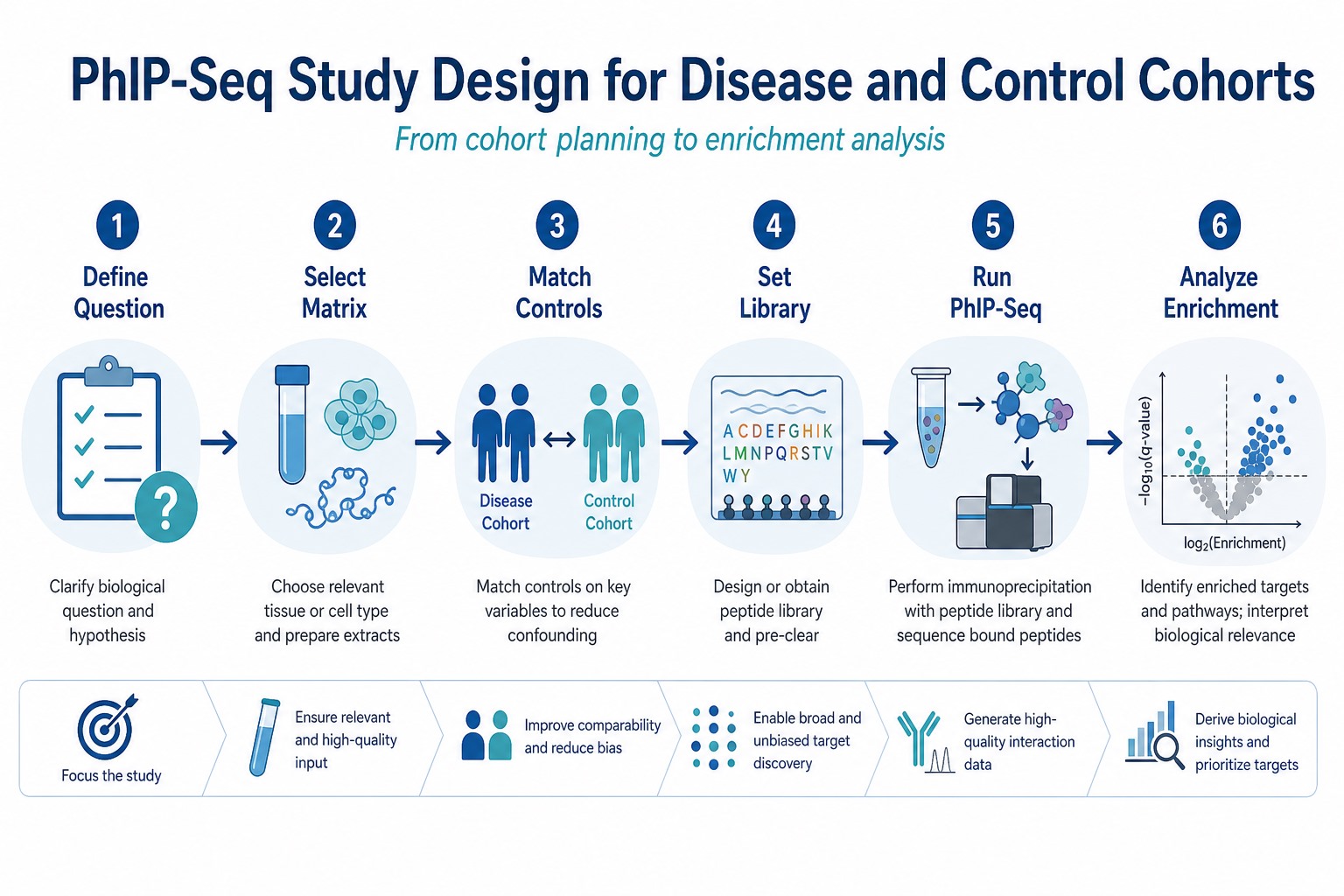
Figure 1. PhIP-Seq cohort study design begins with the scientific question and proceeds through matrix selection, control matching, library choice, and enrichment analysis.
Step 2: Define Inclusion and Exclusion Criteria
Case and control groups must be defined with criteria that reduce confounding.
Cases should be defined by diagnosis standard, disease stage, relevant treatment status, and sample collection timing when these variables affect autoantibody profile. Controls should be unaffected individuals or appropriate disease-irrelevant comparators matched to the matrix and major demographic variables under study. Exclusion criteria may include recent immunotherapy, severe hemolysis, inadequate sample volume, long storage without defined freeze-thaw history, or matrix contamination such as blood in CSF.
Documenting inclusion and exclusion rules before enrollment prevents post hoc reinterpretation when unexpected enrichment patterns appear.
Step 3: Match Disease and Control Cohorts
Control matching is central to disease-associated enrichment interpretation.
Controls should match cases by sample matrix whenever possible. Serum cases should not be compared only with plasma controls unless matrix effects are explicitly modeled. Age, sex, and relevant comorbidity structure should be reviewed so control baselines are not systematically different from cases. Treatment status should be aligned when therapy is known to alter autoantibody reactivity. Collection and storage conditions should be comparable across groups to avoid batch-driven false enrichment.
Matching does not require perfect pairing for every variable, but major systematic differences between cases and controls weaken specificity review.
Related Services
PhIP-Seq Antibody Analysis Service
Identification of Peptide Biomarkers Service
Antibody Epitope Mapping Analysis Service
Peptide Array-Based Epitope Mapping Service
Researchers planning disease and control PhIP-Seq cohorts can consult MtoZ Biolabs to review inclusion criteria, control matching, library scope, and analysis goals before sample intake.
Step 4: Plan Sample Size and Control Number
Sample size should follow the study goal rather than leftover sample availability alone.
Pilot discovery may begin with ten to twenty cases and three to five matched controls when the goal is candidate generation rather than definitive specificity. Case-control discovery with validation intent often benefits from closer balance between cases and controls, such as one control per one to two cases, with a minimum of five controls regardless of case count. Larger cohorts improve stability of baseline estimation and reduce the influence of outlier sera. Technical controls including input library, bead-only, and no-antibody samples should be included in every batch regardless of biological sample number.
Sample size planning should be documented in the study protocol before enrichment thresholds are chosen.
Step 5: Select Matrix and Library Before Enrollment
Matrix and library choices should be fixed before cases and controls are enrolled.
Serum and plasma are common for large autoimmune cohorts because immunoglobulin abundance supports robust enrichment analysis. CSF supports CNS-focused questions but requires matrix-matched controls and volume planning because total IgG is lower. Library choice defines the detectable peptide space. Proteome-wide or tiled libraries support unbiased discovery. Focused libraries support disease-specific screening. Modified peptide libraries support neo-epitope hypotheses when PTM forms are encoded before screening.
Changing matrix or library mid-study creates analysis batches that are difficult to compare without additional controls.
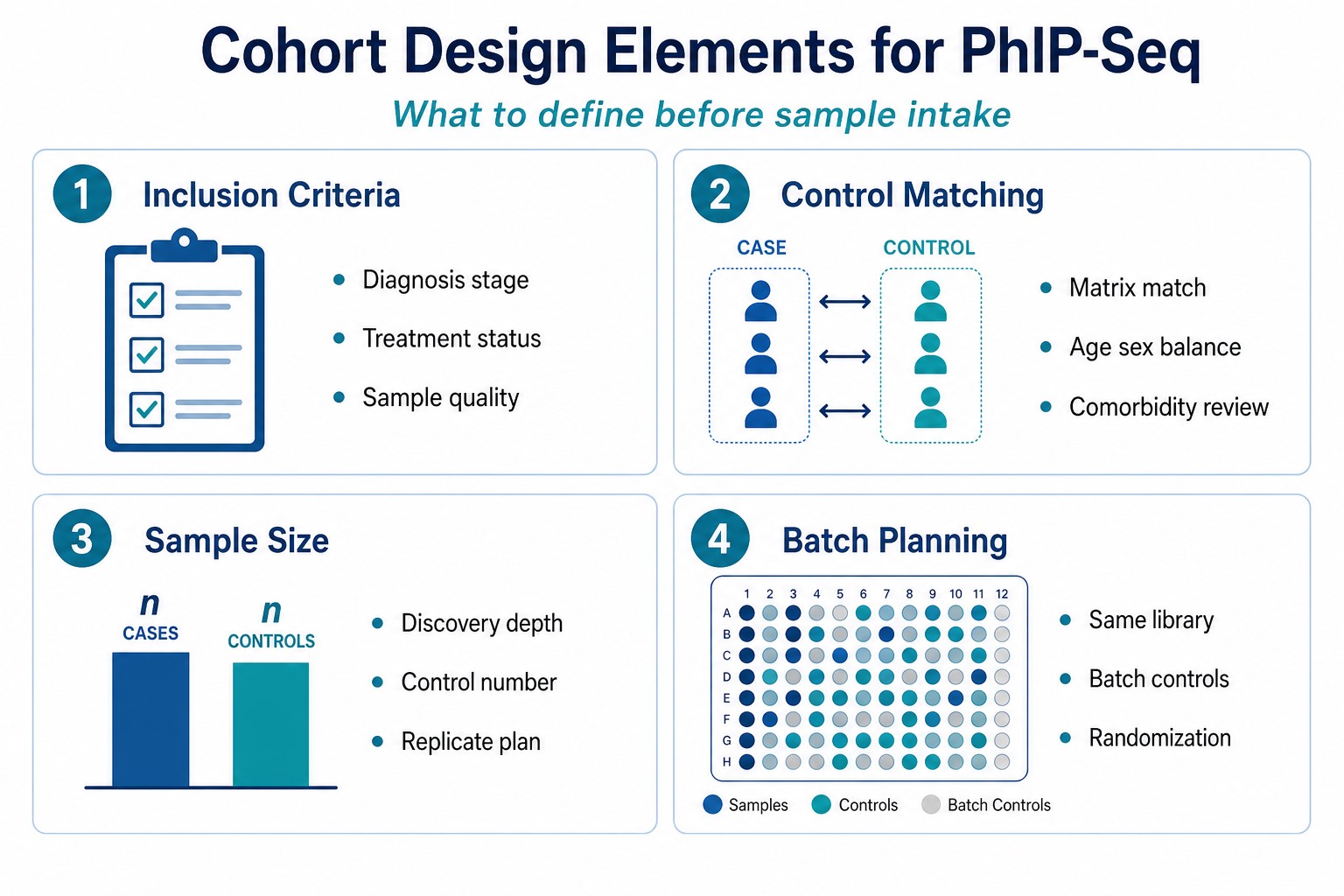
Figure 2. Disease and control cohort design requires predefined inclusion criteria, matched controls, sample size planning, and batch control strategy.
Step 6: Plan Batching, Randomization, and Technical Controls
Batch planning protects cohort comparison from workflow-driven artifacts.
Use the same peptide library lot across cases and controls whenever possible. Include technical controls in each batch to estimate bead-only or no-antibody background. Randomize case and control samples across processing batches when batch number is greater than one. Avoid running all cases in one batch and all controls in another unless batch is included as an explicit analysis variable. Record library input, wash stringency, and sequencing depth so normalization remains transparent.
Batch confounding is a common source of apparent disease enrichment that fails orthogonal validation.
Analysis Plan Linked to Cohort Design
The analysis plan should be written before sequencing and aligned with cohort structure.
Define normalization against input library representation for all samples. Define case-control contrast rules using matched controls rather than fold change alone. Define replicate handling when technical or biological replicates are included. Define modified peptide comparison logic when PTM libraries are used. Define confidence tiers for discovery output so provisional and high-confidence peptides are reported separately.
A cohort designed for case-control discovery should not be summarized using only per-sample enrichment without control contrast.
Cohort Design by Research Goal
Different research goals require different disease and control cohort emphasis.
|
Research Goal |
Case Cohort Emphasis |
Control Cohort Emphasis |
Design Priority |
|---|---|---|---|
|
Autoimmune discovery |
Defined diagnosis and stage |
Matrix-matched healthy donors |
Case-control balance and control number |
|
Modified epitope screening |
Treatment and inflammation status aligned |
Healthy donors plus unmodified pair logic |
PTM library and paired analysis |
|
Neurology or CSF study |
Compartment-specific enrollment |
CSF-matched controls, not serum-only |
Matrix-specific thresholds |
|
Longitudinal treatment study |
Same patients across time points |
Baseline controls plus batch consistency |
Same library across visits |
|
Validation handoff |
Tier A cases from prior discovery |
Independent control set when possible |
Reproducibility over discovery breadth |
Study design should match the decision the enrichment data must support.
Common Cohort Design Mistakes
Several design errors recur in PhIP-Seq disease and control studies.
Enrolling cases before control criteria are defined often leads to poorly matched comparison groups. Using one healthy control for many cases overstates specificity when baseline variability is unknown. Mixing serum and CSF under one threshold ignores matrix effects. Running cases and controls in separate batches without batch correction creates false disease signals. Including treated and untreated cases without stratification confounds therapy effects with disease-associated enrichment. Treating pilot discovery cohorts as validation-ready without independent replication weakens downstream claims.
Most of these mistakes are preventable when cohort design is documented before the first sample is processed.
Expected Outcomes from a Well-Designed Cohort
A well-designed disease and control cohort should produce interpretable discovery output.
Expected deliverables include normalized enrichment tables with case-control contrast annotations. A mapped peptide summary linking hits to proteins, regions, and modification state when relevant. A tiered candidate list separating high-confidence, provisional, and exploratory peptides. A cohort methods summary documenting inclusion criteria, control matching, matrix, library, and batch handling.
These outputs allow teams to move from enrichment review to validation without redesigning the study logic after sequencing.
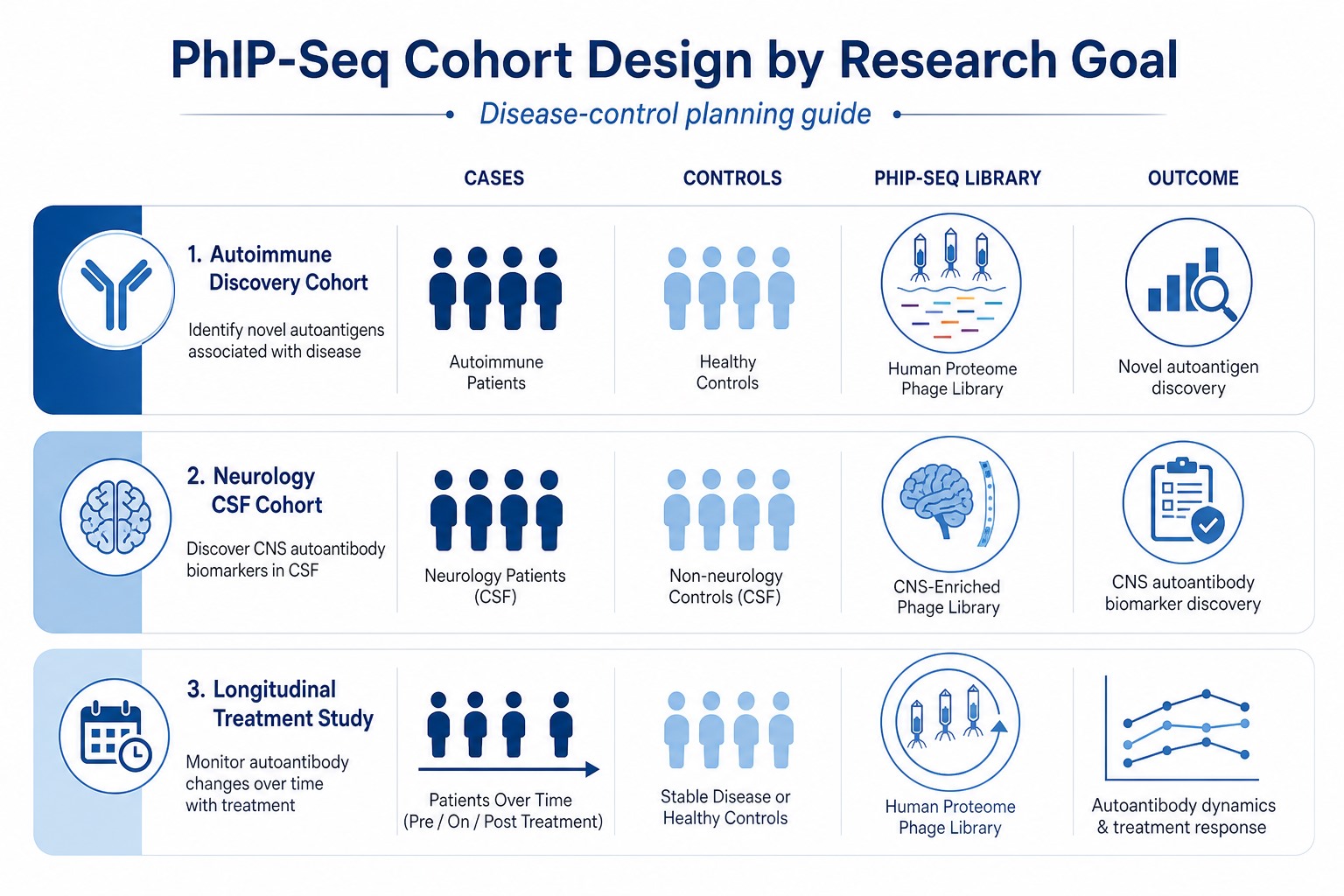
Figure 3. Disease and control cohort design should be tailored to the research goal, matrix, and validation standard required by the project.
Frequently Asked Questions
1. How should disease and control groups be matched in PhIP-Seq?
Match by sample matrix at minimum, and review age, sex, treatment status, and major comorbidity differences that could affect baseline reactivity.
2. How many controls are needed for a case-control PhIP-Seq study?
Many projects use at least three to five matched controls for pilot discovery and prefer five to ten or closer case-control balance for validation-oriented discovery.
3. Can cases and controls be processed in different batches?
Only with caution. Batch should be randomized across groups or included in analysis review. Processing all cases separately from all controls is risky.
4. Should CSF studies use serum controls?
No. CSF studies should use matrix-matched CSF controls because immunoglobulin abundance and background differ from blood matrices.
5. When should the analysis plan be defined?
Before sample intake and sequencing. Normalization, control contrast, and reporting tiers should be fixed in advance.
Conclusion
PhIP-Seq study design for disease and control cohorts determines whether enrichment output supports credible discovery, specificity review, and validation planning. Inclusion criteria, control matching, sample size, matrix choice, library scope, and batch planning should be defined before samples are run. Case-control contrast depends as much on cohort structure as on sequencing depth.
Programs that align cohort design with the intended claim obtain more reliable enrichment interpretation and move more efficiently into validation. Researchers planning disease and control PhIP-Seq studies can contact MtoZ Biolabs to review cohort criteria, control strategy, and library options suited to their project. For teams advancing from cohort discovery to confirmed epitope or PTM evidence, MtoZ Biolabs can also help connect study design with interpretation, prioritization, and validation follow-up.
How to order?




