






Peptide Mapping Service Results Not QC-Ready? Troubleshooting Sample Prep, Scope Gaps, and Report Deficiencies
Introduction
Outsourcing peptide mapping does not guarantee that the returned report will immediately support lot release, comparability review, or regulatory submission. A service report may show moderate coverage while critical regions remain unobserved. PTM review may be absent even though modifications were expected. Method documentation may be too brief for internal QC review. In many cases, the issue is not instrument failure but a mismatch between sample quality, project scope, and report expectations.
Peptide mapping service problems usually trace back to three areas: sample suitability, scope definition, and deliverable alignment. Impure protein samples produce ambiguous peptide assignments. Undefined coverage targets leave both client and provider unsure whether the result is acceptable. Reference sequence errors create apparent mismatches that are actually documentation problems. Reordering the same service without correcting these inputs often reproduces the same inadequate report.
Teams troubleshooting an unsatisfactory peptide mapping service result can request feasibility review before resubmitting samples or expanding scope. MtoZ Biolabs can Assess peptide mapping service readiness and recommend the most efficient recovery path.
Related Services
- Peptide Mapping Service
- Comprehensive Peptide Mapping Service
- Peptide Mapping Analysis Service
- Biopharmaceutical Peptide Mapping Analysis Service
- Peptide Coverage/Peptide Spectrum Match (PSM) Analysis Service
- Primary Structure Analysis Service
Common Signs of a QC-Deficient Service Report
Clients often seek help after observing one or more of the following issues:
- overall coverage is lower than the QC or regulatory workflow requires
- decision-critical regions are missing from the coverage map
- expected PTMs are not reviewed or remain ambiguously assigned
- report lacks sufficient method detail for internal quality review
- reference sequence used in analysis does not match the current construct file
- comparability samples were analyzed under inconsistent digestion or reporting conditions
These outcomes are common when sample purity was overestimated, service scope was quoted too narrowly, or report format requirements were not defined before analysis began.
Why Peptide Mapping Service Results Fall Short
Before reordering the service, review the most frequent causes.
1. Insufficient Sample Purity
Contaminating proteins add unrelated peptides and weaken target coverage confidence.
2. Scope Mismatch
A standard mapping package may not include multi-enzyme gap closure, PTM review, or regulatory-style documentation unless explicitly scoped.
3. Incorrect Reference Sequence
Outdated construct files or missing signal peptide information can distort coverage interpretation.
4. Incomplete Client Briefing on PTMs
Expected modifications not communicated at intake may be omitted from search and review.
5. Report Format Not Aligned to Use Case
Research-style summaries may not satisfy QC or comparability documentation needs.
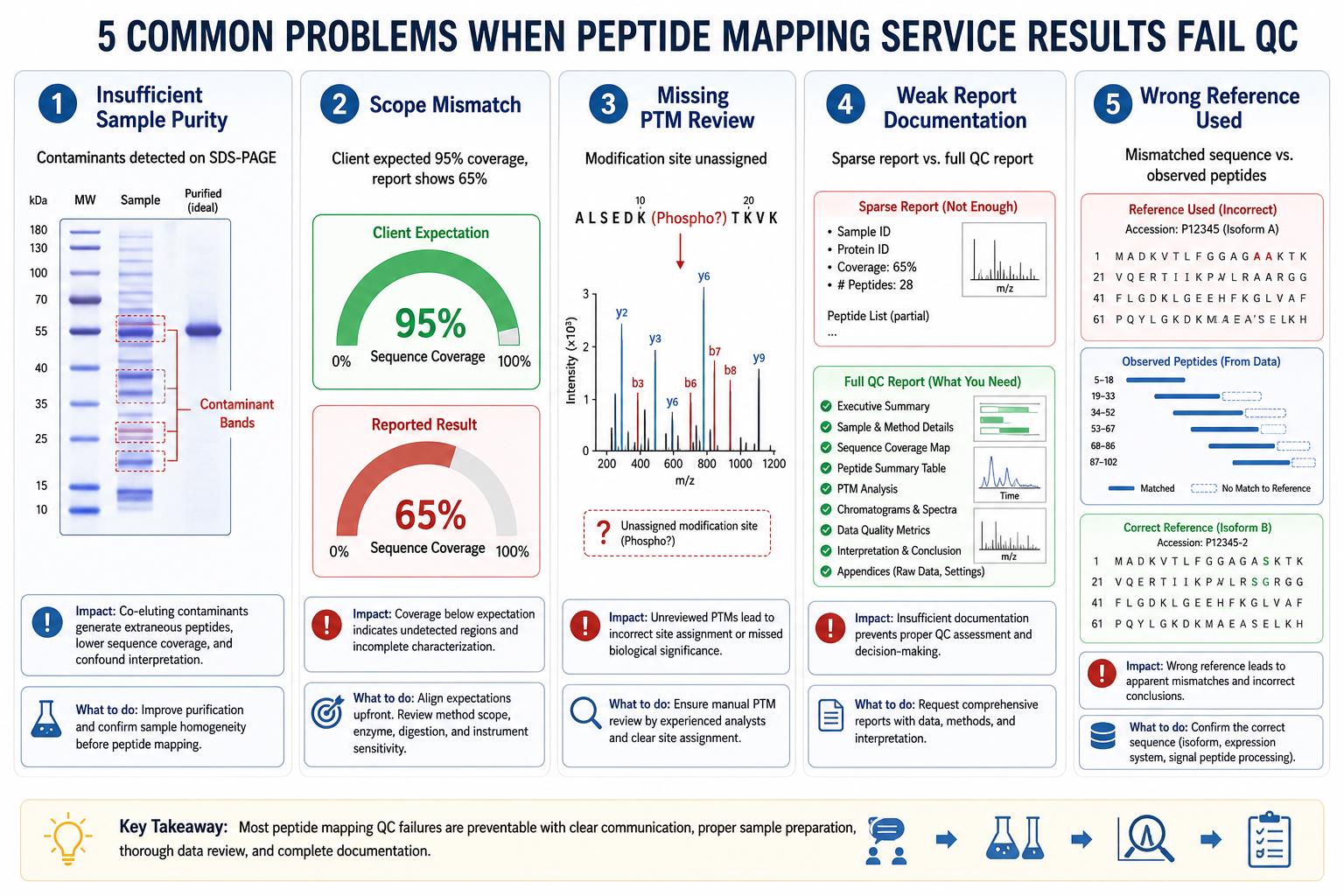
Figure 1. QC-deficient peptide mapping service results often reflect sample quality, scope definition, or report format mismatch rather than service incapacity alone.
Step-by-Step Recovery Guide
When a peptide mapping service report is not QC-ready, use a structured review rather than repeating the same order.
Step 1: Verify Sample Suitability
Review purity data, sample handling, and whether the submitted material represents the intended product state.
Step 2: Confirm Reference Sequence and Construct Status
Ensure the sequence used for mapping matches the current expression construct, processing state, and tag removal plan.
Step 3: Compare Delivered Scope with Project Needs
Identify whether missing elements require a comprehensive mapping tier, PTM review, or gap-closure digest rather than a repeat of the original package.
Step 4: Review Critical Region Coverage
Determine whether unobserved segments affect identity confirmation, modification review, or regulatory acceptance.
Step 5: Request Targeted Follow-Up Rather Than Full Repeat
Gap-closure digestion, PTM-focused review, or report revision may resolve the issue more efficiently than resubmitting the entire project unchanged.
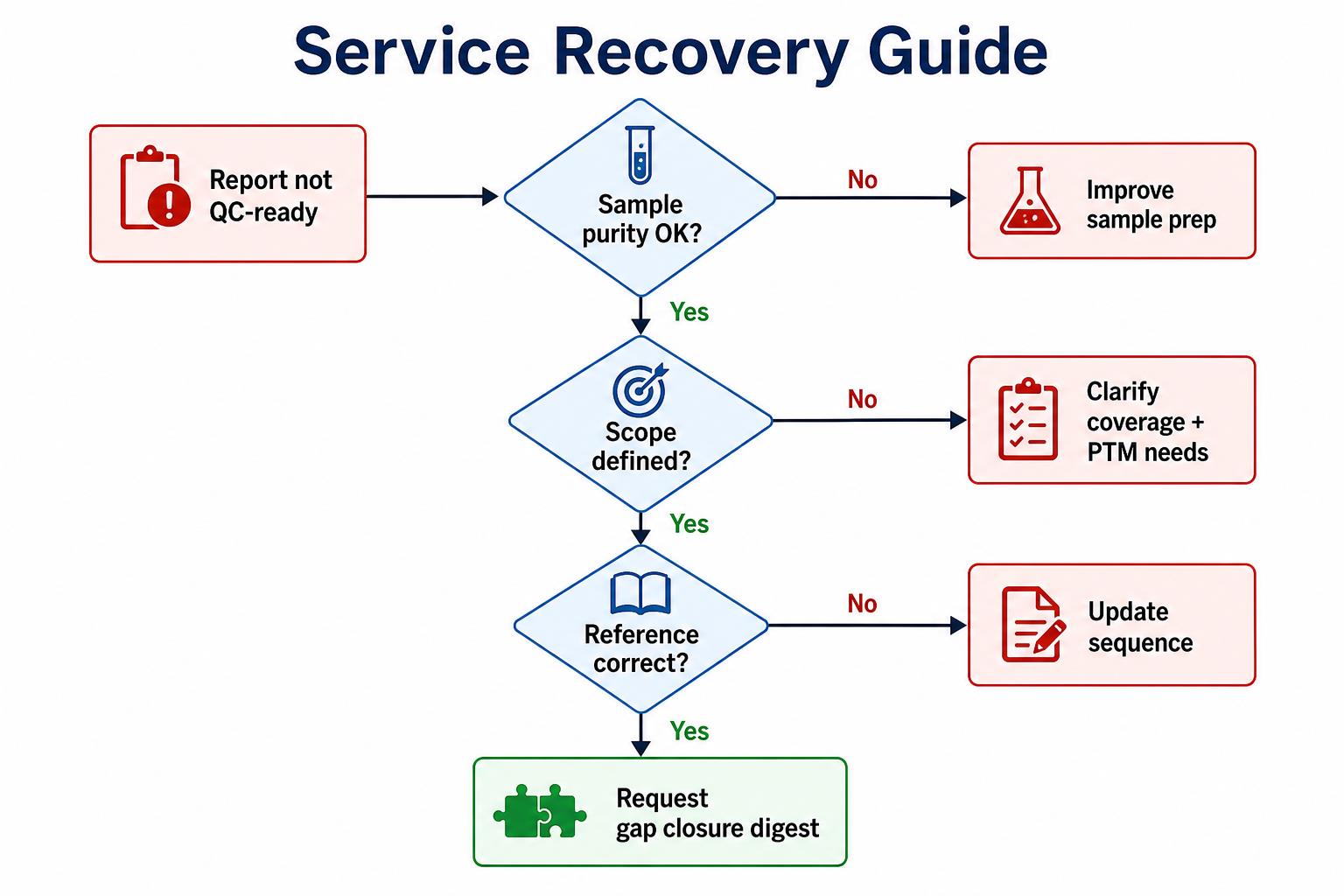
Figure 2. Sample review, scope confirmation, and reference sequence validation are the first steps when a peptide mapping service report is not QC-ready.
Implement one correction at a time and define acceptance criteria before follow-up analysis begins.
Quote Request Checklist for Better First-Round Results
Use this checklist before the initial service request or before reordering.
|
Check Item |
Pass Criteria |
|---|---|
|
Reference sequence current and complete |
Matches construct and processing state |
|
Sample purity documented |
Target protein dominates relevant analysis window |
|
Coverage goal defined |
Critical regions explicitly listed |
|
PTM list provided |
Expected modifications included in scope |
|
Report format agreed |
Research, QC, or comparability template confirmed |
|
Comparability needs stated |
Reference and test handling aligned if applicable |
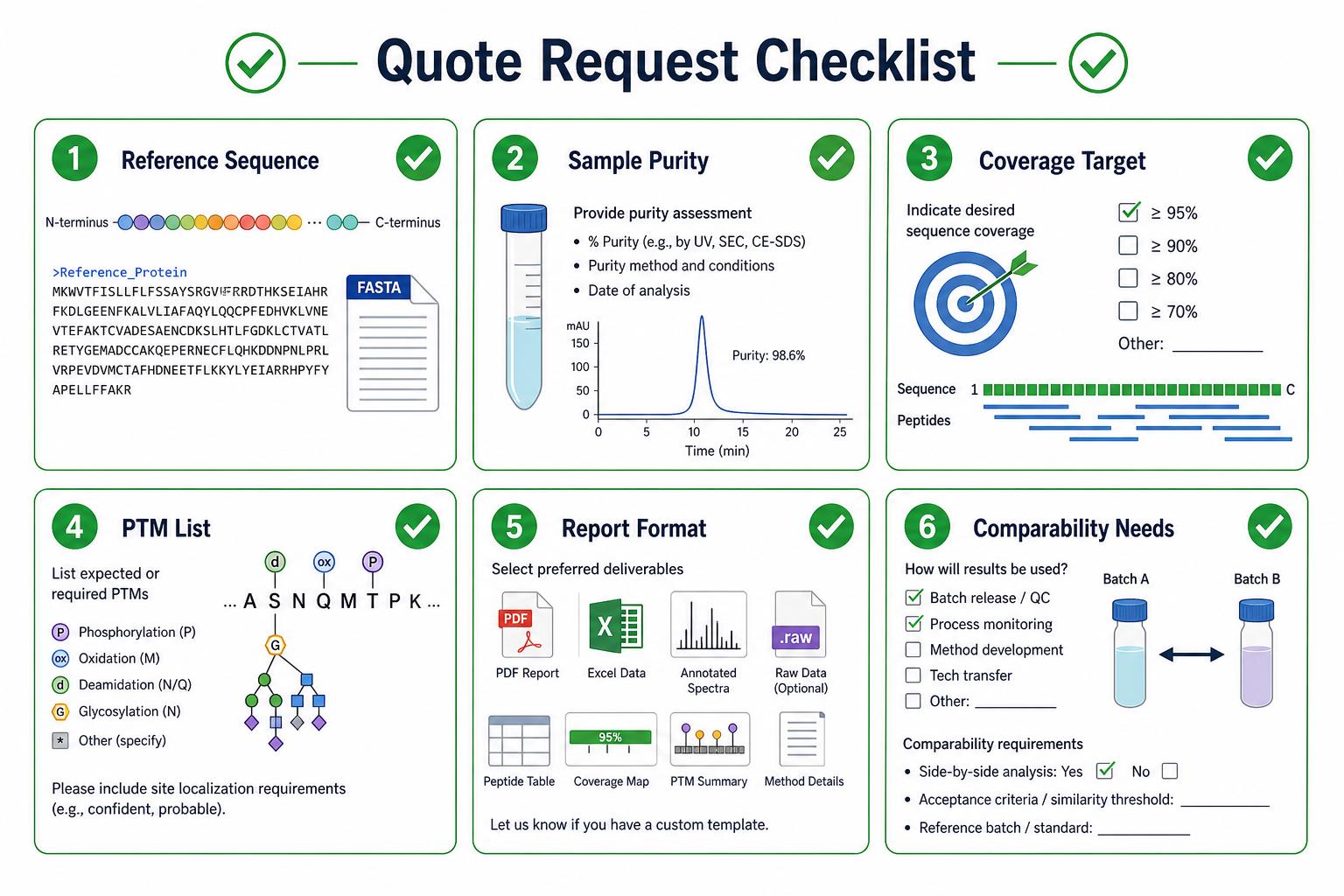
Figure 3. Reference sequence, coverage target, PTM list, and report format should be confirmed before peptide mapping service work begins.
Expected Results After Recovery
A successful recovery should deliver more than a higher coverage percentage. Expected outputs may include:
- revised coverage map with decision-critical regions addressed
- PTM summary aligned to project expectations
- report format suitable for the intended QC or comparability use
- clear commentary on any remaining gaps and their impact
Recovery options depend on project goal:
- Resubmit purer sample when contamination drove ambiguity
- Upgrade to comprehensive mapping when standard digest left persistent gaps
- Add PTM-focused review when modification documentation was missing
- Revise report structure when data were acceptable but presentation was insufficient
Tier-one regions tied to release or comparability decisions should drive follow-up scope rather than blanket repeat analysis.
Key Cautions
Do not assume moderate overall coverage satisfies a QC workflow if key regions remain unobserved.
Do not reorder the same service tier without revising scope when the first report lacked required deliverables.
Do not treat report formatting as secondary if the document must support internal or external review.
Do not compare biosimilar samples unless digestion and reporting conditions were matched from the start.
Share the original report, reference sequence file, and purity data when requesting follow-up support. That context often shows whether sample prep, scope, or interpretation is the primary bottleneck.
Practical Recovery Examples
1. Lot Release Report With Missing C-Terminal Coverage
Request complementary enzyme mapping focused on the unobserved region rather than repeating standard trypsin service alone.
2. Biosimilar Package With Inconsistent Peptide Profiles
Confirm sample prep parity and reorder comparability analysis under matched conditions.
3. QC Review Rejected Report for Insufficient Method Detail
Request report revision or upgraded documentation tier without repeating LC-MS/MS if data quality was acceptable.
4. Expected Glycosylation Not Discussed in Report
Expand scope to include glycopeptide or modified peptide review if detected peptides require specialized interpretation.
Frequently Asked Questions
1. Can a report be upgraded without rerunning all samples?
Sometimes. If original data support additional interpretation or report revision, rerunning everything may not be necessary.
2. Is low coverage always the provider's fault?
Not always. Sample purity, protein difficulty, and scope limits all affect achievable coverage.
3. Should I choose comprehensive mapping from the start?
When QC or regulatory documentation requires broad coverage or difficult regions are known, a comprehensive tier is often more efficient than staged repeats.
4. What if the reference sequence was wrong?
The analysis should be repeated against the corrected sequence before interpreting peptide mismatches as product differences.
5. Can peptide mapping service support a formal gap closure plan?
Yes, when follow-up digests and region priorities are defined as part of the recovery scope.
Conclusion
Peptide mapping service results become QC-ready when sample quality, scope definition, and report expectations are aligned before analysis begins. By reviewing purity, reference sequence, deliverable scope, and critical region coverage after an unsatisfactory report, teams can often recover acceptable documentation without unnecessary full repeats.
MtoZ Biolabs can Recover QC-ready peptide mapping service deliverables through Peptide Mapping Service and Comprehensive Peptide Mapping Service. Contact the technical team with the current report and project requirements before resubmitting samples.
How to order?




