






Peptide Mapping Service or In-House Testing?
Introduction
Biologics teams often reach a practical fork when primary structure confirmation is needed. One group may have LC-MS/MS capacity in-house but limited time for digestion optimization, database searching, and coverage reporting. Another may need a formal peptide map for lot release, comparability, or regulatory documentation. A third may be deciding whether routine HPLC peptide profiling is enough or whether a full peptide mapping service is required for the next project milestone.
Peptide mapping service and in-house testing answer different operational questions. An outsourced service delivers sample-to-report sequence evidence with defined deliverables. In-house testing may support faster exploratory checks when a mature workflow already exists, but internal teams still carry method development, data review, and report formatting burden. The better route depends on documentation depth, internal bandwidth, product complexity, and whether the output must support QC review rather than informal confirmation alone.
When Researchers Face This Decision
This comparison usually appears when a biologics program needs peptide-level evidence but has not yet defined whether the work should stay internal or move to a service provider.
Common decision scenarios include lot release or CMC documentation, where a report-ready coverage package may be required for internal QC or external review; early development confirmation, where the team needs sequence support but reporting requirements are still flexible; comparability after process change, where reference and test materials must be compared at the peptide level with traceable evidence; limited internal MS bandwidth, where instrument access exists but digestion, acquisition, and interpretation capacity is already committed to other projects; and new product format or modification profile, where a fusion protein, ADC, or heavily modified biologic may exceed the current in-house mapping workflow.
In each case, the practical question is whether internal testing can produce the required evidence on the required timeline, or whether an outsourced peptide mapping service provides a more direct path to the needed report format.
Four Comparison Dimensions That Matter Most
A useful comparison should focus on decision variables rather than outsourcing preference alone.
Documentation depth.
Some projects need searchable peptide tables, coverage maps, and PSM-supported assignments. Others need only an internal check that major regions are present.
Internal capacity.
In-house testing depends on digestion expertise, LC-MS/MS availability, software review time, and report writing bandwidth. Service routes shift much of that workload externally.
Product complexity.
Standard mAb mapping is often more predictable than fusion proteins, ADCs, or products with difficult coverage regions or dense modification patterns.
Project phase.
Early development may tolerate exploratory internal testing. Release support, biosimilar assessment, and regulatory milestones often require more formal deliverables.
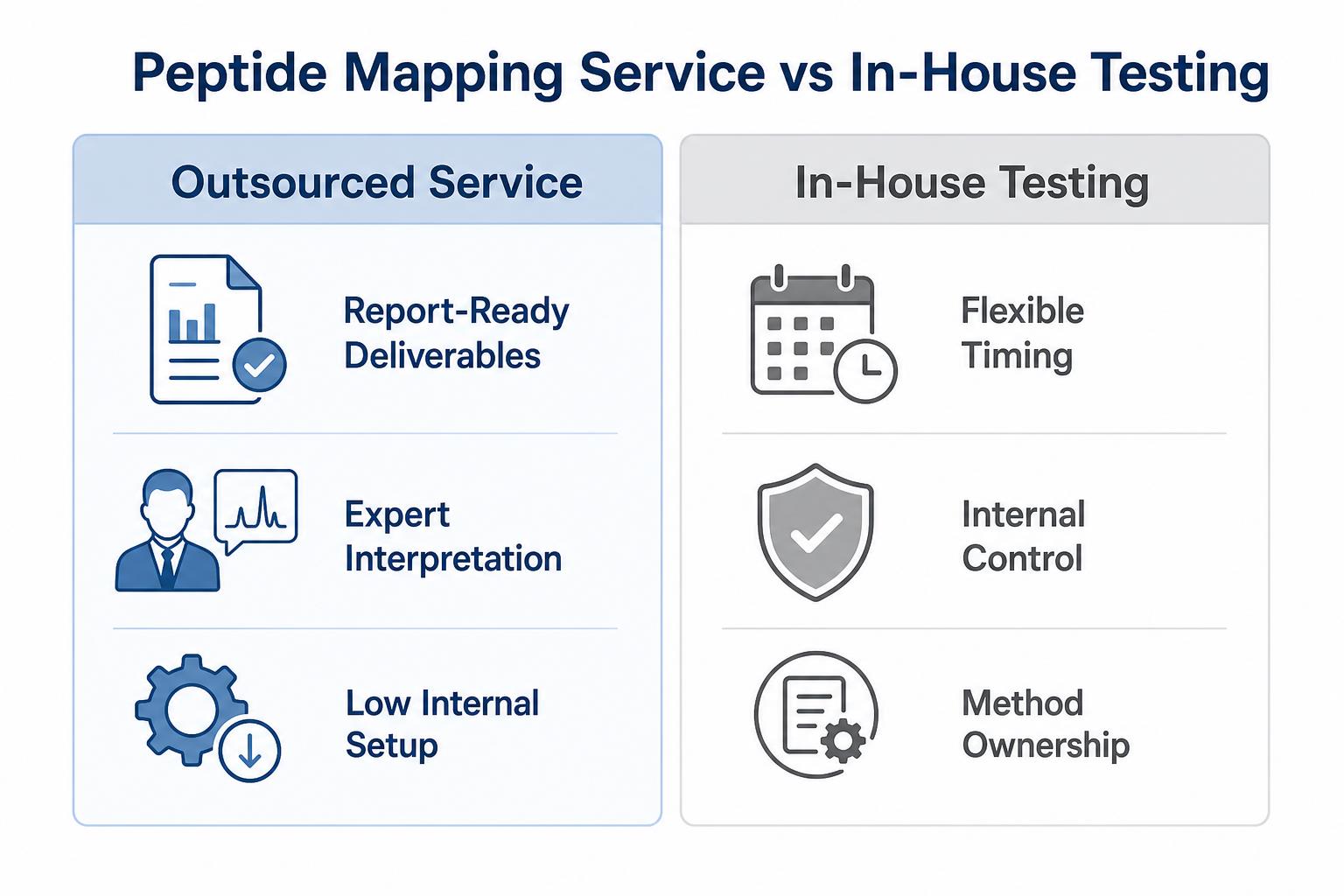
Figure 1. Peptide mapping service and in-house testing differ most in documentation depth, internal capacity demand, and project-phase fit.
How an Outsourced Peptide Mapping Service Works
A peptide mapping service typically follows a defined workflow from feasibility review through digestion, LC-MS/MS analysis, database searching, coverage mapping, and expert report delivery.
The service route is straightforward when the reference sequence is available, sample purity is acceptable, and the reporting goal is defined before submission. Outsourced workflows are often selected when teams need structured deliverables such as coverage maps, peptide identification tables, PTM summaries, and QC notes without building project-specific interpretation capacity internally.
The main limitation is dependence on clear scope definition and sample suitability at intake. Undefined reporting goals or incompatible formulation buffers can delay even a mature service workflow.
How In-House Peptide Mapping Testing Works
In-house testing usually means the biologics team performs digestion, LC-MS/MS acquisition, and data review using internal instruments and software. Some laboratories use HPLC peptide mapping for comparative profiling rather than full LC-MS/MS sequence coverage.
This route can work well when a validated mapping workflow already exists, the goal is exploratory confirmation, and report format requirements are flexible. Internal control over timing and method adjustment can also be valuable during early development.
The main limitation is cumulative internal burden. Method development, search review, coverage reporting, and documentation formatting consume analyst time that may already be allocated to other programs. In-house testing may also produce useful raw data without producing a QC-ready report unless internal reporting standards are already established.
Related Services
Teams comparing outsourced peptide mapping with in-house testing often evaluate adjacent service tiers at the same time. Relevant options include:
Comprehensive Peptide Mapping Service
Biopharmaceutical Peptide Mapping Analysis Service
HPLC-Based Peptide Mapping Assays Service
HPLC-Based Quality Peptide Mapping Assays Service
Primary Structure Analysis Service
Researchers comparing peptide mapping service and in-house testing routes can consult MtoZ Biolabs to review documentation goals, sample type, and the service tier that matches the required reporting depth.
Side-by-Side Comparison
The route descriptions above explain why documentation depth and internal capacity should come before habit or instrument availability. The table below summarizes practical differences between outsourced peptide mapping service and in-house testing.
|
Dimension |
Peptide Mapping Service |
In-House Testing |
|---|---|---|
|
Core deliverable |
Coverage map and PSM-supported report |
Internal data and interpretation |
|
Reporting depth |
Structured, service-defined format |
Depends on internal standards |
|
Interpretation burden |
Low for the submitting team |
High for the internal analyst team |
|
Sequence-level evidence |
Strong when LC-MS/MS is in scope |
Strong only if workflow is mature |
|
PTM localization support |
Strong when included in scope |
Depends on internal capability |
|
Setup burden for client |
Low |
High |
|
Flexibility during project |
Scope defined at intake |
High for method adjustment |
|
Common bottleneck |
Scope and sample readiness |
Method development and report writing |
|
Fit for QC documentation |
Strong |
Variable |
|
Fit for exploratory work |
Possible but may exceed need |
Strong when workflow exists |
This comparison shows why neither route is universally preferable. The better choice follows documentation requirements, product complexity, and the internal capacity available at project start.
Which Route Fits Different Study Goals
Choose a peptide mapping service when
report-ready coverage documentation is required, internal interpretation bandwidth is limited, comparability or biopharmaceutical QC evidence must be consistently formatted, or multi-enzyme mapping and PTM review are needed without building one-off internal expertise.
Choose in-house testing when
a validated mapping workflow already exists, the goal is exploratory confirmation rather than formal documentation, report requirements are flexible, and sample volume justifies maintaining internal methods.
Choose HPLC peptide mapping when
comparative peptide profiles are the primary deliverable, release or stability monitoring depends on chromatographic pattern comparison, and full PSM-supported sequence coverage is not required for the immediate decision.
Consider a combined strategy when
routine monitoring can remain internal or HPLC-based while milestone characterization is supported by outsourced LC-MS/MS peptide mapping service with broader coverage and formal reporting.
Researchers should also define whether the immediate output must support a QC decision, a development go/no-go check, or a regulatory documentation package. That distinction often determines the route more clearly than instrument ownership alone.
Decision Recommendations by Project Type
|
Project Type |
More Suitable First Route |
Why |
|---|---|---|
|
mAb lot release package |
Peptide mapping service |
Report-ready coverage and PSM evidence are usually required |
|
Early clone or construct screening |
In-house testing |
Exploratory confirmation may not need full service reporting |
|
Biosimilar comparability milestone |
Peptide mapping service |
Traceable peptide-level evidence supports similarity review |
|
Stability monitoring across lots |
HPLC peptide mapping or in-house profiling |
Profile comparison may be sufficient for routine tracking |
|
Fusion protein or ADC characterization |
Peptide mapping service |
Complex formats often need broader digestion and review depth |
|
Internal queue already saturated |
Peptide mapping service |
External workflow reduces analyst bottleneck |
|
Method-development-heavy product |
In-house testing first, service later |
Early flexibility may matter before formal documentation |
These recommendations are starting points. Sample matrix, reference sequence quality, modification pattern, and reporting urgency can shift the final plan.
Combined Strategies and Practical Limits
A strict either-or decision is not always necessary. Many biologics programs use different routes at different project phases.
A practical workflow may use in-house LC-MS/MS checks during early development when reporting requirements are still flexible, move to outsourced peptide mapping service for milestone characterization, comparability, or release-support documentation, use HPLC peptide mapping for routine profile monitoring between full LC-MS/MS mapping events, and reserve comprehensive service tiers for products with low coverage, complex PTMs, or regulatory milestones that require broader evidence.
In-house testing is not automatically lower cost when analyst time, repeat digestion, and report preparation are included. Outsourced peptide mapping service is not automatically slower when internal queues and method development delays are part of the real timeline. The decision should be based on the evidence format required for the next decision point.
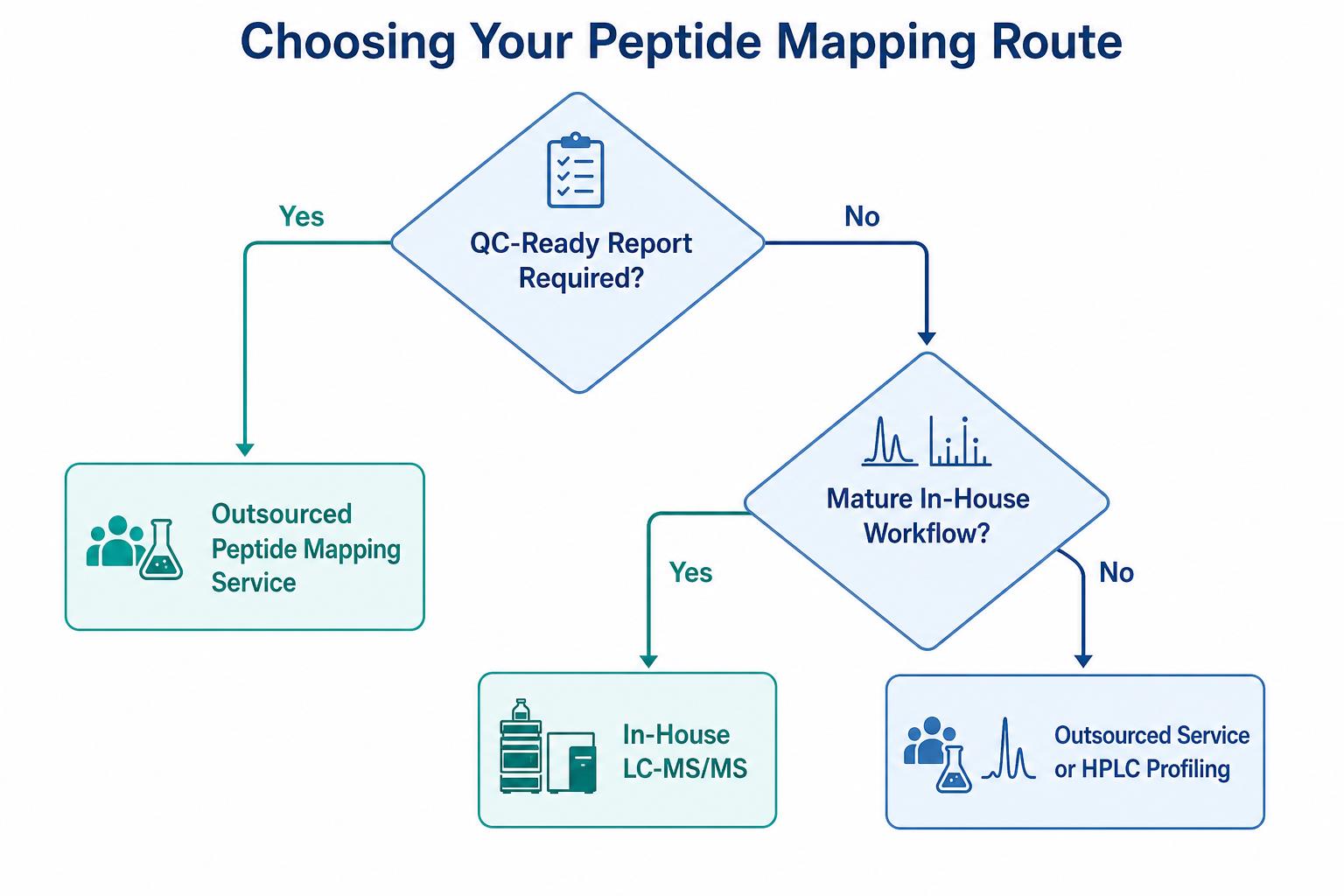
Figure 2. Documentation requirements and internal workflow maturity determine whether peptide mapping service or in-house testing is the more suitable route.
Teams weighing multiple routes for the same program can contact MtoZ Biolabs to compare standard service, comprehensive mapping, and HPLC-based options against the internal workflow already in place.
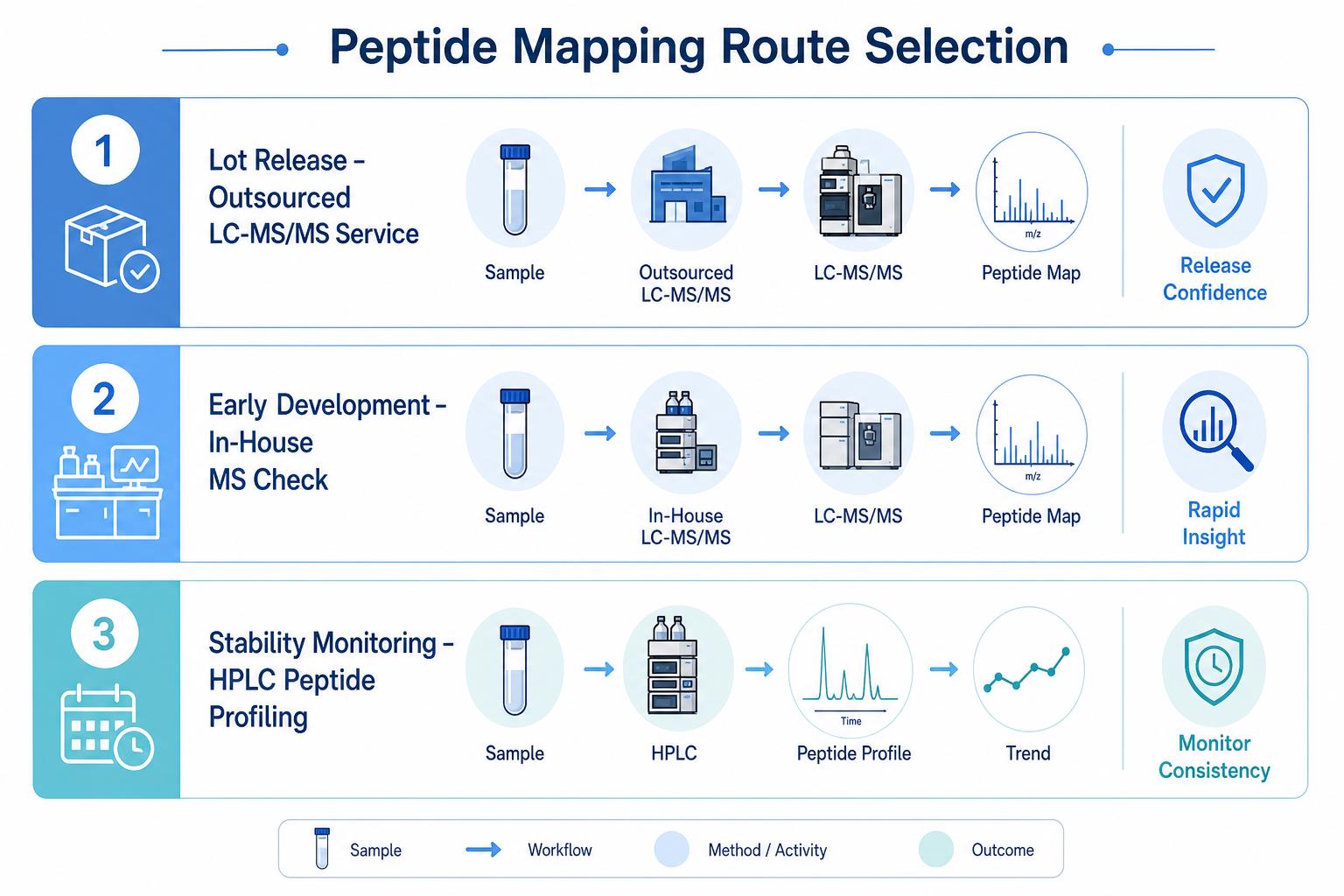
Figure 3. Lot release, early development, and stability monitoring projects often require different peptide mapping routes.
Frequently Asked Questions
1. Is outsourced peptide mapping always slower than in-house testing?
No. Internal queues, method development, and report writing often take longer than a scoped peptide mapping service when internal analyst capacity is limited.
2. Can in-house HPLC peptide mapping replace a peptide mapping service?
For some comparability or stability workflows, HPLC profiling may be sufficient. When residue-level coverage documentation is required, LC-MS/MS peptide mapping service routes are usually more appropriate.
3. What is the main reason teams outsource peptide mapping?
The most common driver is report-ready primary structure documentation combined with limited internal bandwidth for digestion optimization, data review, and formatted reporting.
4. When is in-house testing the better first choice?
In-house testing is often a good first choice when a mature workflow already exists and the goal is exploratory confirmation rather than formal QC or regulatory documentation.
5. Can one provider support both outsourced LC-MS/MS mapping and HPLC profiling?
Yes. Integrated providers can help match the route to the documentation level required at each project phase rather than forcing one method for every milestone.
Conclusion
Peptide mapping service and in-house testing serve different documentation, capacity, and project-phase needs within biologics characterization. Outsourced LC-MS/MS peptide mapping is often the more direct route when report-ready coverage evidence, PTM review, or formal comparability documentation is required. In-house testing can be sufficient for exploratory confirmation when a mature workflow and flexible reporting standards already exist. HPLC peptide profiling may support routine monitoring when full sequence-level documentation is not the immediate goal. The most suitable route follows documentation depth, product complexity, and internal capacity rather than instrument ownership alone. Researchers deciding between peptide mapping service and in-house testing can contact MtoZ Biolabs to review project goals, sample type, and the reporting format required before the next characterization milestone.
How to order?




