






What a Peptide Mapping Service Delivers: From Sample Intake to Coverage Maps and QC-Ready Primary Structure Reports
Introduction
Recombinant protein programs often reach a point where internal teams need primary structure evidence that can support lot release, comparability review, or regulatory documentation. Running peptide mapping in-house requires digestion expertise, LC-MS/MS capacity, and interpretation time that many groups do not maintain for every project stage. A peptide mapping service provides an outsourced route from purified protein sample to report-ready sequence coverage evidence against a reference construct.
A professional peptide mapping service typically includes sample review, proteolytic digestion, LC-MS/MS analysis, peptide identification, and a structured report with coverage maps and modification summaries. The value is not only instrument access but a defined workflow that converts a biopharmaceutical or research sample into traceable primary structure documentation. Understanding what the service includes helps teams scope the right package before samples are shipped.
Teams evaluating outsourced primary structure confirmation can define coverage needs, PTM review scope, and report format before requesting support. MtoZ Biolabs can review peptide mapping service feasibility before sample submission.
Related Services
What a Peptide Mapping Service Includes
A peptide mapping service confirms that observed peptides are consistent with an expected protein sequence. The service provider manages the workflow from sample intake through final reporting rather than delivering raw instrument time alone.
Typical service components include:
-
sample suitability review and feasibility confirmation
-
proteolytic digestion with selected enzyme strategy
-
LC-MS/MS acquisition and peptide identification
-
PSM scoring and sequence coverage mapping
-
PTM or variant review when included in scope
-
written report with method summary and data tables
The service differs from purchasing only MS instrument access because interpretation, report structure, and gap commentary are part of the deliverable. It also differs from intact mass or HPLC profiling alone when residue-level coverage documentation is required.
A peptide mapping service usually supports one of these goals:
-
confirm recombinant product identity against a reference sequence
-
document primary structure for lot release or internal QC
-
compare peptide-level profiles between reference and test material
-
identify or confirm PTMs relevant to product characterization
When a reliable reference sequence exists and documented coverage is required, a peptide mapping service is often the most efficient outsourced route.
Standard Service Workflow
Most peptide mapping service projects follow a defined sequence.
Phase 1: Sample intake and feasibility review.
The provider confirms sample type, purity, reference sequence, and project scope.
Phase 2: Digestion and sample preparation.
Proteolytic enzymes are selected to generate peptides suitable for LC-MS/MS mapping.
Phase 3: LC-MS/MS analysis.
Peptides are separated and fragmented to produce identification data.
Phase 4: Data interpretation.
Observed spectra are matched to the reference sequence and mapped for coverage and modifications.
Phase 5: Report delivery.
Coverage maps, PSM tables, and project commentary are assembled into the agreed report format.
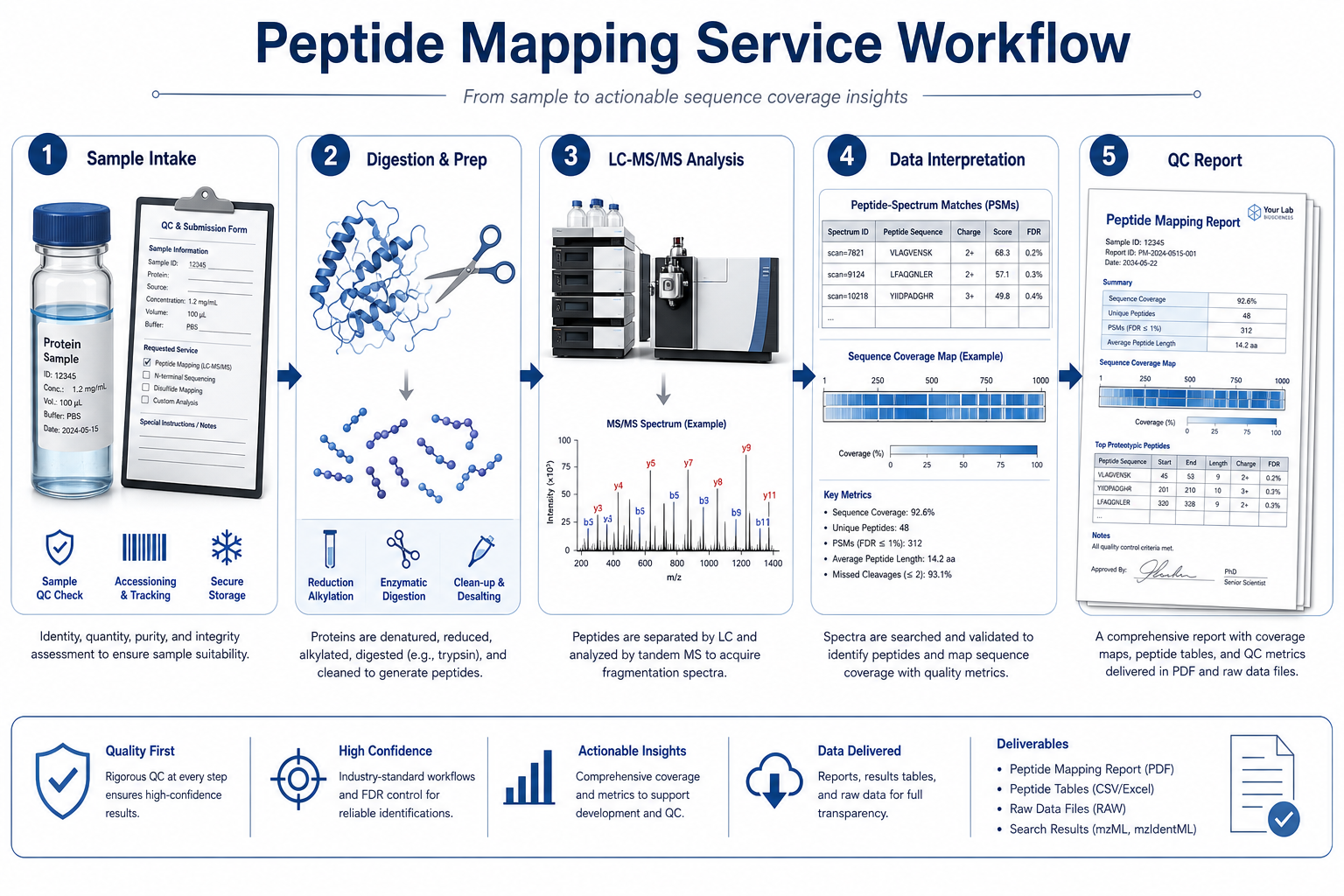
Figure 1. A peptide mapping service converts sample intake, digestion, and LC-MS/MS analysis into coverage-based primary structure documentation.
Feasibility review at intake prevents later rework when sample purity, reference sequence, or coverage expectations were not aligned at the start.
Service Deliverables
Clients should know which deliverables are included before quoting. Standard outputs often include:
Coverage map. Visual summary of observed peptides aligned to the reference sequence.
PSM table. List of identified peptides with scores and modification assignments where applicable.
PTM summary. Overview of detected modifications or sequence variants when in scope.
Method summary. Description of digestion, LC-MS/MS, and search or interpretation approach.
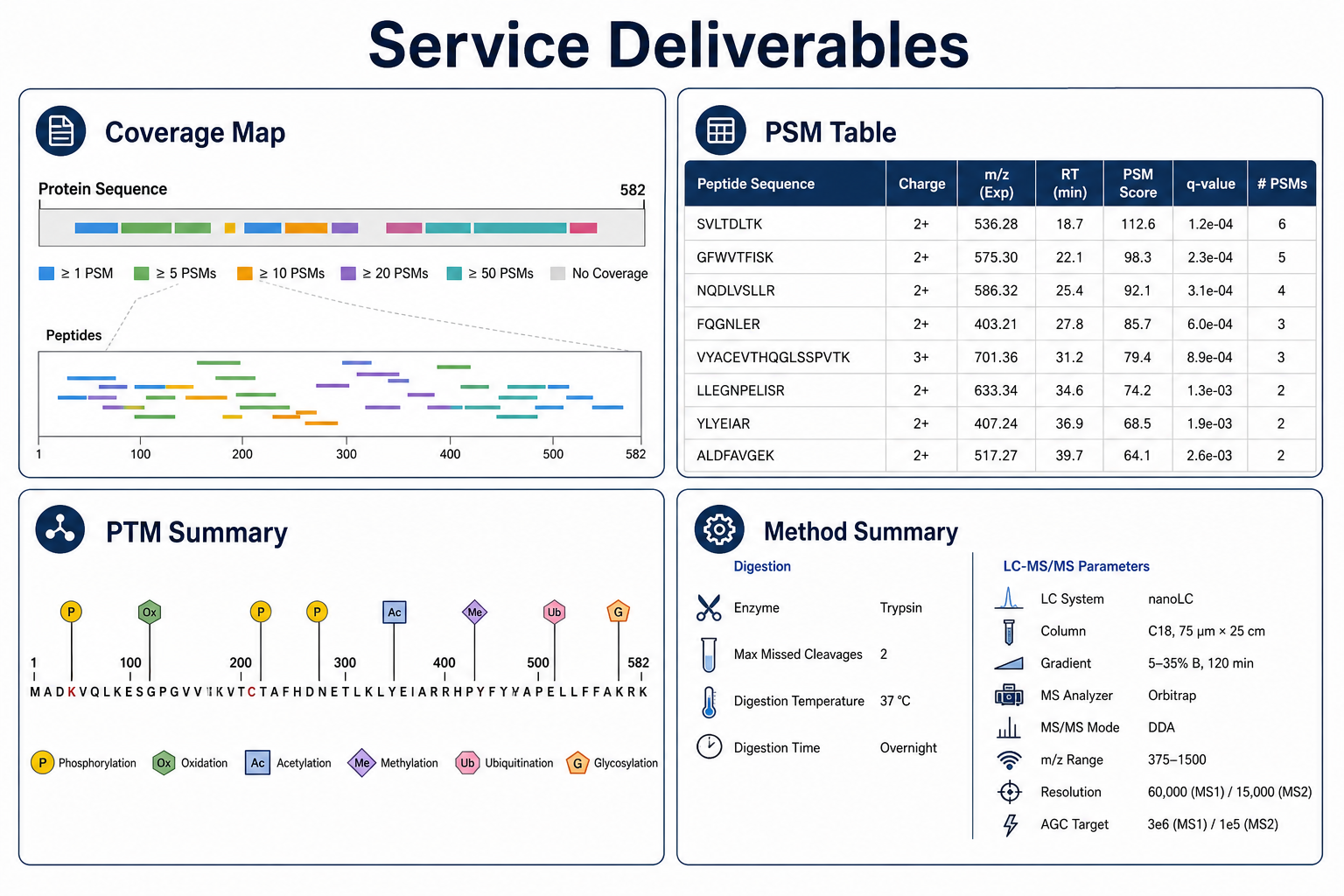
Figure 2. Coverage maps, PSM tables, PTM summaries, and method documentation are core peptide mapping service deliverables.
Report depth varies by service tier. A research confirmation package may be concise, while a biopharmaceutical QC package may require fuller traceability and gap discussion.
Technical Advantages and Limitations
Advantages
Defined workflow. Sample-to-report process reduces internal method development burden.
Interpretation included. Coverage and PTM review are part of the deliverable rather than raw data alone.
Scalable QC support. Outsourcing helps teams handle release, comparability, or milestone samples without standing up full mapping capacity.
Complementary service tiers. Standard, comprehensive, and specialized mapping routes can be matched to project depth.
Limitations
Requires clear scope. Undefined coverage or PTM expectations lead to report mismatch.
Dependent on sample quality. Poor purity or incorrect reference sequence limits service outcome.
Not a substitute for all structure questions. Higher-order structure, disulfide pairing, or unknown sequence discovery may require additional services.
Turnaround depends on complexity. Multi-enzyme mapping, difficult PTMs, or comparability packages require longer analysis and review.
A peptide mapping service confirms primary structure at the peptide level. It does not by itself prove biological activity or higher-order structure unless specifically scoped to do so.
Service Applications
Clients commonly use a peptide mapping service in these settings:
1. Recombinant protein lot release. Confirm batch identity against the intended sequence.
2. Biosimilar comparability. Compare peptide profiles between reference and candidate material.
3. Process development support. Track peptide-level changes across manufacturing conditions.
4. Regulatory and QC documentation. Obtain report-ready primary structure evidence for internal or external review.
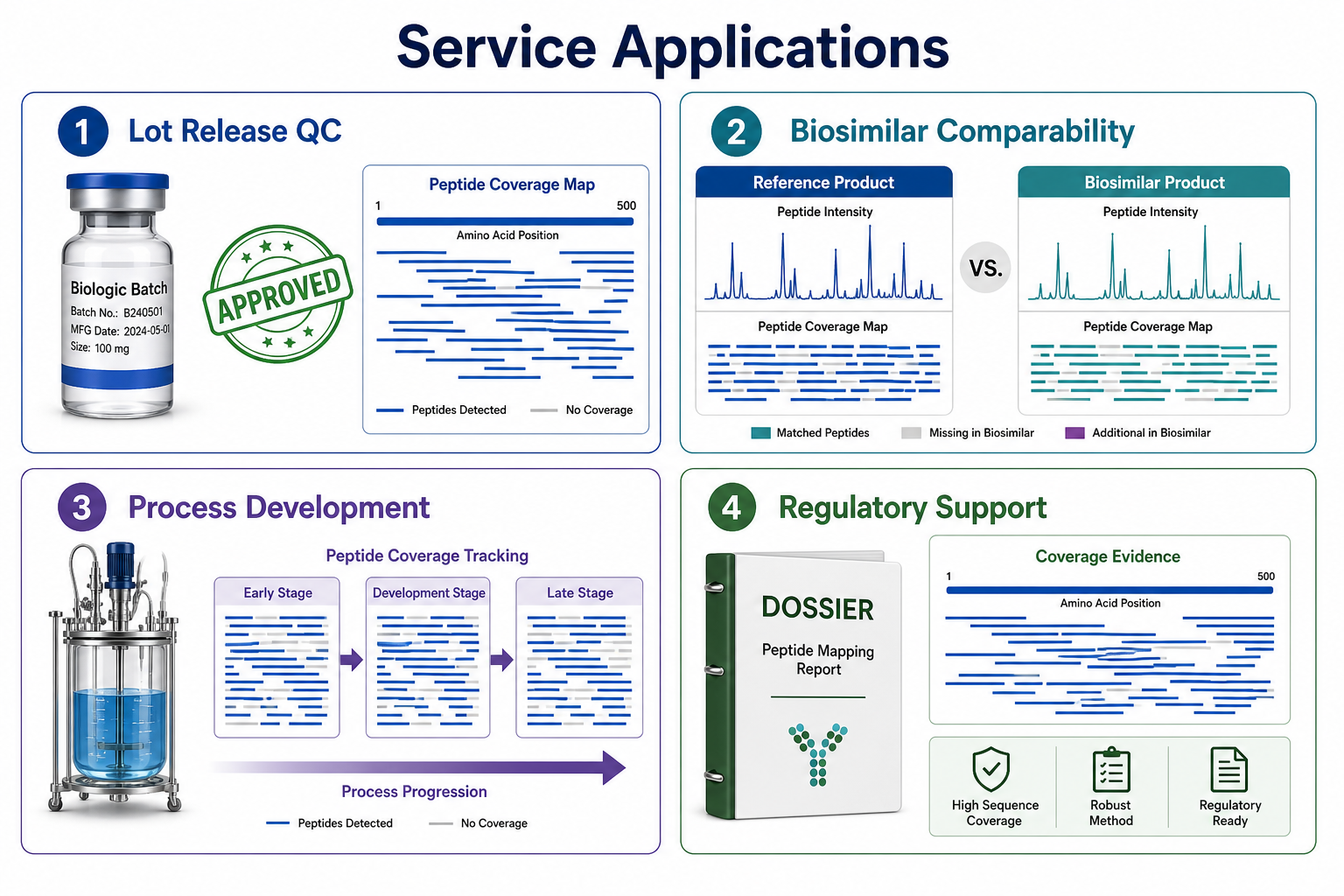
Figure 3. Lot release, biosimilar comparability, process development, and regulatory documentation are common peptide mapping service applications.
What to Provide Before Service Begins
Reliable service delivery depends on client inputs at submission.
| Client Input | Why It Matters |
|---|---|
| Reference protein sequence | Drives peptide matching and coverage mapping |
| Sample purity information | Affects confidence and interpretation |
| Expected PTMs or variants | Defines search and review scope |
| Coverage or documentation goal | Determines service tier and enzyme strategy |
| Report format requirements | Aligns deliverable with QC or regulatory needs |
Providing these details during feasibility review reduces delay after the sample arrives.
Expected Service Outcomes
A well-scoped peptide mapping service should produce:
-
documented sequence coverage against the reference protein
-
confident peptide identifications with interpretable PSM support
-
clear commentary on unobserved or low-confidence regions
-
report structure suitable for the stated QC or research use
Define acceptance criteria during scoping. Critical regions, not coverage percentage alone, often determine whether the report supports the next decision.
For comparability projects, align reference material handling, digestion strategy, and reporting format before both samples are submitted so differences can be interpreted consistently.
Frequently Asked Questions
1. What is included in a standard peptide mapping service?
Typically sample review, digestion, LC-MS/MS analysis, peptide identification, coverage mapping, and a written report. Exact deliverables depend on service tier.
2. Is peptide mapping service the same as peptide mapping analysis?
The terms overlap. A service package usually emphasizes complete sample-to-report delivery, while analysis may refer more specifically to the data interpretation component.
3. How much sample is required?
Depends on protein size, purity, and coverage goal. Feasibility review estimates amount after sample details are provided.
4. Can a peptide mapping service support biosimilar work?
Yes, when scope includes side-by-side comparison of peptide profiles and coverage between reference and test samples.
5. Does the service identify PTMs?
Often yes, when PTMs are included in scope and detected peptides support confident assignment.
Conclusion
A peptide mapping service provides an outsourced route from purified protein to coverage-based primary structure documentation. By defining sample inputs, deliverables, and reporting needs before submission, teams obtain QC-ready evidence more efficiently than building the full workflow internally for every project.
For biopharmaceutical and research peptide mapping with defined report deliverables, MtoZ Biolabs provides with feasibility review before sample intake. Contact the technical team to evaluate reference sequence, sample type, and documentation requirements.
How to order?




