






Peptide Mapping Coverage Incomplete? Troubleshooting Digestion, Enzyme Choice, and PTM Interference
Introduction
A peptide mapping analysis project can produce high-quality MS/MS data yet still leave important regions unconfirmed. Coverage may stop at sixty or seventy percent even though the protein sample appeared pure. Expected PTMs may remain ambiguous. Hydrophobic segments may never appear in the peptide list. For recombinant QC, biosimilar review, or primary structure documentation, incomplete coverage creates delay because the report cannot support the next release or comparability decision.
Low coverage in peptide mapping analysis usually reflects digestion strategy, sample prep, or search interpretation rather than instrument failure alone. A single enzyme may not cleave the protein effectively. Missed cleavages may produce peptides outside the searchable mass range. Modifications may alter expected masses or suppress detectability. Re-running the same digest without reviewing enzyme choice or PTM parameters often reproduces the same gaps.
Teams troubleshooting incomplete coverage or preparing a difficult protein for mapping can request feasibility review before resubmitting material. MtoZ Biolabs can Assess peptide mapping analysis readiness and recommend the most efficient recovery path.
Related Services
- Peptide Mapping Analysis Service
- Comprehensive Peptide Mapping Service
- Peptide Coverage/Peptide Spectrum Match (PSM) Analysis Service
- Peptide Mapping Service
- Primary Structure Analysis Service
- Glycopeptide Mapping Service
Common Signs of an Incomplete Mapping Result
Researchers often seek help after observing one or more of the following patterns:
- overall sequence coverage remains below project expectations
- specific functional or regulatory regions are never observed
- many peptides show missed cleavage patterns or unexpected lengths
- modified sites are suggested but not confidently localized
- hydrophobic or transmembrane-adjacent regions are absent from the map
- repeat digest or rerun produces nearly the same coverage pattern
These outcomes are common when enzyme choice is too narrow, digestion conditions are suboptimal, sample prep removes difficult peptides, or PTM search settings do not match the sample chemistry.
Why Peptide Mapping Analysis Coverage Fails
Before repeating LC-MS/MS acquisition, review the most frequent causes.
1. Incomplete Digestion
Insufficient enzyme activity, inhibitory buffer components, or poor denaturation leave long uncleaved segments.
2. Suboptimal Enzyme Choice
Trypsin alone may not cover all regions, especially when lysine and arginine are sparse or blocked.
3. Hydrophobic Peptide Loss
Long or hydrophobic peptides may be lost during prep or poorly ionized during acquisition.
4. PTM Masking or Search Mismatch
Modifications can shift peptide masses outside expected search windows or reduce detectability.
5. Sample Purity Issues
Contaminating proteins consume search capacity and reduce effective coverage of the target.
6. Reference Sequence Errors
An incorrect expected sequence can make valid peptides appear unmatched.
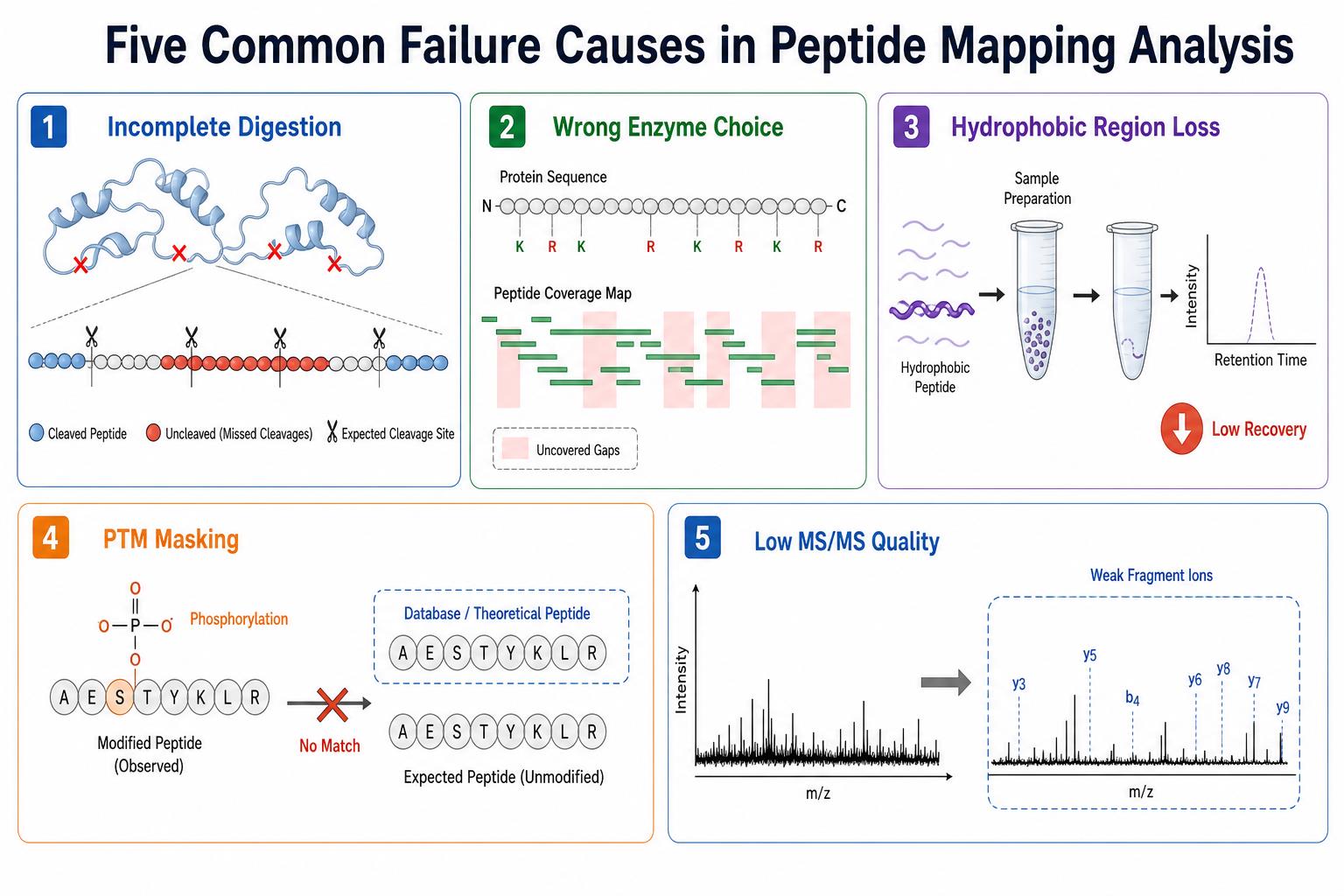
Figure 1. Incomplete coverage in peptide mapping analysis often reflects digestion strategy, enzyme choice, or PTM-related search limits rather than instrument failure alone.
Step-by-Step Recovery Guide
When peptide mapping analysis coverage is insufficient, use a structured review rather than repeating the same workflow.
Step 1: Review Digestion Efficiency
Inspect whether missed cleavages dominate the peptide list and whether digestion time, enzyme ratio, and denaturing conditions were adequate.
Step 2: Evaluate Enzyme Strategy
Consider a complementary protease or sequential multi-enzyme digest when persistent gaps align with cleavage site distribution.
Step 3: Check Sample Prep and Peptide Recovery
Review whether cleanup steps may be removing hydrophobic or modified peptides before LC-MS/MS analysis.
Step 4: Expand PTM and Variant Search Parameters
Confirm that expected modifications, sequence variants, and processing events are included in the search space.
Step 5: Reassess Reference Sequence and Critical Regions
Verify that the reference is correct and that unobserved regions are not the most decision-critical segments for the project.
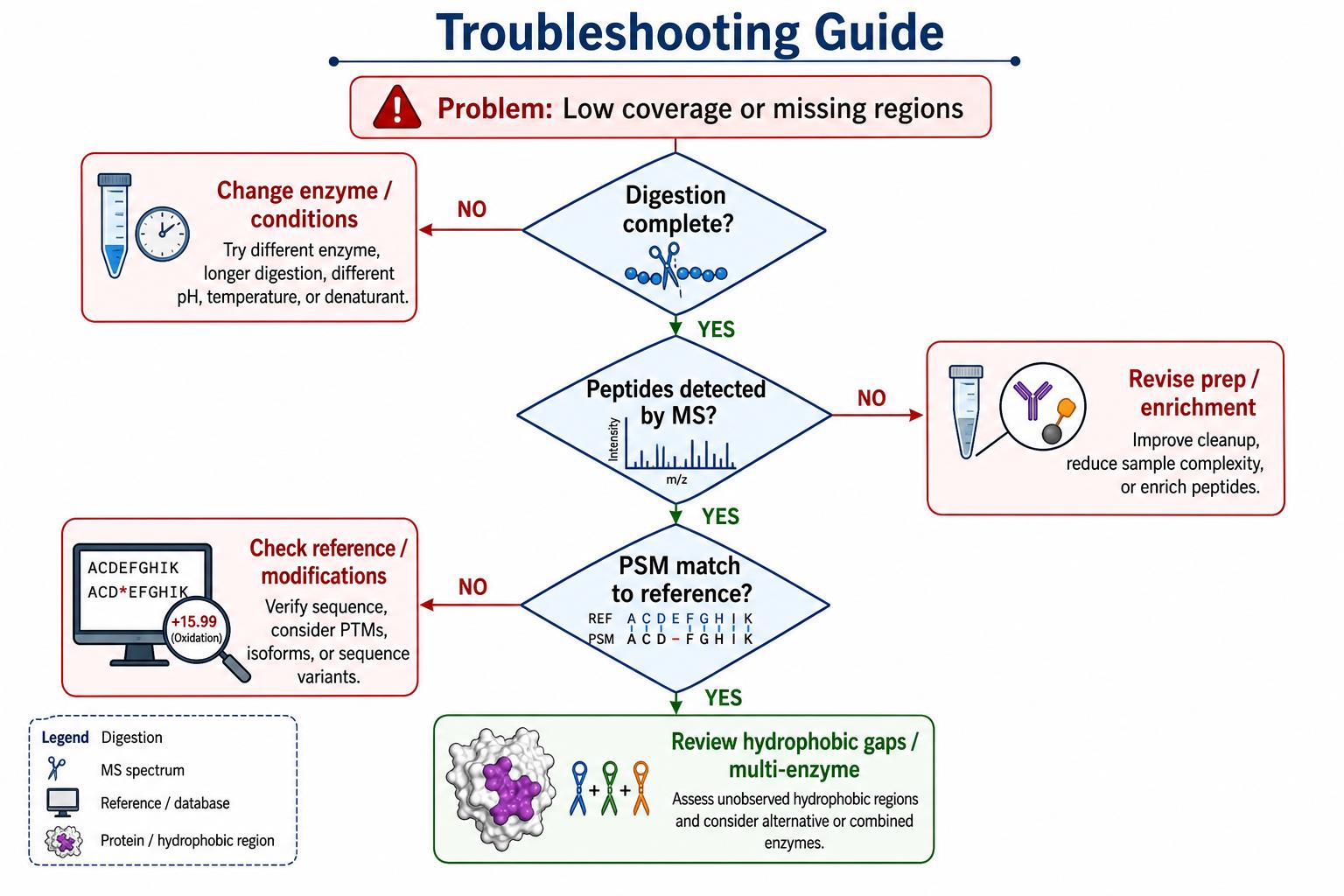
Figure 2. Digestion review, enzyme strategy, sample prep, and PSM search settings are the highest-leverage fixes for incomplete coverage.
Implement one change at a time and compare coverage maps after each modification. Changing enzyme, prep, and search settings simultaneously makes root-cause analysis difficult.
Design Checklist Before Re-Running the Analysis
Use this checklist during recovery or initial project design.
|
Check Item |
Pass Criteria |
|---|---|
|
Reference sequence confirmed |
Matches construct or regulatory file |
|
Sample purity acceptable |
Target protein dominates relevant MW region |
|
Digestion efficiency reviewed |
Missed cleavages within expected range |
|
Enzyme strategy appropriate |
Persistent gaps addressed by planned protease set |
|
PTM search settings match sample |
Expected modifications included |
|
Coverage target defined |
Critical regions explicitly listed |
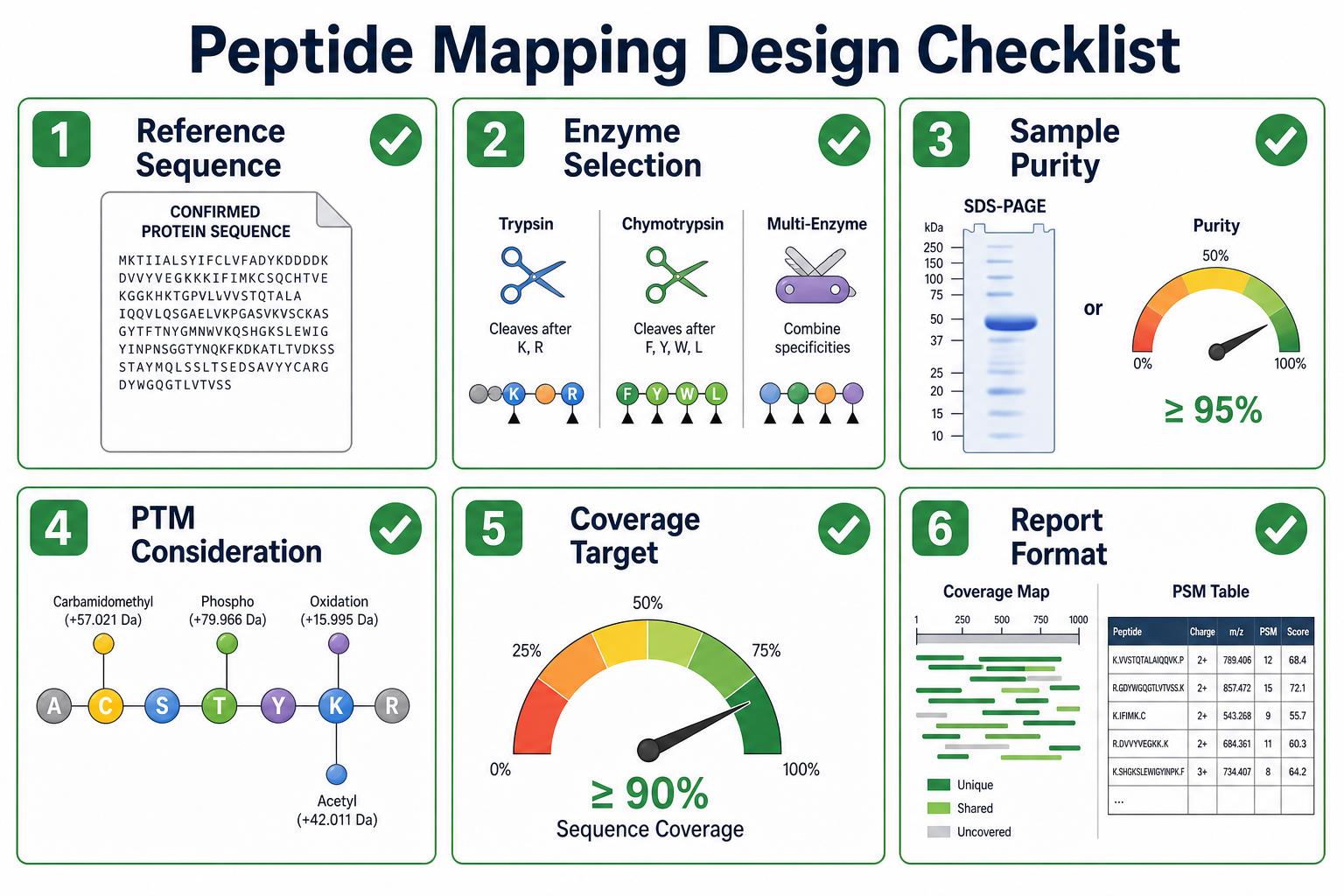
Figure 3. Reference confirmation, enzyme strategy, PTM planning, and coverage targets are essential checkpoints before final reporting.
Expected Results After Recovery
A successful recovery should deliver more than a higher percentage number. Expected outputs may include:
- revised enzyme or digestion strategy with improved region coverage
- updated PSM table with confident matches in previously missing segments
- localized PTM assignments where fragmentation supports site placement
- commentary on remaining gaps and whether they affect project decisions
Recovery options depend on project goal:
- Switch or combine enzymes when cleavage site distribution caused the gap pattern
- Revise digestion or denaturation conditions when missed cleavages dominated
- Adjust prep to retain difficult peptides when hydrophobic loss was suspected
- Use specialized mapping routes such as Glycopeptide Mapping Service when glycosylation limits standard mapping
Regions required for identity confirmation, modification review, or regulatory acceptance should drive recovery priority rather than coverage percentage alone.
Key Cautions
Do not equate high global coverage with confirmation of every decision-critical region.
Do not assume one tryptic digest is sufficient for all proteins or all PTMs.
Do not ignore missed cleavages when interpreting gap patterns.
Do not rerun search parameters without confirming that the reference sequence and modification list are current.
Share the current coverage map and PSM table when requesting support. Visual review of gap location often shows whether enzyme strategy or sample prep is the more likely bottleneck.
A practical recovery milestone is a pilot digest with an alternate enzyme on a small aliquot before repeating full LC-MS/MS on the entire sample set.
Practical Recovery Examples
1. Recombinant Antibody With Moderate Overall Coverage but Missing CH2 Region
Add complementary enzyme digest and review disulfide-linked peptide recovery.
2. Phosphoprotein With Ambiguous Modification Assignment
Optimize enrichment or search parameters and confirm site localization with higher-quality MS/MS.
3. Hydrophobic Membrane-Protein Segment Never Observed
Revise solubilization and prep strategy before changing instrument parameters alone.
4. Biosimilar Comparison With Peptide Absence in Variable Region
Confirm digestion and search settings before interpreting as sequence difference.
Frequently Asked Questions
1. Is 100 percent sequence coverage always required?
Not always. Many projects require complete or near-complete coverage, but the decisive factor is often whether all critical regions are supported by confident peptide evidence.
2. Can a second enzyme improve coverage immediately?
Often yes, when gaps correlate with cleavage site distribution rather than sample purity failure.
3. Do missed cleavages mean digestion failed?
Not necessarily. Some missed cleavages are expected, but excessive uncleaved segments usually indicate digestion conditions should be revised.
4. Can peptide mapping analysis detect unexpected sequence variants?
Yes, when variant peptides are present at detectable levels and the search space includes relevant substitutions.
5. Should I repeat LC-MS/MS before changing digestion strategy?
Usually not. Coverage gaps are more often resolved at digestion or search design than by identical re-acquisition alone.
Conclusion
Incomplete coverage in peptide mapping analysis is usually a solvable digestion, enzyme, or interpretation problem rather than a reason to abandon reference-based confirmation. By reviewing digestion efficiency, enzyme strategy, PTM settings, and critical region priorities before resubmitting samples, teams can often obtain the coverage evidence required for QC and comparability decisions.
MtoZ Biolabs can Recover incomplete peptide mapping analysis workflows through Peptide Mapping Analysis Service and Comprehensive Peptide Mapping Service. Contact the technical team with current coverage data and sample details before repeating analysis.
How to order?




