






Peptide Mapping Analysis by LC-MS/MS: How Digestion, Coverage Maps, and PSM Scoring Confirm Protein Primary Structure
Introduction
Many protein characterization projects begin with a reference sequence and a practical question: does the purified protein in hand actually match that sequence? A recombinant batch may need lot-release evidence. A biosimilar program may need comparability documentation. A research team may need to confirm expression construct integrity before functional studies proceed. In each case, the goal is not open-ended discovery but reference-based confirmation of primary structure.
Peptide mapping analysis addresses that need by digesting the protein into peptides, analyzing them by LC-MS/MS, and matching observed spectra to the expected sequence through peptide spectrum match (PSM) scoring. The resulting coverage map shows which regions of the protein are supported by MS evidence and which modifications or gaps require further review. This workflow is one of the most common routes to primary structure confirmation when a trustworthy reference sequence already exists.
Teams planning structure confirmation should define coverage expectations, enzyme strategy, and PTM review needs before sample submission. MtoZ Biolabs can Review peptide mapping analysis feasibility before digestion or LC-MS/MS analysis begins.
Related Services
- Peptide Mapping Analysis Service
- Peptide Mapping Service
- Comprehensive Peptide Mapping Service
- Biopharmaceutical Peptide Mapping Analysis Service
- Peptide Coverage/Peptide Spectrum Match (PSM) Analysis Service
- Primary Structure Analysis Service
What Peptide Mapping Analysis Measures
Peptide mapping analysis confirms that observed peptides are consistent with an expected protein sequence. The readout is not a single molecular weight value but a set of peptide identifications mapped back to the reference, usually summarized as sequence coverage and supported modification sites.
The method differs from de novo protein sequencing, which assembles sequence directly from MS/MS data without relying on a predefined reference. It also differs from intact mass analysis alone, which confirms global mass but not residue-level coverage across the sequence.
Peptide mapping analysis typically answers one of these questions:
- Does the purified protein match the intended recombinant sequence?
- Which regions of the sequence are supported by MS evidence?
- Are expected PTMs present at the correct sites?
- Does a biosimilar or process sample show peptide-level differences from reference?
When a reliable reference sequence exists and residue-level confirmation is required, peptide mapping analysis is often the most direct primary structure route.
How a Peptide Mapping Analysis Workflow Is Built
Most peptide mapping analysis projects follow a common sequence.
Phase 1: Sample and reference review
Protein purity, expected sequence, and known modifications are confirmed before digestion.
Phase 2: Proteolytic digestion
Enzymes such as trypsin, chymotrypsin, or alternative proteases cleave the protein into peptides suited to LC-MS/MS analysis.
Phase 3: LC-MS/MS acquisition
Peptides are separated by liquid chromatography and fragmented to generate MS/MS spectra.
Phase 4: Database search and PSM scoring
Observed spectra are matched to in silico peptide candidates from the reference sequence.
Phase 5: Coverage mapping and reporting
Identified peptides are aligned to the protein sequence to produce a coverage map and modification summary.
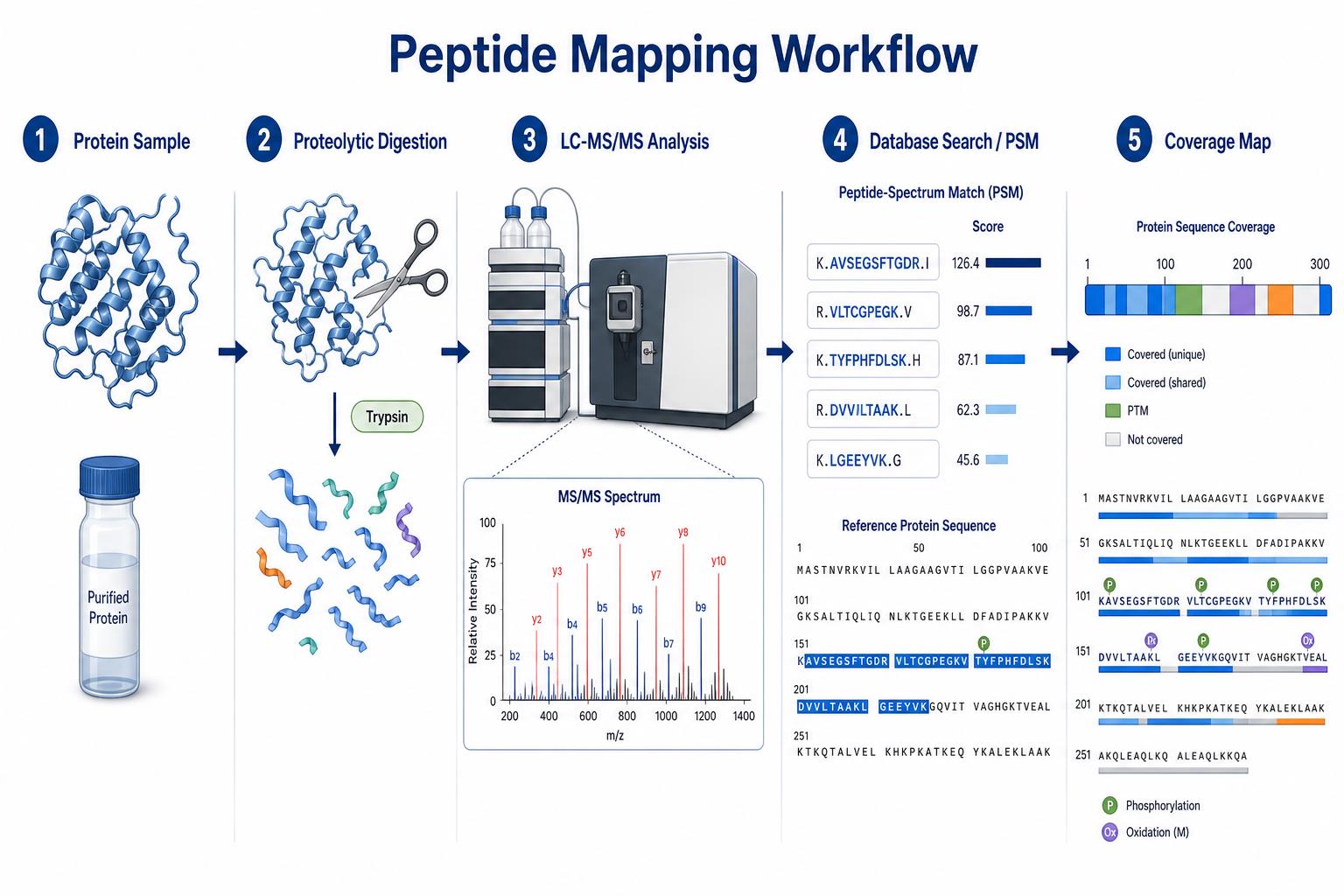
Figure 1. Peptide mapping analysis links proteolytic digestion, LC-MS/MS acquisition, and PSM scoring to a reference-based coverage map.
Multi-enzyme strategies are often used when one protease leaves persistent gaps in coverage or when modified regions require alternate cleavage patterns for confident assignment.
Coverage Maps and PSM Scoring in Brief
Two outputs define most peptide mapping analysis reports.
1. PSM Scoring
Each MS/MS spectrum is scored against candidate peptides from the reference sequence. Higher-confidence matches support stronger residue-level evidence.
2. Sequence Coverage
Identified peptides are mapped along the protein sequence to show observed regions, gaps, and modified sites.
Together, these outputs show not only that the protein is generally consistent with the reference, but which segments are directly supported by MS data.
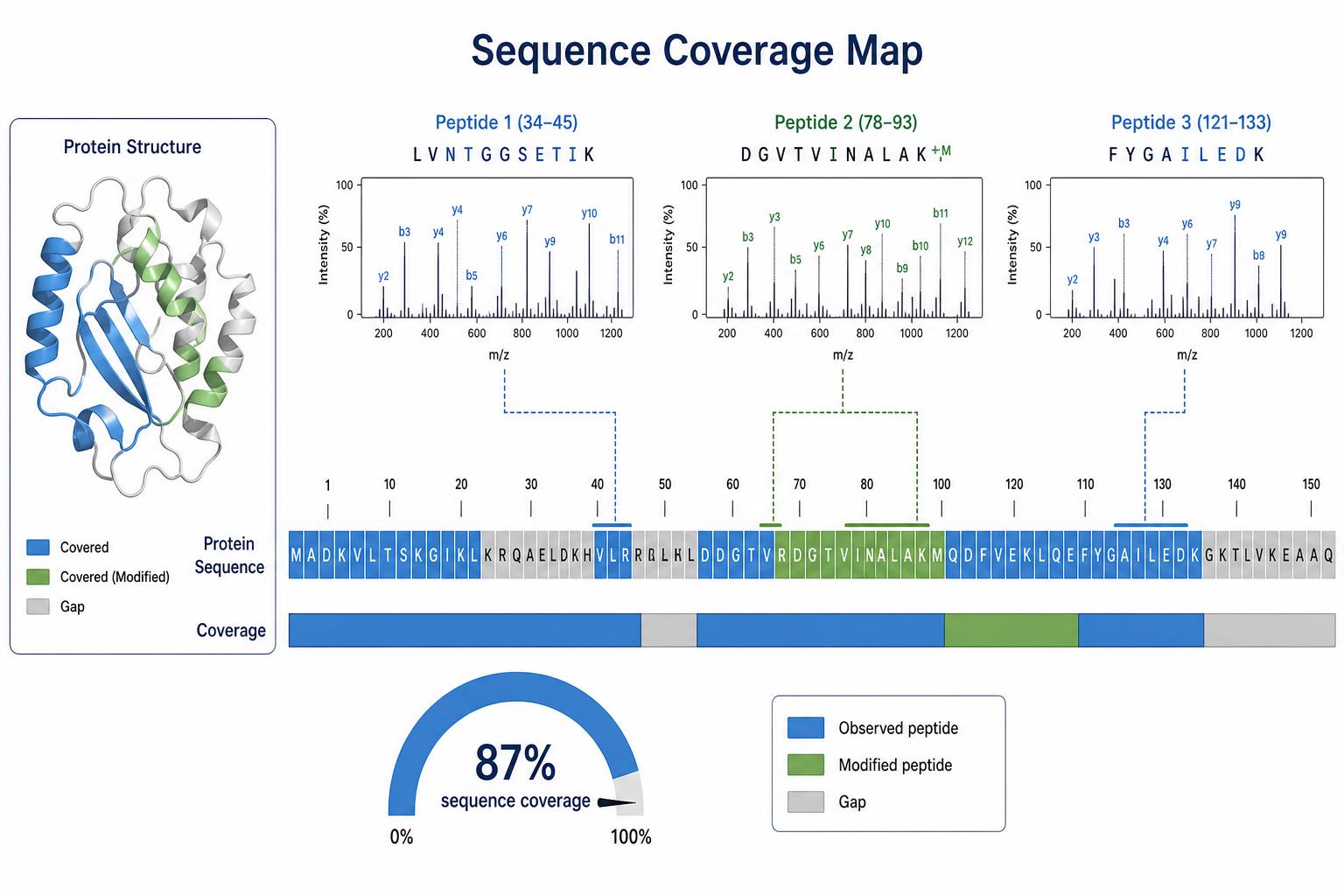
Figure 2. Coverage maps summarize which regions of the reference sequence are supported by observed peptides and confident PSM matches.
Coverage percentage alone can be misleading if critical regions remain unobserved. Review both overall coverage and whether functionally or regulatorily important segments are supported by high-quality peptide evidence.
Technical Advantages and Limitations
1. Technical Advantages
Reference-based confirmation
Directly tests consistency with an expected sequence rather than inferring identity from mass alone.
Residue-level evidence
Coverage maps show where MS support exists across the protein backbone.
PTM site localization
Modified peptides can support phosphorylation, glycosylation, oxidation, and other structure-relevant changes when fragmentation quality is sufficient.
Report-ready documentation
PSM tables and coverage maps are widely used in biopharmaceutical and research QC workflows.
2. Limitations
Requires a reliable reference sequence
Peptide mapping analysis is not the first choice when no trustworthy sequence exists.
Coverage depends on digestion and instrument performance
Hydrophobic, repetitive, or heavily modified regions may remain difficult to observe.
Incomplete digestion creates apparent gaps
Missed cleavages can complicate mapping if not interpreted carefully.
Does not replace higher-order structure analysis
Primary structure confirmation does not by itself prove folding, disulfide pairing, or aggregation state unless specifically designed to address those questions.
Strong PSM scores on a non-representative sample matrix still require biological context. Peptide mapping analysis confirms sequence-level consistency, not functional activity.
Typical Applications
Researchers commonly apply peptide mapping analysis in these settings:
- Recombinant protein QC. Confirm that expressed product matches the intended construct sequence.
- PTM and processing site verification. Identify or confirm modifications and cleavage products at the peptide level.
- Biosimilar and comparability studies. Compare peptide-level profiles between reference and test material.
- Primary structure documentation. Support publication, internal release, or regulatory review with traceable MS evidence.
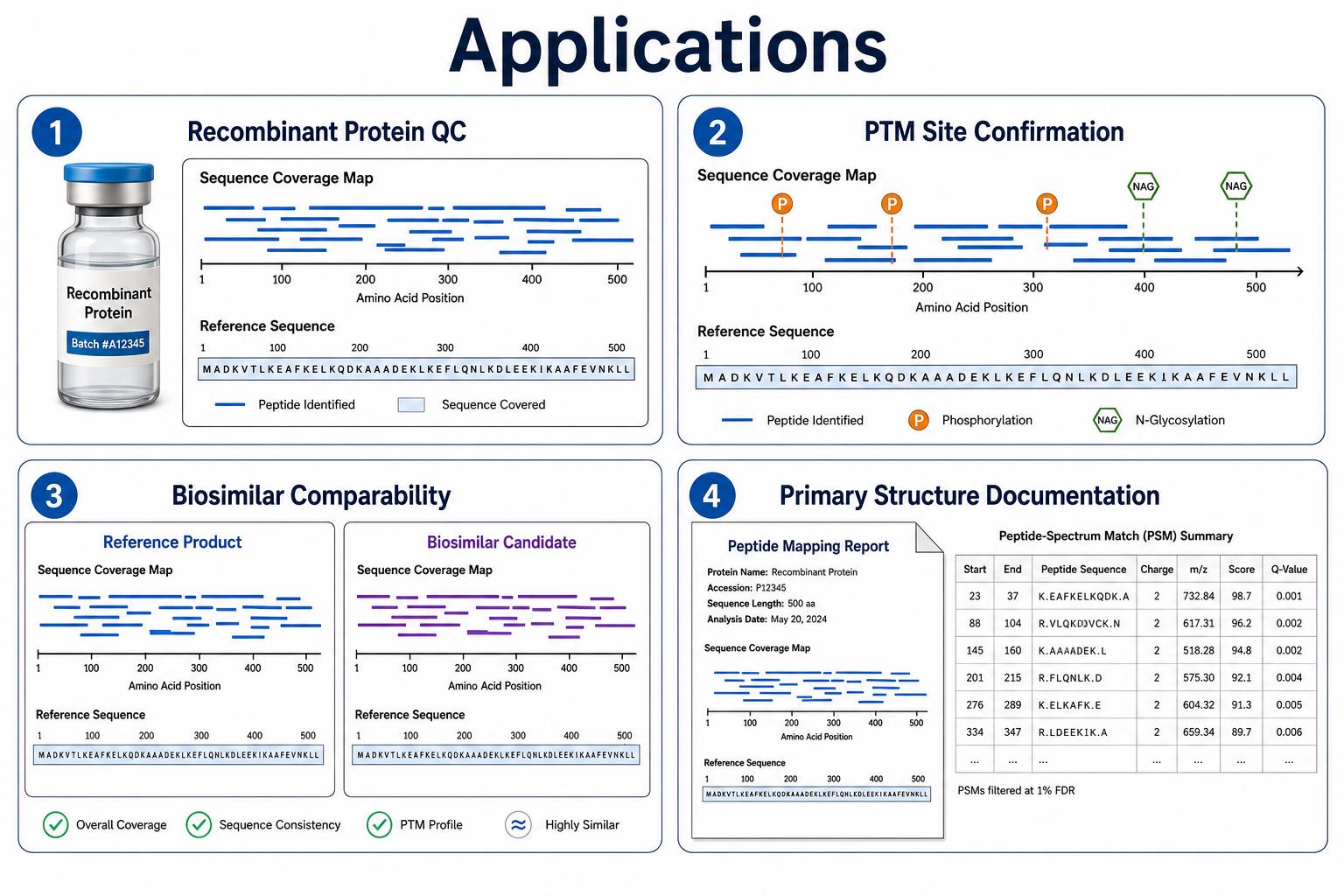
Figure 3. Recombinant QC, PTM confirmation, biosimilar comparability, and primary structure documentation are common peptide mapping analysis applications.
Sample and Project Requirements
Reliable peptide mapping analysis depends on sample quality and project definition at submission.
|
Requirement |
Why It Matters |
|---|---|
|
Reference protein sequence |
Drives in silico digest and PSM search |
|
Sample purity |
Contaminants add false peptide matches and reduce effective coverage |
|
Known or expected PTMs |
Affects search parameters and interpretation |
|
Enzyme strategy |
Determines peptide length distribution and coverage pattern |
|
Coverage expectation |
Defines whether single- or multi-enzyme mapping is needed |
|
Reporting format |
QC, comparability, or research documentation may require different deliverables |
Feasibility review before digestion helps avoid analyzing a sample that purity or sequence ambiguity cannot support.
Expected Deliverables
Useful peptide mapping analysis reports often include:
- PSM table with peptide sequences, scores, and modification assignments
- sequence coverage map aligned to the reference protein
- summary of observed PTMs or sequence variants
- comments on unobserved regions or low-confidence matches
- method summary covering enzyme, LC-MS/MS, and search parameters
Define coverage and documentation depth during scoping. A research confirmation project may require a concise coverage map, while a biopharmaceutical program may require fuller method and data traceability.
For comparability studies, align on reference material, digestion conditions, and reporting format before sample submission so peptide-level differences can be interpreted consistently.
Frequently Asked Questions
1. What is the difference between peptide mapping and peptide mapping analysis?
Usage varies, but both terms generally refer to reference-based confirmation of protein primary structure through proteolytic digestion and LC-MS/MS peptide identification.
2. How much sequence coverage is enough?
Depends on project goal. Many QC workflows target high coverage of the full sequence, but the critical requirement is often coverage of regions that matter for identity, modification, or regulatory review.
3. Can peptide mapping analysis identify PTMs?
Yes, when modified peptides are detected and fragmentation supports site localization.
4. Does peptide mapping analysis require a pure protein?
High purity improves confidence. Complex mixtures can be analyzed, but contaminating proteins may contribute unrelated peptides.
5. Is peptide mapping analysis the same as de novo sequencing?
No. Peptide mapping analysis matches observed peptides to a known reference. De novo sequencing is used when no reliable reference exists.
Conclusion
Peptide mapping analysis provides reference-based primary structure confirmation by linking proteolytic digestion, LC-MS/MS data, and PSM scoring to a sequence coverage map. When a trustworthy reference sequence exists and residue-level evidence is required, this workflow offers a direct route to QC-ready documentation.
For enzyme selection, coverage mapping, and report-ready peptide mapping analysis, MtoZ Biolabs provides Peptide Mapping Analysis Service with feasibility review before sample submission. Contact the technical team to evaluate reference sequence, sample purity, and coverage requirements.
How to order?




