






Non-Reducing Peptide Mapping vs. Intact Mass Analysis for Disulfide Bond Mapping
Introduction
Disulfide bond mapping can be approached in more than one way, and two methods often appear in the same project discussion: non-reducing peptide mapping and intact mass analysis. Both are mass spectrometry-based, both relate to disulfide architecture, yet they answer different questions. A biologics team may request intact mass screening when what the comparability decision actually requires is residue-level disulfide assignment. Another group may invest in full non-reducing LC-MS/MS mapping when a rapid intact mass check would have identified whether deeper analysis was needed.
Non-reducing peptide mapping and intact mass analysis are complementary rather than interchangeable for disulfide bond mapping. Non-reducing peptide mapping detects disulfide-linked peptides after proteolytic digestion and supports cysteine-pair assignment at peptide resolution. Intact mass analysis measures the mass of the whole protein or major subunits and can reveal global disulfide-related heterogeneity or mass shifts without assigning every bond.
Understanding the comparison helps teams define the right scope before sample preparation, method selection, and reporting begin.
When Teams Compare These Two Approaches
This comparison usually arises when a disulfide mapping project has been scoped too broadly or when stakeholders expect one method to deliver the output of the other.
Common scenarios include early antibody characterization, where teams must decide between rapid intact mass screening and full non-reducing peptide mapping; comparability review after a process change, where a mass shift is observed and the next step must be defined; investigation of unexpected product mass or aggregation, where disulfide scrambling is suspected; CMC documentation planning, where reporting depth must match regulatory or internal QC expectations; and resource-limited development stages, where method cost and turnaround must be balanced against connectivity detail required.
In each case, the decisive factor is whether the project requires global disulfide-related mass evidence or site-specific cysteine-pair assignment.
Four Comparison Dimensions That Matter Most
A useful comparison should focus on the analytical question rather than platform branding alone.
Primary question addressed.
Non-reducing peptide mapping asks which cysteine pairs are linked. Intact mass analysis asks whether the overall mass distribution is consistent with expected disulfide-related forms.
Level of structural detail.
Peptide mapping provides residue-level connectivity evidence when disulfide-linked peptides are recovered and validated. Intact mass analysis provides global or subunit-level heterogeneity information without assigning each bond.
Typical sample and workflow context.
Non-reducing peptide mapping requires controlled digestion, LC separation, and often MS/MS validation. Intact mass analysis requires less digestion but may not resolve all connectivity details in complex products.
Expected deliverable.
Peptide mapping delivers connectivity maps and supporting linked-peptide evidence. Intact mass analysis delivers mass profiles, isoform distributions, and screening-level comparability data.
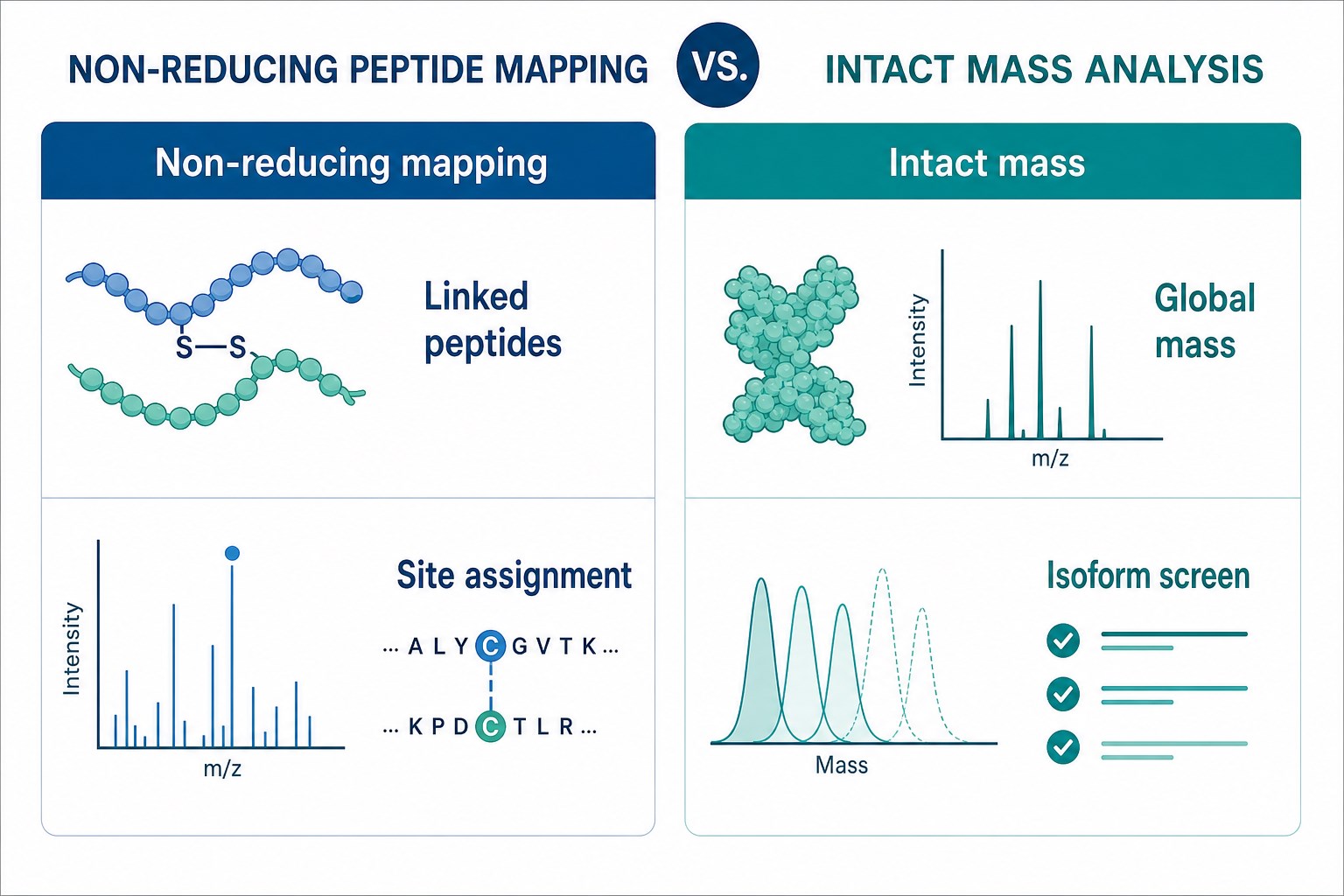
Figure 1. Non-reducing peptide mapping and intact mass analysis differ in detail level, workflow, and deliverable type for disulfide bond mapping.
How Non-Reducing Peptide Mapping Works for Disulfide Mapping
Non-reducing peptide mapping digests the protein without reducing disulfide bonds, separates the resulting peptides by liquid chromatography, and analyzes them by LC-MS/MS. Disulfide-linked peptides remain connected and appear as crosslinked species with mass and retention behavior distinct from reduced counterparts.
The strength of this approach is direct peptide-level connectivity evidence when disulfide-linked peptides are recovered and MS/MS validation is applied. It is widely used for monoclonal antibodies, fusion proteins, and other biotherapeutics where specific interchain and intrachain bonds must be documented.
The main limitation is technical difficulty. Large or poorly ionizing linked peptides, scrambling during prep, and ambiguous spectra can leave some bonds unsupported even when workflow design is sound.
How Intact Mass Analysis Works for Disulfide Mapping
Intact mass analysis measures the mass of the intact protein or major subunits under native or partially reduced conditions without full proteolytic digestion. Disulfide-related heterogeneity appears as mass differences among coexisting forms, such as variants linked to glycosylation, clipping, or disulfide-associated mass shifts.
The strength of intact mass analysis is speed and global overview. It supports rapid comparability screening, isoform detection, and decision-making about whether deeper non-reducing peptide mapping is warranted.
The main limitation is resolution. Intact mass analysis alone usually cannot assign which specific cysteine residues are linked, especially in multi-chain or multi-domain products with several possible pairings.
Related Services
Comprehensive Peptide Mapping Service
Disulfide Bond Analysis Service
Protein Disulfide Bond Analysis Service
Primary Structure Analysis Service
Researchers comparing non-reducing peptide mapping and intact mass analysis for disulfide bond mapping can consult MtoZ Biolabs to review product format, project goal, and the reporting depth required.
Side-by-Side Method Comparison
The table below summarizes common differences relevant to disulfide bond mapping projects.
|
Feature |
Non-Reducing Peptide Mapping |
Intact Mass Analysis |
|---|---|---|
|
Primary output |
Disulfide-linked peptide assignments |
Global mass profile and isoform distribution |
|
Connectivity detail |
Residue-level when validated |
Usually global, not site-specific |
|
Workflow complexity |
Higher: digest, LC, MS/MS, review |
Lower: direct mass measurement |
|
Best for site assignment |
Yes |
Limited |
|
Best for rapid lot screen |
Moderate |
Yes |
|
Scrambling sensitivity |
High during digestion prep |
Lower, but conformational heterogeneity remains |
|
Typical biologics use |
CMC, comparability, investigation |
Early screen, trend monitoring |
|
Orthogonal value to the other |
Provides site detail after mass shift |
Provides global context before deep mapping |
Neither method replaces the other in many development programs. Intact mass can screen; non-reducing mapping can assign.
Decision Workflow: Which Method Fits the Project Goal
A practical decision workflow helps teams avoid method mismatch.
Define the disulfide mapping goal first: confirmation of specific bonds, rapid comparability screen, or investigation of a mass anomaly. Review product format and complexity, including number of chains, hinge architecture, and known isoforms. Select intact mass analysis when a global mass shift or isoform change must be detected quickly with minimal sample processing. Select non-reducing peptide mapping when residue-level connectivity evidence is required for identity, comparability, or CMC documentation. Combine both when intact mass identifies a change that must be localized by peptide-level mapping, or when a characterization package needs both global and site-specific evidence.
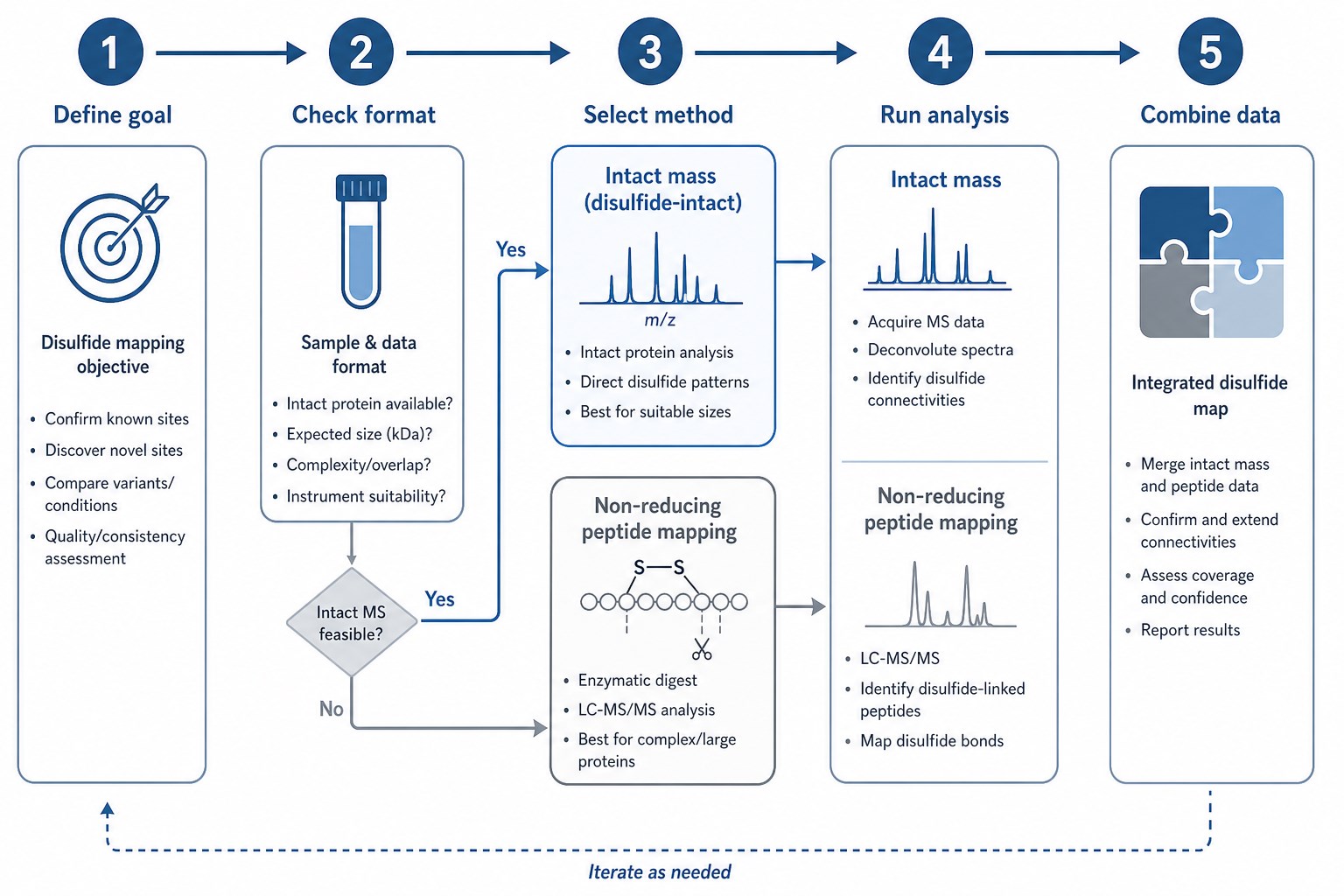
Figure 2. Method selection should follow project goal, product format, and required reporting depth for disulfide bond mapping.
Use Cases Where Each Method Fits Best
Different project types favor different method emphasis.
Site-specific disulfide confirmation for antibodies and fusion proteins favors non-reducing peptide mapping with MS/MS validation because bond-level evidence is usually required.
Rapid lot-to-lot screening or early development monitoring may begin with intact mass analysis to detect global shifts before committing to full mapping.
Comparability after process change often benefits from intact mass as an initial screen, followed by non-reducing mapping if a disulfide-related difference is suspected.
Combined characterization packages for CMC or regulatory support frequently include both intact mass context and peptide-level connectivity documentation.
Investigation of scrambling or mispairing usually requires non-reducing mapping because intact mass alone rarely identifies the affected cysteine pairs.
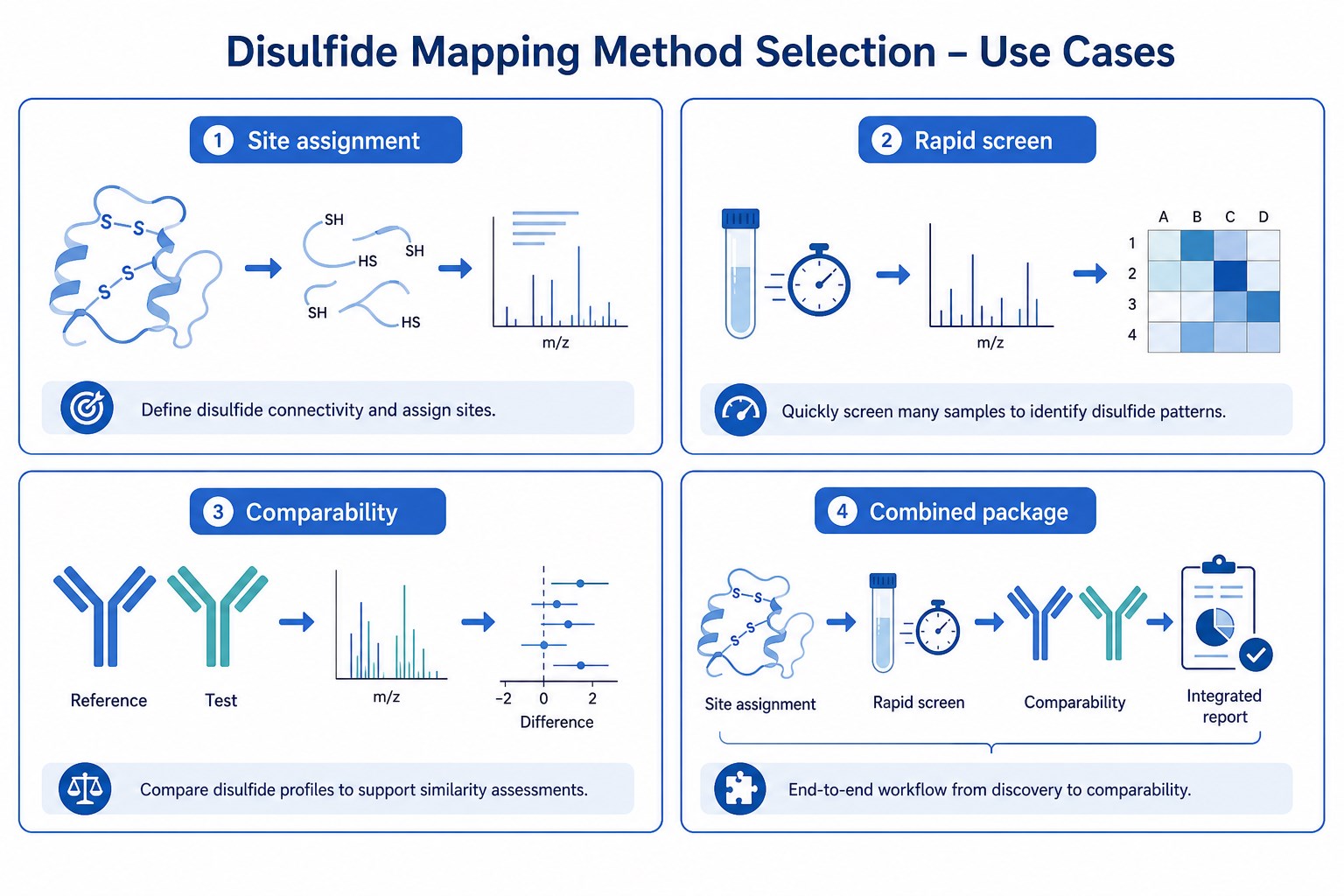
Figure 3. Method choice depends on use case, from site assignment and rapid screening to comparability and combined characterization packages.
Core Strengths and Limits of Each Approach
Non-reducing peptide mapping
Strengths
Provides direct disulfide-linked peptide evidence when workflows are controlled and MS/MS validation is applied. Supports residue-level reporting for CMC and comparability. Integrates with standard bottom-up biologics characterization.
Limits
More complex workflow with higher scrambling risk during prep. Large linked peptides may be difficult to assign confidently. Requires expert review for hinge and interchain bonds.
Intact mass analysis
Strengths
Fast global overview of mass heterogeneity and isoform distribution. Useful for screening and trend monitoring with lower method burden. Helpful for deciding whether deeper mapping is needed.
Limits
Usually cannot assign specific cysteine pairs. May not distinguish all disulfide-related changes from glycosylation, clipping, or other mass modifiers without follow-up. Limited site-specific value alone for disulfide documentation.
Common Selection Mistakes to Avoid
Several mistakes recur when teams choose between these methods.
Using intact mass alone when a comparability or CMC decision requires site-specific disulfide assignment.
Ordering full non-reducing mapping for every lot when intact mass screening would detect global change more efficiently.
Interpreting intact mass shifts as specific bond changes without peptide-level follow-up.
Assuming non-reducing mapping is unnecessary because intact mass appears unchanged, even when low-abundance isoforms or localized scrambling may be missed.
Failing to control sample handling in non-reducing workflows and then comparing results to intact mass data generated under different conditions without context.
Avoiding these mistakes often saves time and produces clearer disulfide mapping conclusions.
Frequently Asked Questions
1. What is the main difference between the two methods?
Non-reducing peptide mapping assigns cysteine pairs at peptide level. Intact mass analysis provides global mass and isoform information without usually assigning each bond.
2. Can intact mass analysis replace non-reducing peptide mapping?
Usually not when site-specific disulfide evidence is required. Intact mass is better suited to screening and global comparability.
3. When should both methods be used together?
When a program needs rapid global monitoring plus site-specific connectivity documentation, or when intact mass detects a shift that must be localized by peptide mapping.
4. Which method is better for monoclonal antibodies?
Non-reducing peptide mapping is better for bond assignment. Intact mass is useful for rapid isoform and mass screening.
5. Which method is more sensitive to sample prep artifacts?
Non-reducing peptide mapping is more sensitive to scrambling and partial reduction during digestion prep.
6. Which deliverable is more suitable for CMC documentation?
Non-reducing peptide mapping with validated MS/MS evidence is generally more suitable when residue-level disulfide documentation is required.
Conclusion
Non-reducing peptide mapping and intact mass analysis serve different but complementary roles in disulfide bond mapping. Peptide mapping delivers site-specific connectivity evidence when disulfide-linked peptides are recovered and validated. Intact mass analysis delivers a fast global view of mass heterogeneity and isoform behavior that can guide whether deeper mapping is needed.
The best project design matches method to decision. Use intact mass for screening and global comparability signals. Use non-reducing peptide mapping when cysteine-pair assignment is required for identity, investigation, or CMC support. Many biologics programs benefit from combining both in a staged workflow rather than treating them as interchangeable alternatives. Teams planning disulfide bond mapping can contact MtoZ Biolabs to review product format, analytical goal, and the method combination best suited to their characterization program.
How to order?




