






Neuropeptidomics Ion Mobility Spectrometry Service
Neuropeptidomics is the systems biology branch focused on studying the composition, expression patterns, and functional states of endogenous neuropeptides in the nervous system. Neuropeptides play key roles in regulating pain, mood, energy metabolism, and neurodevelopment. They are characterized by their precise spatiotemporal expression, diverse modifications, and dynamic abundance. Neuropeptidomics uses high-resolution mass spectrometry to directly detect and quantify peptides in brain tissue, neurons, or body fluids, providing essential support for neurodegenerative disease research, biomarker discovery, and drug target identification.
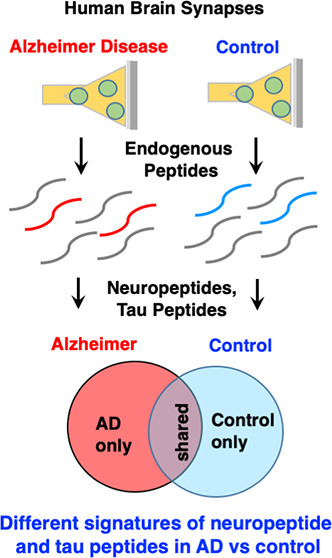
Podvin, S. et al. ACS Chem Neurosci. 2022.
Figure 1. Application of Neuropeptidomics in Neurodegenerative Disease Research
Ion mobility spectrometry–mass spectrometry (IMS-MS) provides a novel structural separation dimension for neuropeptide research. IMS separates charged ions based on their mobility in an inert gas under the influence of an electric field. Neuropeptides exhibit different migration times due to differences in their conformation, size, and charge, which can be further converted into collision cross section (CCS) values. This parameter helps assess structural differences among peptides, contributing to the identification of key molecular differences in neuroregulatory networks.
MtoZ Biolabs is a leading provider of mass spectrometry-based multi-omics services. With advanced IMS-MS platforms, we offer Neuropeptidomics Ion Mobility Spectrometry Service to provide precise and high-throughput structural and quantitative information on neuropeptides, aiding in the advancement of neuroscience, psychiatric disorders, and metabolic regulation studies.
Services at MtoZ Biolabs
MtoZ Biolabs offers the following Neuropeptidomics Ion Mobility Spectrometry Service:
1. Neuropeptide Qualitative Analysis: Identification of endogenous neuropeptides expressed in tissue, brain regions, or neuronal samples, including mature peptides, precursor peptides, and their modified forms.
2. Neuropeptide Quantitative Analysis: Comparison of neuropeptide expression levels under different experimental conditions or disease states to identify potential biomarkers.
3. Peptide Isomer Separation and Conformational Analysis: Assessment of conformational changes using CCS data to assist in functional mechanism inference.
4. Neuropeptide Post-translational Modification (PTM) Detection: Identification of modifications in neuropeptides, such as phosphorylation, sulfation, and acetylation.
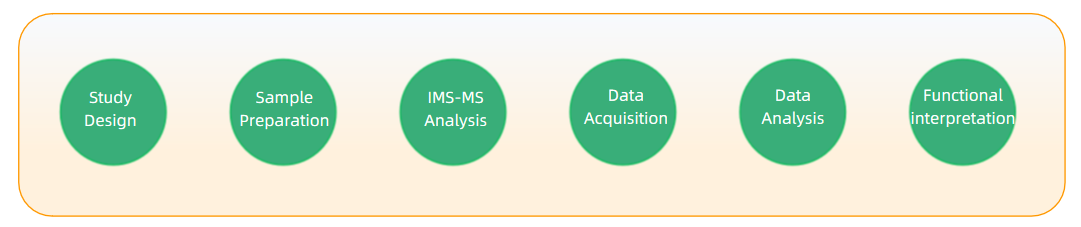
Analysis Workflow
To ensure completeness and reproducibility, we follow the standard process outlined below:
Service Advantages
1. Advanced Instrumentation
MtoZ Biolabs is equipped with multiple high-performance ion mobility spectrometry systems, including Bruker timsTOF Pro, Waters SYNAPT G2-Si, and Agilent 6560. These systems, integrated with nano-LC systems, ensure the accurate capture of neuropeptides in various conformations and modifications, significantly enhancing the reliability of both qualitative and quantitative results.
2. Wide Range of Sample Types
The Neuropeptidomics Ion Mobility Spectrometry Service is compatible with various neuro-related samples, including brain tissue homogenates, cerebrospinal fluid, cell lysates, plasma, and exosome-derived samples. This service is suitable for both basic research and translational studies. Whether samples are sourced from animal models, human tissues, or cell cultures, we can optimize the processing workflow to ensure peptide extraction integrity and representativeness.
3. High Sensitivity
By combining IMS with high-resolution mass spectrometry, we significantly enhance detection sensitivity while improving resolution. This enables the detection of low-abundance neuropeptides, particularly useful in early-stage pathology studies or fine brain region analysis. Even in high-background noise environments, we ensure accurate identification and relative quantification of peptides.
4. Transparent Pricing
MtoZ Biolabs adheres to an open and transparent service model, providing detailed quotes and project flow explanations. Clients can choose service combinations according to their budget, and we support phased billing and data delivery. This ensures a clear and traceable service experience, avoiding hidden costs and redundant investments.
5. Experienced Team
We have a multidisciplinary team of mass spectrometry analysts, neurobiologists, and bioinformatics engineers, all of whom are experienced in neuropeptide research. From project design and sample preparation to data analysis, we offer personalized technical consultation and optimization suggestions, helping clients efficiently advance their research and enhance publication potential.
Applications
The Neuropeptidomics Ion Mobility Spectrometry Service is applicable in several research fields, including but not limited to:
1. Neurodegenerative Disease Mechanism Studies (e.g., Alzheimer's, Parkinson's)
2. Behavioral Science and Neurodevelopment Research
3. Stress, Circadian Rhythm, and Hormonal Regulation Mechanisms Exploration
4. Discovery and Validation of Neuropeptide Biomarkers
5. Drug Mechanism and Neuropeptide Target Screening
FAQs
Q1: What if there is background interference in the sample?
A1: IMS-MS has strong background noise elimination capabilities. We recommend providing purified supernatants or homogenates to improve the signal-to-noise ratio.
Q2: Do you provide CCS data?
A2: Yes. We provide peptide lists with Collision Cross Section (CCS) values, assisting in conformational analysis and isomer identification.
Sample Submission Suggestions
1. Sample Types: Tissue homogenates, brain region extracts, cerebrospinal fluid, cell lysates, etc.
2. Recommended Amount: Tissue ≥100 mg, liquid samples ≥200 μL (can be adjusted based on the project)
3. Shipping: Dry ice shipping to avoid freeze-thaw cycles
4. Storage: Store at -80°C to prevent proteinase or other degradation risks
We also offer sample handling advice and customized submission guidelines during the consultation phase.
Deliverables
1. Neuropeptide Identification List (including sequence, modification sites, migration time, CCS, etc.)
2. Quantitative Analysis Results (comparisons across different treatment groups)
3. Peptide CCS Values and Conformational Classification
4. Chromatographic and Mass Spectrometry Data Visualizations
5. Complete Raw Mass Spectrometry Data and Processed Documents
MtoZ Biolabs is committed to providing high-quality mass spectrometry solutions for neuro-science research. Our Neuropeptidomics Ion Mobility Spectrometry Service integrates advanced IMS-MS platforms, rigorous experimental workflows, and standardized data interpretation to support fundamental research, preclinical studies, and drug development.
Please contact us for personalized project consultation and pricing services, helping you efficiently obtain precise and publishable research data.
How to order?




