






N-Terminal Sequencing: Approaches for Confirming Mature Protein Starts and Processing Sites
Introduction
Many proteins do not begin with the first residue encoded in the gene. Signal peptides are removed during secretion. Propeptides may be cleaved before the mature form becomes active. Recombinant expression systems can leave unintended N-terminal extensions or fail to remove leader sequences as expected. In each case, the biologically relevant question is not only what the gene encodes, but where the mature protein actually starts.
N-terminal sequencing answers that question by reading amino acid order directly from the accessible N-terminus of a purified protein or peptide. The method is widely used to confirm mature starts, verify leader removal, document cleavage events, and support biopharmaceutical identity testing when terminal evidence is required. Unlike whole-protein sequencing, the workflow is focused on the first residues at the protein N-terminus rather than on reconstructing the full primary structure.
Understanding the available approaches, sample requirements, and interpretation limits helps researchers choose the right terminal analysis strategy before samples are submitted. Sequential Edman chemistry remains the classical route for direct residue-by-residue readout, while MS- based terminal workflows can complement or extend terminal confirmation in selected projects.
Related Services
| Research Need | Recommended Service Direction |
| Direct N-terminal residue readout | N-Terminal Sequencing Service |
| Classical Edman-based terminal analysis | Protein Sequencing Service by Edman Degradation |
| Broader protein sequence confirmation | Protein Sequencing Service by Mass Spectrometry |
| Terminal evidence within peptide mapping | Peptide Mapping Service |
| C-terminal complement to N-terminal data | C-Terminal Sequencing Service |
For projects where the N-terminus may be blocked, the sample is impure, or cleavage-site interpretation is uncertain, MtoZ Biolabs can help evaluate whether Edman chemistry, MS-based terminal analysis, or peptide mapping best fits the reporting goal.
What Terminal Analysis Means for Mature Starts
In practice, terminal readout determines the amino acid sequence at the beginning of a protein chain as it exists in the purified sample. That observed start may differ from the translated open reading frame because cellular or recombinant processing has removed a leader sequence, propeptide, or other N-terminal extension.
For mature start confirmation, the key deliverable is usually a short N-terminal sequence that can be compared with the expected mature form. For cleavage-site validation, the same readout is interpreted against predicted products from signal peptidase activity, propeptide removal, or other proteolytic maturation steps. A match supports the proposed processing model. A mismatch may indicate incomplete cleavage, alternative processing, contamination, or an expression construct issue.
This workflow is therefore a targeted identity assay. It does not by itself prove biological activity, folding state, or full-length integrity. It provides direct primary-structure evidence at the protein N-terminus, which is often essential for clone verification, lot release documentation, and troubleshooting recombinant expression.
Core Principles of Terminal Sequencing
1. Edman Degradation
Edman chemistry is the best-known approach for reading the protein N-terminus. In each cycle, the N-terminal residue is selectively derivatized, cleaved as a phenylthiohydantoin amino acid derivative, identified by chromatography, and removed so the next cycle can proceed. Repeated cycles yield a stepwise readout from the N-terminus outward.
This chemistry is powerful because it reads the actual mature terminus without requiring prior knowledge of the full protein sequence. It is especially valuable when the goal is to confirm the first five to ten residues of a purified protein or peptide. Success depends on an unblocked N- terminus, sufficient sample amount, and purity high enough that one dominant N-terminal sequence is present.
2. MS-Based Terminal Approaches
MS-based workflows can support N-terminal confirmation in complementary ways. Intact mass measurement may reveal whether the observed mass matches the predicted mature start. LC- MS/MS analysis of N-terminal peptides generated by targeted digestion can localize terminal sequence evidence within a larger protein. Some projects combine limited Edman readout with peptide mapping to strengthen cleavage-site interpretation.
MS-based routes are not always interchangeable with Edman chemistry. They are often most useful when the project already includes a reference sequence, when the sample cannot be analyzed by Edman because of blocking modifications, or when terminal evidence must be integrated into a broader protein characterization package.
3. N-Terminus Accessibility and Blocking
Not every protein can be sequenced from cycle one. N-terminal acetylation, pyroglutamate formation, and some other modifications block Edman chemistry. Contaminating proteins with free N-termini can obscure the target signal. Low sample amount may limit the number of readable cycles. Feasibility review should therefore consider whether the mature start is chemically accessible and whether purification is sufficient for unambiguous readout.
Standard Terminal Sequencing Workflow
A robust project follows a defined sequence of steps. Each step affects whether the observed terminus can be linked confidently to a mature start or cleavage site.
1. Project Scoping
Define how many N-terminal residues are required and whether the goal is mature start confirmation, cleavage-site validation, or lot release documentation.
2. Sample Feasibility Review
Assess purity, estimated amount, buffer compatibility, and risk of N-terminal blocking.
3. Sample Preparation
Purify or concentrate the target protein, remove interfering salts or detergents when needed, and verify that a dominant product is present.
4. Method Selection
Choose Edman chemistry, MS-based terminal analysis, or a combined strategy based on accessibility and reporting needs.
5. Cycle-by-cycle or Peptide-level Readout
Generate terminal sequence evidence from the accessible N-terminus.
6. Cleavage-site Interpretation
Compare observed sequence with predicted signal peptide removal, propeptide cleavage, or construct design.
7. Report Delivery
Document residues identified, cycles completed, confidence limits, and recommended follow-up if the terminus is blocked or ambiguous.
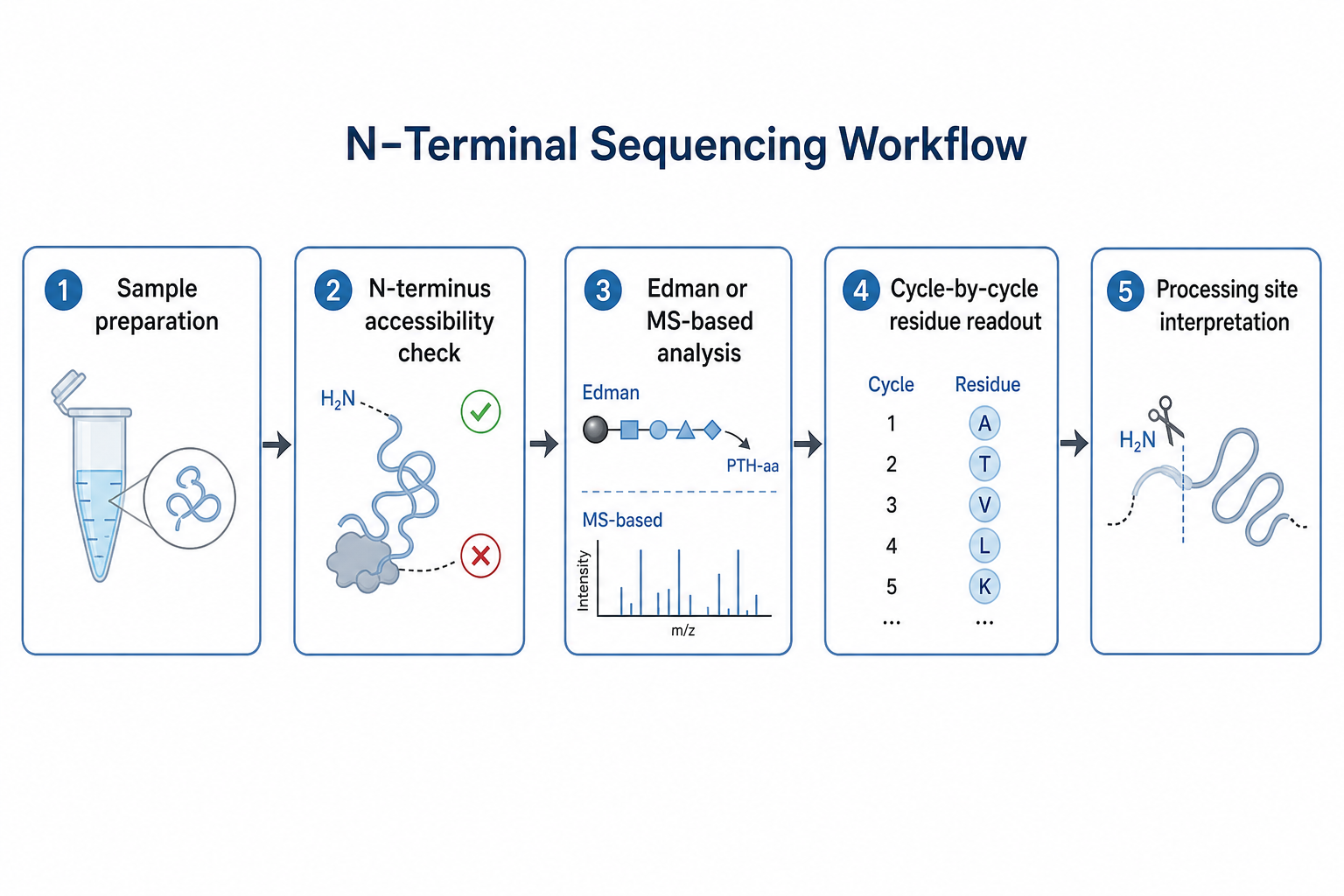
Figure 1. Standard workflow from sample preparation through cleavage-site interpretation
Sample type strongly affects entry point. Purified recombinant protein is the most common starting material for mature start confirmation. Enriched gel bands or HPLC fractions may also be suitable when purity is adequate. Complex mixtures are poor inputs because contaminating N- termini compete for sequencing chemistry or spectral interpretation.
Approaches for Confirming Mature Starts and Processing Sites
Different project goals favor different analytical routes. The table below summarizes common approaches without replacing sample-specific feasibility review.
| Approach | Best Fit | Typical Strength | Main Limitation |
| Edman chemistry | Purified protein with free N- terminus | Direct residue-by- residue readout from the mature terminus | Blocked or modified N- termini may prevent cycle one |
| Intact mass analysis | Known reference with predictable processing | Fast check that observed mass matches mature start | Does not localize sequence when multiple forms overlap |
| N- terminal peptide mapping | Larger proteins with digestion- compatible design | Links terminal residues to internal peptide evidence | Requires suitable enzyme strategy and reference interpretation |
| Combined Edman plus MS | High-stakes QC or ambiguous processing | Orthogonal support for mature start assignment | Higher scope than single- method confirmation |
For leader-removal studies, the observed N-terminal sequence should match the predicted first residue of the mature chain after removal of the signal peptide. For propeptide processing, the readout should begin at the expected mature start rather than at the propeptide N-terminus. When recombinant constructs include affinity tags or secretion leaders, terminal analysis can verify whether those elements were removed as intended.
Sample Requirements
Sample quality is central to successful terminal analysis. Cleaner input improves cycle yield, lowers background from contaminating proteins, and makes cleavage-site interpretation more reliable.
| Sample Factor | Recommended Condition | Why It Matters |
| Purity | Single dominant band or chromatographic peak | Competing N-termini reduce interpretability |
| Sample amount | Enough for planned number of Edman cycles or MS replicates | Low input limits read depth |
| Buffer composition | Volatile or removable salts; limited detergent | Incompatible matrices can interfere with analysis |
| N-terminal state | Free alpha-amino group when Edman is planned | Blocking modifications stop cycle one |
| Reference information | Expected mature start or processing model | Enables cleavage-site confirmation |
| Sample format | Purified protein, validated peptide, or enriched fraction | Defines preparation and feasibility path |
Researchers should share expression system details, predicted leader sequences, and any known modifications when requesting terminal analysis for mature start confirmation.
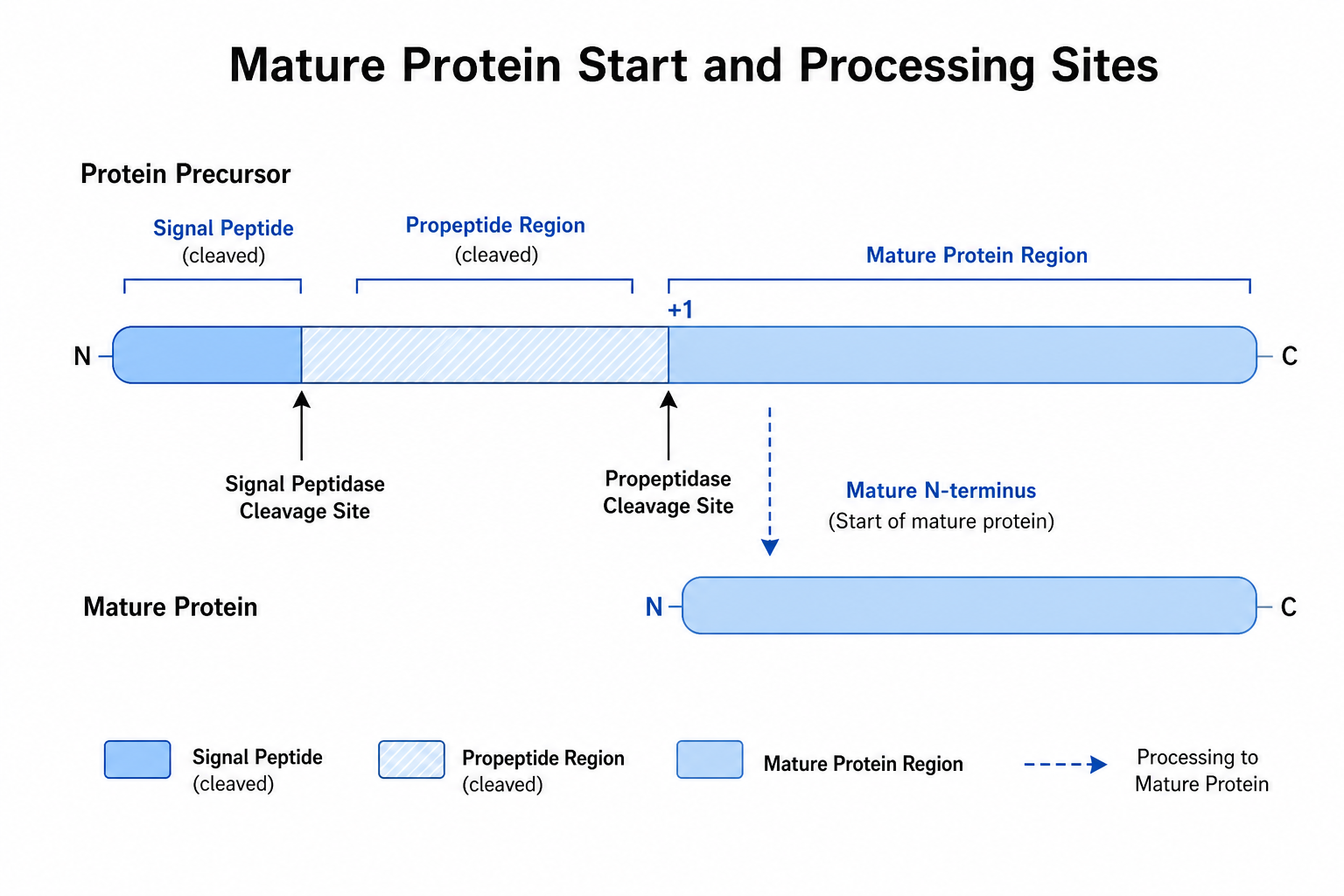
Figure 2. Terminal readout compares observed mature starts with predicted cleavage sites such as signal peptide or propeptide removal
The schematic highlights why terminal analysis is often more informative than gene sequence alone. A correct gene does not guarantee that the purified product begins at the intended mature residue. Direct N-terminal evidence closes that gap.
Core Advantages and Current Limitations
1. Core Advantages
Direct evidence at the protein N-terminus. Terminal readout reports what is present in the sample, not what the construct was designed to express.
Strong fit for cleavage-site confirmation. Observed residues can be mapped directly onto predicted products from secretion leaders, propeptides, or activation steps.
Established role in biopharmaceutical QC. Terminal sequencing supports identity testing, clone selection, and batch documentation when mature start confirmation is required.
Complement to broader protein characterization. N-terminal data can be combined with peptide mapping, intact mass analysis, or C-terminal sequencing for fuller product definition.
2. Current Limitations
Blocked N-termini. Acetylation, pyroglutamylation, and some other modifications may prevent Edman readout unless alternative workflows are used.
Purity dependence. Mixed proteins or poorly resolved bands can produce ambiguous terminal assignments.
Limited read length. Many projects require only the first few residues, but longer N-terminal coverage may be impractical on difficult samples.
Not a substitute for full sequence analysis. Terminal confirmation does not by itself establish complete primary structure or identify internal variants.
Terminal analysis is most valuable when the scientific question is narrowly defined: where does the mature chain begin, and does the observed terminus support the proposed cleavage site?
Applications in Protein Characterization
The workflow supports several recurring characterization scenarios. Teams use it when recombinant expression must be verified, when secretion pathway processing is uncertain, or when regulatory documentation requires terminal identity evidence.
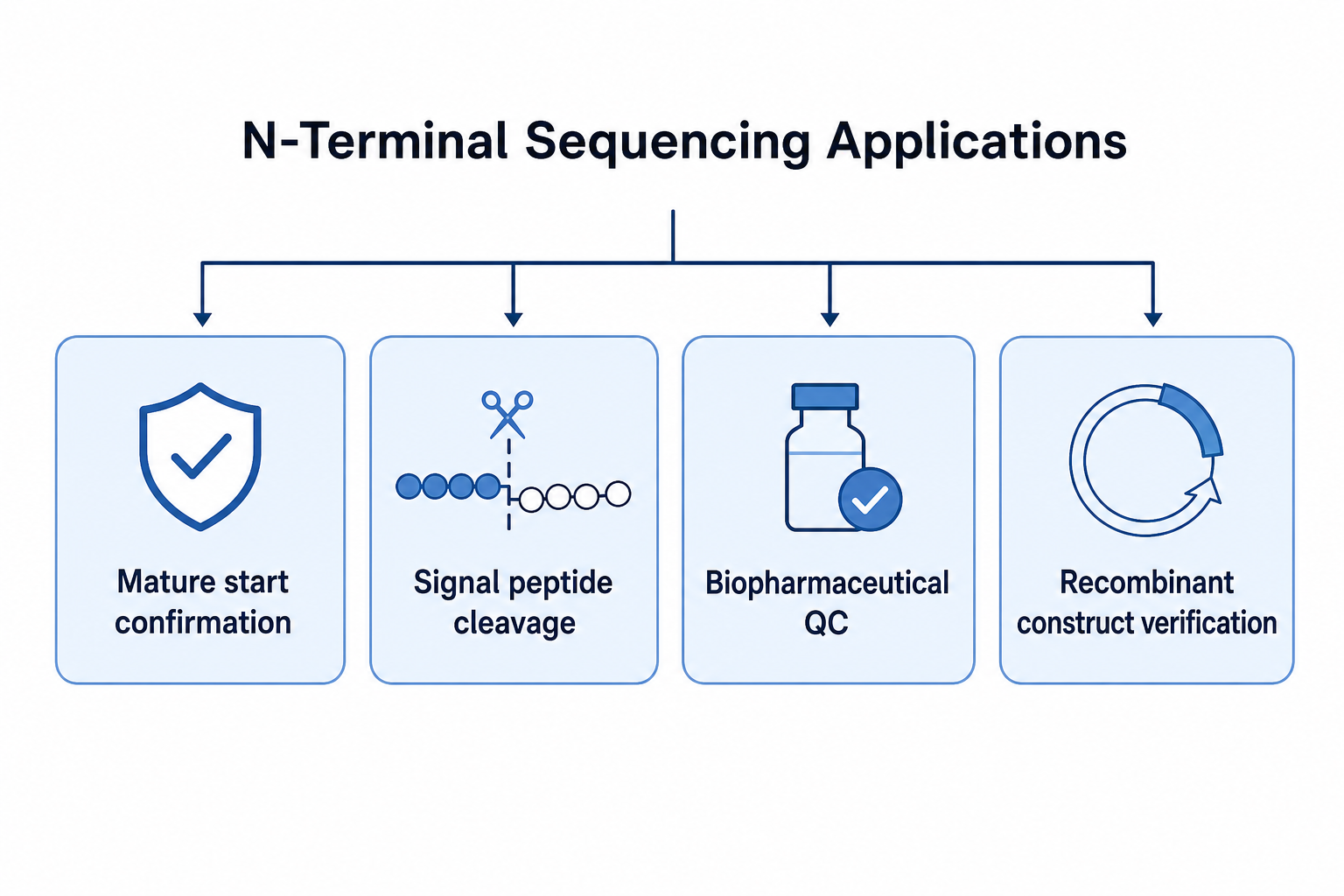 Figure 3. Common applications include mature start confirmation, leader removal validation, biopharmaceutical QC, and recombinant construct verification
| Application Scenario | What Terminal Analysis Provides | Complementary Evidence Often Still Needed |
| Recombinant clone screening | Observed mature start versus expression design | Expression yield and product purity assessment |
| Signal peptide cleavage validation | Direct evidence of leader removal | Sequence prediction and secretion pathway context |
| Propeptide processing studies | Confirmation of mature N- terminal start | Functional assay of activated product |
| Biopharmaceutical lot release | Documented terminal identity for QC records | Peptide mapping or intact mass where required |
| Troubleshooting expression artifacts | Detection of uncleaved tag, leader, or extension | Construct redesign and purification review |
| Biosimilar or comparability review | Terminal consistency across production lots | Broader comparability and glycoform analysis |
These applications show why terminal sequencing is often a targeted step within a broader characterization program rather than a standalone endpoint.
Expected Deliverables and Validation
A useful report should include more than a residue list. Depending on project scope, deliverables may include:
-
number of Edman cycles completed or peptides analyzed
-
observed N-terminal sequence
-
comparison with expected mature start
-
cleavage-site interpretation notes
-
flags for blocked terminus, low yield, or mixed sequence
-
recommendations for orthogonal follow-up when needed
Validation should match the intended use. For clone screening, confirmation of the first few residues may be sufficient. For biopharmaceutical documentation, the report may need clearer traceability, repeat analysis, or support from peptide mapping. When the N-terminus is blocked, validation may shift to MS-based terminal peptide analysis or chemical treatment strategies designed to restore accessibility.
How Terminal Analysis Fits Broader Characterization Programs
Protein characterization often combines multiple evidence types. Peptide mapping may confirm internal sequence coverage. Intact mass analysis may describe product mass and major modifications. N-terminal sequencing adds direct evidence about where the mature chain begins.
The strongest programs define the reporting goal before analysis begins. A project aimed only at verifying removal of a secretion leader requires fewer cycles than a project documenting a disputed cleavage site for regulatory submission. Likewise, a sample with suspected N-terminal heterogeneity may need purification improvement or orthogonal MS support before terminal conclusions are made.
When both termini matter, terminal analysis is commonly paired with C-terminal sequencing or peptide mapping to define the full mature product boundary more completely.
Frequently Asked Questions
1. What is N-terminal sequencing used for?
N-terminal sequencing is used to determine the amino acid sequence at the beginning of a protein and to confirm mature starts, leader removal, and other cleavage events in purified samples.
2. How does Edman degradation support terminal analysis?
Edman chemistry removes and identifies one N-terminal residue per cycle, producing a direct readout from the protein terminus outward. It is widely used when a free N-terminus is present and the sample is sufficiently pure.
3. Can N-terminal sequencing confirm signal peptide cleavage?
Yes. If the observed N-terminal sequence begins at the predicted first residue of the mature protein after leader removal, the result supports correct signal peptide cleavage. A mismatch may indicate incomplete processing or construct design issues.
4. Why can some proteins not be sequenced from the first cycle?
N-terminal blocking modifications, insufficient purity, low sample amount, or competing proteins can prevent successful cycle one or produce ambiguous readout. Feasibility review before submission helps identify these risks.
5. Is N-terminal sequencing enough to characterize an entire protein?
No. It confirms terminal identity and supports cleavage-site interpretation, but it does not replace full protein sequencing, peptide mapping, or functional characterization when complete primary structure or activity evidence is required.
Conclusion
N-terminal sequencing provides direct evidence for mature starts and cleavage sites by reading the accessible N-terminal sequence of a purified product. Sequential Edman analysis remains the classical approach for residue-by-residue terminal readout, while MS-based workflows can complement terminal confirmation when blocking modifications, larger proteins, or broader characterization packages require additional support. Success depends on sample purity, N- terminal accessibility, and clear comparison with the expected mature form. Researchers planning terminal analysis for recombinant verification, secretion processing studies, or biopharmaceutical QC can contact MtoZ Biolabs to review sample suitability, method selection, and the reporting standard best matched to their project.
How to order?




