






MS/MS or MSn Measurement Service
- Food Industry: detection of contaminants, quality control of additives, characterization of nutritional compounds
- Pharmaceuticals: drug metabolism studies, structural verification of active ingredients, impurity profiling
- Chemical Industry: analysis of polymers, fine chemicals, intermediates, and reaction products
- Biotechnology: identification of biomolecules, post-translational modification analysis, biomarker discovery
- Environmental Science: monitoring of pollutants, metabolites, and trace organic compounds
- Comprehensive Experimental Details
- Materials, Instruments, and Methods
- Mass Spectrometry Images
- Data Analysis, Preprocessing, and Estimation (project-dependent)
- Bioinformatics Analysis
- Raw Data Files
Mass spectrometry accurately measures ion mass-to-charge ratios, enabling molecular identification, quantification, and structural analysis. One of the most advanced features of mass spectrometry is tandem mass spectrometry (MS/MS) and multi-stage mass spectrometry (MSn). These approaches extend the capabilities of conventional MS by introducing successive fragmentation steps, providing structural information that is not accessible through single-stage analysis. In MS/MS, selected precursor ions undergo fragmentation to generate product ions, which are analyzed to reveal molecular structure. In MSn, multiple rounds of fragmentation are applied, allowing even deeper insight into complex molecules and subtle structural variations.
The ability to perform MS/MS and MSn measurements is essential for applications such as elucidating molecular structures, mapping protein post-translational modifications, characterizing metabolites, analyzing lipids, and supporting drug discovery. MtoZ Biolabs offers a professional MS/MS or MSn Measurement Service designed to provide accurate, reproducible, and detailed data for a wide spectrum of scientific and industrial needs. By combining advanced mass spectrometry platforms with optimized workflows and expert interpretation, we deliver results that help clients understand molecular structures, verify identities, and explore biological mechanisms with confidence.
Technical Principles
MS/MS and MSn are built upon three fundamental processes: ion selection, ion fragmentation, and detection of resulting product ions. By integrating these steps, MS/MS and MSn provide structural and quantitative information that extends far beyond what can be achieved with single-stage MS.
💠Ion Selection
In the first stage, precursor ions of interest are isolated based on their mass-to-charge ratios (m/z). This selection is achieved using high-performance components such as quadrupoles, ion traps, or Orbitrap analyzers, which ensure that only the target ion enters the subsequent fragmentation stage.
💠Ion Fragmentation
The selected ions undergo controlled fragmentation to generate structurally informative product ions. Common techniques include collision-induced dissociation (CID) and higher-energy collisional dissociation (HCD). Each method provides unique information about molecular substructures and bond connectivity.
💠Multi-Stage Fragmentation (MSn)
Unlike MS/MS, which is limited to a single round of fragmentation, MSn enables sequential fragmentation of product ions. After the first fragmentation event, specific product ions are isolated and subjected to further fragmentation cycles. This iterative approach provides increasingly detailed structural information, particularly useful for deciphering complex architectures of glycans, lipids, metabolites, and modified peptides.
💠Detection and Data Analysis
The fragment ions generated are subsequently measured by high-resolution detectors such as Orbitrap, Quadrupole Time-of-Flight (QTOF), or Fourier Transform Ion Cyclotron Resonance (FTICR) systems. Advanced data acquisition modes, including neutral loss scanning, precursor ion scanning, and multiple reaction monitoring (MRM), facilitate both qualitative structural elucidation and highly sensitive quantitative analysis. The acquired data are processed with specialized bioinformatics software to annotate fragment ions, identify structural features, and generate comprehensive molecular profiles.
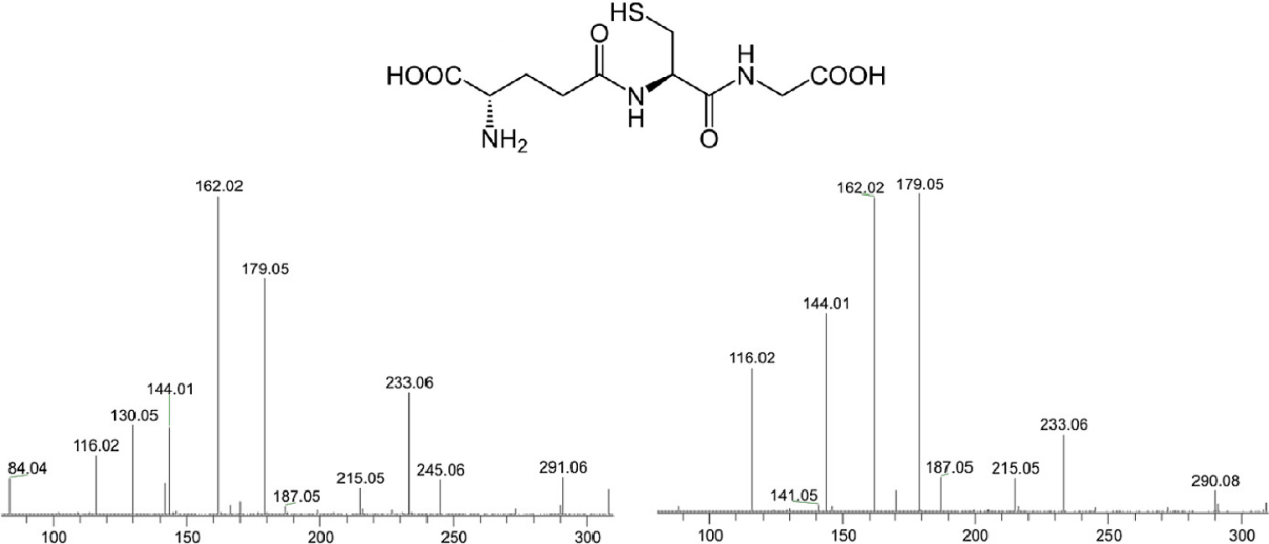
Kasper, P. T. et al. Rapid Commun Mass Spectrom. 2012.
Figure 1. Comparison of MS/MS (Left) and MSn (Right) Fragmentation Spectra of Glutathione
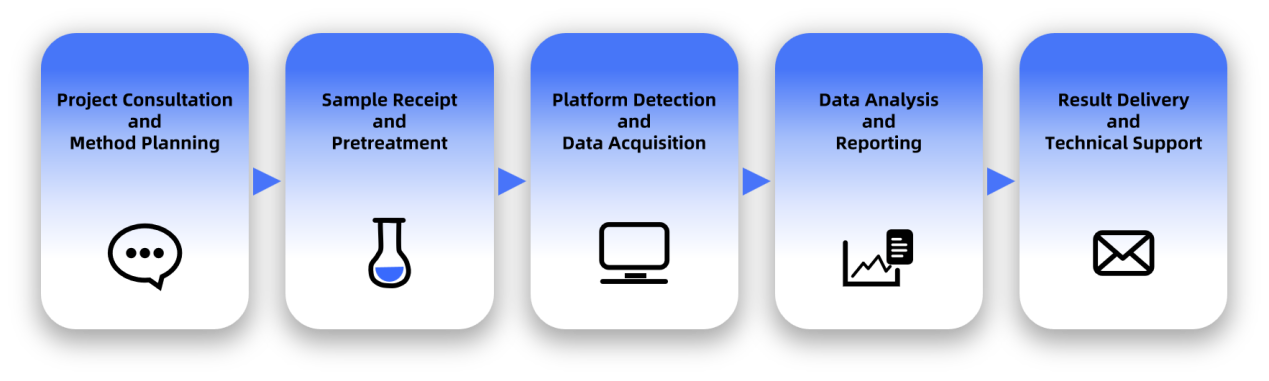
Analysis Workflow
Service Advantages
✅ Extensive experience in MS/MS and MSn applications across proteomics, metabolomics, lipidomics, and glycomics
✅ Ability to resolve complex molecular structures and identify subtle modifications with high accuracy
✅ Flexible workflows tailored to both targeted and untargeted analysis
✅ Strict quality control ensuring reliable, reproducible, and publication-ready results
✅ Professional support from project planning to data interpretation, meeting diverse research and industrial needs
Applications
Sample Submission Suggestions
1. Sample Types
Tissues, biofluids such as serum, plasma, urine, cerebrospinal fluid, cultured cells or lysates, microbial cultures, plant tissues, and purified extracts or fractions.
2. Target Analytes
From the above sample types, we can analyze proteins, peptides, metabolites, lipids, glycans, and other small molecules by MS/MS or MSn.
3. Recommended Amounts
The required amount depends on target analytes, matrix complexity, sensitivity needs, and the selected workflow. Typically, at least 200 μL of liquid sample or 200 mg of solid sample is required. Final quantities will be confirmed during project consultation.
4. Sample Condition
Samples should be free of detergents, salts, and other contaminants that may interfere with ionization.
5. Storage and Transport
Biological samples should be frozen at –80°C and shipped on dry ice. Minimize freeze–thaw cycles.
6. Documentation
Please provide detailed information on sample composition, concentration, and any prior analytical data to facilitate optimal analysis.
Clients are encouraged to contact MtoZ Biolabs for customized sample preparation advice.
Deliverables
How to order?




