






Mitochondrial Proteomics Service: What to Know Before Starting a Project
Before starting a mitochondrial proteomics service project, confirm four practical points: whether your question needs identification, quantification, or both; whether your cells, tissue, or extracted mitochondria meet planning amounts; which acquisition mode fits the cohort; and which deliverables are included versus which functional mitochondrial assays sit outside this proteomics path.
Mitochondrial protein analysis is a mass spectrometry readout of mitochondrial or mitochondria-enriched material. It is not a bundled package of membrane-potential, ROS, respiration, or electron-microscopy assays. Getting that scope clear at kickoff prevents mismatched expectations and keeps the project focused on protein identification and quantitative comparison. Teams preparing a start brief can share sample type, approximate amount, group design, and the claim they need to support with MtoZ Biolabs before the timeline is locked.
Confirm the Scientific Claim First
Write the decision the dataset must support in one sentence. Common mitochondrial proteomics goals include:
- Which proteins are detected in a mitochondrial preparation.
- How mitochondrial-fraction proteins differ between treatment, disease, or genotype groups.
- Which candidates deserve follow-up after a mitochondrial stress or remodeling phenotype is already known from other assays.
If the sentence is about protein presence or abundance change, a mitochondrial proteomics service is on the right track. If the sentence is about proving respiratory-chain activity, membrane potential collapse, ROS burden, permeability transition, or ultrastructure, those endpoints need separate assay plans. They are not substitutes for, or automatic add-ons to, LC-MS/MS proteomics.
That distinction matters because many project briefs mix “mitochondrial function” language with “mitochondrial proteome” language. Confirm which one you are buying before samples move.
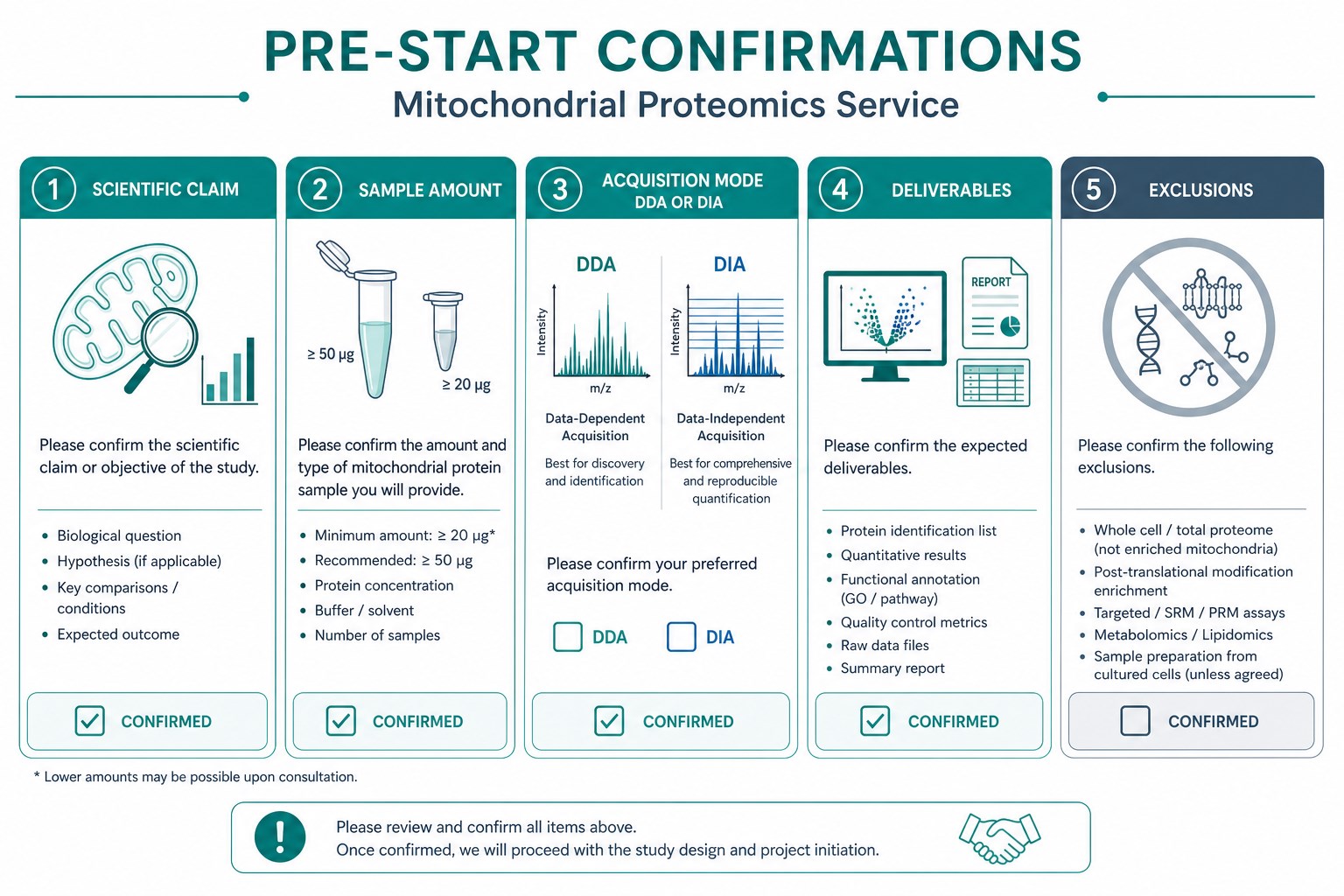
Figure 1. Lock the claim, sample amount, acquisition mode, and deliverable boundaries before kickoff.
Confirm Sample Type and Planning Amounts
Mitochondrial proteomics samples commonly fall into three planning classes. Use the amounts below as planning references from current service guidance, and confirm final targets for your exact matrix and design.
|
Sample class |
Planning amount guidance |
|---|---|
|
Cells |
about 5×10^7 cells per sample |
|
Animal tissue |
about 200 mg per sample |
|
Extracted mitochondrial solution |
protein at least about 50 µg; commonly plan about 80-100 µg; concentration at least about 0.5 µg/µL, commonly plan about 1 µg/µL or higher |
These values are planning anchors, not performance guarantees. Unusual matrices, low-yield isolations, or specialized designs may need a feasibility check before a start date is set. Keep amounts matched across comparison groups so coverage differences are less likely to imitate biological regulation.
Also confirm the physical state of the material: cultured cells, tissue pieces, or already extracted mitochondria. If mitochondria are already isolated, document buffer composition, protein concentration, and how the preparation was made. Feasibility depends on the specific sample set, so edge cases should be reviewed case by case rather than assumed from a generic checklist.
Storage and shipping should protect protein integrity: keep material frozen as required for your preparation, ship on dry ice when appropriate, and avoid unnecessary freeze-thaw. Degraded or poorly tracked samples are weak inputs even when the nominal amount looks adequate.
Confirm Acquisition Mode and Study Structure
Mitochondrial protein analysis can be run in discovery modes suited to different cohort needs. Current platform labeling for this service line includes Orbitrap Exploris 480, timsTOF Pro, and Orbitrap Astral. Software labeling follows acquisition mode: DDA with MaxQuant or Proteome Discoverer, and DIA with Spectronaut or DIA-NN. Exact software versions are not part of the external package description.
Match mode to design:
- Use a DDA-oriented path when flexible discovery identification is the priority.
- Use a DIA-oriented path when consistent cohort-wide quantification is the priority.
- Build group labels, biological replicates, and balanced run order whenever differential claims are expected.
If you only need a protein inventory from one condition, a full multi-group quantitative structure may be unnecessary. If you need treated-versus-control mitochondrial remodeling, design replicates and matched handling before acquisition. Instrument choice alone cannot repair an underpowered or confounded cohort.
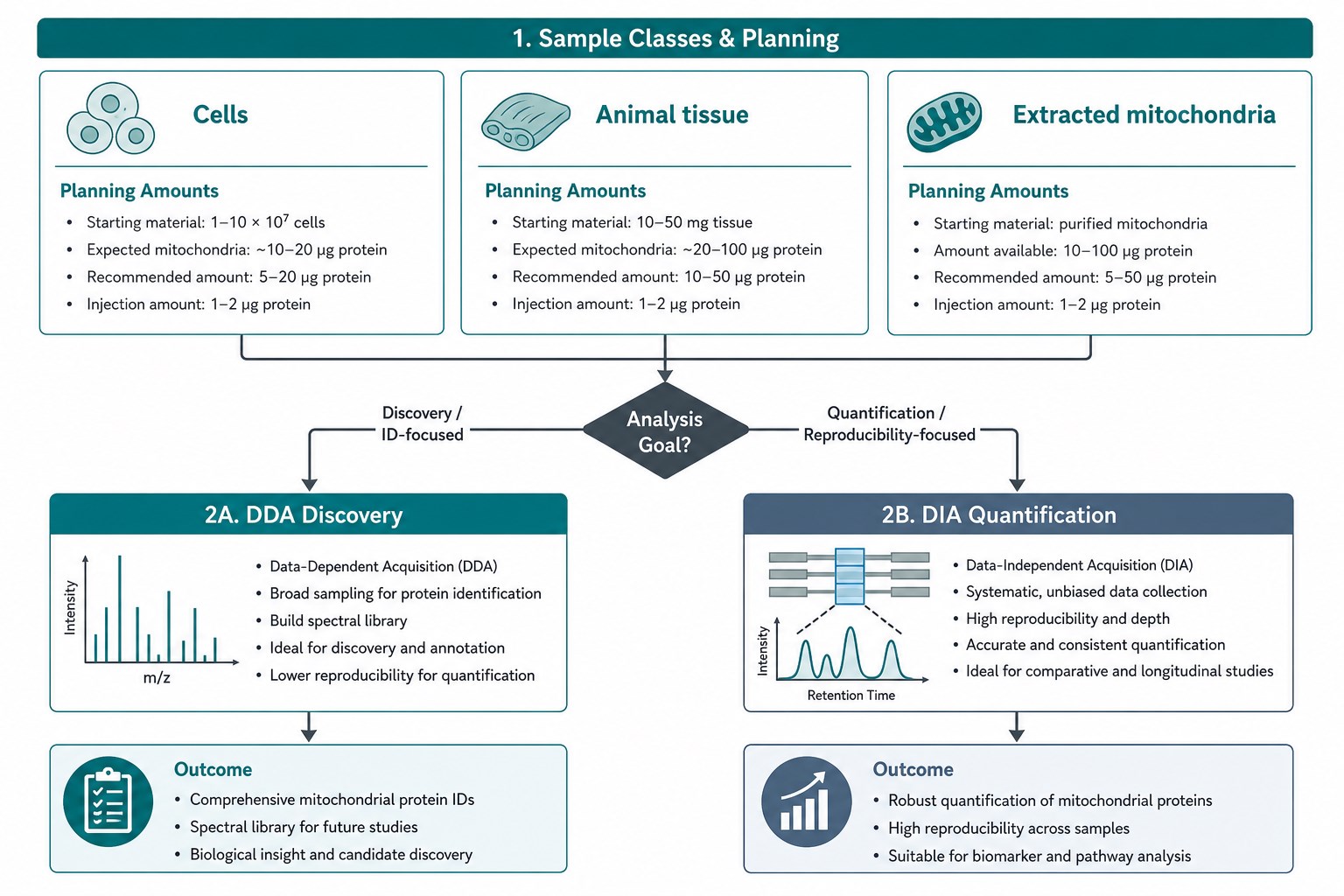
Figure 2. Confirm cells, tissue, or extracted mitochondria first, then match DDA or DIA to the comparison design.
Confirm Deliverables, Timeline, and Scope Limits
A mitochondrial proteomics project should have an explicit delivery list at kickoff: raw data, identification outputs, quantification matrices when designed, and a project report. Pathway or annotation add-ons should be confirmed project by project rather than assumed from a generic template.
Standard cycle guidance for this service line is about 4 weeks, with final timing still dependent on sample condition, cohort size, and whether feasibility review is needed first. Use the 4-week figure as planning guidance, not as an unconditional guarantee for every custom design.
Equally important is what not to assume is included. The following mitochondrial phenotype and function readouts are outside this proteomics service scope and should not be treated as bundled deliverables:
- Oxidative phosphorylation or respiration panels
- Mitochondrial membrane potential assays
- ROS assays
- Respiratory-chain enzyme activity panels
- Calcium or permeability-transition assays
- Mitochondrial toxicity, injury, or autophagy phenotype assays
- Electron microscopy or high-content imaging readouts
Those tools can still matter scientifically as orthogonal evidence. They simply need separate planning. A clean kickoff states proteomics outputs in one column and any functional assays in another.
|
Pre-start item |
What to confirm |
Risk if skipped |
|---|---|---|
|
Claim |
Protein inventory vs differential abundance vs functional phenotype |
Wrong service scope |
|
Sample amount |
Cells, tissue, or extracted mitochondria within planning ranges |
Weak coverage or delayed start |
|
Design |
Groups, replicates, and matched handling for comparisons |
Uninterpretable differentials |
|
Mode |
DDA or DIA path suited to the cohort |
Acquisition mismatch |
|
Deliverables |
Proteomics report package and exclusions |
Expectation gaps at delivery |
|
Timeline |
About 4 weeks as planning guidance |
Scheduling confusion |
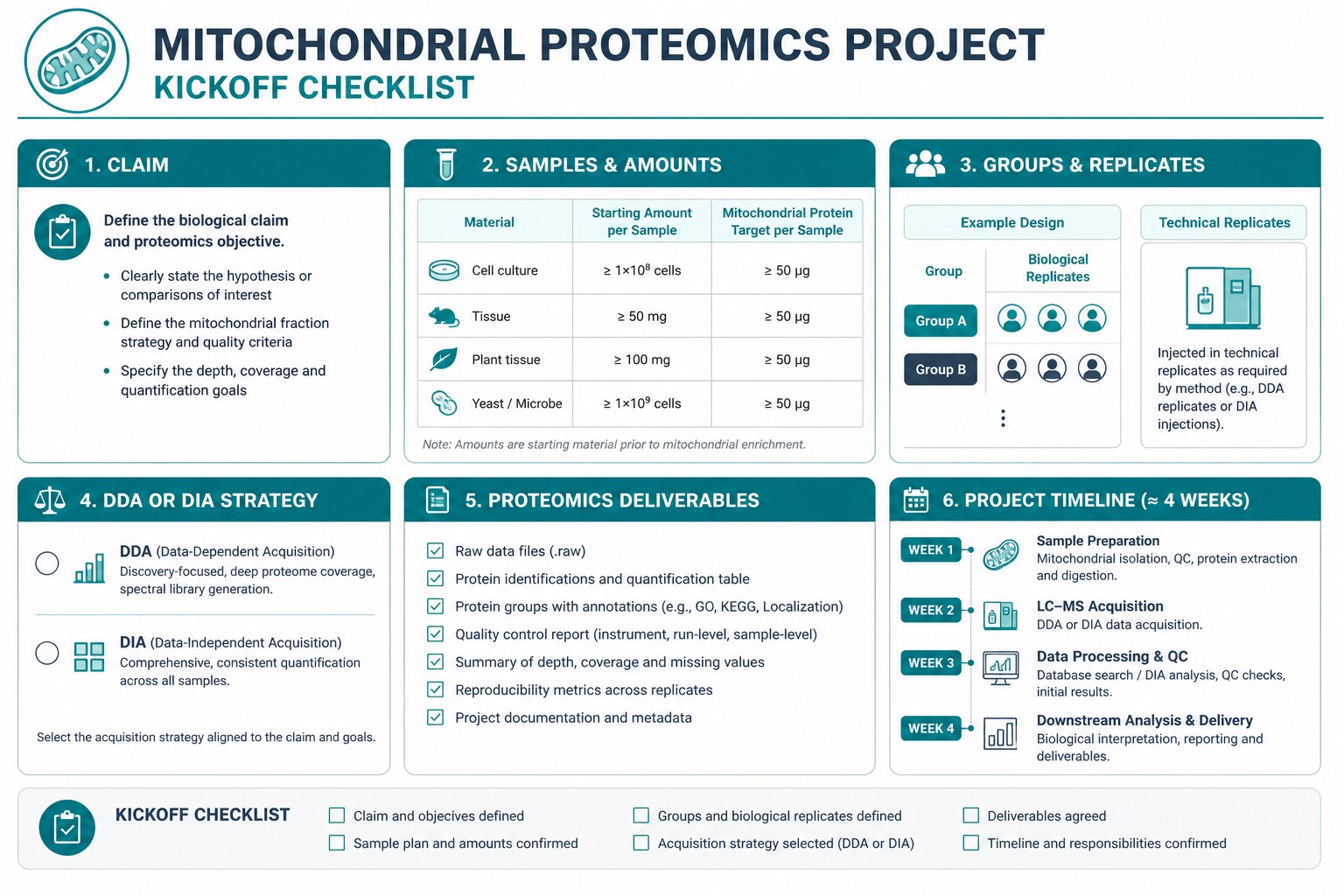
Figure 3. Confirm claim, amounts, design, mode, deliverables, and timeline before the project starts.
When the checklist is complete, send sample type, approximate amounts, whether mitochondria are already extracted, group map, preferred DDA or DIA path if known, and required report contents. MtoZ Biolabs can confirm fit for a mitochondrial proteomics service plan before samples are placed on the calendar.
Related Services
Teams finalizing organelle proteomics scope can review the services below while the project brief is still open.
Mitochondrial Proteomics Service
The main route for mitochondrial proteomics and mitochondrial protein analysis once sample amount, design, and deliverables are confirmed.
Subcellular Proteomics Service
Use this when the question spans multiple subcellular fractions rather than a mitochondria-focused design alone.
Subcellular Structure and Organelle Proteomics Service
A broader organelle proteomics option when mitochondrial work sits inside a multi-compartment study.
Frequently Asked Questions
1. What should I know before starting a mitochondrial proteomics service project?
Confirm the claim, sample amounts, comparison design, DDA or DIA path, deliverables, timeline guidance, and which functional assays are excluded.
2. How much sample is typically needed?
Planning references are about 5×10^7 cells, about 200 mg animal tissue, or about 50 µg protein minimum for extracted mitochondria, with about 80-100 µg commonly planned. Confirm final targets for your matrix.
3. Which instruments and software are used?
External platform labeling includes Orbitrap Exploris 480, timsTOF Pro, and Orbitrap Astral. DDA uses MaxQuant or Proteome Discoverer; DIA uses Spectronaut or DIA-NN.
4. How long does a standard project take?
Planning guidance is about 4 weeks, subject to sample condition and project complexity.
5. Does mitochondrial proteomics include membrane potential or ROS assays?
No. Those phenotype readouts are outside this proteomics service scope and need separate planning if required.
6. What information should I send at kickoff?
Sample type and amounts, extraction status, group design, preferred acquisition mode if known, required deliverables, and the one-sentence claim the dataset must support.
Conclusion
Starting a mitochondrial proteomics project cleanly means aligning the scientific claim with sample amount, acquisition mode, deliverables, and explicit scope limits before work begins. Mitochondrial protein analysis can identify and quantify proteins from cellular, tissue, or extracted mitochondrial inputs, but it does not replace functional mitochondrial assays.
When those boundaries are confirmed up front, the service path is easier to schedule and easier to interpret. Teams ready to kick off can review the start package with MtoZ Biolabs before the mitochondrial proteomics timeline is finalized.
How to order?




