






Mitochondrial Proteomics in Cancer Metabolism: Mapping Metabolic Reprogramming and Therapy Response
Mitochondrial proteomics is applicable in cancer metabolism research when the goal is to map protein-level changes in mitochondrial pathways linked to metabolic reprogramming or therapy response. It fits designs that compare tumor versus matched control, treated versus untreated models, or resistant versus sensitive lines, using mitochondrial-enriched material when the claim is organelle-specific.
It does not replace metabolite measurement, flux analysis, or phenotype assays such as respiration, membrane potential, or ROS. Those readouts sit outside this proteomics scope and should be planned as separate modules when needed. Use mitochondrial proteomics to prioritize protein changes; use complementary assays to interpret metabolic function.
Planning a cancer metabolism or therapy-response study? Share your cancer model, study groups, and sample type through our Project Inquiry Form to discuss mitochondrial proteomics feasibility.
What Cancer Metabolism Questions It Can Address
Cancer metabolism studies often ask how mitochondrial proteins change when cells rewire energy use, biosynthetic capacity, or drug response. Mitochondrial protein analysis can contribute when the question is about abundance, pathway membership, or differential protein patterns rather than about metabolite levels alone.
Typical questions that fit:
- Which mitochondrial proteins differ between tumor and matched non-tumor tissue or cells
- Which respiratory-chain, TCA-cycle, or metabolite-transport proteins change after drug treatment
- Which protein patterns distinguish sensitive and resistant models
- Which candidates are worth orthogonal follow-up after a screening phase
Questions that do not fit this service alone:
- Direct measurement of metabolite concentrations or flux
- Confirmation of respiration rate, membrane potential, or ROS production
- Clinical diagnosis or therapy recommendation claims
One useful check is to write the sentence you expect the result to support. If the sentence is about which mitochondrial proteins changed, proteomics fits. If the sentence is about how fast a pathway turns over, or how membrane potential shifted, another module is required. Keeping these boundaries clear helps decide whether mitochondrial proteomics is the right next step, or whether a metabolomics or phenotype module should run in parallel.
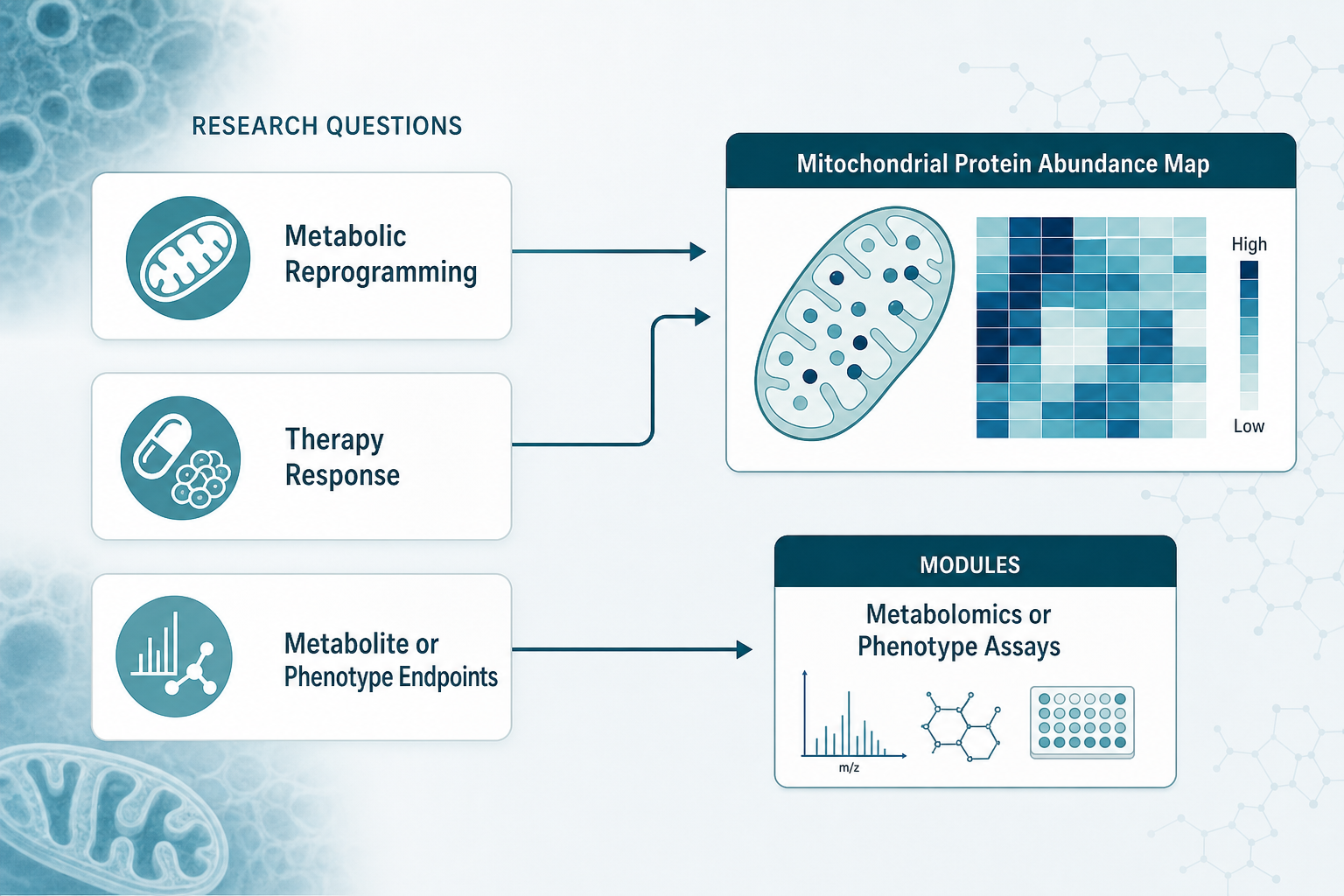
Figure 1. Protein abundance maps support reprogramming and therapy-response questions; metabolite and phenotype readouts remain separate modules.
When Mitochondrial Proteomics Fits Cancer Metabolism Work
|
Research aim |
Fit for mitochondrial proteomics |
Design note |
|---|---|---|
|
Map mitochondrial protein changes in tumor versus control |
High |
Prefer enrichment for organelle claims |
|
Compare treated versus untreated metabolic models |
High |
Match enrichment and handling across arms |
|
Rank therapy-response protein candidates |
High |
Quantitative route required |
|
Measure metabolite levels or flux |
Low |
Needs metabolomics or flux methods |
|
Confirm respiration, membrane potential, or ROS |
Low |
Plan phenotype assays separately |
|
Infer clinical therapy decisions from one screen |
Low |
Keep claims at the exploratory research level |
Applications in Metabolic Reprogramming
Metabolic reprogramming in cancer often involves mitochondrial pathways that support energy production, biosynthetic precursors, redox balance, and metabolite transport. Mitochondrial proteomics can map which proteins in these pathways change under the study conditions.
Useful application settings:
- Tumor versus matched control comparisons focused on mitochondrial pathway proteins
- Hypoxia, nutrient-shift, or oncogene-driven models where mitochondrial protein composition is expected to change
- Early discovery screens that need a ranked list of mitochondrial protein candidates
Technical value in this setting:
- Concentrates the comparison on mitochondrial-enriched material when enrichment is used
- Supports differential ranking across defined study arms
- Provides a protein-level layer that can be paired later with metabolite data
Keep in mind: a change in protein abundance does not by itself prove a change in pathway flux. Treat differential proteins as candidates for follow-up rather than as finished metabolic conclusions. When the project also needs metabolite evidence, mitochondrial metabolomics can be planned as a complementary module after or alongside the protein screen.
Applications in Therapy Response
Therapy-response studies ask how mitochondrial proteins shift after drug exposure, or how resistant and sensitive models differ. Quantitative mitochondrial proteomics fits these designs when arms are clearly defined and processed under matched rules.
Useful application settings:
- Treated versus untreated cell or tissue models
- Sensitive versus resistant line comparisons
- Combination-treatment designs with locked group labels
Technical value in this setting:
- Compares mitochondrial protein abundance across therapy arms
- Helps prioritize candidates linked to response or adaptation
- Supports staged planning: a small quantitative pilot, then a broader cohort
Keep in mind: protein changes after treatment are not the same as proof of drug mechanism or clinical benefit. Orthogonal validation and, when needed, separate phenotype or metabolite modules should be planned after candidates are ranked.
Phenotype assays such as oxidative phosphorylation, membrane potential, ROS, respiratory-chain enzyme activity, calcium flux, permeability transition, autophagy, toxicity scoring, and imaging-based morphology are not part of this proteomics service. If those endpoints matter to the therapy-response story, schedule them as separate experiments.
Study Design Notes for Cancer Metabolism Projects
Before locking a route, state the research claim in plain terms. If the claim is organelle-specific, plan mitochondrial enrichment. If the claim is about abundance differences, plan quantitative mitochondrial proteomics rather than identification alone.
Points worth locking early:
- Define arms clearly: tumor versus control, treated versus untreated, or resistant versus sensitive
- Match enrichment, protein amount, freeze history, and buffer across arms
- Decide whether Phase 1 is a pilot comparison and Phase 2 is a broader cohort
- Separate protein screening from metabolite or phenotype follow-up
For tumor tissue projects, matched non-tumor tissue from the same workflow is usually more informative than an unmatched reference. For cell-line therapy studies, keep dosing time, harvest timing, and enrichment timing aligned across arms. Small timing mismatches can create protein differences that look like response but come from processing.
Sample planning amounts for mitochondrial enrichment work:
- Cells: about 5 x 10^7 cells per sample
- Animal tissue: about 200 mg per sample
- Isolated mitochondrial protein: at least 50 ug, with 80 to 100 ug preferred when possible
- Isolated mitochondrial protein concentration: at least 0.5 ug/uL, with 1 ug/uL or higher preferred when possible
Acquisition mode follows cohort structure after quantification is chosen. DDA suits smaller pilots, with software direction commonly including MaxQuant or Proteome Discoverer. DIA suits broader matched cohorts, with software direction commonly including Spectronaut or DIA-NN. TMT suits predefined multiplexed group maps. Platform discussion can include Orbitrap Exploris 480, timsTOF Pro, and Orbitrap Astral once the route is set.
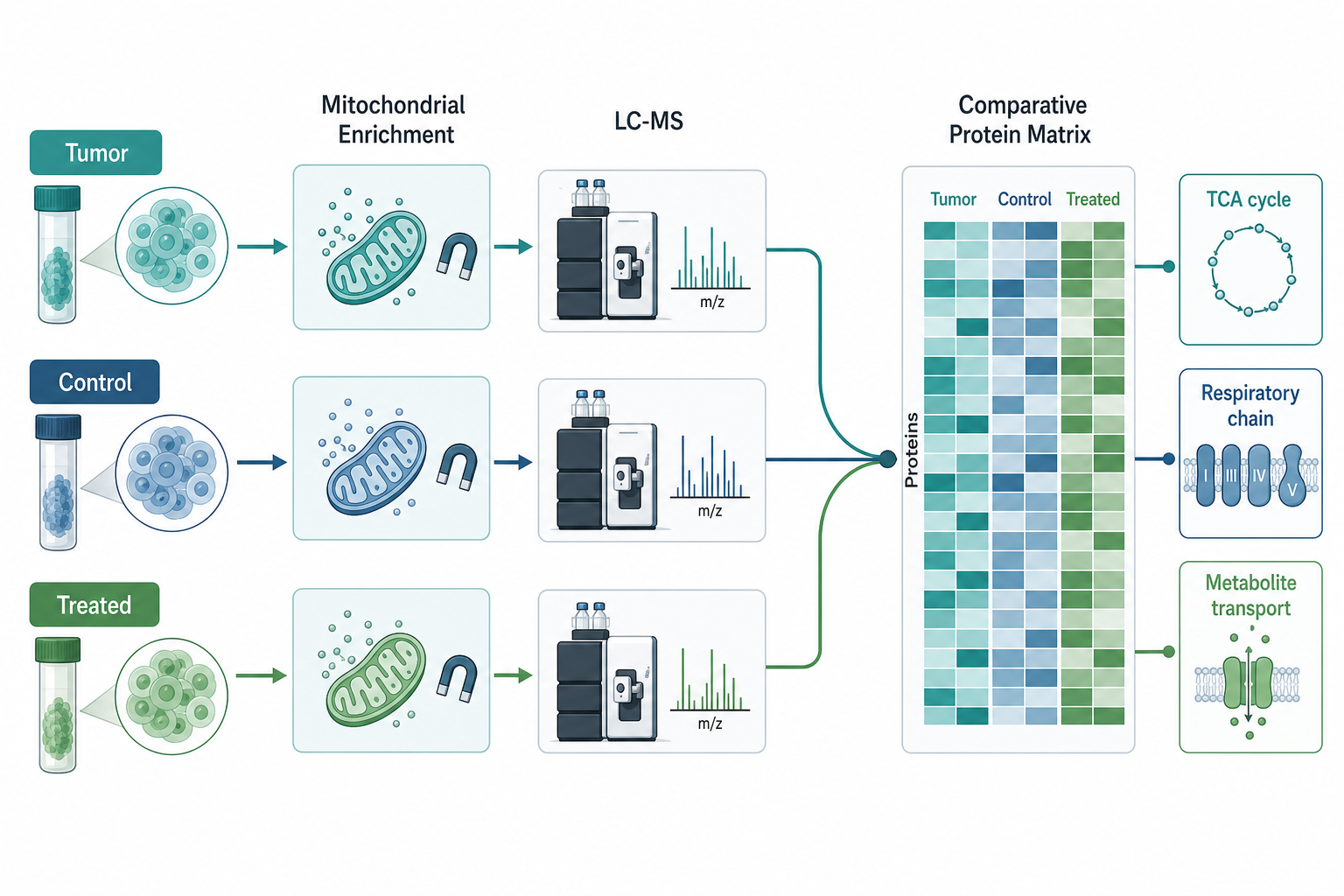
Figure 2. Matched tumor, control, and therapy arms support comparative mitochondrial protein maps.
How to Read Results Without Overclaiming
A useful cancer metabolism proteomics report answers three practical questions.
Which mitochondrial proteins changed between arms.
Which pathway groups those proteins belong to at a descriptive level.
Which candidates deserve orthogonal follow-up.
It does not by itself answer whether metabolite flux changed, whether respiration improved or declined, or whether a therapy will work in patients. Those conclusions need additional modules and independent evidence.
A practical way to read the report:
- Treat differential proteins as ranked candidates
- Keep organelle claims tied to enrichment quality and matched handling
- Pair protein results with metabolomics when the metabolic claim depends on metabolite levels
- Plan phenotype assays separately when function must be shown directly
MtoZ Biolabs can review the cancer model, study arms, and expected claim before the analytical route is locked.
Decision Checklist
Confirm that the research question is about mitochondrial protein changes, not metabolite flux alone.
Decide whether metabolic reprogramming, therapy response, or both are in scope.
Choose enrichment when the claim is organelle-specific.
Choose quantitative mitochondrial proteomics when arms will be compared.
Match sample amounts and handling across every arm.
Plan metabolomics or phenotype modules separately when those endpoints are required.
If the current goal is only to test whether mitochondrial proteomics fits the cancer metabolism direction, start with a clearly defined two-arm comparison and a short candidate list rather than an open-ended catalog.
Related Services
Mitochondrial Proteomics Service
Mitochondrial Isolation and Mitochondrial Protein Purification Service
Mitochondrial Metabolomics Analysis Services
Frequently Asked Questions
1. Is mitochondrial proteomics useful for cancer metabolism studies?
Yes, when the goal is to map mitochondrial protein changes linked to reprogramming or therapy response. It is not a substitute for metabolite or phenotype measurements.
2. Can it measure metabolic reprogramming directly?
It can map protein-level changes in mitochondrial pathways. Direct metabolite levels and flux need metabolomics or flux methods.
3. Can it support therapy-response research?
Yes, for treated versus untreated or sensitive versus resistant comparisons, when arms are matched and quantification is used.
4. Are respiration or ROS assays included?
No. Respiration, membrane potential, ROS, and related phenotype assays are outside this proteomics scope and should be planned separately.
5. What sample amounts should be planned?
Plan about 5 x 10^7 cells, about 200 mg animal tissue, or isolated mitochondrial protein of at least 50 ug, with 80 to 100 ug preferred when possible.
6. When should metabolomics be added?
Add metabolomics when the claim depends on metabolite levels or pathway intermediates, not only on protein abundance.
Conclusion
Mitochondrial proteomics fits cancer metabolism research when the question is about protein-level changes in mitochondrial pathways under reprogramming or therapy-response conditions. Enrichment supports organelle-specific claims, and quantification supports comparison across tumor, control, and treatment arms.
Keep metabolite, flux, and phenotype endpoints as separate modules, and read differential proteins as ranked candidates rather than finished functional proof. For project-specific review of a cancer metabolism design, contact MtoZ Biolabs with model type, study arms, and the expected analytical claim.
How to order?




