






Mitochondrial Proteomics for Oxidative Stress and Respiratory Chain Injury
Mitochondrial proteomics supports oxidative stress and respiratory chain injury research by comparing the abundance of respiratory-chain and redox-handling proteins between stressed and control arms, then grouping the changes into pathway-level patterns linked to the electron transport chain, antioxidant defense, and organelle maintenance.
It provides protein-level evidence that oxidative stress or respiratory-chain injury has remodeled the mitochondrial proteome. It does not directly measure ROS, oxygen consumption, membrane potential, or respiratory-chain enzyme activity. Read proteomic results as a protein map of stress-related change, and plan functional or ROS assays separately when those endpoints are required.
What Oxidative Stress Questions It Can Address
Oxidative stress and respiratory-chain injury are usually discussed as functional states, such as elevated ROS or impaired electron transport. Mitochondrial proteomics contributes a different layer: it quantifies whether the proteins that carry electron transport and defend against oxidative damage change in abundance between conditions.
Questions that fit:
- Which respiratory-chain proteins change under a stress condition
- Which antioxidant and redox-handling proteins shift between arms
- Which repair and turnover proteins respond to injury
- Which candidates are worth orthogonal or functional follow-up
Questions that do not fit this service alone:
- Direct measurement of ROS levels or oxidative flux
- Oxygen consumption, membrane potential, or enzyme activity
- Direct quantification of oxidative damage marks in real time
- Any validated injury score or safety claim
One useful check is to write the sentence you expect the result to support. If it is about which respiratory-chain or antioxidant proteins changed, proteomics fits. If it is about how much ROS was produced or how fast electrons flowed, a functional assay is required.
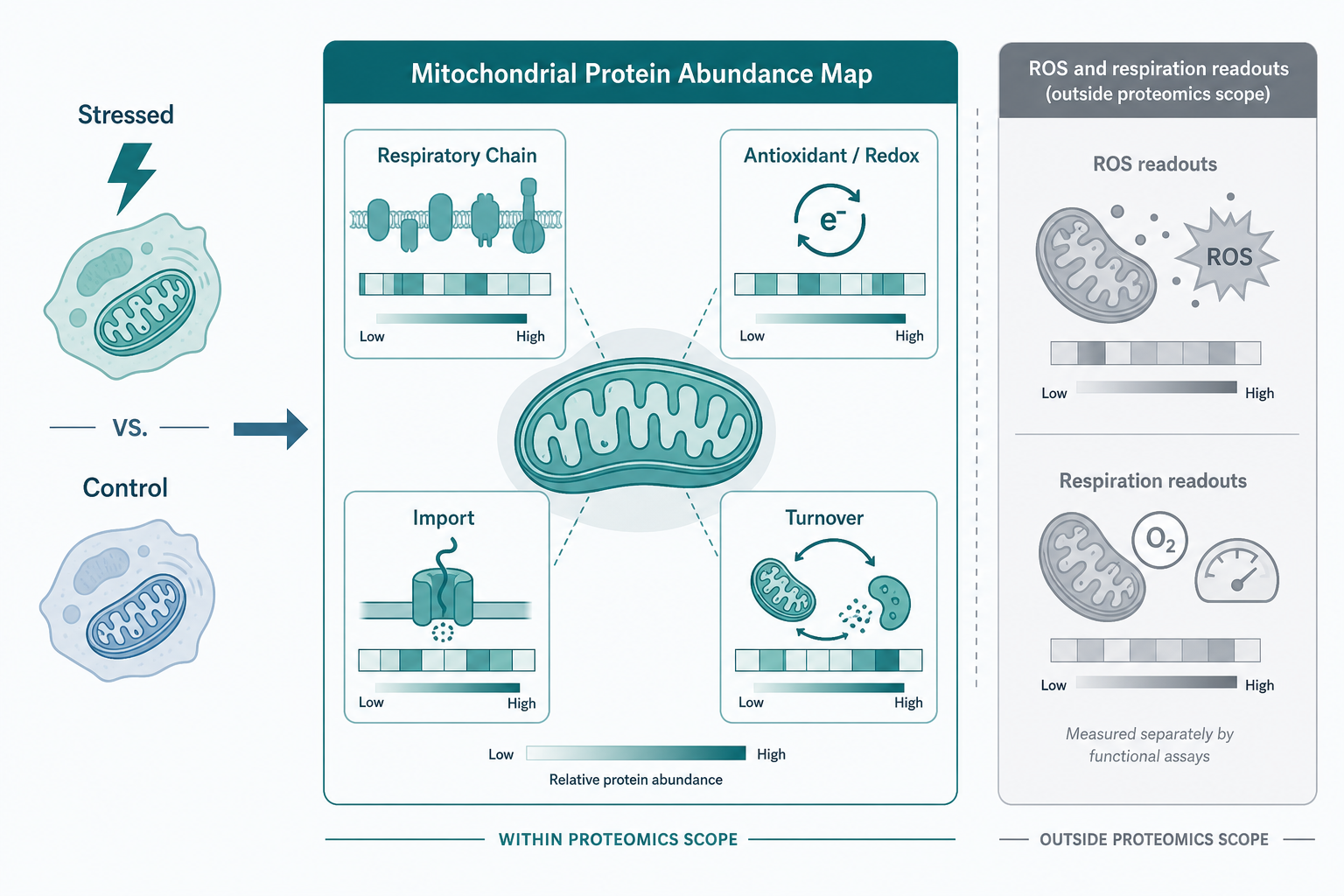
Figure 1. Proteomics maps respiratory-chain and redox protein abundance; ROS and respiration readouts remain separate modules.
When Mitochondrial Proteomics Fits a Stress or Injury Study
|
Research aim |
Fit for mitochondrial proteomics |
Design note |
|---|---|---|
|
Map respiratory-chain protein changes under stress |
High |
Prefer enrichment for organelle claims |
|
Compare stressed and control redox proteins |
High |
Match handling across arms |
|
Rank injury-related candidates |
High |
Quantitative route required |
|
Measure ROS or oxidative flux |
Low |
Needs a dedicated ROS assay |
|
Confirm respiratory-chain enzyme activity |
Low |
Needs an enzyme-activity assay |
|
Produce a validated injury score |
Low |
Outside this research service |
Pathway Groups Commonly Read Under Oxidative Stress
Oxidative stress and respiratory-chain injury are often discussed through several protein groups. Proteomics can describe abundance shifts in these groups at a descriptive level.
Respiratory-chain proteins include Complex I to Complex IV subunits and ATP synthase components. A coordinated shift across these complexes suggests remodeling of the electron transport chain, but it does not by itself prove reduced enzyme activity or electron flow.
Antioxidant and redox-handling proteins include enzymes and chaperones linked to oxidative-damage response. Abundance shifts may align with a stress hypothesis, but they are not a direct ROS measurement.
Import and biogenesis proteins include translocase components and assembly factors. Changes here can point to altered maintenance of the respiratory machinery under stress.
Turnover and repair proteins include factors linked to mitochondrial removal and repair. Changes here can support an injury narrative at the protein level, but they do not confirm autophagy flux without separate assays.
When respiratory-chain and antioxidant groups shift together, the descriptive signal is stronger, but it still stops at protein abundance until functional data are added.
Applications in Oxidative Stress and Injury Research
Comparing stressed and control conditions
Use mitochondrial-enriched material to compare a stress condition against matched control. This fits questions about whether oxidative stress remodels the respiratory-chain and antioxidant proteome.
Comparing dose or time of a stressor
Use graded-dose or time-course arms to rank proteins that shift with stress intensity or duration. Treat the output as candidates that describe a stress-linked pattern rather than a confirmed injury mechanism.
Building a candidate list for functional follow-up
Use quantitative screening to produce a ranked shortlist, then plan orthogonal validation and functional assays as separate modules. Western blot or targeted follow-up can be discussed after candidates are set, but those steps are not automatic parts of the screening deliverable.
Functional and injury endpoints such as oxidative phosphorylation activity, membrane potential, ROS, respiratory-chain enzyme activity, calcium flux, permeability transition, autophagy, toxicity scoring, electron microscopy, and high-content imaging are not part of this proteomics service. When a stress or injury story needs those endpoints, plan them as distinct experiments.
Study Design Notes
Before locking a route, state the oxidative stress or injury claim in plain terms. If the claim is organelle-specific, plan mitochondrial enrichment. If the claim is about abundance differences across arms, plan quantitative mitochondrial proteomics rather than identification alone.
Points worth locking early:
- Define arms clearly: stressed versus control, or graded stressor dose and time points
- Match cell source, treatment window, enrichment, and storage across arms
- Match protein amount, freeze history, and buffer across arms
- Decide whether Phase 1 is a pilot comparison and Phase 2 is a broader dose or time series
Oxidative stress is sensitive to handling because sample processing can itself introduce oxidative change. Keeping lysis, buffer, and freeze history matched across arms reduces protein differences that come from preparation rather than from the biological stressor. A shift seen only at a very high stressor level may reflect general cell damage rather than a specific respiratory-chain response, and this should be noted when interpreting the pattern.
Sample planning amounts for mitochondrial enrichment work:
- Cells: about 5 x 10^7 cells per sample
- Animal tissue: about 200 mg per sample
- Isolated mitochondrial protein: at least 50 ug, with 80 to 100 ug preferred when possible
- Isolated mitochondrial protein concentration: at least 0.5 ug/uL, with 1 ug/uL or higher preferred when possible
Acquisition mode follows cohort structure after quantification is chosen. DDA suits smaller pilots, with software direction commonly including MaxQuant or Proteome Discoverer. DIA suits broader matched cohorts, with software direction commonly including Spectronaut or DIA-NN. TMT suits predefined multiplexed group maps. Platform discussion can include Orbitrap Exploris 480, timsTOF Pro, and Orbitrap Astral once the route is set.
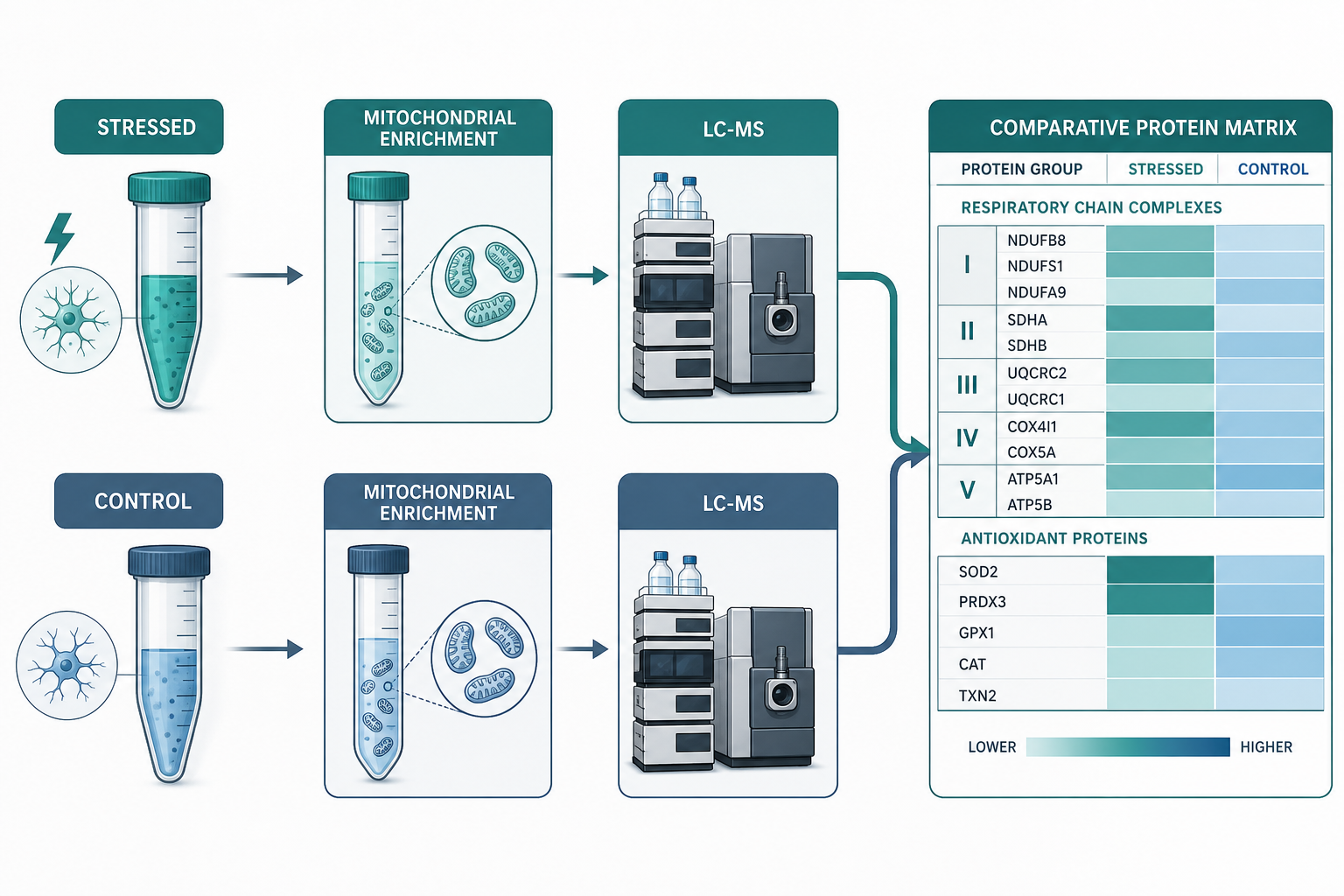
Figure 2. Matched stressed and control arms support a comparative respiratory-chain and redox protein map for descriptive interpretation.
Reading Results Without Overclaiming
A useful oxidative stress proteomics report answers three practical questions.
Which respiratory-chain and redox proteins changed between arms.
Which pathway groups those proteins belong to at a descriptive level.
Which candidates deserve orthogonal or functional follow-up.
It does not confirm that ROS rose, that electron transport slowed, or that respiratory-chain enzymes lost activity. Those conclusions need dedicated ROS and functional assays and independent evidence.
A practical way to read the report:
- Report results as protein abundance patterns, not as ROS or activity findings
- Keep organelle claims tied to enrichment quality and matched handling
- Separate high-dose general damage from specific respiratory-chain remodeling
- Plan ROS, respiration, and enzyme-activity modules separately when those endpoints matter
MtoZ Biolabs can review the stressor, dose or time arms, and expected claim before the analytical route is locked.
Decision Checklist
Confirm the goal is a protein-level map of stress-related change, not a ROS or activity measurement.
Choose enrichment when the claim is organelle-specific.
Choose quantitative mitochondrial proteomics when arms will be compared.
Keep stressor dose and exposure time consistent within arms and separated between arms.
Match sample source and handling across every arm to limit preparation-driven oxidation.
Plan ROS, respiration, and enzyme-activity assays as separate modules.
If the current goal is only to test whether mitochondrial proteomics fits an oxidative stress direction, start with a clearly defined stressed versus control comparison and a short candidate list rather than an open catalog.
Related Services
Mitochondrial Proteomics Service
Mitochondrial Isolation and Mitochondrial Protein Purification Service
Mitochondrial Protein Posttranslational Modification Analysis Service
Frequently Asked Questions
1. What Can Mitochondrial Proteomics Show in an Oxidative-Stress Study?
It can compare the abundance of detectable mitochondrial and mitochondria-related proteins between defined stress and control conditions. The results support protein-level hypotheses but do not directly confirm oxidative stress, respiratory-chain injury, ROS production, or enzyme activity.
2. Does it measure ROS or respiration?
No. ROS, oxygen consumption, and membrane potential are functional readouts that need separate assay modules.
3. What protein groups are usually reviewed?
Common groups include respiratory-chain subunits, antioxidant and redox-handling proteins, import and biogenesis factors, and turnover-related proteins.
4. Does a respiratory-chain protein decrease prove reduced activity?
Not on its own. Abundance and activity are different measurements, so activity claims need enzyme-activity assays.
5. What sample amounts should be planned?
Plan about 5 x 10^7 cells, about 200 mg animal tissue, or isolated mitochondrial protein of at least 50 ug, with 80 to 100 ug preferred when possible.
6. When should ROS or functional assays be added?
Add them whenever the study must confirm oxidative stress or respiratory-chain injury at the functional level, since proteomics alone stays at the protein-abundance level.
Conclusion
Mitochondrial proteomics supports oxidative stress and respiratory chain injury research by mapping protein-abundance patterns across respiratory-chain, antioxidant, import, and turnover groups between stressed and control arms. Enrichment supports organelle-specific claims, and quantification supports comparison across dose or time.
Report these results as protein-level research evidence rather than a ROS or activity verdict, keep functional assays as separate modules, and read differential proteins as ranked candidates. For project-specific review of an oxidative stress or injury design, contact MtoZ Biolabs with stressor, study arms, and the expected analytical claim.
How to order?




