






Mitochondrial Protein Analysis for Tumor Metabolism and Candidate Protein Prioritization
Mitochondrial protein analysis supports tumor metabolism research by producing a quantitative comparison of mitochondrial proteins across study arms, then ranking the differential proteins into a shortlist of candidates for follow-up. Candidate prioritization is the step that turns a long differential list into a small, defensible set worth validating.
Prioritization here means exploratory ranking, not validation. It orders candidates by evidence strength within the dataset, such as effect size, consistency across replicates, mitochondrial localization confidence, and relevance to the metabolic question. Confirming any candidate still needs orthogonal methods planned as a separate step.
Why Prioritization Matters in Tumor Metabolism Work
A tumor metabolism comparison often returns many differentially abundant mitochondrial proteins. Most cannot be followed up at once, so the practical problem is choosing which few to pursue.
Prioritization addresses three risks:
- Chasing changes that are statistically weak or inconsistent across replicates
- Following proteins whose mitochondrial localization is uncertain
- Spending validation effort on candidates that are hard to test
A structured ranking reduces these risks by making the selection criteria explicit rather than leaving the choice to a single p-value cutoff or to whichever protein looks familiar.
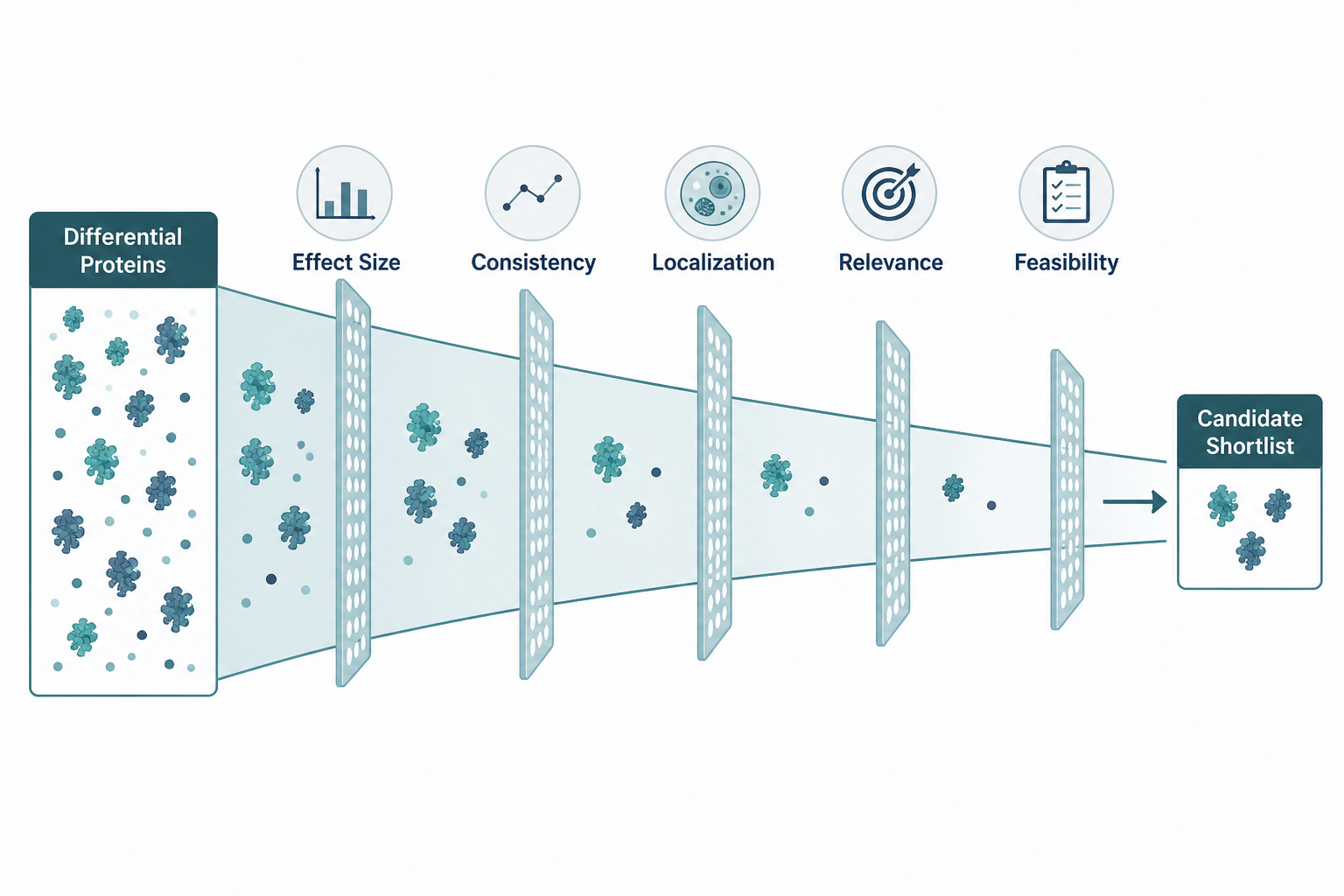
Figure 1. A differential protein list is narrowed by explicit criteria into a short candidate set for follow-up.
What the Analysis Delivers Before Prioritization
Mitochondrial protein analysis for tumor metabolism starts with a quantitative comparison across defined arms.
Typical deliverable content:
- A quantitative matrix of mitochondrial protein abundance across arms
- Differential proteins between tumor and control or treated and untreated
- Descriptive pathway grouping of the differential proteins
- A ranked candidate shortlist for follow-up
What the deliverable does not include:
- Metabolite levels or flux measurements
- Respiration, membrane potential, or other functional readouts
- Validation of any single candidate
These boundaries keep the candidate list at the level the data supports, which is a ranked hypothesis set rather than a confirmed result.
Prioritization Criteria
|
Criterion |
What it checks |
Why it matters for tumor metabolism |
|---|---|---|
|
Effect size |
Magnitude of abundance change between arms |
Larger, reproducible shifts are stronger leads |
|
Consistency |
Agreement across replicates and arms |
Reduces the chance of a chance finding |
|
Localization confidence |
Whether the protein is a credible mitochondrial resident |
Keeps organelle claims defensible |
|
Pathway relevance |
Link to the metabolic question at hand |
Focuses on candidates tied to the hypothesis |
|
Validation feasibility |
Practicality of orthogonal follow-up |
Avoids leads that cannot be tested |
No single criterion decides a candidate. A protein with a large change but weak replicate consistency, or strong consistency but uncertain localization, usually ranks below a protein that is moderate but solid on every criterion.
How Prioritization Works in Practice
Step 1: Filter the differential list
Start from the differential proteins, then apply effect-size and consistency thresholds set for the study. This removes weak or noisy changes before any biological judgment is applied.
What this route contributes:
- Focuses attention on reproducible differences
- Reduces the candidate pool to a manageable size
- Keeps the selection reproducible and documented
Step 2: Weigh biological and localization evidence
Rank the remaining proteins by mitochondrial localization confidence and by relevance to the metabolic question.
What this route contributes:
- Keeps organelle-level claims tied to credible mitochondrial residents
- Aligns the shortlist with the tumor metabolism hypothesis
- Separates strong leads from incidental changes
Step 3: Check validation feasibility
For the top candidates, confirm that an orthogonal test is realistic before committing to follow-up.
What this route contributes:
- Prevents effort on candidates that are hard to validate
- Connects the shortlist to a concrete next experiment
- Supports a staged plan from screening to confirmation
Validation itself, including western blot or targeted follow-up, is planned as a separate module. It is not part of the screening deliverable and should be scheduled once the shortlist is set.
Applications in Tumor Metabolism
Prioritizing candidates from a tumor versus control screen
Use mitochondrial-enriched material to compare tumor and matched control, then prioritize proteins that are strong on effect size, consistency, and localization. The output is a shortlist tied to the metabolic contrast.
Ranking therapy-response candidates
Use treated versus untreated or resistant versus sensitive arms, then rank proteins that track with the response. Treat the top proteins as leads for mechanism work rather than as confirmed drivers.
Building a defensible shortlist for grant or follow-up planning
Use the ranked list to support a focused next phase, where a small number of candidates move into orthogonal validation. A documented ranking makes the selection easier to justify.
Functional endpoints such as oxidative phosphorylation activity, membrane potential, ROS, respiratory-chain enzyme activity, calcium flux, permeability transition, autophagy, toxicity scoring, and imaging-based morphology are not part of this proteomics service. When candidates need functional confirmation, plan those assays as separate experiments.
Study Design Notes
Before locking a route, state the tumor metabolism question in plain terms. If the claim is organelle-specific, plan mitochondrial enrichment. If the claim is about abundance differences across arms, plan quantitative mitochondrial proteomics rather than identification alone.
Points worth locking early:
- Define arms clearly: tumor versus control, treated versus untreated, or resistant versus sensitive
- Include enough replicates to judge consistency, since prioritization depends on it
- Match enrichment, protein amount, freeze history, and buffer across arms
- Decide whether Phase 1 is a screening pilot and Phase 2 is validation
Replicate structure deserves attention here because the consistency criterion cannot be applied to arms with too few replicates. Planning the replicate count with prioritization in mind is more effective than adding replicates after a noisy first pass.
Sample planning amounts for mitochondrial enrichment work:
- Cells: about 5 x 10^7 cells per sample
- Animal tissue: about 200 mg per sample
- Isolated mitochondrial protein: at least 50 ug, with 80 to 100 ug preferred when possible
- Isolated mitochondrial protein concentration: at least 0.5 ug/uL, with 1 ug/uL or higher preferred when possible
Acquisition mode follows cohort structure after quantification is chosen. DDA suits smaller pilots, with software direction commonly including MaxQuant or Proteome Discoverer. DIA suits broader matched cohorts, with software direction commonly including Spectronaut or DIA-NN. TMT suits predefined multiplexed group maps. Platform discussion can include Orbitrap Exploris 480, timsTOF Pro, and Orbitrap Astral once the route is set.
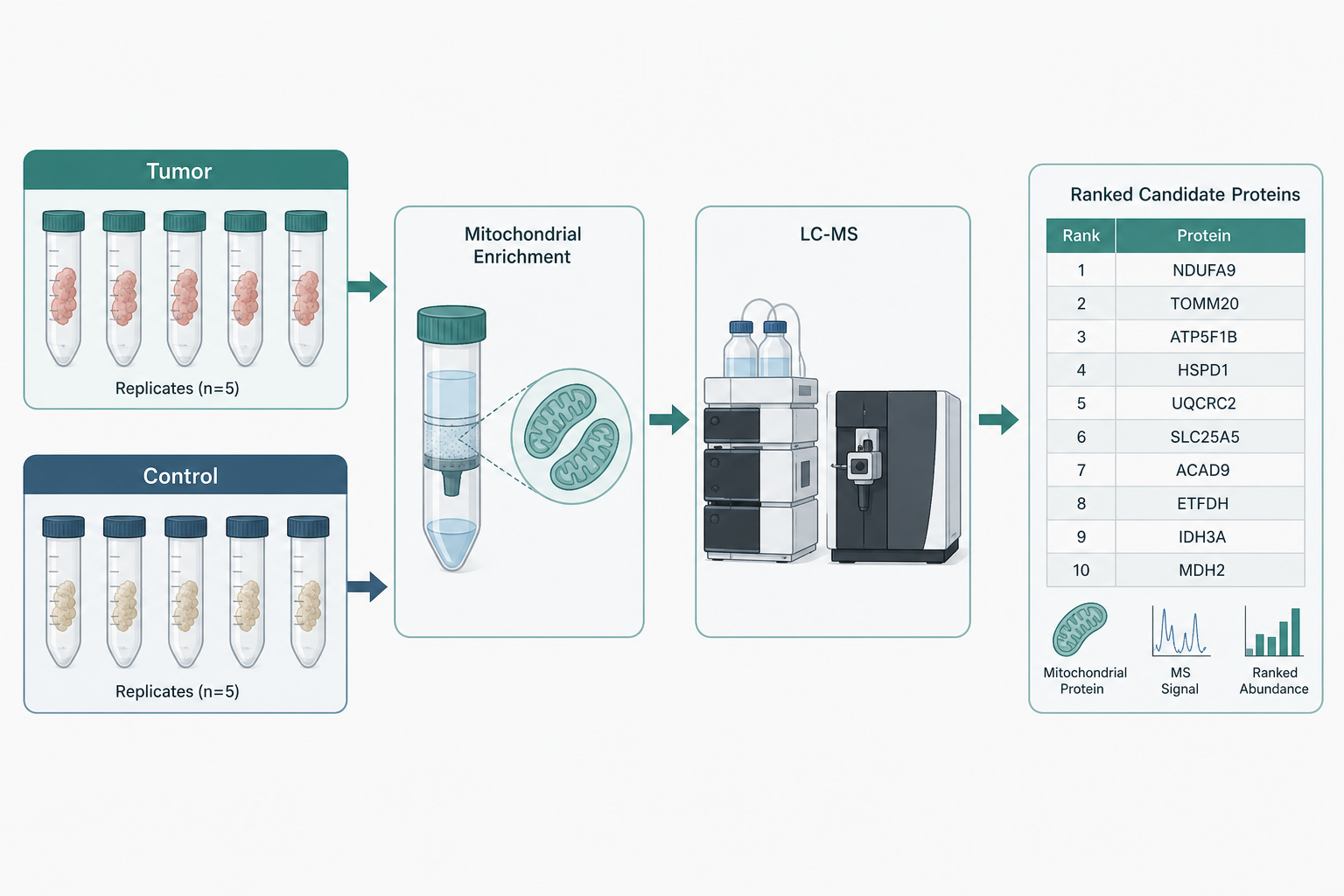
Figure 2. Matched arms and adequate replicates support a ranked candidate shortlist for follow-up.
Reading the Candidate List Without Overclaiming
A useful candidate list answers three practical questions.
Which mitochondrial proteins changed and how strongly.
Which of those are credible mitochondrial residents relevant to the question.
Which are realistic to validate next.
It does not confirm that a candidate drives tumor metabolism, that a pathway flux changed, or that a therapy target is established. Those claims need orthogonal validation and, where relevant, separate metabolite or functional modules.
A practical way to read the report:
- Treat the shortlist as ranked hypotheses, not confirmed targets
- Keep organelle claims tied to localization confidence and matched handling
- Pair with metabolomics when the metabolic claim depends on metabolite levels
- Plan validation as a distinct follow-up phase
MtoZ Biolabs can review the tumor model, study arms, and prioritization goals before the analytical route is locked.
Decision Checklist
Confirm the goal is a ranked candidate list, not only a differential table.
Choose enrichment when the claim is organelle-specific.
Choose quantitative mitochondrial proteomics with enough replicates to judge consistency.
Set prioritization criteria before looking at the results.
Rank candidates by effect size, consistency, localization, relevance, and feasibility.
Plan validation and any functional or metabolite work as separate modules.
If the current goal is only to test whether mitochondrial proteomics fits a tumor metabolism direction, start with a two-arm screen and a short ranked list rather than an open catalog.
Related Services
Mitochondrial Proteomics Service
Mitochondrial Isolation and Mitochondrial Protein Purification Service
Mitochondrial Metabolomics Analysis Services
Frequently Asked Questions
1. What does candidate prioritization mean here?
It means ranking differential mitochondrial proteins into a shortlist by evidence strength. It is exploratory ranking within the dataset, not validation.
2. Does prioritization confirm a target?
No. It orders candidates for follow-up. Confirmation needs orthogonal methods planned as a separate step.
3. What criteria are used to rank candidates?
Effect size, consistency across replicates, mitochondrial localization confidence, pathway relevance, and validation feasibility.
4. Why do replicates matter for prioritization?
The consistency criterion depends on replicate structure. Too few replicates make it hard to separate real changes from noise.
5. What sample amounts should be planned?
Plan about 5 x 10^7 cells, about 200 mg animal tissue, or isolated mitochondrial protein of at least 50 ug, with 80 to 100 ug preferred when possible.
6. Is validation included in the deliverable?
No. Validation such as western blot or targeted follow-up is a separate module scheduled after the shortlist is set.
Conclusion
Mitochondrial protein analysis contributes to tumor metabolism research by comparing mitochondrial proteins across arms and ranking the differences into a defensible candidate shortlist. Prioritization uses explicit criteria, keeps the list at the level of ranked hypotheses, and connects screening to a concrete validation plan.
Set the criteria before reviewing results, keep functional and metabolite endpoints as separate modules, and treat the shortlist as leads rather than confirmed targets. For project-specific review of a tumor metabolism prioritization plan, contact MtoZ Biolabs with model type, study arms, and the expected candidate output.
How to order?




