






Microcrystalline Cellulose Analysis Service | Pharmaceutical Excipient
Microcrystalline cellulose (MCC) is a high-purity cellulose derivative obtained through controlled acid hydrolysis of plant-derived α-cellulose, typically sourced from wood pulp or cotton. MCC is characterized by its high crystallinity and unique physicochemical properties, making it one of the most widely used and important pharmaceutical excipients. As a key excipient in tablet manufacturing, MCC serves as a diluent, filler, and binder, while also enhancing tablet hardness and disintegration, ensuring stable drug release and effective absorption in vivo.
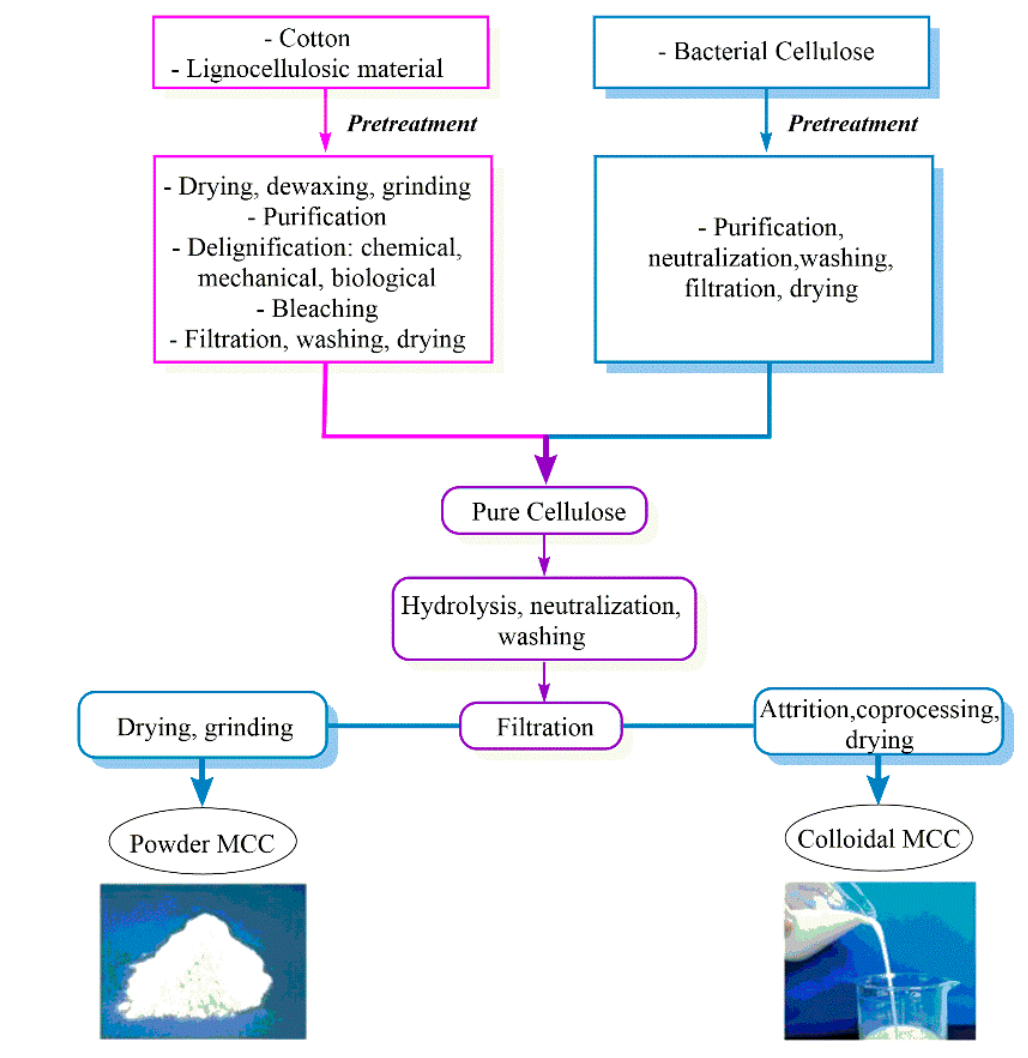
Lupidi, G. et al. Molecules. 2023.
Figure 1. Production of Microcrystalline Cellulose from Cellulose-Based Materials
With the rapid growth of the global pharmaceutical industry, the demand for consistent and high-quality excipients has increased significantly. Variations in MCC quality directly affect tablet compression, dissolution, and stability, highlighting the need for comprehensive analysis and quality control. Leveraging advanced analytical platforms and a professional research team, MtoZ Biolabs provides a systematic Microcrystalline Cellulose Analysis Service to support pharmaceutical companies, research institutions, and quality control laboratories in the full characterization and evaluation of MCC, ensuring compliance and consistency throughout drug development and production.
Services at MtoZ Biolabs
The quality attributes of MCC include appearance, chemical composition, degree of polymerization, crystallinity, moisture content, particle size distribution, flowability, purity, and microbiological limits. These parameters not only determine its performance in formulations but also its compliance with pharmacopoeial standards. Through infrared spectroscopy, color reactions, polymerization degree measurement, conductivity and pH determination, loss on drying, ash analysis, and microbial testing, MCC can be systematically characterized.
1. Appearance and Solubility Testing: Evaluation of color, morphology, dispersibility, and solubility characteristics.
2. Identification: Infrared spectroscopy, characteristic color reactions, and polymerization degree tests.
3. Physicochemical Testing: Determination of pH, conductivity, loss on drying, sulfated ash, water-soluble substances, and ether-soluble substances.
4. Impurities and Residues: Assessment of inorganic residues, heavy metals, and organic-soluble impurities.
5. Physical Performance Testing: Measurement of bulk density, particle size distribution, and related parameters.
6. Microbial Limits: Comprehensive testing of aerobic bacteria, yeasts, molds, and specified pathogens to ensure safety.
Analysis Workflow
1. Sample Receipt and Registration: Confirmation of sample information and testing requirements.
2. Sample Preparation: Preparation of solutions or dispersions according to test protocols.
3. Physicochemical and Functional Testing: Execution of pre-defined analytical methods.
4. Microbiological Testing: Conducted under sterile conditions, including enrichment, isolation, and confirmation.
5. Data Analysis and Comparison: Benchmarking results against pharmacopeial or client specifications.
6. Reporting: Delivery of complete test results with compliance evaluation.
Service Advantages
1. Comprehensive Parameter Coverage
MtoZ Biolabs provides a full-scale microcrystalline cellulose analysis service covering identification, physicochemical properties, impurity control, and microbial safety. This ensures thorough quality evaluation from raw material to final excipient, offering reliable data for pharmaceutical applications.
2. Regulatory-Compliant Testing Methods
All analytical methods comply with international pharmacopeial standards (USP, EP, etc.). Laboratory practices strictly follow quality management systems, ensuring data accuracy, reproducibility, and regulatory compliance to facilitate approval and registration.
3. Advanced Analytical Platform and Experienced Team
Equipped with advanced instruments including high-resolution mass spectrometry, infrared spectroscopy, conductivity meters, and particle size analyzers, combined with extensive excipient testing experience, MtoZ Biolabs can support diverse and customized analytical requirements.
4. Transparent and Standardized Reporting
Reports include detailed methods, raw data, spectra, statistical results, and compliance evaluation. Clients receive clear, traceable results suitable for quality audits and regulatory submissions.
5. Efficient and Streamlined Process
From sample receipt to report delivery, standardized procedures of microcrystalline cellulose analysis service shorten turnaround time, ensuring efficient data delivery and supporting clients in accelerating drug development and quality control processes.
Applications
1. Pharmaceutical Companies: For new drug development, generic drug registration, and excipient substitution evaluation.
2. Quality Control Departments: For raw material inspection, batch release, and stability monitoring.
3. Research Institutes: For development and study of new MCC sources.
4. Regulatory Submissions: Providing USP/EP-compliant testing data for global registrations.
FAQs
Q1: What is the typical testing turnaround time?
A1: Most analyses are completed within 1–2 weeks, depending on the number and complexity of requested tests.
Sample Submission Suggestions
1. Sample Type: Powdered microcrystalline cellulose.
2. Recommended Quantity: Submit 50–100 g per batch, sufficient for all analytical tests (physicochemical, impurities, and microbiological) and parallel experiments.
3. Packaging: Sealed containers to prevent moisture absorption.
4. Transportation: Room temperature is acceptable; avoid prolonged exposure to high humidity.
5. Documentation: Provide batch number, source information, and specific testing requirements.
Deliverables
1. Sample information confirmation form
2. Detailed description of analytical methods and procedures
3. Raw data and spectra (e.g., infrared spectra, particle size distribution curves)
4. Comprehensive analytical results and statistical summaries
5. Compliance evaluation and conclusions
6. Recommendations and risk notes (if any nonconformities are observed)
Microcrystalline cellulose plays a critical role as a pharmaceutical excipient, and its physicochemical and microbiological properties directly impact drug quality, safety, and efficacy. With advanced analytical platforms and systematic services, MtoZ Biolabs provides reliable MCC analysis and quality evaluation for pharmaceutical companies and research institutions.
If you are seeking a professional, compliant, and efficient microcrystalline cellulose analysis service, MtoZ Biolabs is your trusted partner, supporting your drug development and quality control with dependable results.
How to order?




