






Mass Spectrometry Proteomics: Turning Complex Protein Samples into Interpretable Biological Evidence
Introduction
A proteomics project can end with thousands of LC-MS/MS files and still leave the research team without a clear biological conclusion. A cell lysate may contain thousands of proteins across a wide abundance range. A plasma sample may carry abundant albumin and immunoglobulins that mask lower-abundance signaling proteins. A tissue extract may include degradation products, matrix contaminants, and post-translational variants that complicate database searching. Without a structured path from raw spectra to protein-level reporting, complex protein samples remain analytically rich but biologically unreadable.
Mass spectrometry proteomics addresses this problem by converting complex protein mixtures into layered evidence that can support biological interpretation. Sample preparation reduces matrix interference. Liquid chromatography spreads peptides across retention time. LC-MS/MS generates sequence-informative fragment ions. Computational analysis assigns confident peptide matches, infers protein groups, quantifies abundance changes, and connects results to pathway or mechanism review. The value of the workflow is not spectral acquisition alone. It is the transformation of complex samples into interpretable biological evidence.
What Interpretable Biological Evidence Means in Proteomics
Interpretable biological evidence in mass spectrometry proteomics is protein-level information that a research team can connect to a defined question. That question may ask which proteins change after treatment, which pathways are activated, which modifications shift in response to stress, or whether a therapeutic protein matches its intended sequence and quality profile.
Raw mass spectrometry data are not biological evidence by themselves. A survey MS scan records precursor ions. An MS/MS spectrum records fragment ions. These measurements become evidence only after they pass quality filtering, are assigned to peptide sequences with controlled false discovery rates, and are summarized into protein identifications, quantitative comparisons, or modification maps that match the study design.
Interpretable evidence therefore has three properties. It is traceable to spectral support. It is summarized at the protein or modification level relevant to the project. It can be compared across samples or conditions in a way that supports the next experimental or development decision.
Why Complex Protein Samples Are Difficult to Analyze Directly
Protein samples are complex for reasons that extend beyond protein count alone.
Abundance range is a major challenge. In cell lysates and biofluids, a small number of highly abundant proteins can dominate ionization and reduce detection of lower-abundance targets. Sample complexity also includes proteoforms. A single gene product may exist as multiple isoforms, cleavage products, and modified states that differ in mass and chromatographic behavior. Matrix effects from salts, detergents, lipids, and polymers can suppress peptide ionization if cleanup is insufficient.
Biological complexity adds another layer. A treatment may alter protein abundance, localization, modification, or interaction status simultaneously. A single analytical readout rarely captures all of these changes unless the workflow is designed for the evidence type required. This is why mass spectrometry proteomics relies on staged complexity reduction rather than direct intact analysis of unfractionated mixtures in most discovery projects.
How Mass Spectrometry Proteomics Reduces Sample Complexity
Mass spectrometry proteomics reduces analytical complexity through linked experimental steps before and during LC-MS/MS acquisition.
Protein extraction and cleanup remove interfering compounds and bring proteins into a digestible form. Enzymatic digestion, most often with trypsin, converts proteins into peptides that ionize more consistently and produce interpretable MS/MS fragment patterns. Fractionation or enrichment may be added when low-abundance proteins, membrane proteins, or modified peptides are central to the study.
Reversed-phase liquid chromatography separates peptides before they enter the mass spectrometer. This step reduces ion suppression by limiting how many peptides are ionized at once. It also distributes peptides across retention time so feature matching and label-free quantitation remain reproducible across replicate runs.
Acquisition mode further shapes complexity management. Data-dependent acquisition selects intense precursors for MS/MS fragmentation during each LC cycle. Data-independent acquisition fragments peptides across predefined m/z windows to improve consistency across large sample sets. Targeted PRM monitors a defined peptide panel when the project has moved from discovery to validation.
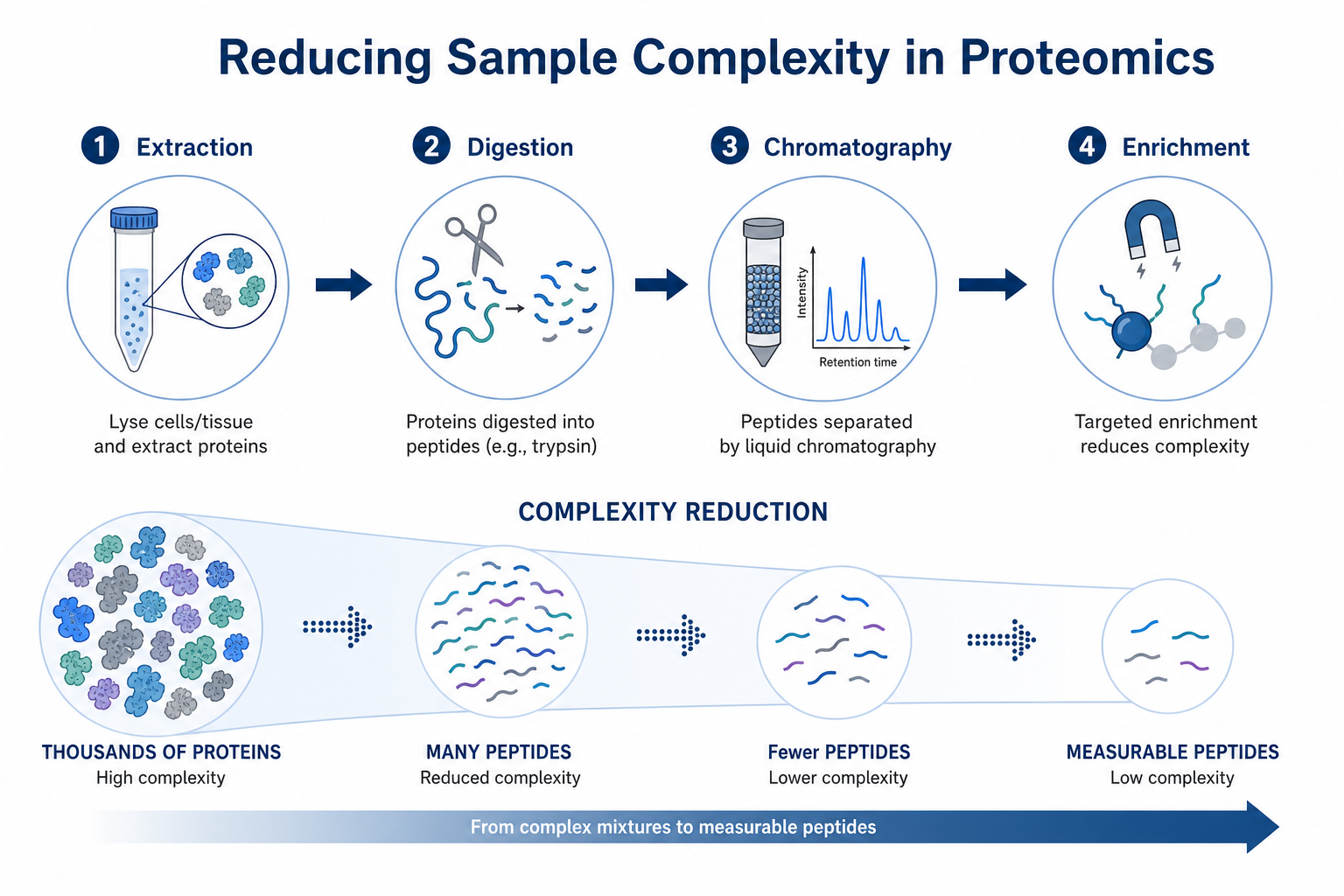
Figure 1. Mass spectrometry proteomics reduces sample complexity through extraction, digestion, chromatographic separation, and optional enrichment before LC-MS/MS measurement.
From Spectra to Protein-Level Evidence
The transformation from complex samples to interpretable evidence follows a defined analytical chain.
Peptide ions are measured during LC elution. MS/MS fragmentation generates product ions that reflect peptide sequence. Search software compares observed spectra with predicted fragment ions from protein databases and assigns peptide-spectrum matches with scoring metrics. False discovery rate control removes low-confidence matches before protein inference groups peptides into protein identifications.
Quantitative comparison is added when the study design requires abundance change across groups. Peptide ion intensities, reporter ion signals, or targeted transition areas are normalized and rolled up to protein groups for statistical testing. Modification mapping extends the same logic when enriched modified peptides are analyzed with localization-aware search parameters.
Bioinformatic interpretation connects protein lists to biological context. Pathway enrichment, network mapping, and functional annotation help researchers move from identified proteins to mechanism-level discussion. In biologics projects, interpretation may focus on sequence coverage, localized modifications, and comparability against a reference standard rather than pathway analysis.
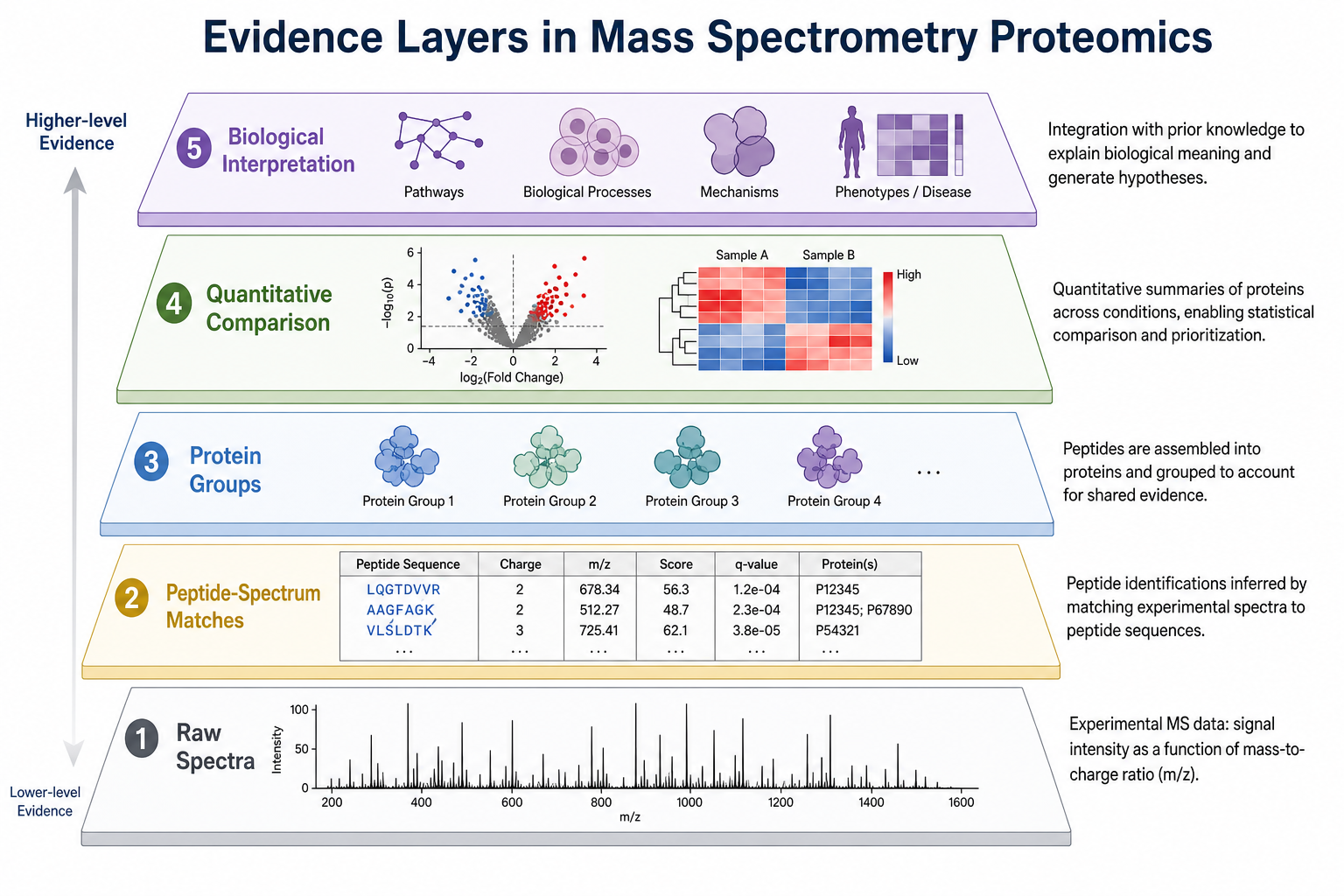
Figure 2. Interpretable biological evidence in mass spectrometry proteomics is built through linked evidence layers from raw spectra to protein reporting and biological context.
Related Services
Protein Identification Service
Quantitative Proteomics Service
Label-Free Quantitative Proteomics Service, MS Based
Proteomics Bioinformatic Analysis Service
Researchers converting complex protein samples into interpretable proteomics evidence can consult MtoZ Biolabs to review sample matrix, evidence type, and reporting depth before phase 1 preparation begins.
What Makes Proteomics Evidence Interpretable or Uninterpretable
Not every LC-MS/MS dataset becomes useful biological evidence. Interpretability depends on experimental design, data quality, and reporting choices.
|
Factor |
More interpretable outcome |
Less interpretable outcome |
|---|---|---|
|
Study design |
Clear comparison groups and defined biological question |
Underspecified controls or mixed sample types |
|
Sample handling |
Consistent extraction, digestion, and storage |
Variable prep that distorts quantitation |
|
Spectral quality |
High-confidence PSMs with fragment support |
Sparse or low-scoring matches |
|
Protein inference |
Transparent grouping rules and coverage notes |
Over-grouped proteins with shared peptide ambiguity |
|
Quantitation |
Normalized values with replicate consistency |
Single-run intensity without QC review |
|
Reporting |
Protein tables linked to pathway or QC context |
Raw files without summarized conclusions |
Teams that define the required evidence layer before analysis are more likely to receive reports that support biological interpretation rather than disconnected spectral archives.
Turning Evidence into Biological Conclusions
Interpretable evidence becomes a biological conclusion only when it is matched to the question asked.
In signaling research, a quantitative proteomics table may show that multiple proteins in one pathway change coherently after stimulation. In disease studies, differential abundance lists may highlight candidate biomarkers that require targeted follow-up. In biopharmaceutical development, peptide mapping may confirm that a product matches its intended sequence and that critical modifications remain within expected ranges.
The interpretation step should remain conservative. A protein identification list supports presence and coverage claims. A quantitative comparison supports relative abundance change when replicate design is adequate. A modification map supports site-level structural claims when localization confidence is sufficient.
Applications Where Interpretable Evidence Matters
Mass spectrometry proteomics is widely used when complex samples must be converted into decision-ready protein evidence.
In basic and translational research, LC-MS/MS supports pathway analysis after drug treatment, comparison of disease versus control tissues, and review of immunoprecipitated protein complexes. In biomarker discovery, discovery-scale quantitation narrows candidate panels before targeted PRM validation. In biologics characterization, peptide mapping and modification analysis convert purified product samples into sequence-level quality evidence. In interactome studies, affinity enrichment followed by LC-MS/MS identifies binding partners from complex lysates.
Across these applications, the common requirement is the same. The sample is complex at intake, but the deliverable must be a structured protein report that a scientist, reviewer, or quality team can interpret without reprocessing every raw spectrum manually.
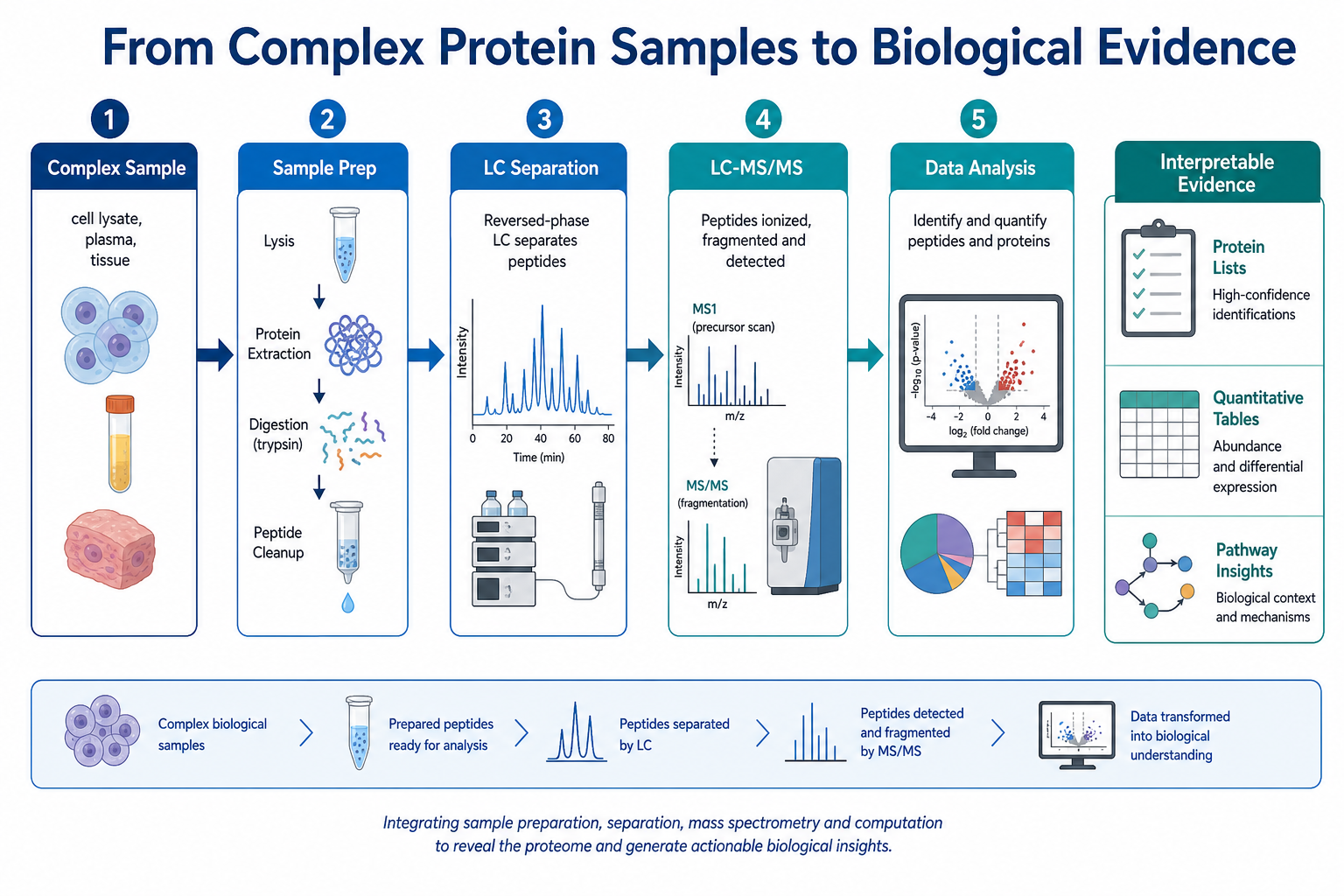
Figure 3. Mass spectrometry proteomics turns complex protein samples into interpretable biological evidence through staged preparation, LC-MS/MS measurement, and structured data analysis.
Advantages of the Evidence Transformation Approach
Converting complex samples into layered proteomics evidence provides several technical advantages.
Sequence-level confirmation supports protein assignment beyond abundance alone. Multiplexed measurement allows many proteins to be evaluated in one experiment when sample prep and acquisition are matched to the matrix. Quantitative comparison can be embedded in the same workflow that generates identification evidence. Modification mapping adds structural detail when enrichment and search parameters are configured correctly. Targeted follow-up can reuse discovery peptides to build reproducible monitoring assays.
These advantages matter because biological interpretation depends on evidence quality at each layer. A long protein list without quantitative reproducibility may not support mechanism claims. A quantitative dataset without confident identifications may not support target nomination. Mass spectrometry proteomics is effective when identification, quantitation, and reporting depth are planned together.
Sample Complexity and Workflow Selection
Different sample types require different complexity reduction strategies.
Cell and tissue lysates often use standard bottom-up digestion with optional fractionation when deeper coverage is required. Plasma and serum may require depletion or enrichment when low-abundance proteins are the focus. Purified biologics may move toward peptide mapping or intact mass review when the product is already low in matrix complexity.
Workflow selection should follow the evidence type needed at the end of the project.
Frequently Asked Questions
1. How does mass spectrometry proteomics turn complex samples into biological evidence?
It reduces sample complexity through preparation and chromatography, generates sequence-informative MS/MS spectra, assigns confident peptide matches, summarizes protein-level results, and connects those results to quantitative or pathway interpretation.
2. What is the difference between raw LC-MS/MS data and interpretable proteomics evidence?
Raw data are spectral measurements. Interpretable evidence is filtered, assigned, and summarized information such as protein identifications, abundance comparisons, or modification maps that can be linked to a biological or quality question.
3. Why is sample preparation important for interpretable proteomics results?
Preparation affects digestion efficiency, matrix cleanliness, modification preservation, and quantitation consistency. Poor preparation can reduce identification depth or distort abundance comparison even when the mass spectrometer performs normally.
4. Can one proteomics project produce both identification and quantitation evidence?
Yes. Many LC-MS/MS workflows generate identification and quantitative comparison in the same study when acquisition mode, replicate design, and normalization are planned from the start.
5. When should targeted proteomics follow discovery analysis?
Targeted PRM or MRM is often used after discovery when a defined protein panel must be measured repeatedly with higher reproducibility and clearer acceptance criteria.
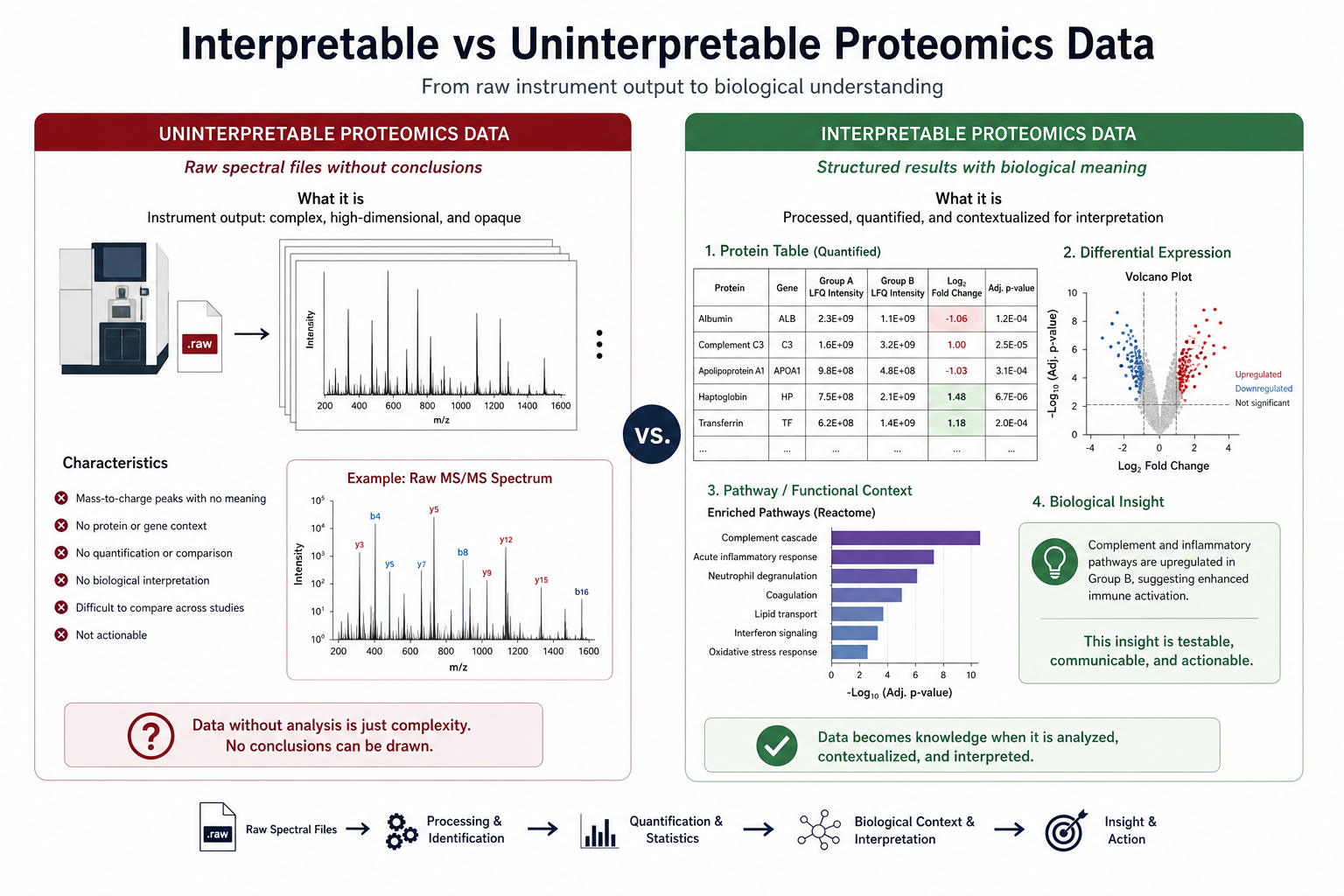
Figure 4. Interpretable proteomics evidence includes structured protein tables and biological context, whereas raw spectral files alone do not answer the original research question.
Conclusion
Mass spectrometry proteomics is valuable because it turns complex protein samples into layered, interpretable biological evidence. Sample preparation, LC separation, LC-MS/MS acquisition, database matching, protein inference, and bioinformatic review each convert analytical complexity into a reporting format that scientists can use. Projects succeed when the required evidence type is defined before preparation begins and when identification, quantitation, and interpretation are treated as linked steps rather than separate afterthoughts.
If your team needs to move from a complex lysate, tissue extract, biofluid, or biologics sample to a protein report that supports biological or quality decisions, MtoZ Biolabs can help align workflow design with the evidence layer your project requires. Contact MtoZ Biolabs to review sample complexity, LC-MS/MS strategy, and the reporting format needed to convert proteomics data into interpretable results.
How to order?




