






Mass Spectrometry Proteomics: Methods, Workflow, and Applications
Introduction
A research team can invest heavily in LC-MS/MS capacity and still receive proteomics data that do not answer the original question. One project may return a long protein list with weak quantitative reproducibility. Another may quantify peptides consistently yet miss the modified proteins that drove the study design. A biologics group may generate peptide mapping coverage while intact mass differences on the product remain unexplained. In mass spectrometry proteomics, these outcomes usually reflect a mismatch between analytical strategy, sample preparation, and reporting depth rather than a single failed instrument run.
Mass spectrometry proteomics uses LC-MS and tandem mass spectrometry to identify proteins, map modifications, and compare abundance across samples. The field spans bottom-up peptide-centric workflows, top-down intact protein analysis, and targeted PRM or MRM measurement of selected peptides. Each route produces a different type of structural and quantitative evidence. Understanding the methods, workflow logic, and application fit helps laboratories design projects that produce usable protein data rather than disconnected spectral files.
What Mass Spectrometry Proteomics Is
Mass spectrometry proteomics is the use of mass spectrometry to measure proteins and peptides and convert those measurements into biological or quality-related conclusions. The analytical chain usually includes sample preparation, chromatographic separation, MS detection, MS/MS fragmentation, database searching or spectral matching, and protein-level reporting.
Unlike immunoassay or gel-based methods, mass spectrometry proteomics can provide sequence-level evidence, modification site information, and multiplexed comparison across many proteins in one experiment. The trade-off is workflow complexity. Sample matrix, acquisition mode, search parameters, and false discovery rate control all influence whether the final report supports discovery, comparability, or validation goals.
In practice, mass spectrometry proteomics is not one fixed experiment. It is a family of LC-MS/MS workflows selected according to sample complexity, required structural resolution, and whether the project priority is identification, quantification, modification mapping, or targeted confirmation.
Main Approaches in Mass Spectrometry Proteomics
Three strategy families cover most project needs in mass spectrometry proteomics.
Bottom-up proteomics digests proteins into peptides before LC-MS/MS analysis. Protein identities are inferred from peptide-spectrum matches. This route supports large-scale discovery, PTM enrichment studies, and biologics peptide mapping because complex mixtures can be analyzed at high peptide throughput.
Top-down proteomics analyzes intact proteins or large fragments with minimal digestion. Proteoforms are characterized more directly when sample complexity is controlled. This route is often used for purified proteins, histone analysis, and intact variant review when peptide inference is not sufficient.
Targeted proteomics monitors selected peptide ions by PRM or MRM after discovery or when a defined protein panel must be measured repeatedly. This route supports assay-style confirmation, biomarker follow-up, and quality monitoring when broad discovery is no longer the primary need.
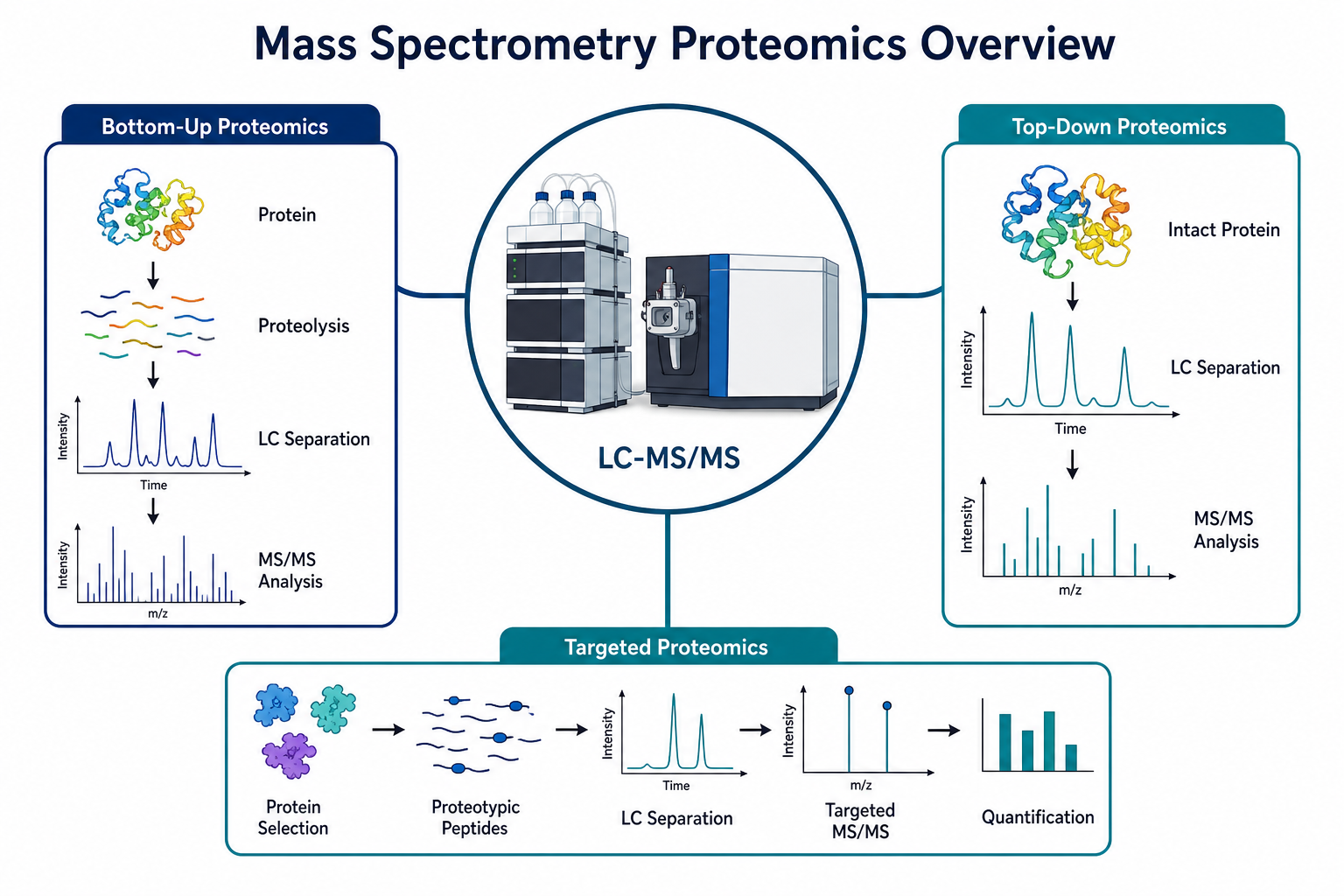
Figure 1. Mass spectrometry proteomics includes bottom-up, top-down, and targeted LC-MS/MS strategies matched to different structural and throughput needs.
Standard LC-MS/MS Workflow in Proteomics
A typical mass spectrometry proteomics project moves through linked experimental and computational phases.
Sample preparation extracts proteins or enriches modified peptides according to the biological question. Reduction, alkylation, digestion, and cleanup steps must be matched to the sample matrix so the material entering the LC system is stable and searchable.
Chromatographic separation reduces ionization competition before mass spectrometry analysis. Reversed-phase LC is a widely used peptide separation mode in bottom-up proteomics, while intact protein workflows may require additional fractionation upstream.
MS detection records precursor ions during the LC run. Survey scans establish which ions are present and which precursors may be selected for fragmentation or window-based acquisition.
MS/MS fragmentation generates product ions that support sequence assignment or targeted quantification. Fragment quality strongly affects identification confidence and modification localization.
Database searching or spectral library matching compares experimental spectra with predicted or reference spectra. False discovery rate control separates confident assignments from random matches.
Protein reporting groups peptide evidence into protein groups, quantification tables, or proteoform summaries depending on the workflow selected.
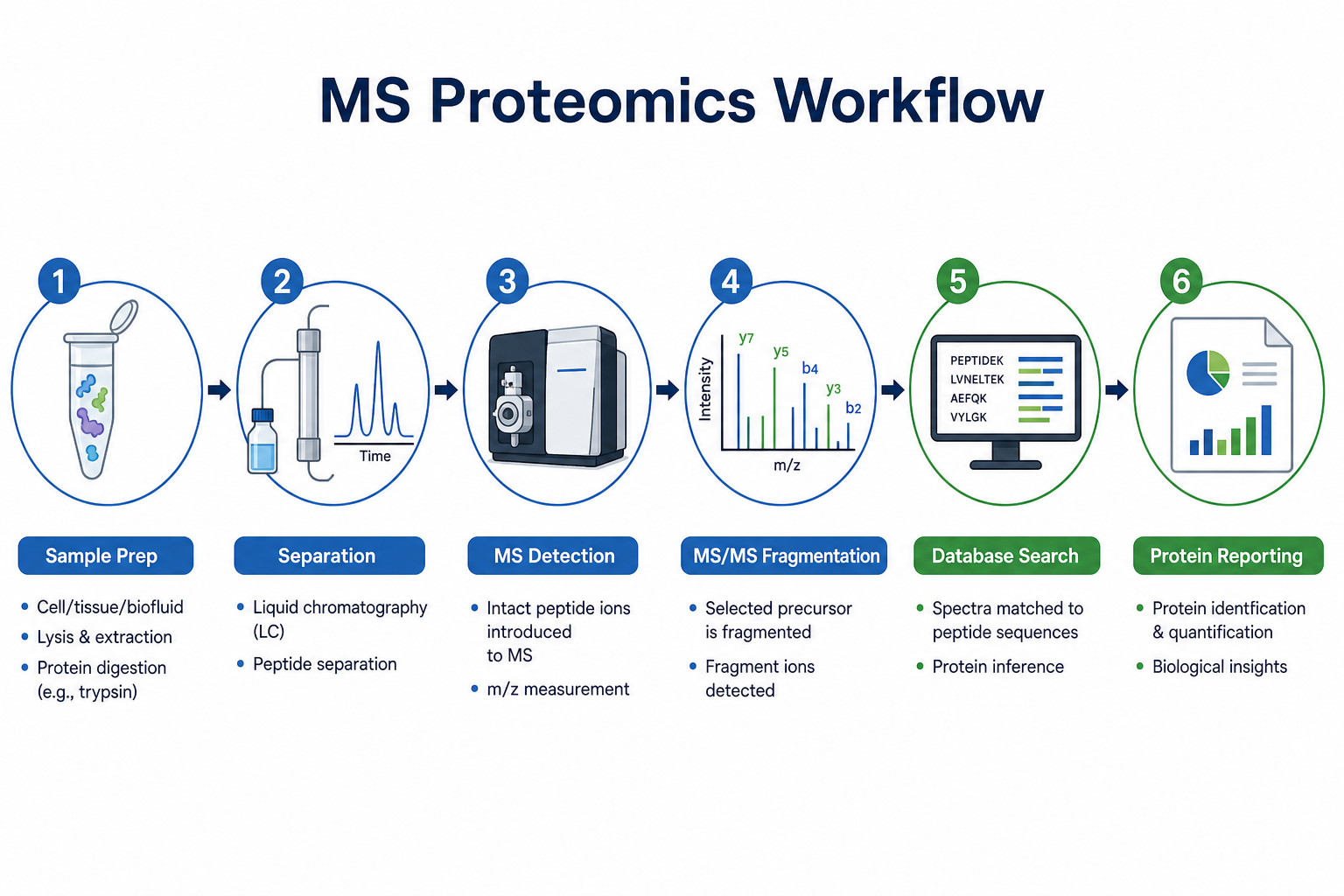
Figure 2. A standard mass spectrometry proteomics workflow links sample preparation, LC-MS/MS acquisition, database matching, and protein-level reporting.
How Mass Spectrometry Generates Proteomics Evidence
The value of mass spectrometry proteomics depends on what the instrument measures and how confidently those measurements are interpreted.
Precursor mass accuracy helps assign peptide or protein ions to the correct elemental composition window. High-resolution systems improve assignment confidence, especially in complex mixtures with many near-isobaric ions.
Fragment ion patterns provide sequence evidence in bottom-up workflows and structural detail in top-down or targeted experiments. Backbone cleavages that produce consecutive fragment ladders support residue-level assignment when spectral quality is sufficient.
Chromatographic retention time adds a third coordinate to feature matching. It supports label-free alignment across runs and helps distinguish isobaric peptides with different hydrophobicity.
Acquisition mode determines whether the dataset prioritizes deep identification or reproducible quantification. Data-dependent acquisition selects precursors during the run for MS/MS analysis. Data-independent acquisition fragments peptides across predefined windows and is often used when cohort comparison requires consistent measurement across samples.
Related Services
Mass spectrometry proteomics projects often combine identification, quantification, and reporting services according to sample type and study goal. Relevant options include:
Protein Identification Service
Quantitative Proteomics Service
Label-Free Quantitative Proteomics Service, MS Based
Proteomics Bioinformatic Analysis Service
Researchers planning mass spectrometry proteomics should define workflow route, acquisition strategy, and reporting depth before phase 1 sample intake and phase 2 data acquisition begin.
Quantification Strategies in Mass Spectrometry Proteomics
Quantification extends mass spectrometry proteomics from cataloging proteins to comparing them across conditions. The right strategy depends on sample number, labeling feasibility, and reproducibility requirements.
The table below summarizes common MS-based quantification modes used in proteomics projects.
|
Quantification Mode |
How Measurement Works |
Common Fit |
Main Review Point |
|---|---|---|---|
|
Label-free LC-MS |
Compares precursor or fragment intensities across runs |
Discovery cohorts without labeling |
Normalization and digestion consistency |
|
TMT or iTRAQ |
Uses reporter ions from isobaric labels |
Multiplexed treatment comparison |
Reporter balance and ratio compression |
|
SILAC |
Compares metabolic label incorporation in cells |
Cell-based mechanistic studies |
Labeling efficiency and mixing design |
|
DIA or SWATH |
Quantifies fragment signals across defined windows |
Reproducible cohort quantification |
Spectral library quality and alignment |
|
PRM or MRM |
Monitors selected peptide transitions |
Targeted confirmation and assay follow-up |
Transition selectivity and calibration |
Quantification should be planned before acquisition because the chosen mode affects sample preparation, run scheduling, and the statistics applied during analysis.
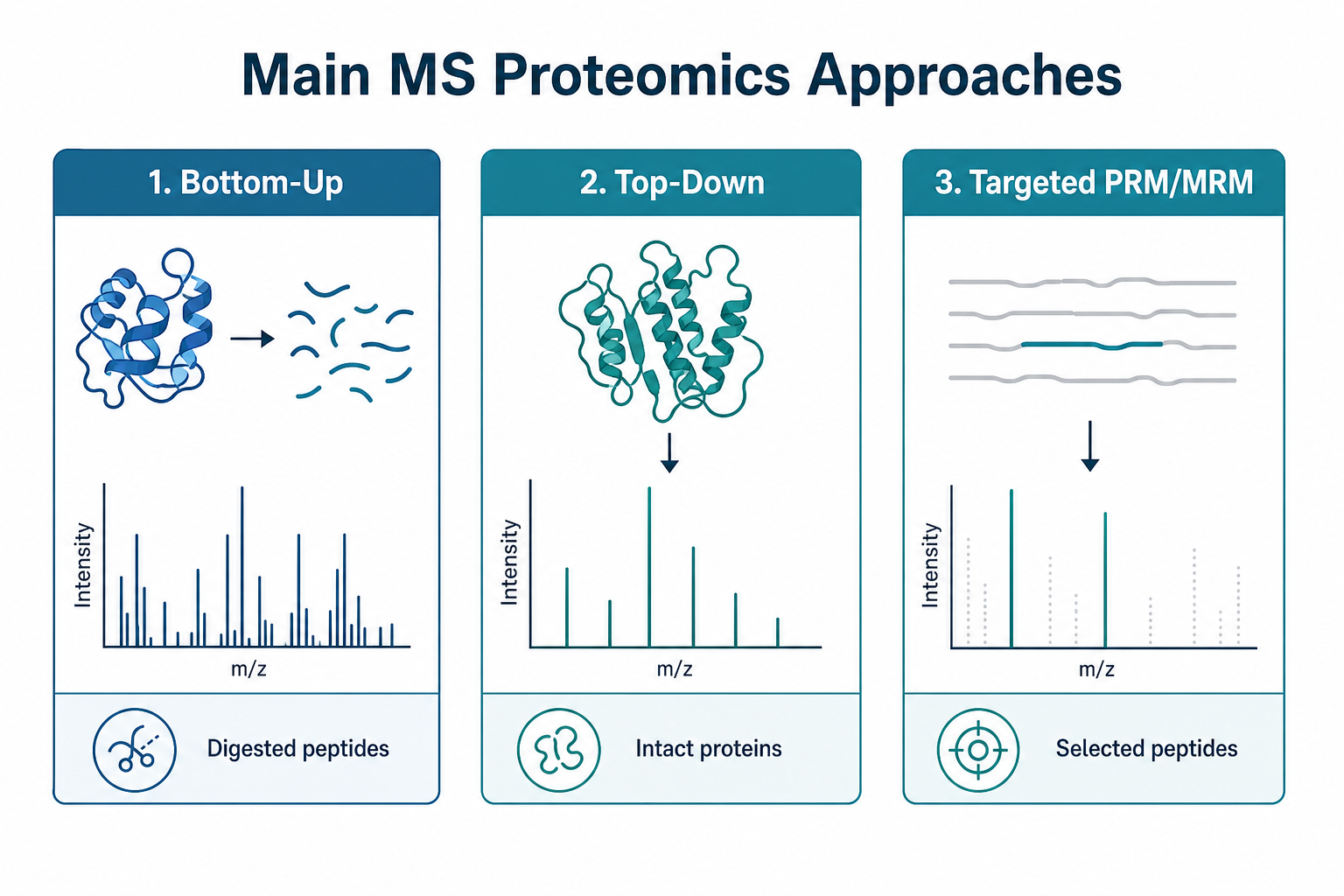
Figure 3. Mass spectrometry proteomics approaches differ in whether the MS system measures digested peptides, intact proteins, or selected peptide targets.
Data Analysis and Reporting in MS Proteomics
Mass spectrometry proteomics does not end at raw spectral acquisition. Analysis determines whether the data support the intended conclusion.
Peptide-spectrum match review is the first quality gate in bottom-up projects. Score thresholds, false discovery rate controls, and manual review of modified peptides prevent over-interpretation of weak spectra.
Protein inference translates peptide evidence into protein groups. Shared peptides across protein families create ambiguity that should be reported clearly rather than collapsed into oversimplified protein lists.
Quantitative filtering removes low-quality features, applies normalization, and evaluates missing values before biological comparison. Replicate agreement and batch structure should be reviewed before treatment effects are discussed.
Reporting layers should match project needs. A discovery report may emphasize protein groups and pathway context. A biologics peptide mapping report may emphasize coverage maps and modified peptide evidence. A targeted assay report may emphasize transition quality and repeat measurement performance.
Applications of Mass Spectrometry Proteomics
Mass spectrometry proteomics supports a wide range of research and biopharmaceutical applications when workflow design matches the question.
In basic and translational research, LC-MS/MS is used for protein identification in cell and tissue lysates, differential expression analysis across treatment groups, and post-translational modification mapping after enrichment. Signaling studies often combine phosphoproteomics enrichment with modified peptide searching.
In biopharmaceutical development, mass spectrometry proteomics supports peptide mapping for sequence coverage, host cell protein analysis, comparability review after process changes, and impurity tracing when peptide or intact protein evidence is required.
In biomarker and targeted programs, discovery experiments often lead to PRM assay development for repeated measurement of selected proteins or modification sites across larger sample sets.
In proteoform-focused analysis, top-down or intact protein MS may be added when peptide-level data cannot explain intact mass differences or modification coexistence on one molecule.
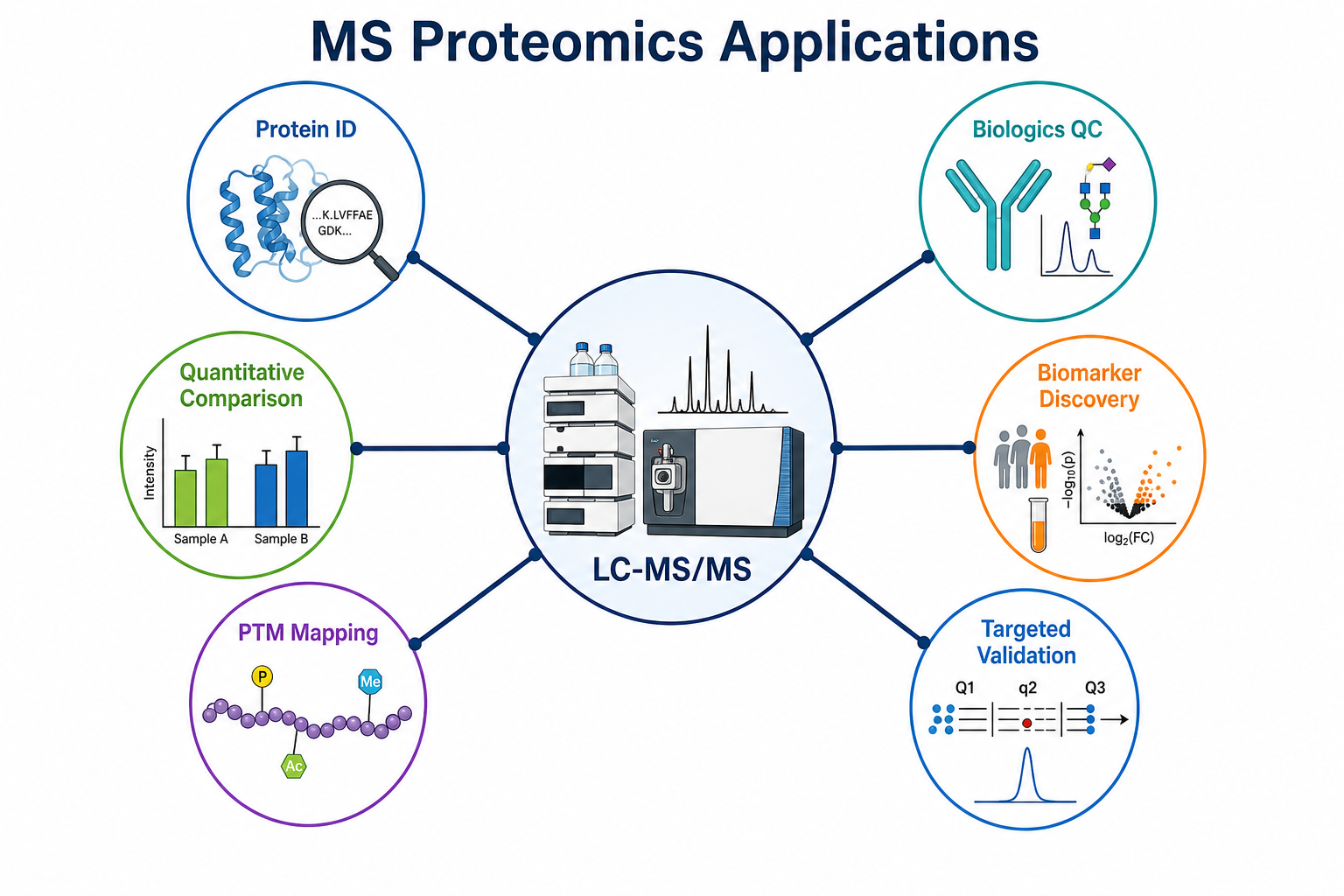
Figure 4. Mass spectrometry proteomics supports identification, quantification, modification mapping, biologics characterization, and targeted validation workflows.
Project Design Considerations
Strong mass spectrometry proteomics outcomes depend on decisions made before samples enter the LC system.
Sample matrix defines preparation complexity. Cell lysates, plasma, purified proteins, and biologics drug substance each require different cleanup, digestion, and loading strategies.
Structural resolution defines workflow route. Broad discovery usually begins with bottom-up analysis. Intact proteoform questions may require top-down or intact protein follow-up.
Acquisition depth should match the reporting goal. Deep identification, cohort quantification, and targeted confirmation place different demands on gradient length, replicate number, and instrument scheduling.
Reference database quality affects identification completeness. Custom databases, contaminant filtering, and isoform representation should be reviewed before searching begins.
Reporting format should be defined early. Publication, comparability, and assay validation projects require different deliverables and review standards.
Frequently Asked Questions
What is mass spectrometry proteomics used for?
Mass spectrometry proteomics is used to identify proteins, compare abundance across samples, map post-translational modifications, support biologics characterization, and confirm selected proteins by targeted MS methods.
How is mass spectrometry proteomics different from protein gel or antibody methods?
Mass spectrometry proteomics can provide sequence-level and site-level evidence across many proteins in one experiment. Immunoassays and gel-based methods are useful for targeted detection but usually provide less sequence detail and lower multiplexing depth.
What is the standard workflow in mass spectrometry proteomics?
Bottom-up LC-MS/MS is a widely used workflow because it supports complex mixtures, established database searching, and flexible quantification modes across many project types.
When is top-down proteomics used instead of bottom-up analysis?
Top-down proteomics is often used when intact proteoform characterization is required and sample complexity can be controlled sufficiently for intact protein measurement.
What should a mass spectrometry proteomics report include?
A useful report typically includes peptide or proteoform evidence, protein-level summaries, quantification tables when applicable, QC notes, and interpretation guidance that distinguishes confident calls from provisional features.
Conclusion
Mass spectrometry proteomics provides a flexible framework for protein identification, quantification, and structural characterization. LC separation reduces sample complexity before MS analysis. Tandem mass spectrometry generates the fragment or transition evidence that drives database searching, protein inference, and many quantitative comparisons. Workflow route, acquisition mode, and analysis depth determine whether the resulting data support discovery, biologics review, or targeted validation.
Reliable proteomics outcomes depend on treating mass spectrometry as part of an integrated experimental system. Sample preparation shapes the ions entering the instrument. Acquisition design determines whether the dataset emphasizes depth, reproducibility, or selective confirmation. Analysis and reporting choices determine whether the final protein evidence is fit for the biological or quality decision behind the project.
Teams planning mass spectrometry proteomics can contact MtoZ Biolabs to review sample type, workflow route, and reporting depth before acquisition begins.
If a project requires both discovery identification and targeted follow-up, MtoZ Biolabs can help align bottom-up screening with PRM or intact protein confirmation in a staged workflow.
Researchers preparing mass spectrometry proteomics studies for publication or biologics review can request a project assessment from MtoZ Biolabs to define phase 1 experimental scope and phase 2 deliverables.
How to order?




