






Mass Spec Based Proteomics
Introduction
Researchers searching for proteomics services often encounter the phrase mass spec based proteomics before the full workflow is clear. A collaborator may request a mass spec proteomics experiment when what they actually need is protein identification, quantitative comparison, or modification mapping. A grant application may list LC-MS/MS capacity without explaining how peptide measurements become protein-level results. The term is widely used in laboratories and service descriptions, but its scope is not always defined in plain language.
Mass spec based proteomics is the use of mass spectrometry to measure peptides and proteins and convert those measurements into identification, quantitation, and modification results. The approach replaces or supplements antibody-dependent assays by generating sequence-level evidence from ion mass and fragmentation patterns. It supports discovery profiling, pathway comparison, PTM mapping, biologics characterization, and targeted protein monitoring across many sample types.
This article explains what mass spec based proteomics is, how the analytical stack works, which experiment types it includes, and how researchers can match mass spec proteomics workflows to common project goals.
What Mass Spec Based Proteomics Is
Mass spec based proteomics is proteomics analysis in which mass spectrometry is the primary detection and measurement technology. Proteins or peptides are ionized, their mass-to-charge ratio is recorded, and in tandem MS/MS mode fragment ions are captured to support sequence assignment.
In most projects, the workflow is bottom-up. Proteins are extracted from biological samples, digested into peptides, separated by liquid chromatography, and analyzed by LC-MS or LC-MS/MS. Software matches experimental spectra to protein sequence databases and summarizes results as protein lists, abundance tables, or modification maps.
Mass spec based proteomics is therefore both a field and a method family. The field studies the protein complement of biological systems. The method family uses mass spectrometry as the analytical engine that makes large-scale protein measurement practical in complex matrices such as cell lysates, tissues, plasma, and purified biologics.
Why Proteomics Is Built Around Mass Spectrometry
Mass spectrometry became central to proteomics because it addresses limitations of older protein analysis approaches.
Antibody-based methods such as western blot and ELISA require prior knowledge of the target and a qualified reagent for each protein. Mass spec based proteomics can identify proteins from database searching even when no antibody exists. Gel-based methods provide visual comparison but limited sequence detail. Mass spectrometry provides fragment ion evidence that supports residue-level assignment. Single-protein assays scale poorly when hundreds of proteins must be compared across conditions. LC-MS/MS can measure many peptides in one experiment.
Mass spec based proteomics also supports flexible experimental design. The same platform can run discovery identification, label-free quantitation, isobaric multiplexing, PTM enrichment analysis, and targeted PRM monitoring when acquisition parameters are adjusted for the project goal.
The Mass Spec Proteomics Technology Stack
A mass spec based proteomics project moves through linked layers that convert a biological sample into an interpretable report.
Sample preparation extracts proteins and removes interferents that would suppress ionization. Digestion converts proteins into peptides suited to reversed-phase chromatography and tandem mass spectrometry. Liquid chromatography separates peptides in time so fewer ions enter the source at once. Mass spectrometry records precursor m/z values and intensities, and in MS/MS mode generates product ions for identification. Bioinformatics assigns peptide-spectrum matches, applies false discovery rate filtering, infers protein groups, and produces quantitation or modification summaries.
Each layer affects the next. Poor digestion reduces identification depth. Weak chromatography increases ion suppression. Incorrect search parameters inflate false positives. Mass spec based proteomics therefore depends on coordinated experimental and computational design rather than instrument performance alone.
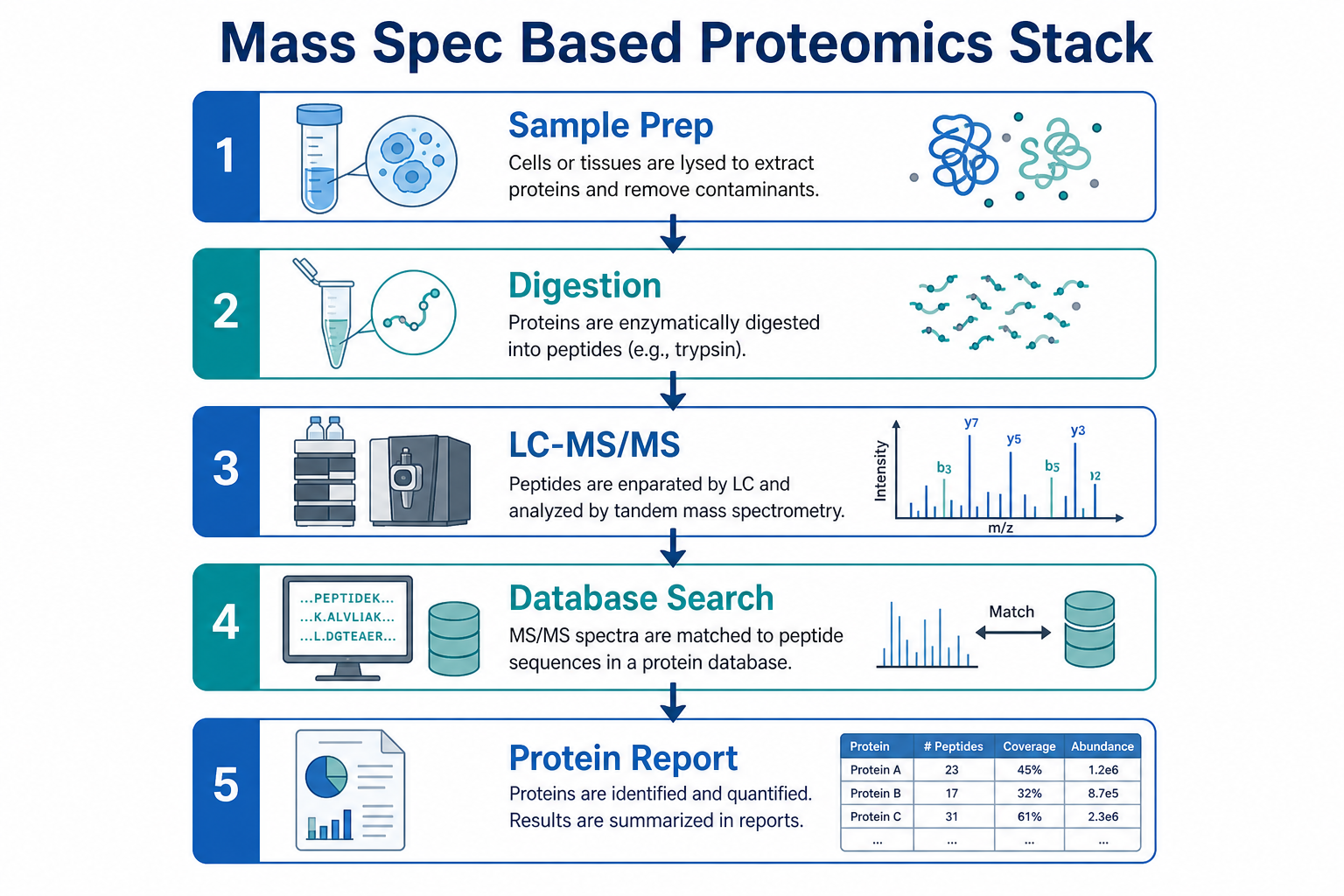
Figure 1. Mass spec based proteomics links sample preparation, peptide digestion, LC-MS/MS measurement, and bioinformatics into a coordinated analytical stack.
Main Experiment Types in Mass Spec Based Proteomics
Mass spec based proteomics is not a single experiment. It includes several strategy families selected according to sample type and reporting goal.
Bottom-up proteomics digests proteins into peptides before LC-MS/MS. This is the dominant route for discovery identification, PTM studies, and biologics peptide mapping because it handles complex mixtures efficiently.
Top-down proteomics analyzes intact proteins or large fragments with minimal digestion. This route is used when proteoform characterization of purified proteins is required and sample complexity is controlled.
Targeted proteomics monitors selected peptide ions by PRM or MRM. This route supports assay-style measurement of defined protein panels after discovery or when repeated quantitation is the primary goal.
PTM-focused proteomics enriches modified peptides before LC-MS/MS to map phosphorylation, glycosylation, acetylation, ubiquitination, and other modifications at site level.
|
Experiment Type |
Sample Entry |
Primary Output |
|---|---|---|
|
Bottom-up discovery |
Digested peptides from lysate or tissue |
Protein identification list |
|
Label-free quantitation |
Digested peptides across replicate groups |
Differential abundance table |
|
Isobaric labeling |
Multiplexed digested peptides |
Group comparison within one run |
|
Top-down |
Intact protein or large fragment |
Proteoform mass and fragment evidence |
|
Targeted PRM |
Selected peptide panel |
Panel intensity values |
|
PTM proteomics |
Enriched modified peptides |
Site-level modification map |
Related Services
Mass Spectrometry-Based Protein Identification Service
Quantitative Proteomics Service
Label-Free Quantitative Proteomics Service, MS Based
Proteomics Bioinformatic Analysis Service
Researchers planning a mass spec based proteomics project can consult MtoZ Biolabs to review sample type, experiment category, and the reporting format best matched to identification, quantitation, or modification analysis.
What Mass Spec Proteomics Can Measure
Mass spec based proteomics addresses several categories of protein information in one analytical platform.
Protein identity is established through peptide-spectrum matches from LC-MS/MS fragmentation and database searching. Relative abundance is derived from peptide ion intensities compared across samples using label-free, isobaric, or metabolic labeling strategies. Post-translational modifications are detected through mass shifts and altered fragmentation patterns after enrichment. Sequence coverage in biologics is confirmed by mapping digested peptides against a reference protein sequence. Targeted panels are monitored by PRM when selected proteins require repeated measurement.
The measurement scope depends on workflow design. A discovery project may identify thousands of proteins with moderate quantitation depth. A targeted project may measure twenty peptides with high reproducibility and limited new identification.
From Sample to Report in Mass Spec Proteomics
A typical mass spec based proteomics project produces structured outputs that support biological or quality conclusions.
Raw LC-MS/MS files contain survey scans and fragmentation spectra for each peptide elution event. Peptide-spectrum match tables list assigned sequences with confidence scores. Protein inference groups peptides into protein identifications with false discovery rate filtering. Quantitation tables compare peptide or protein abundance across sample groups with statistical review. Modification reports assign sites and localization scores for enriched PTM workflows.
Researchers should define the expected deliverable before analysis begins. A protein list alone may not support pathway statistics. A quantitation table without identification evidence may not support mechanistic claims about specific proteins. Mass spec based proteomics reporting should match the study design.
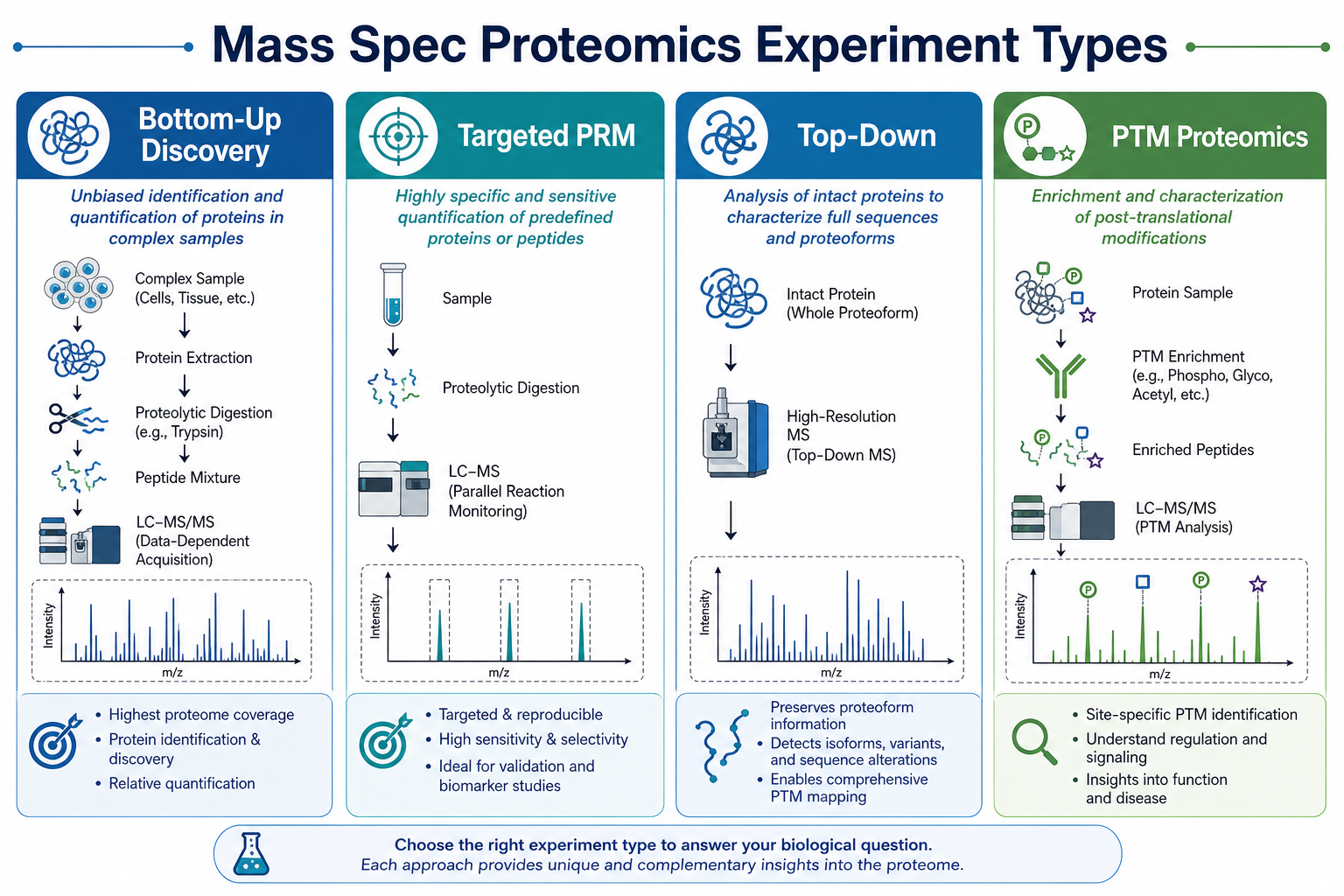
Figure 2. Mass spec based proteomics includes bottom-up discovery, targeted PRM, top-down characterization, and PTM-focused enrichment workflows.
Common Applications of Mass Spec Based Proteomics
Mass spec based proteomics is applied across research and product characterization settings.
Basic research teams use it to compare protein profiles between treated and control cells, identify signaling pathway changes, and map modification responses to stimuli. Biomarker programs use discovery proteomics to nominate candidate proteins in plasma or tissue and targeted mass spec to validate panels in larger cohorts. Biopharmaceutical groups use peptide mapping, PTM analysis, and intact mass measurement to characterize therapeutic proteins and antibodies. Drug discovery teams combine quantitative proteomics with compound treatment to study mechanism of action at the protein level.
The same LC-MS/MS platform supports these applications when sample preparation and acquisition mode are configured for the biological or quality question.
|
Application Area |
Typical Sample |
Mass Spec Workflow |
|---|---|---|
|
Signaling biology |
Cell lysate |
Discovery LC-MS/MS plus label-free quantitation |
|
Biomarker discovery |
Plasma or serum |
Fractionation plus discovery LC-MS/MS |
|
Biologics QC |
Purified antibody |
Peptide mapping LC-MS/MS |
|
PTM research |
Stimulated cells |
Enrichment plus modified peptide searching |
|
Target validation |
Lysate or biofluid |
Targeted PRM panel |
How to Plan a Mass Spec Proteomics Project
Project planning should begin with the evidence type required, not the instrument name.
Researchers should define whether the priority is identification, quantitation, modification mapping, or targeted monitoring. Sample type and amount should be reviewed because plasma, membrane fractions, and purified proteins require different preparation paths. Replication and group design should be set before analysis when statistical comparison is a project goal. The acquisition mode should match the strategy. DDA supports deep identification. DIA supports reproducible quantitation across cohorts. PRM supports panel monitoring.
Clear communication of the expected report format reduces mismatches between experimental design and biological conclusions.
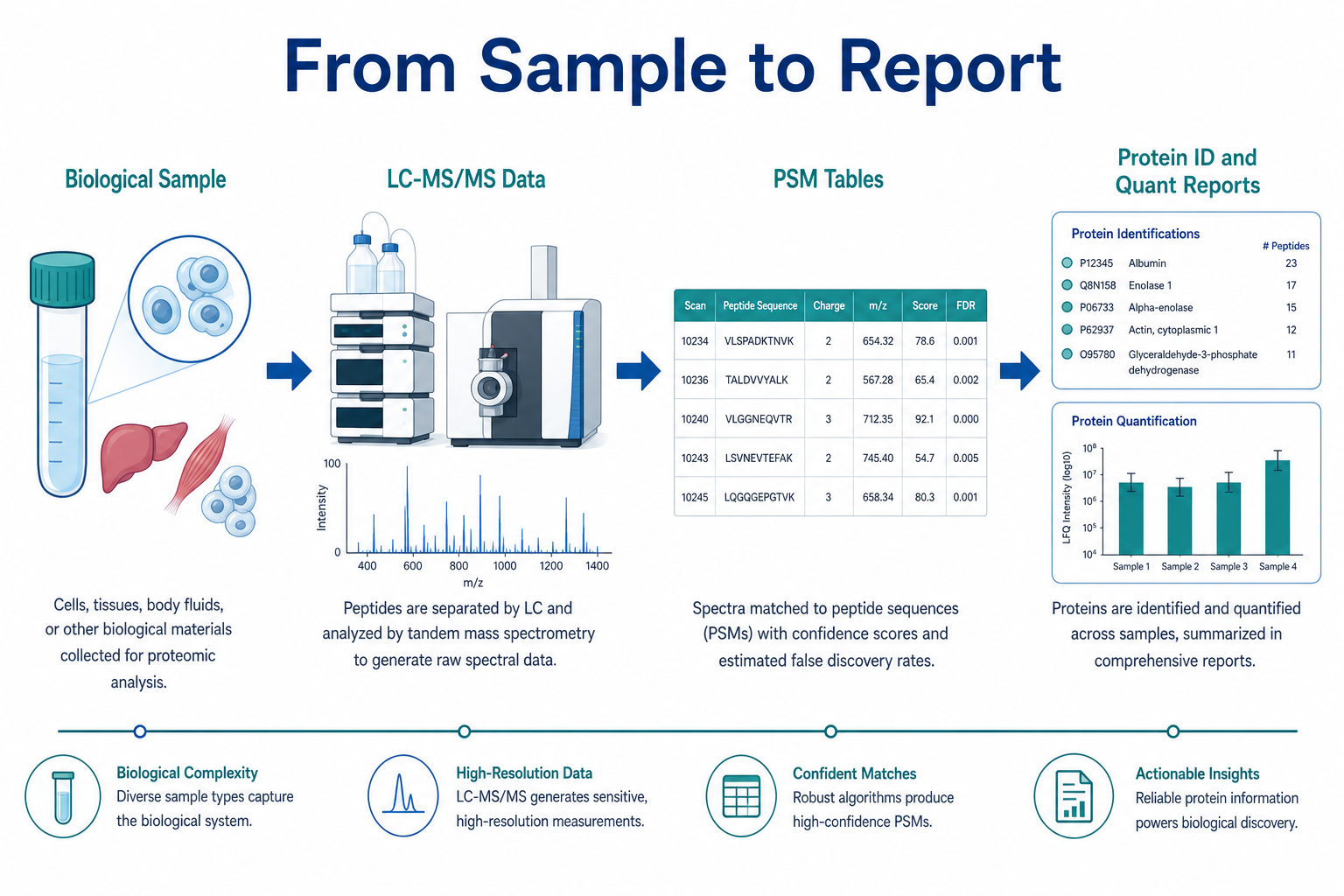
Figure 3. Mass spec based proteomics converts biological samples through LC-MS/MS measurement into peptide-spectrum matches, protein inference, and quantitation or modification reports.
Frequently Asked Questions
1. What is mass spec based proteomics?
Mass spec based proteomics is the use of mass spectrometry to identify, quantify, and characterize proteins and peptides in biological samples through LC-MS or LC-MS/MS analysis and database searching.
2. How is mass spec proteomics different from western blot or ELISA?
Mass spec based proteomics can measure many proteins with sequence evidence without requiring an antibody for each target. Western blot and ELISA are efficient for single known proteins when qualified reagents exist.
3. What is the most common mass spec proteomics workflow?
Bottom-up LC-MS/MS is the most common workflow. Proteins are digested into peptides, separated by liquid chromatography, and identified through tandem mass spectrometry and database searching.
4. Can mass spec based proteomics identify and quantify proteins in the same project?
Yes. Discovery LC-MS/MS supports identification, and peptide ion intensities from the same or related runs support relative quantitation across sample groups.
5. What samples are suitable for mass spec based proteomics?
Common samples include cell lysates, tissues, plasma, serum, immunoprecipitation eluates, exosomes, and purified proteins or biologics.
Conclusion
Mass spec based proteomics is the mass spectrometry-driven branch of proteomics that converts complex protein samples into identification, quantitation, and modification evidence. The field rests on a coordinated stack of sample preparation, peptide measurement by LC-MS/MS, and bioinformatics interpretation. Experiment types range from bottom-up discovery and PTM mapping to targeted PRM and top-down characterization, each producing different reporting outputs.
Understanding what mass spec based proteomics measures and how experiment types differ helps researchers plan projects with appropriate expectations and select workflows matched to their biological or product characterization goals. Teams beginning a mass spec proteomics project can contact MtoZ Biolabs to review sample type, experiment category, and the analytical path best suited to their research question.
How to order?




