






Lycium barbarum Polysaccharide Analysis Service
Lycium barbarum polysaccharide (LBP) is an important natural macromolecular compound extracted from the Lycium barbarum plant, mainly found in its fruits, leaves, and roots. As a water-soluble polysaccharide, Lycium barbarum polysaccharide has various biological activities such as immune regulation, antioxidant, anti-aging, and blood sugar-lowering effects. It is widely used in health supplements, nutritional supplements, and cosmetics. Lycium barbarum polysaccharide is not only the core component of the medicinal and nutritional value of Lycium barbarum but also an important topic in modern pharmacological research.
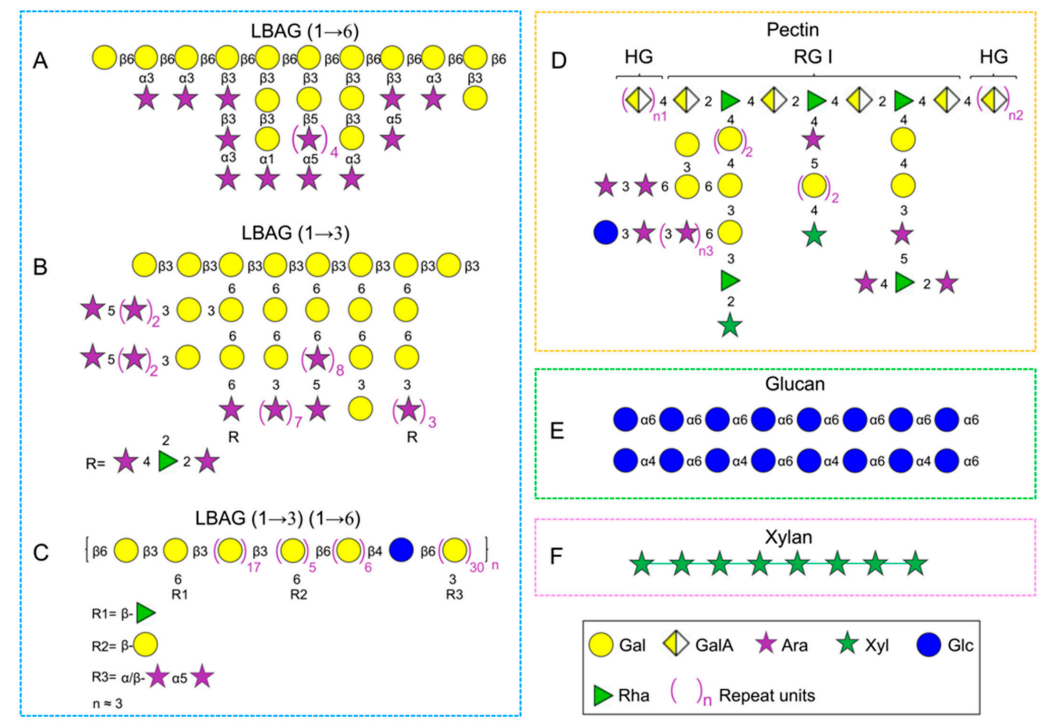
Cao, C. et al. Foods. 2022.
Figure 1. The hypothetical structures of LBPs
The structural characteristics, molecular weight, monosaccharide composition, and biological activities of Lycium barbarum polysaccharides are critical issues in scientific research. Accurate analysis of the structure and function of Lycium barbarum polysaccharides provides important evidence for its pharmacological effects, functional foods, and health products. Therefore, Lycium barbarum polysaccharide analysis is not only an important tool for quality control but also a key step in studying its pharmacological mechanisms, product development, and standardization.
Using advanced chromatography-mass spectrometry platforms, MtoZ Biolabs offers a high-resolution and reproducible Lycium barbarum polysaccharide analysis service that enables structural analysis, molecular weight determination, and biological activity evaluation of Lycium barbarum polysaccharide samples, providing reliable and scientific data support for research, pharmaceuticals, food, and health industries.
Services at MtoZ Biolabs
The Lycium barbarum polysaccharide analysis service provided by MtoZ Biolabs focuses on the following two core analysis directions:
1. Structural Analysis
The molecular structure of Lycium barbarum polysaccharide directly determines its biological characteristics, so accurate structural analysis is crucial for studying its biological activities. We use advanced technology platforms to perform detailed structural analysis of Lycium barbarum polysaccharide, including the following methods:
🔹Fourier-Transform Infrared (FT-IR) Analysis
Using FT-IR technology, we can detect the functional groups and glycosidic linkage types of Lycium barbarum polysaccharide. FT-IR can provide the characteristic absorption peaks of functional groups in the molecule, helping us confirm the typical β-1,4 glycosidic bonds and other possible modification groups in Lycium barbarum polysaccharide.
🔹Nuclear Magnetic Resonance (NMR) Analysis
Nuclear magnetic resonance (NMR) technology is the key method for analyzing the structure of Lycium barbarum polysaccharide. Through 1D and 2D NMR spectra, we can accurately identify the monosaccharide units, glycosidic bond connections, branching structures, and terminal groups of Lycium barbarum polysaccharide. NMR analysis can provide us with detailed information on polysaccharide chain length, branching degree, and molecular interactions, revealing its possible three-dimensional structure.
🔹Mass Spectrometry (MS) Analysis
Using mass spectrometry (MS) technology, we can further verify the glycan chain structure of Lycium barbarum polysaccharide through fragmentation spectra. MS analysis not only helps us establish the molecular weight but also allows us to confirm the glycosidic bond types, monosaccharide composition, and linkage patterns of Lycium barbarum polysaccharide, providing high-resolution data support.
🔹Gel Permeation Chromatography (GPC)
Gel permeation chromatography (GPC) is used to analyze the molecular weight and distribution of Lycium barbarum polysaccharide. Through GPC, we can obtain the molecular weight distribution information of Lycium barbarum polysaccharide, providing an important basis for evaluating its physical properties and bioavailability.
2. Biological Activity Analysis
The biological activity of Lycium barbarum polysaccharide is an important reflection of its application value, mainly manifested in immune regulation, antioxidant, anti-aging, and blood sugar-lowering effects. Our Lycium barbarum polysaccharide analysis service utilizes a variety of biological experimental methods to evaluate the biological activity of Lycium barbarum polysaccharide, providing scientific data for its application in health product development and pharmacological research. Specific methods include:
🔹Immune Modulation Activity Analysis
Lycium barbarum polysaccharide has significant immune modulation effects. We assess its activation effect on immune cells by detecting cytokines (such as IL-6, TNF-α). Through ELISA (enzyme-linked immunosorbent assay) and other techniques, we can quantify and analyze the specific role of Lycium barbarum polysaccharide in regulating immune responses.
🔹Antioxidant Activity Analysis
The antioxidant properties of Lycium barbarum polysaccharide can be evaluated through various methods. We use the DPPH (2,2-diphenyl-1-picrylhydrazyl) radical scavenging assay and ABTS (2,2'-azino-bis(3-ethylbenzthiazoline-6-sulfonic acid)) assay to detect the ability of Lycium barbarum polysaccharide to scavenge free radicals.
🔹Anti-Aging Activity Analysis
Lycium barbarum polysaccharide is widely regarded as having anti-aging effects. We quantitatively analyze the anti-aging effects of Lycium barbarum polysaccharide by assessing cell proliferation ability, inhibition of cell apoptosis, and response to oxidative stress. Common tests include cell viability assays (such as the MTT method) and DNA damage repair ability tests.
🔹Anti-Diabetic Activity Analysis
We assess the effect of Lycium barbarum polysaccharide on glucose metabolism in vitro, such as inhibiting α-glucosidase and α-amylase activity, to evaluate its potential application in diabetes management.
Analysis Workflow
1. Sample Pretreatment: Pretreatment of samples, such as Lycium barbarum powder, extract, or purified polysaccharide, to remove impurities and ensure the purity of polysaccharides.
2. Structural Analysis: Using FT-IR, NMR, and MS to analyze the structural features, including monosaccharide composition, glycosidic bond types, and molecular weight distribution.
3. Biological Activity Testing: Evaluating biological activity through cell-based assays and biochemical tests (such as ELISA, antioxidant activity tests), focusing on immune modulation, antioxidant, and other functions.
4. Data Analysis and Report Generation: All experimental results will be analyzed and interpreted by experienced analysts, and a detailed analysis report will be generated.
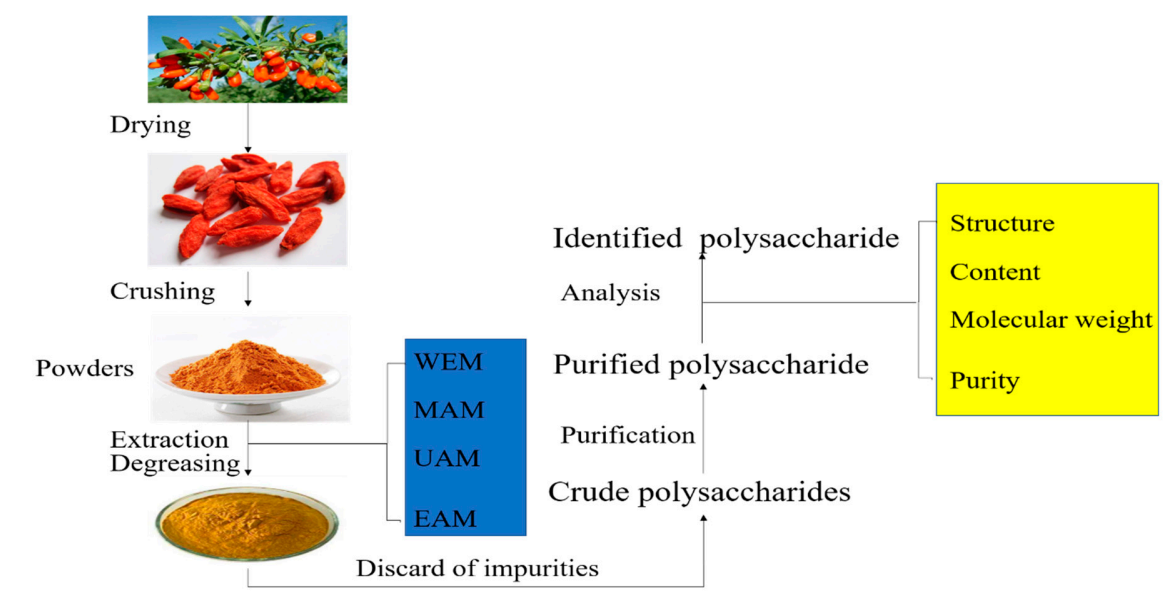
Tian, X. et al. Biomolecules. 2019.
Figure 2. The Flowchart of the Extraction, Purification, and Analysis of Lycium Barbarum Polysaccharides
Service Advantages
1. Multi-Technology Integrated Analysis
MtoZ Biolabs provides a variety of advanced analytical platforms, including FT-IR, NMR, MS, GPC, etc., to comprehensively analyze the structure and biological activities of Lycium barbarum polysaccharide, ensuring the accuracy and completeness of the results.
2. Highly Customized Service
Based on client needs and sample characteristics, MtoZ Biolabs provides personalized Lycium barbarum polysaccharide analysis service and flexibly adjusts strategies to meet the research and application needs across different fields.
3. Experienced Technical Team
Our technical team has extensive experience in polysaccharide chemistry and biological activity testing, providing detailed result interpretation and professional technical support to help clients better understand their data.
Applications
☑️ Pharmacological Research and Health Product Development: Assess the immune modulation, antioxidant, and other biological activities of Lycium barbarum polysaccharide to support drug and health product development.
☑️ Food Functional Ingredient Analysis: Study the potential application of Lycium barbarum polysaccharide in food products and evaluate its health benefits.
☑️ Basic Biological Research: Investigate the mechanisms of Lycium barbarum polysaccharides in cellular metabolism and immune responses to support clinical research.
Sample Submission Suggestions
1. Sample Type: Powder, lyophilized sample, extract, or semi-purified sample is acceptable.
2. Sample Amount: It is recommended to provide ≥10 mg of dry sample or ≥1 mL of liquid sample (concentration ≥5 mg/mL).
3. Purity Requirements: If the sample contains a high level of impurities (such as proteins or pigments), please inform us in advance so that appropriate pretreatment methods can be devised.
4. Storage and Transportation: Samples should be stored at low temperatures and sealed. During transportation, dry ice or ice packs are recommended.
5. Additional Information: Please provide the sample source, extraction method, and analysis goals to help us design a tailored solution.
Deliverables
1. Molecular weight and distribution results
2. Monosaccharide composition and ratio analysis report
3. Glycan chain structure and glycosidic linkage analysis data
4. Biological activity test results and analysis report
5. Sample purity and impurity evaluation report
If you are conducting Lycium barbarum polysaccharide-related research or need precise analysis of your samples, please contact MtoZ Biolabs. We will provide reliable scientific processes and data support to assist in your research or product development.
How to order?




