






LC-MS/MS Workflows for Serum, Plasma, and CSF Proteomics
Reliable serum, plasma, and cerebrospinal fluid proteomics depends on controlling the analytical workflow before LC-MS/MS acquisition begins. Variation introduced during sample collection, storage, group assignment, protein preparation, and peptide generation can propagate into quantitative results and biological interpretation. Pre-analytical design is therefore a major determinant of whether the final dataset supports the intended comparison.
Serum, plasma, and CSF differ in clotting status, protein composition, dynamic range, contamination risks, and available input. Each matrix requires a workflow aligned with the biological objective, experimental groups, replicate structure, and planned data output. The first step is therefore to define the sample matrix and study design before selecting preparation and acquisition strategies.
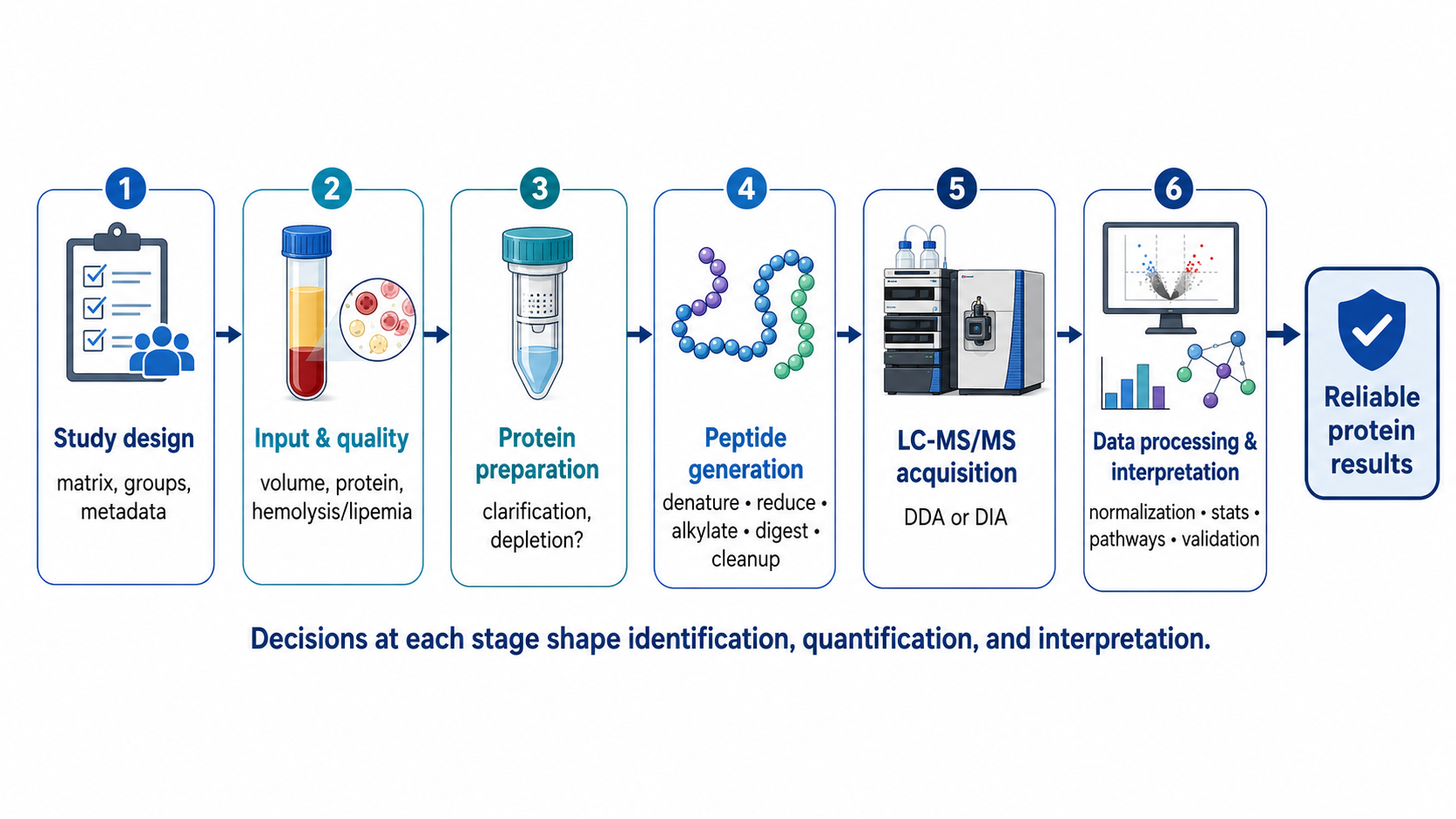
Figure 1. Integrated workflow for serum, plasma, and CSF proteomics from study design to data interpretation.
Pre-Analytical Workflow Design
1. Defining the Sample Matrix and Study Design
(1) Distinguishing Serum, Plasma, and CSF
Serum is collected after coagulation, while plasma is prepared using an anticoagulant and retains clotting-related proteins. CSF has a distinct protein composition, typically lower total protein concentration, and often more limited available volume than serum or plasma. These matrix differences affect preparation losses, contaminant profiles, dynamic range, and the feasibility of optional enrichment or fractionation steps.
(2) Establishing Groups, Replicates, and Metadata
Group definitions, biological replicates, collection time points, and relevant covariates should be established before sample processing. Collection site, processing batch, storage history, and other metadata also need consistent documentation. When biological groups overlap with technical batches, subsequent statistical analysis may not reliably separate biological variation from workflow-related effects.
2. Reviewing Input and Sample Quality
(1) Matching Available Input to the Planned Workflow
Available volume and protein content should be evaluated against the planned preparation route. Routine profiling, depletion of high-abundance proteins, peptide fractionation, PTM enrichment, and repeat preparation do not have identical input requirements. Feasibility therefore depends on both the available material and the analytical objective.
(2) Identifying Pre-Analytical Quality Risks
Hemolysis can introduce intracellular proteins into serum or plasma, while lipemia may interfere with extraction, chromatography, or ionization. Blood contamination can substantially alter the apparent CSF proteome. Precipitates, prolonged handling, and repeated freeze-thaw cycles may introduce additional variation that should be considered during technical review.
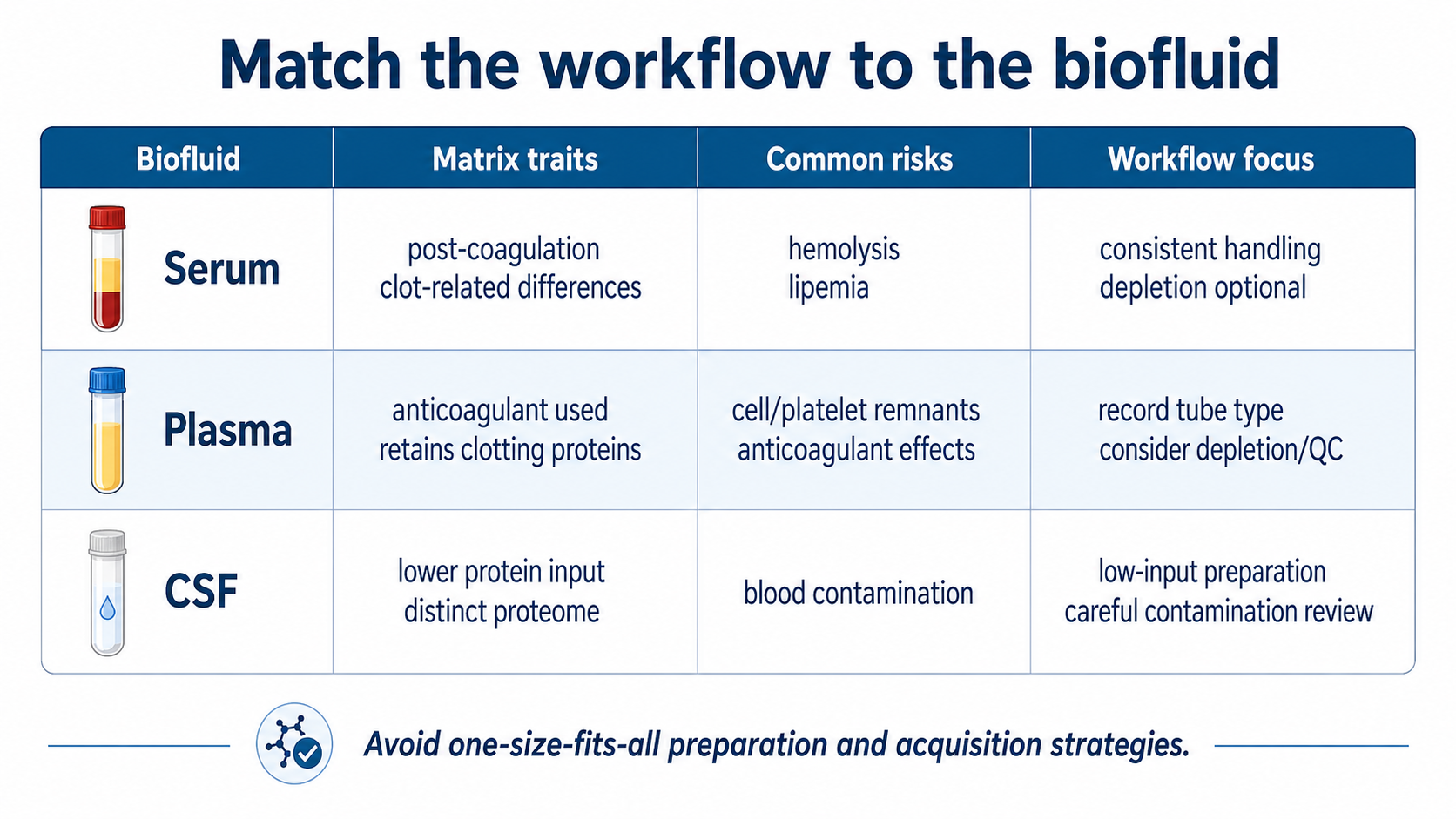
Figure 2. Matrix-specific characteristics, quality risks, and workflow considerations for serum, plasma, and CSF proteomics.
Sample Preparation and Peptide Generation
1. Preparing Biofluid Proteins for Digestion
(1) Clarification and Matrix-Specific Handling
Clarification removes particulates or residual cellular material that could disrupt subsequent processing. Plasma handling should also account for the recorded anticoagulant and potential cellular or platelet-derived remnants. CSF preparation often requires particular attention to limited input and blood-derived contamination, while serum processing should remain consistent across all comparison groups.
(2) Evaluating High-Abundance Protein Depletion
Highly abundant serum and plasma proteins can dominate peptide signals and reduce observation of lower-abundance components. Depletion may increase access to some proteins, but it adds handling steps, requires sufficient input, and may remove proteins bound to targeted carriers. Its use should follow the study objective rather than serve as a universal prerequisite.
2. Converting Proteins Into LC-MS/MS-Compatible Peptides
(1) Denaturation, Reduction, and Alkylation
Protein denaturation exposes regions that may otherwise remain inaccessible to proteolytic enzymes. Reduction disrupts disulfide bonds, while alkylation stabilizes reactive cysteine residues and limits bond reformation. Reagent conditions and reaction settings should be adapted to sample composition, protein amount, and downstream analytical requirements.
(2) Proteolytic Digestion and Peptide Cleanup
Bottom-up proteomics converts proteins into peptides that can be separated by liquid chromatography and analyzed by tandem mass spectrometry. Digestion conditions influence missed cleavages, peptide length, and sequence coverage. Peptide cleanup removes salts, detergents, lipids, and other components that may impair chromatography or electrospray ionization.
3. Assessing Preparation Quality
(1) Monitoring Digestion and Peptide Recovery
Preparation quality can be evaluated through peptide yield, digestion consistency, missed-cleavage patterns, and peptide property distributions. These indicators help determine whether the material is suitable for acquisition or whether preparation-related variation may affect comparison. Appropriate acceptance criteria depend on the sample matrix, workflow, and project objective.
(2) Controlling Preparation Batches
Sample processing order should avoid concentrating one biological group in a single preparation batch. Consistent reagents, documented handling times, and balanced processing reduce avoidable technical variation. When several batches are necessary, reference materials or pooled quality-control samples may support assessment of preparation and acquisition stability.
LC-MS/MS Data Acquisition
1. Selecting the Acquisition Mode
(1) Data-Dependent Acquisition for Protein Profiling
Data-dependent acquisition selects precursor ions for fragmentation according to their observed signals and defined acquisition rules. It supports peptide identification and broad protein profiling, but precursor selection may vary between runs. This run-to-run stochasticity can contribute to missing identifications in larger comparative datasets.
(2) Data-Independent Acquisition for Cohort Comparison
Data-independent acquisition fragments ions across systematically defined precursor ranges. The resulting data contain overlapping fragment signals that require dedicated computational processing. DIA is often used when consistent quantitative measurement across multiple samples is important, although performance still depends on chromatography, sample quality, acquisition settings, and data analysis.
2. Aligning Quantitative Design With Acquisition
(1) Label-Free Quantitative Workflows
Label-free workflows analyze samples in separate LC-MS/MS runs and compare peptide or protein signals after processing. They offer flexibility when sample numbers change, but require careful injection order, instrument monitoring, normalization, and batch management. Technical variation should be controlled so it does not obscure biologically relevant abundance differences.
(2) Multiplexed Labeling Workflows
Multiplexed labeling combines differently labeled samples before LC-MS/MS analysis. Channel allocation, reference design, sample balance, and potential batch bridging need to be defined before preparation begins. This route can reduce some run-to-run effects, but labeling efficiency and ratio distortion still require quality assessment during processing and interpretation.
3. Managing Chromatography and Instrument Performance
(1) Chromatographic Separation and Injection Order
Liquid chromatography separates complex peptide mixtures before ionization and fragmentation. Gradient conditions, column performance, sample loading, and carryover influence the signals entering the mass spectrometer. Randomized or balanced injection order, blank runs, and suitable quality-control injections help reveal drift, contamination, or changes in analytical performance.
(2) Platform Selection and Acquisition QC
Instrument selection should reflect sample complexity, available input, throughput, acquisition mode, and the intended balance between identification depth and quantitative consistency. Instrument model alone does not determine project quality. Retention-time stability, signal response, mass accuracy, identification consistency, and carryover are among the factors that may be monitored during acquisition.
Data Processing and Result Interpretation
1. Matching Data Processing to Acquisition
(1) DDA Database Searching and Identification Control
DDA spectra are commonly matched against a protein sequence database to generate peptide-spectrum matches, peptide identifications, and inferred protein groups. Database composition, enzyme rules, allowed modifications, mass tolerances, false-discovery-rate control, and protein inference settings all influence the final identification list.
(2) DIA Signal Extraction and Quantification
DIA processing extracts peptide evidence from complex fragment-ion data using library-assisted or library-free strategies. Signal assignment, interference control, retention-time alignment, and quantitative filtering affect the resulting matrix. The software configuration should correspond to the acquisition design and remain consistent across samples intended for direct comparison.
2. Evaluating Quantitative Data Quality
(1) Normalization, Missing Values, and Replicate Consistency
Normalization reduces systematic differences that are unrelated to the biological comparison. Replicate correlations, intensity distributions, coefficient patterns, and missing-value structure can reveal technical inconsistency or unusual samples. A missing signal does not by itself demonstrate that a protein is biologically absent from the original specimen.
(2) Batch Effects and Statistical Comparison
Exploratory plots and statistical models can identify variation associated with preparation date, acquisition batch, collection site, or other technical factors. Batch correction cannot recover information that is completely confounded with biological grouping. Balanced experimental design remains more reliable than attempting to resolve severe confounding after data collection.
3. Moving From Protein Results to Biological Interpretation
(1) Protein Lists, Quantitative Matrices, and Functional Annotation
Protein and peptide lists summarize identification evidence, while quantitative matrices support comparison across samples or groups. Differential analysis prioritizes proteins associated with the specified contrast. Functional annotation and pathway analysis organize these results biologically, but their interpretation depends on species support, database coverage, background selection, and statistical criteria.
(2) Candidate Prioritization and Follow-Up Validation
Differential proteins, enriched pathways, or detected modification sites represent discovery or prioritization evidence. They do not independently confirm a causal mechanism, diagnostic biomarker, or functional effect. Important candidates should be evaluated using suitable orthogonal measurements, independent samples, targeted assays, or functional experiments according to the intended conclusion.
A reliable serum, plasma, or CSF proteomics workflow depends on continuity between study design, sample quality, preparation, LC-MS/MS acquisition, data processing, and interpretation. For broader guidance on sample selection, workflow planning, quantitative strategies, and result interpretation, see Serum, Plasma, and CSF Proteomics: From Biofluid Samples to Biological Insights.
MtoZ Biolabs supports project-specific workflow evaluation and proteomics analysis for these sample types, with the analytical route selected according to available input, group design, research objective, and intended data output. Submit your inquiry below for project evaluation.
How to order?




