






LC-MS/MS Proteomics: Workflow, Principles, and Applications in Protein Analysis
Introduction
Complex protein samples rarely yield clear biological answers from a single assay readout. Cell lysates, serum, tissue extracts, and biopharmaceutical materials contain thousands of proteins and peptides spanning wide abundance ranges. Researchers need methods that can identify proteins, localize modifications, compare samples quantitatively, and support follow-up validation. LC-MS/MS proteomics has become the central platform for this work because it combines liquid chromatography separation with tandem mass spectrometry detection at peptide-level resolution.
LC-MS/MS proteomics applies bottom-up or related workflows to digest proteins into peptides, separate them by liquid chromatography, fragment selected precursors by tandem mass spectrometry, and infer protein identity and modification state from the resulting spectra. The approach supports discovery experiments, targeted biologics characterization, PTM mapping, and quantitative comparison across conditions, batches, or treatment groups.
For teams planning protein analysis by LC-MS/MS proteomics, the first step is to define whether the project requires protein identification, modification mapping, relative quantitation, or a combined reporting package matched to the biological or product question.
What LC-MS/MS Proteomics Means in Protein Analysis
LC-MS/MS proteomics is the use of liquid chromatography coupled to tandem mass spectrometry to analyze peptides derived from proteins in a sample. In the most common bottom-up workflow, proteins are enzymatically digested, peptides are separated online by reversed-phase LC, and mass spectrometers collect precursor ion measurements followed by fragment ion spectra for selected peptides.
Protein identity is inferred by matching observed peptide spectra to reference sequence databases or, in selected cases, by de novo interpretation when database coverage is incomplete. Post-translational modifications, sequence variants, and labeling states can be included in search parameters when the project requires them. Quantitative LC-MS/MS proteomics adds intensity-based or isotope-based comparison across samples to estimate relative protein abundance changes.
LC-MS/MS proteomics therefore provides both qualitative and quantitative protein analysis from the same experimental platform, with reporting depth determined by sample complexity, acquisition strategy, and data review standards.
Core Principles of LC-MS/MS Proteomics
Several principles define how LC-MS/MS proteomics converts complex protein mixtures into interpretable analytical results.
Bottom-up peptide-centric analysis
Most LC-MS/MS proteomics workflows analyze peptides rather than intact proteins. Digestion reduces sample complexity relative to full proteome mass analysis and produces fragments suited to database searching and PTM localization.
Chromatographic separation before MS detection
Liquid chromatography reduces ion suppression and improves dynamic range by separating peptides in time before they enter the mass spectrometer. Gradient length, column chemistry, and run time strongly affect the number and quality of identifiable peptides.
Tandem mass spectrometry for sequence evidence
MS/MS fragmentation generates product ions that support peptide sequence assignment and modification localization. The quality of fragment evidence determines confidence in protein identification and PTM calls.
Database searching and inference logic
Observed spectra are matched against protein sequence databases using search engines that consider enzyme specificity, fixed and variable modifications, and mass tolerances. Protein inference groups peptide evidence into protein-level reports according to defined rules.
Quantitation as an optional but powerful layer
Label-free, metabolic labeling, or chemical labeling strategies can compare peptide or protein abundance across samples when the project goal includes differential expression or treatment response analysis.
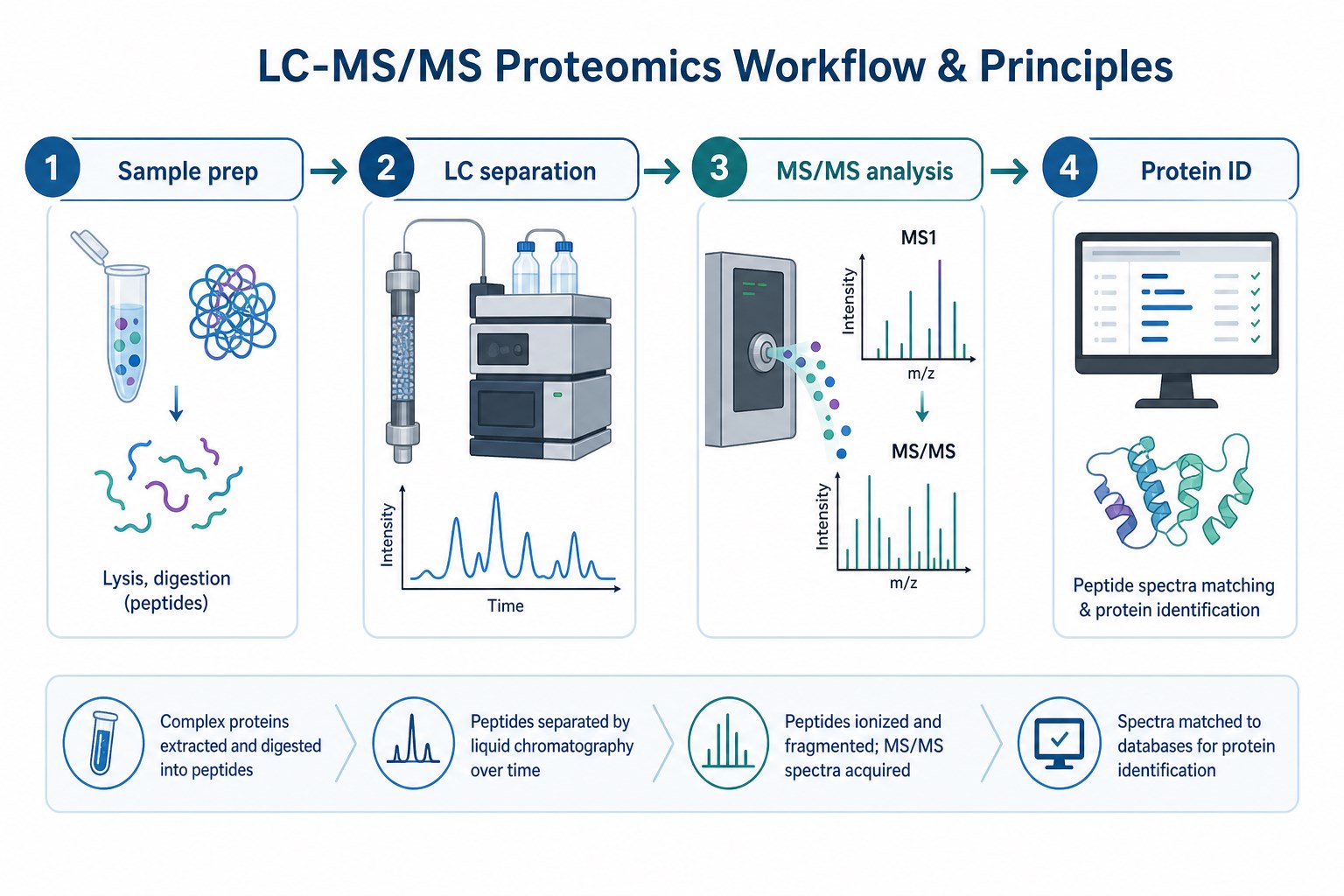
Figure 1. LC-MS/MS proteomics combines sample preparation, LC separation, MS/MS analysis, and protein identification in a peptide-centric workflow.
Standard LC-MS/MS Proteomics Workflow
A practical LC-MS/MS proteomics workflow for protein analysis follows a linked sequence of steps.
Sample preparation extracts proteins from the matrix, denatures and reduces structure when required, digests proteins into peptides, and cleans up salts or contaminants that interfere with chromatography and ionization. Peptide LC separation resolves complex peptide mixtures using reversed-phase gradients optimized for run time and project depth. MS/MS acquisition selects precursor ions and collects fragment spectra with resolution and acquisition settings matched to the peptide set. Database search matches spectra to reference sequences and assigns modifications when included in the search space. Protein reporting aggregates peptide spectrum matches into protein lists, coverage maps, modification summaries, and quantitative comparisons when quantitation is in scope.
Workflow design should be defined before sample submission because digestion strategy, LC gradient, acquisition depth, and search parameters all depend on the analytical question.
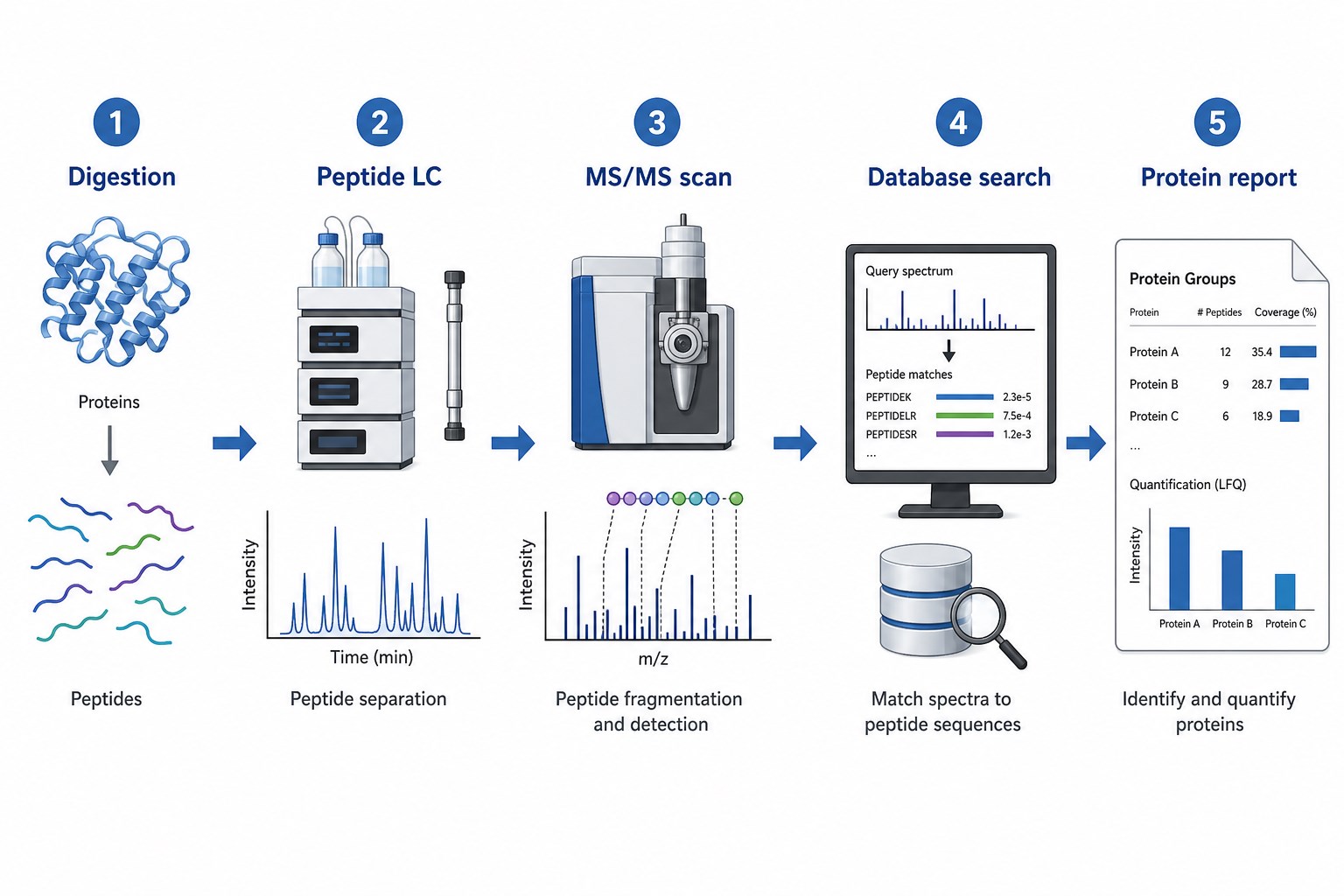
Figure 2. A standard LC-MS/MS proteomics workflow moves from digestion and peptide LC through MS/MS scanning, database search, and protein reporting.
Related Services
Comprehensive Peptide Mapping Service
Primary Structure Analysis Service
Protein Full Sequence Coverage Analysis Service
Biopharmaceutical Peptide Mapping Analysis Service
Teams planning LC-MS/MS proteomics for protein analysis can consult MtoZ Biolabs to review sample type, workflow depth, and reporting requirements for the project goal.
Workflow Variants by Analytical Goal
Different protein analysis goals favor different LC-MS/MS proteomics configurations.
|
Analytical Goal |
Workflow Emphasis |
Typical Output |
|---|---|---|
|
Protein identification |
Broad discovery acquisition and database search |
Protein list and peptide evidence |
|
PTM mapping |
Modification-enriched search and manual review |
Localized modification sites |
|
Biologics sequence confirmation |
Targeted digestion and high-confidence PSM review |
Coverage map and variant check |
|
Relative quantitation |
Replicate LC-MS/MS with label-free or labeled strategy |
Differential protein abundance table |
|
Targeted follow-up |
SRM or PRM on selected peptides |
Quantitative monitoring of defined targets |
Discovery depth, biologics characterization rigor, and quantitative comparison place different demands on the same core LC-MS/MS platform.
Key Technical Components in LC-MS/MS Proteomics
Understanding the main technical components helps teams interpret results and plan experiments more effectively.
Sample preparation and digestion
Protein extraction, lysis conditions, reduction and alkylation, and protease selection determine peptide recovery and compatibility with downstream LC-MS/MS. Incomplete digestion or matrix interference can reduce identifications before acquisition begins.
LC method design
Gradient length, flow rate, column chemistry, and run time affect peptide separation and identifications per run. Longer gradients often improve coverage at the cost of throughput.
MS/MS acquisition modes
Data-dependent acquisition is common in discovery proteomics. Targeted modes such as selected reaction monitoring or parallel reaction monitoring support validation and quantitation of defined peptides with higher reproducibility.
Search parameters and false discovery control
Database completeness, enzyme rules, modification scope, and mass tolerances shape identification outcomes. False discovery rate filtering is standard in discovery reporting to reduce false protein calls.
Data review and reporting depth
Automated search output often requires expert review for modified peptides, low-abundance features, and biologics-grade sequence confirmation. Reporting should match the decision the data must support.
Applications in Protein Analysis
LC-MS/MS proteomics supports a broad range of protein analysis applications across research and biopharmaceutical settings.
Protein identification in complex mixtures enables discovery of expressed proteins in cell lines, tissues, and biofluids when database reference is available.
PTM mapping localizes phosphorylation, glycosylation, oxidation, and other modifications when search and review strategies are matched to the modification class.
Biologics characterization applies LC-MS/MS peptide mapping to confirm sequence, detect variants, and review critical quality attributes in therapeutic proteins and antibodies.
Relative quantitation compares protein abundance across treatment, disease, or process conditions when replicate design and normalization are controlled.
Biomarker discovery and mechanistic research use differential proteomics to generate hypotheses that may require orthogonal validation afterward.
Application depth should increase when data support regulatory, comparability, or publication-grade decisions rather than exploratory screening alone.
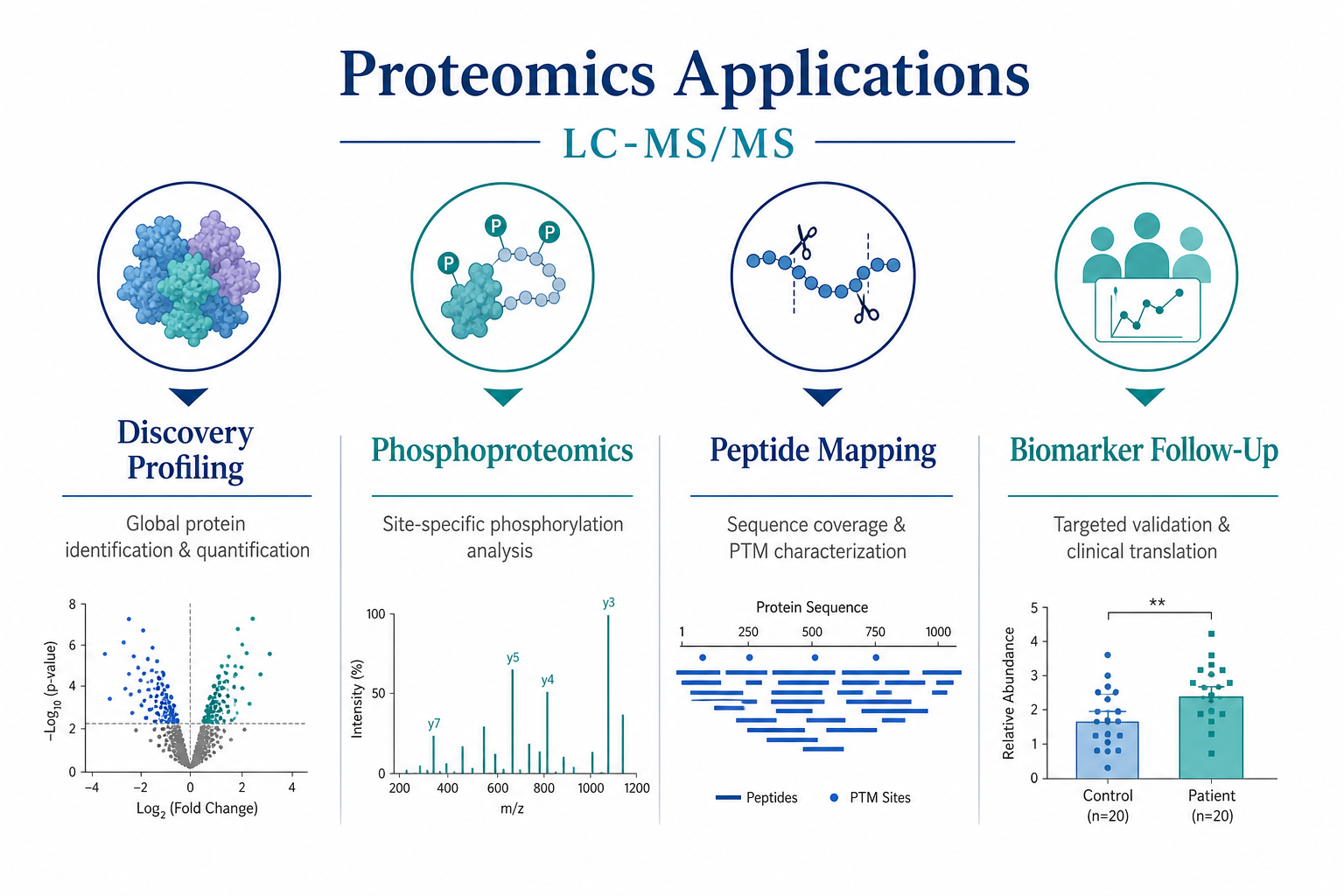
Figure 3. LC-MS/MS proteomics supports protein identification, PTM mapping, quantitation, and biomarker discovery in protein analysis.
Core Advantages and Current Limitations
Core Advantages
Peptide-level resolution for identification and modification analysis.
LC-MS/MS provides detailed evidence at the fragment ion level.
Compatibility with complex samples.
Proteomics workflows handle cell lysates, serum, tissue, and purified proteins with adapted prep methods.
Flexible discovery and targeted modes.
The same platform supports broad profiling and focused peptide monitoring.
Quantitative comparison capability.
Label-free and labeling strategies enable relative abundance analysis across sample sets.
Integration with biologics characterization.
Peptide mapping by LC-MS/MS is central to protein drug sequence and PTM review.
Current Limitations
Dynamic range remains challenging.
Low-abundance proteins may be missed in complex mixtures without enrichment or fractionation.
Sample prep strongly affects outcomes.
Poor digestion or matrix interference can limit identifications regardless of instrument performance.
Database dependence in standard workflows.
Unknown sequences or incomplete references reduce identification confidence.
Quantitation requires careful experimental design.
Replicates, normalization, and batch control are essential for reliable differential results.
Expert review is often needed for modified peptides and biologics-grade reporting.
Automated search output alone may not meet high-confidence project standards.
Sample and Project Planning Considerations
Before LC-MS/MS proteomics analysis begins, teams should define:
- sample type and protein extraction context
- analytical goal: identification, PTM mapping, quantitation, or biologics confirmation
- reference database or sequence availability
- digestion strategy and modification search scope
- required LC-MS/MS depth and replicate design
- reporting format and confidence standards
Feasibility review before method lock-in reduces repeat analysis caused by incompatible matrices or unclear project scope.
Expected Deliverables
A useful LC-MS/MS proteomics report for protein analysis typically includes:
- protein identification list with supporting peptide evidence
- peptide spectrum match summary and coverage information when applicable
- PTM or modification summary if modification mapping is in scope
- quantitative comparison tables for differential projects
- method notes covering digestion, LC-MS/MS settings, and search parameters
- interpretation limits and recommended follow-up when confidence is incomplete
Reporting depth should match project stage, from exploratory protein lists to reviewed biologics characterization packages.
Frequently Asked Questions
1. What is LC-MS/MS proteomics?
LC-MS/MS proteomics uses liquid chromatography and tandem mass spectrometry to identify and analyze peptides derived from proteins in a sample.
2. How does LC-MS/MS differ from LC-MS alone?
LC-MS/MS collects fragment ion spectra for selected precursors, providing sequence and modification evidence beyond precursor mass alone.
3. What is bottom-up proteomics?
Bottom-up proteomics digests proteins into peptides before LC-MS/MS analysis and is the most common workflow in protein analysis.
4. Can LC-MS/MS proteomics quantify proteins?
Yes. Label-free or labeling-based strategies can compare relative protein abundance across samples when experiment design supports quantitation.
5. Is LC-MS/MS proteomics used in biologics characterization?
Yes. LC-MS/MS peptide mapping is widely used for sequence confirmation, PTM review, and comparability support in biopharmaceutical protein analysis.
6. What most affects proteomics result quality?
Sample preparation, digestion efficiency, LC method design, acquisition depth, database setup, and data review standards all strongly influence outcomes.
Conclusion
LC-MS/MS proteomics provides a powerful workflow for protein analysis by combining peptide generation, chromatographic separation, tandem mass spectrometry, and database-driven interpretation. The platform supports protein identification, PTM mapping, biologics characterization, and quantitative comparison when workflow design and reporting depth are matched to the project goal.
Reliable results depend on sample preparation quality, appropriate LC-MS/MS acquisition, sound search parameters, and review standards aligned with the intended use of the data. Teams that define analytical goals early can select the workflow variant best suited to discovery, characterization, or quantitative protein analysis. Groups planning LC-MS/MS proteomics projects can contact MtoZ Biolabs to review sample status, workflow scope, and reporting requirements for their protein analysis program.
How to order?




